“There are three things in life that are truly important: family, friends, and shopping.”
— Astrid Leong to Rachel Chu

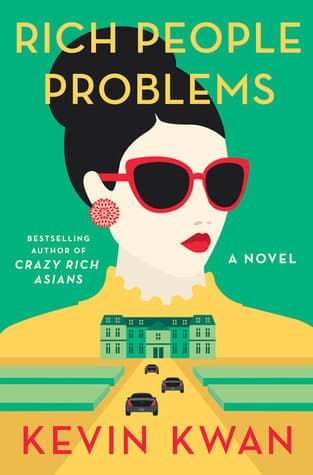
Kevin Kwan (2017)
Genre
Romance
Reading Time
8-10 hours
Key Themes
See below
Sign in to track this book
Asia's wealthiest family fights over a dying matriarch's fortune and prime Singaporean estate, as long-buried secrets, couture sabotage, and scandalous rivalries explode, threatening their opulent lives.
The novel opens with the impending death of Su Yi, the matriarch of the wealthy Shang-Young family, at her ancestral estate, Tyersall Park, in Singapore. Nicholas Young, her favorite grandson, learns of her critical condition from his mother, Kerry. Nicholas and his wife, Rachel Chu, immediately prepare to fly from New York to Singapore, understanding the moment's significance for the entire family. The news spreads through the Shang-Young and Leong clans, as relatives from around the world gather at Tyersall Park, not only to pay respects but also to position themselves for the inevitable distribution of Su Yi's fortune and the estate. This sets the stage for a dramatic power struggle among the super-rich.
Upon arrival at Tyersall Park, Nicholas and Rachel enter the chaotic atmosphere of the Shang-Young family's gathering. Various cousins, aunts, and uncles, many of whom Nicholas hasn't seen in years, are already present, each subtly or overtly vying for Su Yi's attention. The air is thick with animosity and competitive displays of affection for the dying matriarch. Secrets and old grievances resurface, particularly concerning Su Yi's will and the future of Tyersall Park, a sixty-four-acre property in prime Singapore real estate. Nicholas quickly realizes that his grandmother's final days will not be peaceful, as the family's problems escalate into a battle for inheritance.
Away from Tyersall Park, Astrid Leong is dealing with her own problems. Her ex-husband, Michael Teo, driven by jealousy, works to sabotage her relationship with her childhood sweetheart, Charlie Wu. Michael uses a smear campaign, leaking fabricated stories to the press and manipulating social media to damage Astrid's reputation and business. Despite these attacks, Astrid and Charlie's bond strengthens, and Charlie is a supportive partner. However, Michael's relentless pursuit creates significant stress, threatening Astrid's peace and public image, and forcing her to confront his bitterness and the lengths he will go to hurt her.
Kitty Pong, now married to Jack Bing, China's second-richest man, finds herself in a new social stratum but still insecure. Despite her wealth and status, she feels overshadowed by Jack's famous fashionista daughter, Colette Bing. Kitty's attempts to impress Colette often backfire, leading to awkward situations. She tries to assert her position, especially in fashion and social events, but Colette's natural elegance and existing network make it difficult. Kitty's problems show up as a relentless, often comical, struggle for acceptance within her new, elite family, highlighting the endless pursuit of status even at the highest levels.
After Su Yi's death, the family gathers for the reading of her will, a tense event. The will's contents cause drama, as many relatives are disappointed by their allocations, especially those who felt entitled. The most contentious point is the disposition of Tyersall Park. Amidst the revelations, a shocking secret comes to light: Su Yi had a long-lost son, an illegitimate child named Christopher, who was given up for adoption decades ago. This revelation questions the entire inheritance, as Christopher, if found, would have a claim to a significant portion of the estate, including Tyersall Park, much to the dismay of the family.
Nicholas, guided by duty and a desire to honor his grandmother's wishes, takes on the responsibility of finding Christopher. Rachel, with her intellect and research skills, assists him. Their investigation leads them through old family records, obscure connections, and a journey that spans continents, from Singapore to London and beyond. They uncover fragments of Christopher's life, piecing together his history after he was given up for adoption. The search is challenging, as many family members, particularly those who stand to lose inheritance, try to obstruct their efforts, fearing the implications of Christopher's discovery for their own claims.
Michael Teo's vendetta against Astrid and Charlie reaches a dangerous peak. He orchestrates a public humiliation for Astrid, involving a fabricated scandal that goes viral. More alarmingly, he arranges for Charlie Wu's teenage son, Cassian, to be kidnapped from his elite Hong Kong private school, believing this will force Charlie to retreat and leave Astrid. The kidnapping sends shockwaves through their lives, forcing Astrid and Charlie to navigate a terrifying ordeal while trying to protect Cassian. This extreme act shows Michael's depravity and the severe consequences of his jealous rage, putting the lives of those Astrid loves at risk.
The fate of Tyersall Park remains a central point of contention. With Christopher's revelation and the complexities of Su Yi's will, the family is divided on whether to sell the valuable property for a massive profit or preserve it as a family legacy. Nicholas, along with a few others, advocates for its preservation, seeing it as more than just real estate but a symbol of their heritage. However, the allure of billions of dollars from a potential sale is too strong for many of the more greedy relatives. Heated arguments and backroom dealings ensue, highlighting the deep rift between those who prioritize tradition and those driven by financial gain.
Ultimately, many of the conflicts find resolution. Nicholas and Rachel successfully locate Christopher, who, surprisingly, is not interested in the vast fortune, having built a fulfilling life of his own. His disinterest defuses much of the tension around the inheritance. Astrid and Charlie rescue Cassian, and Michael Teo is brought to justice for his crimes, allowing Astrid and Charlie to formalize their relationship with a surprise, star-studded wedding proposal in India. Kitty Pong, through a series of unexpected events, gains some respect and finds her place within her new family, in her own unique, often comical, way. The various plotlines converge, bringing closure and new beginnings for the main characters.
The novel concludes with the final disposition of Su Yi's estate. Tyersall Park is preserved, fulfilling Su Yi's deepest wish, thanks in part to Christopher's decision and Nicholas's efforts. The immense wealth is distributed, but not without further squabbles and the family's problems. The events around Su Yi's death and will cause significant change within the Shang-Young and Leong families. Nicholas and Rachel solidify their positions as moral anchors, Astrid finds true happiness, and even characters like Kitty Pong experience growth. Su Yi's legacy is honored, and while the family remains imperfect, a new chapter begins, with both continuity and transformation.
The Protagonist
Nicholas begins as a respected but somewhat passive observer of his family's drama and evolves into an active, decisive leader in preserving his grandmother's legacy and unifying the family.
The Protagonist
Rachel continues to solidify her place within the Young family, proving her worth and intelligence, and becoming an indispensable partner to Nicholas.
The Central Figure (Deceased)
As a character who is dying, Su Yi's arc is more about the revelations of her past and the enduring impact of her legacy, which ultimately brings both discord and unexpected unity to her family.
The Supporting Protagonist
Astrid moves from being tormented by her past marriage to finding true love and peace with Charlie, asserting her independence and strength.
The Supporting Character
Charlie's arc is largely about his unwavering pursuit of Astrid and his commitment to protecting her and his family, ultimately culminating in their marriage.
The Supporting Character / Comic Relief
Kitty gradually learns to navigate her new social world, finding a measure of acceptance and even a strange kind of confidence through her unique, often clumsy, efforts.
The Antagonist
Michael's arc descends into full villainy, culminating in his downfall and legal repercussions for his malicious acts.
The Supporting Character
Colette largely remains consistent in her role as a high-society figure, eventually developing a more nuanced, if still somewhat distant, relationship with Kitty.
The Mentioned / Pivotal Figure
Christopher's arc is less about personal development and more about his discovery and his crucial decision to forgo the inheritance, which ultimately resolves much of the plot's tension.
The novel shows how vast fortunes breed greed, jealousy, and social dysfunction within families. The Shang-Young clan's scramble for Su Yi's inheritance highlights how money distorts relationships, turning relatives into rivals. Characters like Michael Teo show how wealth amplifies existing insecurities and fuels destructive behavior, as he uses his resources to exact revenge on Astrid. The constant pursuit of status, exemplified by Kitty Pong, shows that even immense wealth does not guarantee happiness, but often creates new problems. The book satirizes the idea that money solves everything, instead showing it often complicates and corrupts.
““The only thing more expensive than being rich is being poor.””
A core tension is the conflict between upholding family traditions and securing individual happiness. Nicholas and Rachel are often caught between the expectations of the Shang-Young dynasty and their desire for a simpler life. The battle over Tyersall Park shows this, with some family members valuing the property as heritage and others seeing it as a financial asset. Astrid's struggle to pursue her love for Charlie Wu while battling societal judgment and her ex-husband's attacks also reflects this theme, showing the pressure to conform to family and social expectations even at the cost of personal fulfillment.
““In Asia, family is everything. But sometimes, everything is too much.””
Many characters deal with their sense of identity and where they belong within their social circles. Rachel Chu, as an American-born Chinese outsider, navigates the world of Asian high society. Kitty Pong, despite marrying into extreme wealth, struggles to gain acceptance from her stepdaughter Colette and the wider elite. Even Astrid faces an identity crisis as she tries to shed the shadow of her past marriage and forge a new path with Charlie. The search for Christopher also touches on this, exploring how one's origins and family ties shape, or fail to shape, one's sense of self and belonging.
““No matter how rich you are, you still have to figure out who you are.””
Amidst the opulence and drama, the novel celebrates genuine love and loyalty. Nicholas and Rachel's bond provides a stable, moral center. Astrid and Charlie's rekindled romance, tested by Michael's malice, triumphs, highlighting love's resilience. The loyalty Nicholas shows to his grandmother's memory and his determination to fulfill her wishes, even when confronting his greedy relatives, underscores the importance of familial love beyond material gain. These relationships offer a contrast to the superficiality and avarice that often characterize the 'crazy rich' world.
““Love was the one thing money couldn’t buy, and ironically, it was the only thing that truly mattered.””
A dying matriarch's will sparks a battle for vast wealth and property.
The entire novel is driven by the classic inheritance plot, centered around Su Yi's impending death and the subsequent reading of her will. This device serves as the primary catalyst for conflict, bringing together disparate family members and exposing their true characters and motivations. The immense value of Tyersall Park and Su Yi's other assets creates a high-stakes environment where greed, manipulation, and long-buried secrets come to the forefront. The unexpected revelation of Christopher, Su Yi's illegitimate son, further complicates the inheritance, serving as a major plot twist that reshapes the family's future and the distribution of wealth.
Multiple concurrent narratives follow different characters' 'rich people problems.'
The novel employs parallel storylines, weaving together the separate but interconnected narratives of Nicholas and Rachel at Tyersall Park, Astrid's romantic travails, and Kitty Pong's social climbing. This device allows the author to showcase the diverse manifestations of 'rich people problems' across different segments of the ultra-wealthy. While Nicholas's story focuses on the family inheritance, Astrid's explores the destructive power of jealousy and the pursuit of true love, and Kitty's provides comic relief through her social insecurities. These parallel plots occasionally intersect, enriching the overall tapestry of the crazy rich world and offering varied perspectives on its challenges.
Exaggerated portrayals of the wealthy to critique their excesses and absurdities.
Kevin Kwan utilizes social satire throughout the novel to highlight and critique the absurdities, excesses, and often superficial concerns of the ultra-rich. This is evident in the extravagant descriptions of fashion, homes, and lifestyles, as well as the characters' often self-important dialogue and petty squabbles. Kitty Pong's character, in particular, serves as a vehicle for much of the comic satire, with her misguided attempts at social climbing and her desperate need for validation. The satire often serves to underscore the moral emptiness that can accompany immense wealth, contrasting it with the grounded values of characters like Nicholas and Rachel.
An unexpected character or event resolves a seemingly insurmountable problem, often humorously.
While not a pure deus ex machina in the traditional sense, the discovery of Christopher, Su Yi's long-lost son, functions as a subverted version of this device. His existence is a complete surprise, and his unexpected lack of interest in the vast inheritance provides a convenient and somewhat humorous resolution to the intense family conflict over Tyersall Park. Instead of a divine intervention, it's a very human, un-rich-person-like decision that defuses the central tension, allowing for a resolution that might have otherwise been impossible given the family's greed. This twist provides both comedic relief and a satisfying, albeit unexpected, narrative shortcut.
“There are three things in life that are truly important: family, friends, and shopping.”
— Astrid Leong to Rachel Chu
“Money doesn't buy happiness, but it does buy a private jet, and that's pretty close.”
— Kitty Pong's internal thoughts
“The only thing better than inheriting a fortune is inheriting a fortune and a scandal.”
— Auntie Alix's musings on family drama
“Never underestimate the power of a woman with a good tailor and an even better lawyer.”
— Eleanor Young's advice to Rachel
“True love is not about finding someone to live with, it's about finding someone you can't live without.”
— Nick Young reflecting on his relationship with Rachel
“Sometimes the greatest luxury is having no one know what you own.”
— Charlie Wu's philosophy on wealth
“It's not about how much money you have, it's about how much money you can spend without anyone noticing.”
— Peik Lin's observation about the truly rich
“The best way to get over a man is to get under a new one. Or, failing that, to buy a new Birkin.”
— Fiona Tung's coping mechanism
“You can take the girl out of the kampung, but you can't take the kampung out of the girl.”
— Eleanor Young's subtle jab at Rachel
“Being rich isn't about having a lot of money; it's about having the freedom to do whatever you want, whenever you want.”
— Astrid Leong on the true meaning of wealth
“In the world of the super-rich, a divorce is merely a strategic reallocation of assets.”
— Auntie Philippa's cynical view of marriage
“The only thing more expensive than being poor is being rich and trying to hide it.”
— Kitty Pong's internal struggle with her new wealth
“Life is too short to wear boring jewelry.”
— Auntie Carol's fashion philosophy
“Sometimes the greatest love stories are the ones that are never fully told.”
— Rachel Chu reflecting on her family's past
Ready to see how well you understood this book? Take our interactive quiz with 10 questions.

Biography coming soon.