“I'm dead. I know I'm dead. I'm not crazy.”
— Sharon's initial realization of her death and the struggle to accept it.

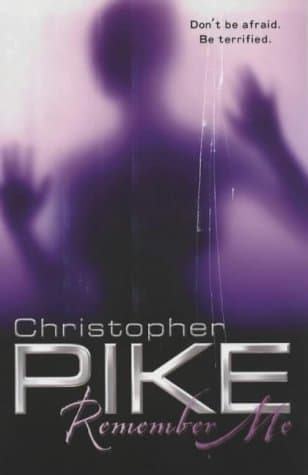
Christopher Pike (1989)
Genre
Romance
Reading Time
272 min
Key Themes
See below
Sign in to track this book
A murdered teen returns as a ghost, haunting her friends and exploring their dreams to unmask her killer before a terrifying entity called The Shadow strikes again.
Shari Cooper attends a party at her friend Heather's house. She feels a strange push and falls from a fourth-story window, dying instantly. Her last thought is that someone pushed her. She awakens as a ghost, disoriented but aware of her surroundings and the immediate aftermath. She observes the police investigation and her friends' reactions, especially Heather, her boyfriend Peter, and her best friend Greg. Shari is determined to find her murderer, convinced it was not an accident.
Shari quickly learns the limits and abilities of her new ghostly form. She can move through walls and observe without being seen or heard, but she cannot touch anything. She tries to communicate with her loved ones, particularly Peter and Greg, but fails. Her frustration grows as she realizes the police consider her death an accidental fall. Driven by her promise to find the truth, Shari begins to follow her friends, hoping to find clues in their conversations and behavior.
Shari focuses on Peter, her boyfriend, and Heather, the party host. She notices Peter's distant behavior and Heather's unusual nervousness. She remembers a past argument with Peter about his possessiveness and Heather's long-standing crush on him. Shari overhears conversations that hint at secrets and tensions among her friends, making her more suspicious. She also discovers she can enter people's dreams, which she uses to gain insight into their thoughts and fears, though the dreams are often fragmented.
Shari spends time observing Greg, her closest friend, who is heartbroken by her death. Despite his grief, Shari senses Greg is hiding something. She recalls a strange conversation they had before her death, where Greg seemed agitated. She uses her dream-walking ability to enter Greg's dreams, where she sees disturbing images and fragmented memories. These suggest he might know more than he lets on, or is involved in something dangerous, though the dreams are not clear enough to provide direct answers.
As Shari continues her investigation, she becomes aware of another presence – a dark, malevolent entity she calls 'The Shadow.' This being is not a ghost but something older and more sinister, a creature that feeds on fear. The Shadow sometimes appears as a chilling cold or a fleeting dark shape, causing Shari immense terror. It seems drawn to her and the circumstances of her death, suggesting it might connect to her murder or the killer's motives. This adds a new layer of horror to her quest.
Shari improves her ability to enter dreams, using it to explore her friends' subconscious minds. She sees snippets of conversations, anxieties, and guilty feelings. In Heather's dreams, she sees jealousy and a desperate desire for Peter. In Peter's dreams, there is a mix of guilt and anger, and a fear of being exposed. No dream provides a clear confession, but they collectively show strained relationships and hidden motives. This suggests multiple people might have had reasons to want Shari gone, or at least knew something about her death.
Shari meets an elderly ghost named Gus, who has been trapped in the house for decades. Gus is cynical but offers Shari important information. He tells her about The Shadow, describing it as an ancient evil that preys on the living and the dead. He warns her that it grows stronger from fear and dark deeds. Gus explains that The Shadow has been in the house for a long time and is attracted to the violence and despair around Shari's death. He advises her to be careful, as The Shadow threatens her ghost existence.
Through dream clues, overheard conversations, and piecing together fragmented memories, Shari identifies her killer: Greg. She learns that Greg was obsessed with her. In a moment of rage, he pushed her from the window when she rejected his advances and threatened to tell Peter. He had planned it to look like an accident. Shari confronts Greg. Though he cannot see or hear her directly, her presence and the weight of his guilt begin to manifest, causing him distress and fear, which attracts The Shadow.
As Greg struggles with his guilt and Shari's ghostly presence, The Shadow manifests more powerfully, drawn by the intense fear and evil. It begins to torment Greg, feeding on his terror and regret. Shari watches, horrified, as The Shadow tries to consume Greg's soul, not out of revenge but because it thrives on such darkness. She realizes that while Greg is her killer, The Shadow is a greater evil, and its presence threatens not only Greg but also the balance between the living and the dead.
Despite Greg being her murderer, Shari cannot watch The Shadow destroy him. She understands that her pursuit of justice has accidentally unleashed a greater evil. In a selfless act, Shari intervenes, using her ghostly energy to distract and weaken The Shadow, drawing its attention away from Greg. This act of compassion and forgiveness, even towards her killer, uses much of her remaining spectral energy. The Shadow is temporarily repelled, and Shari's act gives Greg a chance at redemption, though he remains haunted by his actions.
Having found the truth and protected Greg from The Shadow, Shari feels a deep peace. Her purpose on Earth is complete. She no longer feels anger or a need for revenge. With a final look at her friends and the world she left behind, Shari passes into the afterlife, leaving the living world. Her story ends with the understanding that spiritual justice was served, and the living must now deal with the consequences of their actions and The Shadow's lingering presence.
The Protagonist
From a vengeful spirit seeking her killer, Shari evolves into a compassionate entity who sacrifices herself to protect her murderer from a greater evil, finding peace in the process.
The Antagonist
Initially portrayed as a grieving friend, Greg is revealed to be Shari's killer, whose guilt and fear make him a target for The Shadow.
The Supporting
Peter remains a figure of suspicion and grief, never fully understanding the supernatural events but grappling with the human aftermath of Shari's death.
The Supporting
Heather's jealousy towards Shari for Peter is a minor conflict, but she remains a living character dealing with the aftermath of Shari's death, unaware of the supernatural forces at play.
The Antagonist
The Shadow's presence intensifies throughout the narrative, culminating in a direct threat to Greg, which Shari must confront.
The Supporting
Gus serves as a static mentor figure, providing crucial information and warnings to Shari, but his own ghostly existence remains unchanged.
Shari's main conflict is choosing between seeking revenge for her murder and finding forgiveness. At first, she wants justice, but as she faces The Shadow's true evil, her view changes. Her final act of self-sacrifice to save Greg, her killer, from The Shadow shows that true peace comes from compassion, not vengeance. This theme appears in Shari's thoughts and her final actions to repel The Shadow, choosing to protect rather than condemn.
“I had to find out who killed me. I had to know. And then... then I would make them pay.”
The book explores two kinds of evil: human and supernatural. Greg's obsession and murder show humanity's dark potential, driven by twisted emotions like unrequited love and jealousy. The Shadow, however, embodies an older, cosmic evil that exists independently of human actions, feeding on negativity and fear. The story suggests that while human evil is destructive, supernatural evil can be more widespread and consuming, needing a different kind of sacrifice to fight.
“There was a darkness in this house that had nothing to do with people. It was older, hungrier, and it smelled of fear.”
Greg's story shows how obsession can corrupt and destroy. His unrequited love for Shari becomes a dangerous possessiveness that leads to her murder. The story highlights the destructive power of attachment and the inability to accept rejection. Greg's actions not only end Shari's life but also condemn him to a life of guilt and fear, making him a target for The Shadow. This theme serves as a warning about the dark side of love and desire.
“He said he loved me. I just never knew how much 'love' could twist into something so ugly.”
The novel directly addresses the concept of an afterlife and consciousness after death. Shari's experience as a ghost offers a unique view of human relationships, secrets, and the physical world she can no longer touch. It explores the idea that while the body dies, the spirit can remain, with its own abilities and limits. Her journey from ghost to a more peaceful state suggests a spiritual evolution beyond earthly concerns.
“I was dead, but I was more alive than I had ever been. And I had a job to do.”
The entire story is told from the first-person perspective of a deceased protagonist.
This device immediately immerses the reader in Shari's unique post-death experience, offering insights into the limitations and newfound abilities of a ghost. It creates dramatic irony, as Shari knows the truth about her death long before the living characters, and allows her to observe her friends' true feelings and secrets from an uninhibited vantage point. This perspective enhances the mystery and the supernatural horror elements of the narrative.
Shari's ability to enter the dreams of the living to gather clues.
Dream-walking serves as a crucial investigative tool for Shari, allowing her to access the subconscious thoughts, fears, and suppressed memories of her friends. It provides fragmented, symbolic clues that slowly piece together the truth of her murder, adding a psychological layer to the mystery. This device also allows for exploration of character depth beyond their waking personas, revealing hidden motives and anxieties that drive their actions.
A malevolent entity that represents cosmic evil, distinct from human villainy.
The introduction of The Shadow elevates the stakes beyond a simple murder mystery, transforming it into a supernatural thriller. It serves as a constant, looming threat that is drawn to negativity and fear, adding a layer of existential horror. The Shadow forces Shari to confront a greater evil than her human killer, ultimately leading to her moral dilemma and self-sacrificing act, underscoring the theme of the nature of evil.
Shari's initial assumptions and suspicions about her friends are often incorrect.
While Shari is a ghost and therefore has unique access to information, her initial interpretations of her friends' behaviors and dreams are colored by her pre-death relationships and emotional biases. This creates suspense and misdirection for the reader, as Shari initially suspects Peter and Heather based on their past conflicts and visible reactions, delaying the discovery of the true killer and adding complexity to her investigation.
“I'm dead. I know I'm dead. I'm not crazy.”
— Sharon's initial realization of her death and the struggle to accept it.
“Someone pushed me. Someone murdered me.”
— Sharon's dawning understanding that her death was not an accident.
“How can I find my killer if no one can hear me?”
— Sharon's frustration as a ghost unable to communicate with the living.
“The worst thing about being dead isn't the loneliness, it's the inability to change anything.”
— Sharon reflecting on the powerlessness of her ghostly state.
“It was like watching a movie of my own life, but I couldn't press pause or rewind.”
— Sharon observing her family and friends continuing their lives without her.
“Love doesn't die just because a body does.”
— Sharon's realization about her feelings for Mike, even after her death.
“I was a ghost, a whisper in the wind, and still, I felt jealousy.”
— Sharon's human emotions persisting despite her spectral form, particularly when seeing Mike with another girl.
“The truth was a slippery thing, always just out of my grasp.”
— Sharon's struggle to piece together the events leading to her death.
“Sometimes the people you trust the most are the ones who betray you.”
— Sharon's growing suspicion about those closest to her.
“He saw me. He actually saw me.”
— Sharon's shock and hope when Mike seems to sense her presence.
“Being dead didn't make me less human, it just made me less visible.”
— Sharon's internal struggle to maintain her identity and sense of self.
“The past is never truly dead. It just waits for the right moment to come back and haunt you.”
— Sharon's discovery of long-buried secrets that connect to her murder.
“I may be dead, but I'm not giving up.”
— Sharon's determination to uncover her killer, despite her limitations.
“Even in death, there are choices to be made.”
— Sharon contemplating her options as a ghost, particularly regarding her connection to Mike.
Ready to see how well you understood this book? Take our interactive quiz with 10 questions.
Christopher Pike is a prolific author known for his young adult horror and thriller novels. His works, including "Remember Me," "Chain Letter," and "Falling," often feature suspenseful plots, supernatural elements, and teenage protagonists. Pike's distinctive writing style has made him a popular figure in the genre, captivating readers with his ability to blend mystery and fright.