“I was raw. He was raw. It was what made us so perfect. We were two broken pieces that fit just right.”
— Reflecting on the unique and imperfect bond between the protagonists.

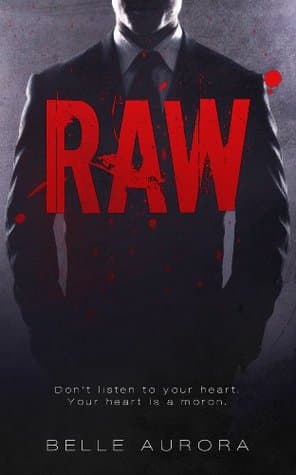
Sign in to track this book
A woman who escaped a difficult childhood finds herself drawn to her persistent stalker, blurring the lines between fear and a dangerous kind of love.
Willow de la Vega, twenty-six, built her life after leaving an abusive home at sixteen. She is educated, employed, and independent, valuing her friends above all else. She works as a barista and lives in a small apartment, feeling safe in her routine. Despite her confident appearance, Willow hides deep emotional scars from childhood, even from her closest friends. She believes she controls her life and emotions, determined never to be vulnerable again.
Willow notices a man watching her. At first, it is a brief glance, a feeling of being observed. Soon, his presence becomes constant, appearing at her coffee shop, outside her apartment, and following her on errands. He never approaches directly, but his intense gaze and silent surveillance create a growing sense of unease. Willow tries to dismiss it as paranoia, but his regular presence makes it impossible to ignore. She feels a primal fear mixed with a strange fascination with the man she knows only as 'him'.
Driven by fear and a need for answers, Willow confronts the man, later identified as Julian. Julian does not deny his actions. He confesses to watching her because he feels a deep connection, claiming he understands her pain and sees her true self. He reveals details about her life that only someone observing her closely would know, further unsettling Willow. Despite her initial terror, Julian's vulnerability and his seemingly genuine desire to protect her begin to weaken her defenses, starting a complex and morally ambiguous relationship.
Julian remains a constant presence in Willow's life, but his actions become less overtly threatening and more protective. He anticipates her needs, offering comfort and support subtly. He shares parts of his own dark past, hinting at a life of abuse and isolation that mirrors Willow's experiences. This shared trauma creates an unexpected bond. Willow, despite her caution, is drawn to his intensity and how he seems to understand her without her speaking. Her friends, however, remain suspicious and concerned about Julian's influence.
As Willow spends more time with Julian, her emotional barriers begin to break down. His unwavering devotion and his ability to see past her defenses make her feel seen and understood in a way no one ever has. He offers her a sense of security and belonging she had never known, despite their unconventional relationship. This new emotional vulnerability is terrifying for Willow, who has always relied on her independence. She struggles with falling for a man who initially stalked her, questioning her own judgment.
While Julian's affection is intense and protective, it also becomes possessive and controlling. He grows jealous of Willow's friends, especially her male friends, and subtly tries to isolate her. He makes decisions for her, claiming it is for her own good, and his reactions to perceived threats against Willow are often extreme. Willow, initially affected by his devotion and her own need for connection, slowly starts to recognize these warning signs. The line between protection and control blurs, and she begins to feel suffocated by the very love that once seemed like salvation.
A specific incident, perhaps Julian overreacting to a perceived threat or directly interfering with Willow's autonomy, marks a major turning point. This event forces Willow to assess the reality of her relationship with Julian. She realizes that his 'love' is not healthy, but a manifestation of his own deep-seated issues and a desire for control. The incident shatters the illusion she had built around their connection, making her confront the dangerous path she had taken. Her friends' warnings echo in her mind, and she feels a renewed sense of fear.
Recognizing the danger, Willow tries to distance herself from Julian. This is difficult, as Julian's possessiveness intensifies when he senses her pulling away. He uses emotional manipulation, guilt, and subtle threats to try and keep her by his side. Willow struggles with her lingering feelings for him, the fear of being alone again, and the immense pressure he exerts. She confides more deeply in her friends, who support her and offer a safe haven. This period is marked by intense emotional turmoil and a constant fight for her independence.
After successfully separating from Julian, Willow begins a long and painful journey of healing. She grapples with the lingering trauma of both her childhood and her relationship with Julian. She reflects deeply on how she could have fallen for someone who initially stalked her, examining her own vulnerabilities and how her past made her susceptible to such an intense, unhealthy connection. This period involves self-discovery, therapy, and a renewed commitment to her own well-being and the genuine, healthy relationships she has with her friends. She understands that love can be destructive when it comes from brokenness.
Willow, changed by her experiences, emerges stronger and more aware. She learned important lessons about love, control, and self-preservation. She embraces her independence with new clarity, understanding that true love should empower, not imprison. While the scars from her past and her relationship with Julian remain, she is no longer defined by them. She continues to build her life with a deeper understanding of her own worth and the kind of healthy relationships she deserves, showing resilience and growth.
The Protagonist
Willow's arc involves moving from a state of controlled independence, through a dangerous entanglement with Julian, to a place of true self-awareness and healthy self-preservation.
The Antagonist/Love Interest
Julian's arc is largely static in his core possessiveness, though he briefly appears to offer Willow solace before his true nature fully emerges as a controlling force.
The Supporting
Sarah's arc is one of unwavering support and growing concern for Willow, highlighting the importance of true friendship in the face of danger.
The Supporting
Ethan's arc reinforces the theme of healthy friendship and the importance of a support system.
The Mentioned
Her impact on Willow is foundational, driving Willow's initial character traits and vulnerabilities.
The novel challenges traditional notions of love by presenting a relationship born from stalking that becomes deeply possessive and controlling. Julian's actions, though he sees them as love, are rooted in obsession and a desire for control, blurring the lines between protection and imprisonment. Willow's initial attraction to this intensity shows how trauma can make people susceptible to unhealthy attachments, mistaking profound attention for genuine care. The story explores how love, without respect for autonomy, can become destructive, showing 'love gone wrong.' Julian's 'love' is a twisted reflection of Willow's own need for connection, revealing the dark side of devotion.
“I’m sure you’re wondering how a person falls in love with their stalker. So am I. This isn’t a story. This is my life.”
Both Willow and Julian carry significant childhood trauma, which deeply influences their behaviors and relationship. Willow's past abuse leads her to build strong emotional walls, making her independent but also lonely and starved for genuine connection. Julian's own unaddressed trauma appears as an inability to form healthy attachments and an intense need to control. The story illustrates how shared trauma can create a powerful, though dangerous, bond, as each character initially sees their own pain reflected in the other. It explores how vulnerability, when exposed to unhealthy dynamics, can lead to more harm.
“Growing up the way I did, you’d think I’d be more screwed up than what I actually am.”
A central conflict in the novel is Willow's struggle to maintain her autonomy against Julian's increasing control. After escaping an abusive home and building her life on independence, Willow initially values her freedom. However, Julian's gradual intrusion into her life, disguised as protection and love, slowly erodes her sense of self and her ability to make her own choices. The story details the subtle and overt ways control can be exerted in a relationship, showing how a person can lose their agency without fully realizing it until it is almost too late. Willow's journey becomes a fight to reclaim her self-ownership.
“He makes me feel. It’s unconventional. But it’s real.”
Willow's friends, her chosen family, act as a counterpoint to her toxic relationship with Julian. They represent healthy, supportive, and reciprocal love, offering Willow a lifeline and a reality check. Unlike Julian, her friends respect her autonomy, offer genuine concern, and provide a safe space without expectation or manipulation. Their unwavering support is instrumental in Willow's eventual realization of the danger she is in and her ability to break free. This theme highlights the vital role of healthy social connections in healing from trauma and navigating dangerous relationships.
“My friends have become my family. Like me, they know what it’s like to grow up unloved.”
The entire story is told through Willow's subjective lens.
The novel is exclusively narrated by Willow, allowing readers direct access to her thoughts, fears, and internal struggles. This device is crucial for understanding her complex emotional journey, her initial attraction to Julian, and her gradual realization of the danger. It immerses the reader in her perspective, making the experience of being stalked and then falling for the stalker more intimate and unsettling. It also limits the reader's information, mirroring Willow's own uncertainty and confusion about Julian's true nature, making his possessiveness more insidious as it unfolds.
Hints and warnings are given about the dark nature of the 'love story'.
The author's note explicitly states, 'This is not a love story. This is a story of love gone wrong,' immediately setting a dark tone. Throughout Willow's internal monologue, there are subtle hints and growing anxieties about Julian's intensity and her own unsettling feelings. She often questions her sanity and the unconventional nature of their connection, signaling that something is amiss. This foreshadowing builds tension and prepares the reader for the inevitable unraveling of their relationship, emphasizing that the 'romance' is inherently flawed and dangerous.
Julian's initial stalking is framed as a twisted form of protection and understanding.
This device is central to the novel's premise. Julian's stalking is not purely malicious; he genuinely believes he is protecting Willow and understanding her in a way no one else can. He uses his knowledge gained from observing her to anticipate her needs and offer comfort, which initially disarms Willow. This trope explores the dangerous allure of intense, unwavering attention for someone who has felt unloved and unseen, making the transition from fear to a misguided sense of safety and even love more plausible, yet ultimately revealing the inherent toxicity of such a dynamic.
Julian subtly isolates Willow from her support system.
As Julian's influence grows, he subtly works to isolate Willow from her friends, her chosen family. He expresses jealousy, manipulates situations to spend more time alone with her, and casts doubt on her friends' intentions. This isolation is a classic tactic in abusive relationships, weakening the victim's support system and making them more dependent on the abuser. For Willow, who already had a small circle, this makes her even more vulnerable to Julian's control, highlighting the gradual erosion of her external connections as her internal world becomes increasingly dominated by him.
“I was raw. He was raw. It was what made us so perfect. We were two broken pieces that fit just right.”
— Reflecting on the unique and imperfect bond between the protagonists.
“Sometimes the most beautiful things are found in the most unexpected places, like a wildflower blooming in a concrete jungle.”
— A philosophical observation about finding beauty and hope in harsh environments.
“He wasn't my knight in shining armor. He was the darkness that understood my own, and that was so much more.”
— Describing a deeper, more profound connection than a typical romantic fantasy.
“Pain was a language we both spoke fluently, and in that, we found our common ground.”
— Highlighting how shared past trauma or pain brings the characters together.
“You don't just fall in love with someone's good parts. You fall in love with their broken parts too, the ones they try to hide.”
— A candid reflection on the nature of unconditional love and acceptance.
“My heart was a fortress, but he found a way to scale its walls, not with force, but with understanding.”
— Illustrating how one protagonist breaks down the other's emotional barriers.
“We were a beautiful mess, and I wouldn't have it any other way.”
— Embracing the chaotic yet perfect nature of their relationship.
“Sometimes the quietest moments hold the loudest truths.”
— An introspective thought about the power of silence and subtle communication.
“He didn't try to fix me. He just held my hand while I put myself back together.”
— Emphasizing supportive love over trying to 'fix' a person.
“My past was a shadow, but with him, I started to see the light.”
— Describing the transformative effect of a new relationship on past trauma.
“Love isn't always pretty. Sometimes it's messy and painful, but it's real.”
— A realistic portrayal of love, acknowledging its complexities and difficulties.
“He was the storm I never knew I needed, and I was willing to drown in him.”
— A passionate description of being consumed by an intense love.
“You can't heal what you don't acknowledge. And sometimes, you need someone to help you see the wound.”
— Discussing the importance of facing one's pain for healing to begin.
“We were two halves of a whole, not because we completed each other, but because we understood each other's incompleteness.”
— A nuanced take on the 'two halves' trope, focusing on mutual understanding of flaws.
Ready to see how well you understood this book? Take our interactive quiz with 10 questions.