“My Lord Marquis of Carabas is drowning! Help!”
— The cat shouts this to trick people into believing his master is a nobleman in distress.

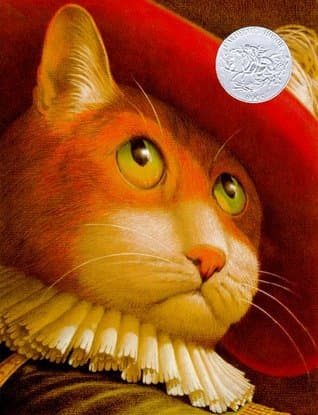
Charles Perrault (2016)
Genre
Fantasy / Children's
Reading Time
15 min
Key Themes
See below
Sign in to track this book
A clever feline uses wit and trickery to transform his penniless master into a marquis, securing his fortune and a royal marriage.
When a miller dies, his three sons divide his small estate. The oldest son gets the mill, the middle son gets the donkey, and the youngest, very upset, is left with only the cat. The youngest son complains about his situation, thinking he will starve after eating the cat and making a drum from its skin, while his brothers can live off their inheritances. The cat, though, hears his master's despair and, surprisingly, speaks, promising to make his master rich if given a bag and a pair of boots.
The youngest son, curious and with nothing to lose, gives the cat the requested items: a bag and a pair of boots. Puss, now nicely dressed, goes to a rabbit warren, puts bran and sow-thistle in his bag, and lies down as if dead. A young, unaware rabbit falls for the trap and is caught. Puss then proudly takes the rabbit to the King's palace, presents it as a gift from his 'master, the Marquis of Carabas,' and earns the King's favor, repeating this act over several months with different game.
One day, Puss learns that the King and his beautiful daughter will be driving along the riverbank. Puss tells his master, the miller's son, to bathe in a certain spot in the river. As the royal carriage approaches, Puss hides his master's clothes and then shouts loudly that the Marquis of Carabas is drowning. The King, recognizing Puss from his gifts, orders his guards to save the 'Marquis.' Puss then says that thieves stole his master's clothes while he was bathing.
The King feels bad for the supposed Marquis of Carabas and orders his best clothes from his own wardrobe for the miller's son. Dressed in the rich clothing, the miller's son looks noble and handsome. The King is impressed, and his daughter, the Princess, finds him agreeable. The King invites the 'Marquis' to join them in their carriage, and the miller's son accepts, enjoying the Princess's company.
While the miller's son rides with the King, Puss runs ahead of the carriage. He sees some mowers working in a field and sternly warns them that if they do not tell the King the fields belong to the Marquis of Carabas, they will be cut into mincemeat. Scared, the mowers agree. When the King asks the mowers whose fields they are, they say they belong to 'my Lord Marquis of Carabas,' which increases the King's admiration for the 'Marquis's' wealth.
Puss continues his run, arriving at another large field where reapers are harvesting grain. He uses the same method, threatening them with bad consequences if they do not say the land is the property of the Marquis of Carabas. The reapers, just as scared as the mowers, promise to obey. As the King's carriage passes, the King asks about the owner of these rich lands, and the reapers confirm, as instructed, that they belong to the Marquis of Carabas, further solidifying the King's belief in the 'Marquis's' great fortune.
Finally, Puss arrives at a grand castle, which belongs to a powerful and rich Ogre. Puss learns about the Ogre's magic, specifically his power to change into any creature. Puss, always planning, decides this castle would be the perfect home for his master, the Marquis of Carabas. He plans to use the Ogre's own pride and powers against him to get the property before the King and his master arrive.
Puss asks to see the Ogre, pretending to be curious about his famous transformation abilities. He politely asks the Ogre if it is true that he can change into any animal, no matter how big. The Ogre, flattered and wanting to show his power, immediately changes into a scary lion. Puss, pretending to be very scared, quickly climbs onto the roof, barely escaping the lion's jaws, but secretly happy that the Ogre has shown his ability.
After the Ogre changes back to his human form, Puss comes down from the roof and suggests that, while changing into a large animal is impressive, changing into a very small one would be an even greater, and perhaps harder, feat. He specifically challenges the Ogre to change into a mouse. The Ogre, proud and confident in his magic, instantly changes into a tiny mouse. Puss, quick and smart, pounces on the mouse and eats him, getting rid of the castle's true owner.
Just as Puss finishes his meal, the King's carriage arrives at the castle. Puss rushes out to greet them, saying, 'Welcome, Your Majesty, to the castle of my Lord Marquis of Carabas!' The King, surprised by the castle's size, is sure of the Marquis's great wealth and power. Impressed by the 'Marquis's' lands, his apparent bravery, and the beauty of his 'castle,' the King offers his daughter's hand in marriage. The miller's son, now a true Marquis, accepts, and they marry. Puss becomes a great lord who only hunts for fun.
The Protagonist
Puss begins as a seemingly ordinary cat and, through his ingenuity, elevates himself and his master to a position of power and wealth, becoming a respected lord.
The Protagonist
He transforms from a penniless, hopeless miller's son into a wealthy, respected Marquis who marries a Princess, all thanks to his cat.
The Supporting
The King remains largely static, serving as the target and enabler of Puss's scheme, ultimately granting his daughter's hand to the 'Marquis'.
The Supporting
She meets and marries the 'Marquis of Carabas,' fulfilling her role as a royal bride.
The Antagonist
The Ogre is introduced as a powerful figure but is quickly outsmarted and devoured by Puss, leading to his demise.
The Mentioned
Deceased before the story begins, his legacy initiates the plot.
The Supporting
They are briefly introduced, intimidated, and then disappear from the narrative after serving their purpose.
The story of Puss in Boots shows that cleverness and planned deception can lead to great social and economic advancement. Puss, an animal, skillfully tricks every character and situation to help his master. He invents gifts for the King, plans a 'drowning,' frightens workers, and tricks the Ogre, using lies, disguise, and psychological games to reach his goals. This theme suggests that wit can be more powerful than inherited wealth or noble birth in finding success, questioning traditional social structures.
“You need not trouble yourself, Master, you have only to give me a bag, and have a pair of boots made for me, that I may go through the dirt and brambles, and you shall see that you are not so ill off as you imagine.”
This theme looks at how outward appearances and made-up identities can greatly affect how people are seen and their social standing. The miller's son, poor and ordinary at first, becomes a 'Marquis' just by wearing fine clothes from the King and following Puss's story. The King and Princess are completely fooled by the illusion of wealth, nobility, and power that Puss carefully builds. The story shows that in society, what one seems to be can be more important than what one truly is, pointing out how superficial judgments based only on looks can be.
“The King found him very handsome, and the King's daughter fell in love with him, for he was very agreeable.”
Puss in Boots is a story about big social change. The miller's youngest son, born into the lowest social class, becomes a wealthy Marquis who marries a Princess. This change is not earned through hard work, natural talent, or noble family, but entirely through his cat's bold plans. The theme questions fixed class structures, suggesting that with enough cunning and chance, even the most humble person can rise to the top of society, though through unusual and dishonest ways.
“The King, charmed with the good qualities of the Marquis of Carabas, and seeing the vast estates he possessed, said to him, after drinking five or six glasses, 'It will be your fault, my Lord, if you do not become my son-in-law.'”
The Ogre's downfall shows how vanity can be a fatal flaw. Despite his great magic and wealth, the Ogre is so full of pride and a wish to show off his abilities that he falls for Puss's simple challenge. Puss uses the Ogre's vanity by first challenging him to become a large, impressive animal, then subtly suggesting that changing into something small would be an even greater feat. The Ogre's inability to resist proving himself, even in a small way, directly leads to his death, showing how pride can blind even the most powerful to danger.
“The Ogre, who was very proud of his power, changed himself immediately into a lion, and Puss was so frightened that he immediately climbed up to the gutters, not without great pain and difficulty.”
Giving human characteristics and abilities to an animal.
The most prominent plot device is the anthropomorphic nature of Puss in Boots. Puss is not merely a cat; he walks upright, wears clothes, speaks fluently, strategizes, manipulates, and plans elaborate schemes. This human-like intelligence and agency are essential to the plot, as it is Puss's unique abilities that drive the entire narrative and enable the miller's son's social ascent. Without Puss's human intellect, the story could not unfold.
An unexpected power that solves a seemingly unsolvable problem.
While not a traditional 'god from the machine,' Puss functions similarly for the miller's son. The son faces an unsolvable problem of poverty and social stagnation. Puss, a seemingly insignificant inheritance, unexpectedly appears with the intelligence and will to solve all his master's problems, almost magically transforming his fate. Puss's sudden offer to make his master's fortune and his subsequent successful execution of the plan serve as an improbable, yet convenient, resolution to the initial predicament.
A character who uses cunning and deceit to outwit others.
Puss embodies the classic trickster archetype. He is a clever, mischievous figure who uses his intelligence and deceit to subvert established order and achieve his goals. He lies to the King, intimidates laborers, and outsmarts a powerful Ogre, all through cunning rather than brute force or honest means. His actions are morally ambiguous but lead to a positive outcome for his master, highlighting the trickster's role in challenging norms and creating new possibilities.
The Ogre serves as a contrasting character to Puss.
The Ogre acts as a foil to Puss. Both possess extraordinary abilities (Puss's cunning, the Ogre's magic), but their approaches and ultimate fates differ dramatically. The Ogre relies on raw power and vanity, making him predictable and vulnerable. Puss, in contrast, relies on wit, strategy, and understanding human (and ogre) psychology. The Ogre's physical strength and magical prowess are ultimately no match for Puss's intellectual superiority, emphasizing the story's theme that intelligence can triumph over brute force.
“My Lord Marquis of Carabas is drowning! Help!”
— The cat shouts this to trick people into believing his master is a nobleman in distress.
“Do not be afraid, master. Only give me a pair of boots and a bag, and you shall see that you are not so badly off as you imagine.”
— The cat reassures his poor master after inheriting him, promising to improve their fortunes.
“Good reapers, if you do not tell the king that this meadow belongs to the Marquis of Carabas, you shall be chopped as fine as mincemeat.”
— The cat threatens reapers to support his lie about his master's ownership of land.
“The Marquis of Carabas has been robbed of his clothes while bathing, and thieves have carried them off.”
— The cat invents a story to explain why his master is naked, leading to royal gifts.
“You have only to go and bathe in the river at the place I shall show you, and leave the rest to me.”
— The cat instructs his master on how to play along with his schemes to impress the king.
“This meadow belongs to my lord, the Marquis of Carabas.”
— The cat falsely claims ownership of fields and harvests to build his master's reputation.
“Help! Help! The Marquis of Carabas is drowning!”
— Repeated cry used by the cat to manipulate situations and gain sympathy.
“If you will follow my advice your fortune is made.”
— The cat encourages his master to trust in his clever plans for advancement.
“The cat, who had gone on before, met with some countrymen who were mowing a meadow.”
— Narrative description of the cat's proactive efforts to orchestrate events.
“He ran to the palace of the king and said, 'My lord the Marquis of Carabas is coming.'”
— The cat announces his master's arrival to the king, cementing the noble illusion.
“The king ordered the officers of his wardrobe to go and select one of his best suits for the Marquis of Carabas.”
— Result of the cat's deception, showing how it leads to royal favor and gifts.
“Puss in Boots became a great lord, and never again ran after mice, except for amusement.”
— Conclusion of the story, highlighting the cat's rise in status and changed lifestyle.
“The cat, who heard this, said to his master, 'Do as I tell you, and you shall be a rich man.'”
— Early encouragement from the cat, setting the stage for their adventures.
Ready to see how well you understood this book? Take our interactive quiz with 10 questions.
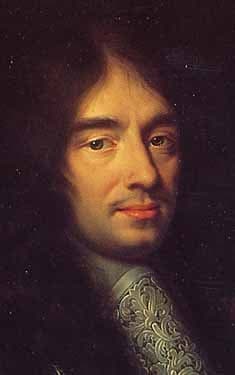
Charles Perrault was a 17th-century French writer and poet, best known for his collection of fairy tales, "Histoires ou contes du temps passé". This collection introduced classic stories like "Puss in Boots", "Cinderella", and "Sleeping Beauty" to a wider audience. Perrault's work established many of the narrative conventions still associated with these fairy tales today.







