BookBrief
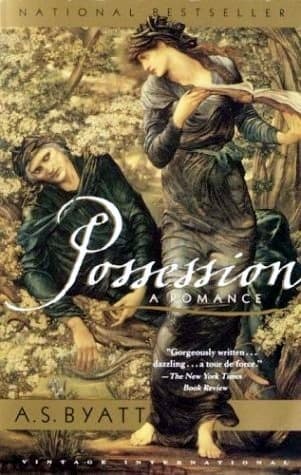
Possession cover
Archivist's Choice

Possession

A.S. Byatt (1990)

Genre

Romance

Reading Time

12 Minutes

Key Themes

See below

Track Your Reading

Sign in to track this book

Synopsis

Roland Michell, a young and struggling academic, discovers a hidden letter that suggests a scandalous secret affair between the revered Victorian poet, Randolph Henry Ash, and the lesser-known poet, Christabel LaMotte. This discovery upends the accepted literary history and propels Roland into a clandestine investigation. He partners with Maud Bailey, a brilliant but emotionally guarded scholar specializing in LaMotte, and together they embark on a literary detective hunt, piecing together fragments of letters, journals, and poems. Their research takes them across England and Brittany, through dusty archives and forgotten estates, as they race against rival academics eager to claim the discovery for themselves. As Roland and Maud delve deeper into the passionate and intellectual lives of Ash and LaMotte, they find themselves mirroring the very emotions and complexities of the Victorian poets' relationship, blurring the lines between their academic pursuit and their own burgeoning, unexpected romance.
Difficulty
Hard
Pacing
Moderate
Mood
Intellectual, romantic, mysterious, contemplative, historical

Plot Summary

The Discovery of a Secret

Roland Michell, an American research assistant in London, is working in the library of Victorian poet Randolph Henry Ash. He finds two unsent letters in a volume of Ash's collected works. These letters, in Ash's handwriting, are addressed to a woman who is not his wife, Ellen Ash. The letters hint at a passionate affair, a surprising detail given Ash's public image as a devoted husband. This discovery makes Roland curious, as it could redefine Ash's legacy and his own career. He decides to keep it to himself at first.

Meeting Maud Bailey

Roland's early research points to Christabel LaMotte, a lesser-known Victorian poet, as the recipient of Ash's letters. He realizes he needs to consult an expert on LaMotte's work. This leads him to Maud Bailey, a British academic specializing in LaMotte, who works at a university in Lincoln. Their first meeting shows both academic rivalry and a growing attraction. Maud is initially cautious, but Roland's persistence and hints of his discovery spark her interest. He reveals just enough to get her to collaborate, setting up their joint investigation.

The Joint Research Begins

Roland and Maud, despite their different academic styles and initial reservations, agree to work together to find the truth behind the letters. Their search takes them through archives, old houses, and libraries across England. They piece together information from letters, diaries, and historical accounts. Each new discovery helps them understand the intellectual and emotional connection between Ash and LaMotte. As they learn more about the Victorian poets, their own professional relationship changes, subtly reflecting the passions they are studying. Their academic pursuit mixes with their growing personal feelings.

The Trail to Yorkshire

The scholars' investigation leads them to Yorkshire. They find evidence that Ash and LaMotte spent time together in a secluded country estate, away from London. This period seems to have been important in their relationship, possibly where their affair became physical. Roland and Maud visit these places, trying to imagine the poets' experiences. The journey through the landscape and historical sites deepens their connection to Ash and LaMotte, blurring the lines between their research and their own relationship. The isolation of their shared quest also increases their intimacy.

Rival Scholars and the Race for Discovery

As Roland and Maud's research continues, rumors of a major find about Ash spread among academics. Other scholars, like Professor Mortimer Cropper, an Ash biographer, and James Blackadder, another Ash scholar, learn of the potential discovery. They start their own investigations, often encountering Roland and Maud, creating a competitive atmosphere. The race to uncover the full truth intensifies, with each party wanting the prestige such a revelation would bring. This academic rivalry adds urgency to Roland and Maud's quest, pushing them to work more secretly.

The Brittany Retreat

The research eventually leads Roland and Maud to Brittany, France, to a small village where Christabel LaMotte lived for a significant time. This region, rich in folklore, was the setting for some of LaMotte's poetry. They find more letters and diary entries that show LaMotte's emotional state during this period, hinting at a personal crisis and a secret. The journey to Brittany symbolizes a deeper look into LaMotte's inner world, revealing her spiritual and emotional complexities. The shared experience of exploring this landscape strengthens the bond between Roland and Maud, as they navigate both the historical clues and their own feelings.

The LaMotte Family Secret

In Brittany, Maud makes an important discovery about Christabel LaMotte's family history. She finds evidence of a hidden child, born to LaMotte out of wedlock. This is a shocking revelation. It confirms the affair with Ash and explains LaMotte's later reclusiveness and poetic themes. The secret child adds a tragic and human element to LaMotte's story, showing the societal pressures and personal sacrifices she made. This discovery is especially meaningful for Maud, as it connects with her own thoughts about love, independence, and the legacy of female artists.

The Confrontation at the Mausoleum

The academic rivalry ends in a dramatic confrontation at Randolph Henry Ash's mausoleum. All the competing scholars – Roland, Maud, Cropper, and Blackadder, along with Ash's descendants – gather at the site. Each believes a final clue about Ash's life and the affair is hidden there. The atmosphere is tense with anticipation. The scholars, driven by ambition and a desire for answers, search frantically through the mausoleum's contents. This scene shows the sometimes ruthless nature of academic pursuit and the pressure to be the first to find a significant historical truth.

The Buried Box

During the search at the mausoleum, a hidden lead-lined box is found beneath Ash's coffin. Finding this box is the peak of the scholarly quest, promising to reveal the secrets of the poets' affair. The box contains a lock of hair, a small doll, and, most importantly, intimate letters and a journal entry from Ash that describe the affair and the birth of their child. These documents prove the relationship and the child's existence, confirming Roland and Maud's suspicions and completing the story of Ash and LaMotte's forbidden love. The contents of the box rewrite literary history.

The Resolution of the Past and Present

With the box's contents revealed, the historical mystery of Randolph Henry Ash and Christabel LaMotte is solved. The truth of their affair and secret child changes their literary legacies. After this discovery, Roland and Maud process both the historical revelations and their own feelings. Their shared journey has brought them closer. The novel ends with Roland moving into Maud's apartment, a subtle step towards a romantic relationship, suggesting their own 'possession' of each other has begun, mirroring the love story they uncovered.

Principal Figures

Roland Michell

The Protagonist

Roland transforms from a directionless, insecure academic into a confident scholar and a man open to love, finding his intellectual and emotional footing through his collaboration with Maud.

Maud Bailey

The Protagonist

Maud evolves from a fiercely independent, emotionally guarded academic to a woman who allows herself to be vulnerable and open to a romantic relationship with Roland, mirroring LaMotte's own passionate life.

Randolph Henry Ash

The Supporting

Though a historical figure, Ash's 'arc' is revealed retrospectively as his true, passionate nature and secret life are uncovered, challenging his public image as a stoic, morally upright Victorian.

Christabel LaMotte

The Supporting

LaMotte's 'arc' is also revealed retrospectively, transforming her from a minor, reclusive poet into a woman of profound passion, artistic integrity, and tragic sacrifice as the details of her affair and hidden child are discovered.

Professor Mortimer Cropper

The Antagonist

Cropper remains largely static, his relentless pursuit of academic dominance leading to his ultimate frustration when Roland and Maud uncover the key truths before him.

James Blackadder

The Supporting

Blackadder's arc involves a gradual shift from skepticism to reluctant acceptance of the new truths about Ash, reflecting the changing landscape of literary scholarship.

Blanche Glover

The Supporting

Blanche's 'arc' is revealed through her diary, showing her journey from devoted companion to a woman consumed by jealousy and ultimately, a keeper of LaMotte's most painful secrets.

Val

The Supporting

Val's arc involves her gradual separation from Roland as he grows beyond their shared life, leading to the dissolution of their relationship.

Themes & Insights

The Nature of Love and Possession

The novel explores different kinds of love—romantic, intellectual, unrequited, and obsessive—across two time periods. It asks what it means to 'possess' another person, whether through love, understanding, or scholarly claim. The affair between Ash and LaMotte contrasts with the developing relationship between Roland and Maud, showing the lasting challenges of intimacy. It also examines the idea of 'possessing' a literary figure through research, and the ethics of uncovering their private lives.

We are not meant to be, as they say, possessed. But we are also not meant to be alone.

Narrator

Feminism and the Female Artist

The novel examines the restrictions on Victorian women, especially artists like Christabel LaMotte, who faced societal expectations, limited chances, and the results of unconventional choices. Maud Bailey, a modern feminist scholar, looks at LaMotte's life and work through a contemporary view, showing the ongoing fight for female independence and recognition. The theme explores how women's voices were suppressed in the past, and the continuing effort to re-evaluate their contributions to art.

She was a woman, and a poet. These two facts were, in her time, almost contradictory.

Narrator

The Interplay of Past and Present

Byatt combines two stories—the Victorian love affair and the modern investigation—showing how the past influences the present. Roland and Maud's lives are shaped by Ash and LaMotte. The novel suggests that historical figures continue to resonate, and that understanding the past helps us understand ourselves. Literary research becomes a bridge across time, connecting characters with those who came before.

They were not in the past, but the past was in them.

Narrator

Academic Pursuit and Obsession

The novel looks at academia, showing both its pursuit of knowledge and its darker side of competition, ego, and obsession. Characters like Cropper represent the possessive and sometimes unethical aspects of scholarly ambition, while Roland and Maud show a more collaborative and ethical approach. The theme questions the ethics of uncovering private lives, the ownership of intellectual property, and the impact of discoveries on reputations. It also highlights the sacrifices and rewards of a life dedicated to research.

The true scholar, like the true lover, seeks not to possess, but to understand.

Roland Michell

Myth, Fairy Tale, and Symbolism

Mythology and fairy tales are woven into the novel, especially through Christabel LaMotte's poetry and the symbolic places Roland and Maud explore. These old stories help explain the timeless human experiences of love, loss, betrayal, and transformation. Allusions to figures like Melusina, Persephone, and other myths enrich the characters' inner lives and hint at plot developments. The symbolic meaning adds depth to the historical and academic narrative.

There are more things in heaven and earth, Horatio, than are dreamt of in your philosophy.

Randolph Henry Ash (quoting Hamlet)

Plot Devices & Literary Techniques

Epistolary Format

Letters and journals reveal the past.

The novel extensively uses letters, journal entries, and poems written by the Victorian poets, Randolph Henry Ash and Christabel LaMotte. These primary source documents serve as the central clues for Roland and Maud's investigation, allowing the reader to directly access the poets' voices, thoughts, and emotions. This device not only drives the plot forward but also creates a vivid sense of immediacy and authenticity for the historical narrative, immersing the reader in the Victorian era and the intimate details of the affair. It also highlights the interpretative nature of historical research.

Parallel Narratives

Two love stories unfold simultaneously.

The novel employs a dual narrative structure, intertwining the historical love story of Ash and LaMotte with the contemporary, developing romance between Roland and Maud. These parallel narratives create a rich tapestry of comparison and contrast, allowing Byatt to explore recurring themes of love, intellectual connection, and societal constraints across different eras. The modern scholars' journey to uncover the past often mirrors the emotional experiences of the Victorian poets, blurring the lines between their research subjects and their own lives, and deepening the emotional resonance of both stories.

Intertextuality

Literary references enrich the narrative.

Byatt's novel is rich with intertextual references, drawing upon a vast array of Victorian literature, mythology, and folklore. Quotes, allusions, and stylistic echoes of poets like Tennyson, Browning, and Christina Rossetti, as well as myths like Melusina and Persephone, are woven throughout the text. This device not only showcases the characters' intellectual worlds but also enriches the thematic depth of the novel, providing layers of meaning and commentary on the nature of art, love, and storytelling. It invites the reader to engage on a deeper literary level, reflecting the academic nature of the plot itself.

The MacGuffin (The Buried Box)

The ultimate hidden truth.

The 'buried box' discovered beneath Ash's coffin functions as a classic MacGuffin, a plot device that drives the characters' actions and the story's momentum. While its contents (letters, a lock of hair, a journal) are ultimately revealed and hold significant narrative weight, its primary purpose throughout much of the novel is to provide a concrete, tangible goal for the competing scholars. The anticipation of what the box might contain fuels the academic rivalry and propels Roland and Maud's journey, bringing all the disparate threads of the investigation to a dramatic climax.

Critical analysis

Notable Quotes

Quiz

Test Your Knowledge

Ready to see how well you understood this book? Take our interactive quiz with 10 questions.

10
Questions
~5
Minutes
?
Best Score

Key Questions (FAQ)

Possession is a novel that intertwines the stories of two pairs of lovers separated by time. It follows two contemporary scholars researching the lives of two Victorian poets, uncovering their passionate and complex relationship through letters and journals.

About the author

A.S. Byatt

A.S. Byatt is a Booker Prize-winning author celebrated for her intricate and intellectually rich novels. Her most acclaimed works include 'Possession,' a complex exploration of literary history and romance, and 'Ragnarok,' a vivid retelling of Norse mythology. Byatt's writing is characterized by its deep engagement with literature, history, and the natural world, earning her a reputation as one of contemporary Britain's most significant novelists.