“The war took everything from me. My home, my family… but it couldn’t take my love for you.”
— Eliza reflects on her enduring love for Jim amidst the devastation of war.

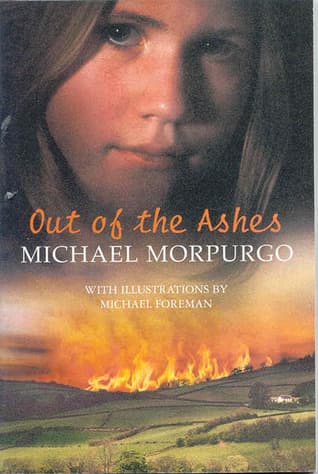
Michael Morpurgo (2002)
Genre
Romance
Reading Time
128 min
Key Themes
See below
Sign in to track this book
A young girl's diary records the agonizing wait between hope and loss as an epidemic threatens her family's farm and every animal she loves.
Becky Morley, a young girl on a Devon farm, begins a new diary on New Year's Day. She introduces her family: her mum, dad, and younger brother, Stephen. She describes daily routines and their animals, including pedigree dairy cows, pigs, sheep, and her special hand-reared lamb, Little Josh. The farm is her world, full of nature's sounds and sights. She expresses deep love for animals and farm life, noting the security and tradition of their existence. Her first entries show the simple joys and challenges of farm life, setting a peaceful scene before the crisis.
The first signs of trouble appear as Becky hears news reports about foot-and-mouth disease breaking out in northern England. At first, it seems a distant problem, far from their peaceful Devon farm. Her parents discuss it with some worry, but it is not yet an immediate threat. Becky, through her diary, records the growing unease as the disease spreads, moving from a distant headline to a local topic. Her early entries reflect a naive hope that it will not reach them, a common feeling among farmers initially unaffected.
The foot-and-mouth disease continues its spread south, and the news becomes more alarming daily. The Morley family and their farming community watch in horror as the disease crosses county lines, eventually reaching nearby areas. Becky records the increased tension in her parents' talks, the constant radio and TV updates, and the visible worry on their faces. The once distant threat now feels uncomfortably close, bringing fear and uncertainty. Daily farm routines are overshadowed by the looming disease.
The unthinkable happens: foot-and-mouth disease is confirmed in Devon. The news shocks the community. Becky describes the terrible sight of military and veterinary teams arriving at nearby farms, creating a feeling of dread. The sound of gunshots, signaling the culling of infected animals, echoes across the fields, a horrifying reality that shatters the rural peace. Farmers must keep their animals indoors, and movement restrictions are put in place. Becky's diary entries become sadder, reflecting the deep sorrow and helplessness everyone feels as their way of life is systematically destroyed. The close-knit farming community is gripped by fear and unity.
The disease strikes a farm just a few fields from the Morley's. Becky sees the heartbreaking scene as all the animals—sheep, cattle, pigs—on their neighbor's farm are culled and their bodies burned. Smoke from the fires hangs heavy in the air, a constant reminder of the tragedy. This event deeply affects Becky, making the abstract threat of the disease a concrete, horrifying reality. She describes the silence that falls on the neighboring farm, the absence of animal sounds, and the deep grief of the affected family. The experience increases her fear for her own animals, especially Little Josh, her beloved lamb.
The moment the Morley family has feared arrives: a team of veterinarians comes to inspect their farm. Becky vividly recounts the tension during the inspection, as her parents nervously watch the vets examine their cattle, sheep, and pigs. Every cough, every unusual movement from an animal, feels like a potential death sentence. The vets move systematically, their faces grim, searching for any sign of infection. Becky's heart pounds as she waits for their verdict, hoping their animals are healthy. The inspection is a difficult experience, bringing the family to the edge of despair and showing how fragile their situation is.
To the Morley family's great relief, the veterinarians declare their farm clear of foot-and-mouth disease. Becky describes the wave of gratitude and exhaustion that washes over her parents. It is a temporary break, a fragile win in a battle they are still fighting. However, the joy is lessened by knowing the disease is still widespread in the area, and another inspection could happen soon. The family remains alert, constantly checking their animals for any symptoms. This moment of grace allows them to breathe, but the shadow of the disease continues to loom, making every day a test of their strength.
Driven by a strong fear of losing Little Josh, Becky decides to take desperate action. She begins to hide her beloved hand-reared lamb, moving him to a secret spot in the woods near their farm. She brings him food and water daily, risking discovery but unable to bear the thought of him being culled. This act of defiance comes from pure love and a desperate need to protect the animal that symbolizes her innocence and connection to the farm. Her secret trips to care for Josh become a main part of her days, a hidden burden she carries alone, showing her deep emotional bond with the lamb.
Keeping Little Josh hidden puts a significant emotional strain on Becky. She feels guilty about deceiving her parents, who are already under great stress. Her diary entries show her inner conflict: wanting to be honest versus needing to protect her lamb. She constantly worries about Josh's safety and the chance of her secret being found out. This time is marked by increased anxiety and isolation for Becky, as she handles her personal crisis amid the larger farm tragedy. Her secret becomes a heavy weight, but her love for Josh outweighs her fear of punishment or discovery.
Slowly, the foot-and-mouth outbreak begins to lessen. The number of new cases drops, and the government announces a gradual lifting of restrictions. The sound of culling teams becomes less frequent, and the smoke from fires disappears. Becky records the cautious optimism that begins to return to her family's life. While the immediate threat lessens, the memory of the devastation remains. The landscape is scarred, and the farming community is changed forever. This marks the start of a long recovery, but also a chance for the Morley family to begin rebuilding their lives, though with a deep sense of loss and resilience.
With the immediate danger passed, Becky finally brings Little Josh back to the farm. Her parents, though surprised and perhaps a little annoyed by her secret, are ultimately relieved and understanding. The reunion with Josh symbolizes a small victory, a return to normalcy, and a sign of Becky's strong love. The family begins the slow process of healing and recovery, thinking about the difficult experience. They acknowledge the great losses suffered by their community but also find strength in their survival and their lasting connection to their land and animals. Becky's diary ends with a sense of hope, marked by the lasting effects of the crisis.
The Protagonist
Becky transforms from an innocent farm girl into a mature, empathetic young woman who understands the fragility of life and the importance of resilience.
The Supporting
She endures immense stress and fear but remains a steadfast pillar of strength for her family, demonstrating resilience and care.
The Supporting
He grapples with the potential loss of his life's work and the emotional toll, ultimately showing resilience in the face of adversity.
The Supporting
He experiences the crisis as a young child, absorbing the fear and sadness but ultimately finding comfort in family resilience.
The Supporting
Josh remains a constant, innocent presence, serving as a catalyst for Becky's actions and a symbol of enduring life.
The Mentioned
They serve as agents of the government's containment strategy, bringing both fear and, eventually, a sense of relief when the crisis subsides.
The Mentioned
They experience the full devastation of the disease, serving as a poignant example of the crisis's impact on individual lives and livelihoods.
The foot-and-mouth disease shows how quickly an established way of life, built over generations, can be broken. The Morley family's secure world is turned upside down by an invisible enemy, threatening not only their animals but also their very existence as farmers. The constant fear of inspection, the sound of culling teams, and the sight of burning fires (as seen with neighboring farms) show how uncertain their situation is. This theme highlights the vulnerability of both animal life and human livelihoods in the face of epidemics.
“One day it was all normal, the next it was like a black cloud had come over everything, and it just kept getting darker.”
At its core, the story explores love—the deep, unconditional love Becky has for her animals, especially Little Josh, and the love her family shares for their farm and each other. This love makes the threat of loss incredibly painful. The culling of animals, both on their own farm and nearby, represents deep grief, not just for the animals but for the dreams and effort put into them. Becky's desperate act of hiding Little Josh is the ultimate expression of this love, going against logic to protect her beloved lamb.
“I couldn't just stand by and let them take him. He was my lamb, my Little Josh.”
Despite the great despair and devastation, the story emphasizes the lasting human spirit of resilience and the hope that remains. The Morley family, though deeply affected, continues to care for their remaining animals, follows strict biosecurity, and supports their community. Becky's act of hiding Little Josh, while risky, shows her hope that some life can be saved. Even after the crisis, the family begins the slow process of rebuilding, showing their strong will to continue farming. Little Josh's survival symbolizes this hope for a new start.
“We'd lost so much, but we still had each other, and we still had the farm. We'd start again.”
The book clearly shows the beauty and cycles of farm life, demonstrating humanity's deep connection to nature. However, it also reveals how quickly nature, through disease, can show its destructive power, reminding humans of their secondary role. Farmers, despite their best efforts, are ultimately at the mercy of the outbreak. The story subtly questions humanity's control over nature and highlights the delicate balance where a single virus can bring an entire industry and way of life to its knees. Becky's perspective as a child deeply connected to this natural world makes this theme especially touching.
“The fields looked the same, but they weren't. Everything had changed, as if the very earth was holding its breath.”
The story is told entirely through Becky's diary entries.
The use of first-person diary narration allows the reader to experience the Foot and Mouth crisis directly through the eyes and emotions of a young girl. This intimate perspective provides immediate access to Becky's fears, hopes, and observations, making the unfolding tragedy deeply personal and relatable. It also emphasizes the chronological progression of events, from initial reports to the full devastation and eventual recovery. The diary format allows for unfiltered emotional responses and reflections, enhancing the sense of authenticity and drawing the reader into Becky's internal world.
Becky's hand-reared lamb represents innocence, hope, and the essence of farm life.
Little Josh, Becky's special lamb, serves as a powerful symbol throughout the narrative. Initially, he embodies the innocence and simple joys of farm life, representing Becky's deep connection to her animals. As the Foot and Mouth crisis intensifies, Josh becomes a symbol of hope and the struggle for survival. Becky's desperate efforts to hide and protect him represent the fight to preserve what is pure and valuable amidst widespread destruction. His eventual survival symbolizes the possibility of recovery and the enduring spirit of life, offering a glimmer of light in the darkness.
The gradual spread of the disease creates mounting tension and uncertainty.
The plot skillfully builds suspense through the rising action of the Foot and Mouth disease's spread. Beginning with distant news reports, the threat gradually encroaches upon the Morley farm, moving from neighboring counties to adjacent fields, and finally to their own doorstep. This slow, inexorable approach creates a palpable sense of dread and uncertainty for both the characters and the reader. Each new development, from confirmed cases nearby to the arrival of vets, heightens the tension, keeping the reader constantly on edge about the fate of the Morley's animals and their farm.
“The war took everything from me. My home, my family… but it couldn’t take my love for you.”
— Eliza reflects on her enduring love for Jim amidst the devastation of war.
“Even in the darkest of times, a flicker of hope can ignite a new beginning.”
— A general observation on resilience and optimism after suffering.
“A promise made under a willow tree, that’s a promise meant to last a lifetime.”
— Eliza recalls a significant moment and promise made with Jim.
“We built our dreams on the land, and though the land may be scarred, our dreams remain.”
— Jim expresses his determination to rebuild their life despite the physical destruction.
“Sometimes, the only way to move forward is to look back, just long enough to understand what you’re leaving behind.”
— A moment of contemplation about the past and future.
“The scent of honeysuckle always brings you back to me, even when you’re miles away.”
— Eliza's sensory memory of Jim through a specific scent.
“Our love wasn't a fragile thing, easily broken. It was forged in fire, strong and true.”
— A powerful declaration about the strength and endurance of their love.
“The silence of the empty fields spoke louder than any words could.”
— Eliza observes the desolate landscape after the war.
“He saw not the ruins, but the potential for what could be again, and that’s why I loved him.”
— Eliza's admiration for Jim's optimistic vision.
“To lose everything and still find the courage to love again, that is true bravery.”
— A reflection on the profound courage required to heal and love after loss.
“The old oak stood witness to our beginning, and it will stand witness to our rebirth.”
— A symbolic connection to a significant natural landmark.
“We were two halves of a whole, and no war could ever truly separate us.”
— A profound statement about their deep connection and unity.
“A garden replanted is a heart rekindled.”
— A metaphor for the process of rebuilding and finding joy again.
“The sound of your voice was the only music I needed to hear.”
— Eliza's simple yet profound appreciation for Jim's presence.
Ready to see how well you understood this book? Take our interactive quiz with 10 questions.

Biography coming soon.