“Whatever happens tomorrow, we had today; and I'll always remember it.”
— Emma says this to Dexter, reflecting on their relationship's fleeting moments.

Sign in to track this book
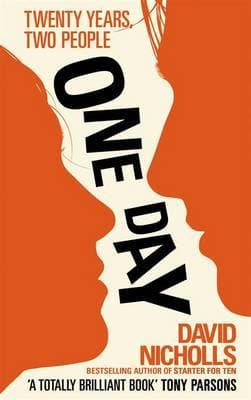
A twenty-year story capturing the evolving, on-again-off-again friendship and love between two individuals, always reconnecting on the same day, July 15th.
On July 15th, 1988, Emma Morley and Dexter Mayhew meet for the first time after their graduation ball at the University of Edinburgh. Despite an initial awkwardness, they spend the day together, talking about their futures and their differing aspirations. Emma, intellectual and idealistic, dreams of making a difference, while Dexter, charming and privileged, anticipates a life of travel and adventure. They share a platonic, yet deeply connected, day before parting ways, agreeing to keep in touch. The exact nature of their relationship remains undefined, a mix of friendship and unspoken attraction.
Over the next few years, their lives diverge. By July 15th, 1989, Emma is living in a grim London flat, working in a terrible Tex-Mex restaurant, disillusioned with her post-university reality. Dexter, however, begins a glamorous career as a television presenter, traveling the world and enjoying a hedonistic lifestyle of parties, drugs, and casual relationships. Their annual check-ins on July 15th show this growing disparity: Emma struggles with self-doubt and unfulfilling jobs, while Dexter's career takes off, making him a household name, though he becomes increasingly arrogant.
In 1991, Emma and Dexter take a holiday together in Greece. The trip seems a chance to reconnect, but it quickly exposes friction between them. Dexter's self-centered behavior, his flirtations with other women, and his casual dismissal of Emma's feelings create tension. Emma, still fond of him but frustrated by his immaturity and lack of genuine interest in her struggles, confronts him about his lifestyle. The holiday ends with unresolved conflict, showing the difficulties of maintaining their friendship amidst their diverging paths and unspoken desires.
As the 1990s progress, their fortunes begin to reverse. Emma, after enduring several unsatisfying jobs, finds her calling as a teacher, finding fulfillment and purpose. She also enters a relationship with Ian, a well-meaning but dull comedian. Meanwhile, Dexter's television career declines due to his unprofessional behavior, drug use, and an aging appearance. By the late 1990s, he is presenting late-night infomercials, a shadow of his former glamorous self. Their July 15th conversations now show Emma's growing confidence and Dexter's increasing vulnerability.
In 1999, Dexter marries Sylvie Lemerle, a woman from a similar privileged background. Emma is quietly disappointed. Emma attends the wedding, observing the union with a mix of affection for Dexter and a lingering sense of what might have been. After the wedding, Emma writes Dexter a personal letter, sharing her feelings for him, her observations about his life, and her frustrations with their inability to truly connect. She never sends the letter, keeping it as a private reminder of her enduring love and unfulfilled hopes for their relationship. Dexter and Sylvie soon have a daughter, Jasmine.
Years later, after Dexter's marriage to Sylvie collapses due to her infidelity with his best friend, Calum, and his career hits rock bottom, he finds himself adrift. Emma, now an author of young adult fiction, has ended her relationship with Ian. On July 15th, 2004, they meet again. Dexter, humbled and matured by his experiences, confesses his true feelings for Emma, and she reciprocates. They share a passionate kiss, finally acknowledging the deep love and connection that has underpinned their friendship for over two decades. They begin a romantic relationship, moving in together and planning a future.
Emma and Dexter marry in 2005. Their life together is filled with love, laughter, and domestic contentment. Dexter, having found stability with Emma, opens a successful deli. Their main challenge becomes their struggle to conceive a child. They undergo fertility treatments, facing the emotional toll of repeated disappointments. Despite these setbacks, their bond deepens, and they support each other through the process, showing a maturity and commitment that had been absent in their earlier lives. Their July 15th entries show a couple deeply in love and united in their desire for a family.
On July 15th, 2007, after a lovely day with Dexter, Emma is killed in a cycling accident while riding home. Dexter is devastated by her sudden death, plunged into deep grief. The loss of Emma, the love of his life and his constant companion for nearly two decades, shatters his world. The story shifts abruptly, showing the fragility of life and the impact of loss, leaving Dexter to grapple with a future he never imagined without her.
In the years following Emma's death, Dexter struggles with his grief. He isolates himself, drinks heavily, and neglects his deli. His friends and family, including Sylvie and Ian, try to support him. On subsequent July 15ths, he often visits places that held significance for him and Emma, reliving memories and wrestling with his sadness. He slowly begins to process his loss, finding solace in his daughter Jasmine and the enduring memories of Emma. He realizes he must continue living for Emma and for those who still depend on him.
By July 15th, 2011, Dexter has made progress in rebuilding his life. He has stopped drinking, is a more present father to Jasmine, and has reconciled with his parents. He visits Edinburgh with Jasmine, showing her the places where he and Emma first met and spent their graduation day. He reflects on their long, winding journey together, acknowledging Emma's impact on his life. The novel concludes with a flashback to their first morning after graduation in 1988, emphasizing the enduring power of their connection and the story of their 'one day'.
The Protagonist
Emma evolves from an uncertain graduate to a confident, successful woman who finds her voice and ultimately her true love with Dexter, only for her life to be tragically cut short.
The Protagonist
Dexter transforms from a reckless and self-absorbed young man into a responsible, loving husband and father, profoundly shaped by his life with Emma and her eventual loss.
The Supporting
Sylvie moves from being Dexter's glamorous wife to his ex-wife and co-parent, showing a capacity for friendship and support after their divorce.
The Supporting
Ian serves as a stable but ultimately incompatible partner for Emma, eventually becoming a supportive friend to Dexter after Emma's death.
The Supporting
Jasmine grows from a young child to a pre-teen, serving as a catalyst for Dexter's emotional recovery and a symbol of his continuing connection to life.
The Supporting
Calum transitions from a loyal friend to a betrayer, symbolizing the consequences of Dexter's irresponsible lifestyle and the fragility of some friendships.
The Supporting
Jean's character arc is defined by her declining health, which serves as a catalyst for Dexter's eventual maturation and a source of quiet grief for him.
The Supporting
Stephen's arc is largely static as a concerned father, but his relationship with Dexter improves as Dexter matures and takes on more responsibility.
The novel's structure, returning to July 15th each year, explores the theme of time. It shows how lives diverge and converge, how people change and remain the same, and how moments accumulate to form a life. We see Emma and Dexter age, mature, and face life's challenges, showing the relentless forward march of time and its impact on their individual journeys and their relationship. The 'one day' is a constant marker against which their evolution is measured.
“Live each day as if it's your last, that's what I say. But then again, if it were, you'd be pretty knackered by the end of it.”
A central theme is the long-standing, often unacknowledged, love between Emma and Dexter. For much of the book, their feelings remain unspoken or are acted upon at the wrong times, leading to years of longing and missed chances. Their individual relationships with others show the depth of their connection to each other, which they only fully embrace after overcoming obstacles and personal growth. The tragic ending shows the preciousness of finally finding that love.
“You're a pop song, Dexter. You're a catchy, shallow pop song.”
The differing social backgrounds of Emma (working-class, intellectual) and Dexter (privileged, charming) shape their early lives and career paths. Emma struggles with low-paying jobs and finds fulfillment through hard work and education. Dexter initially coasts on his charm and privilege in a glamorous but unfulfilling career. The novel comments on how class influences opportunities, expectations, and the pace of personal growth, with Emma's groundedness contrasting with Dexter's initial recklessness.
“I'm not a snob, I'm just… discerning.”
The book explores the blurred lines between deep friendship and romantic love. Emma and Dexter's relationship begins as a close friendship, evolving over two decades. The story questions whether true love can exist without being explicitly romantic, and how a strong friendship can be both a foundation for and an obstacle to a romantic relationship. Their journey shows the complexities of platonic intimacy and when it must transition or break under the weight of unspoken desire.
“She was his best friend. He knew her better than anyone. And she knew him.”
Emma and Dexter's individual quests for happiness and fulfillment are central. Emma finds it through meaningful work and intellectual pursuits, ultimately finding love and stability. Dexter initially seeks it through fleeting fame, hedonism, and external validation, only to find it hollow. He ultimately finds contentment through maturity, responsibility, and the deep, abiding love he shares with Emma. The novel suggests that genuine happiness comes from connection, purpose, and self-acceptance, rather than superficial success.
“It was a good life. Not a perfect life, but a good life.”
Narrative told through snapshots on a single recurring date
The novel's most prominent device is its unique structure, presenting a snapshot of Emma and Dexter's lives on the same day, July 15th, every year from 1988 to 2007, with a final flashback to 1988. This allows the reader to observe their gradual evolution, the changes in their relationship, and the impact of time and life events without needing to detail every intervening moment. It creates a sense of anticipation for each annual update and powerfully underscores the passage of time and the slow burn of their connection.
A final jump in time to contextualize the beginning
While the core narrative progresses chronologically on July 15th, the novel concludes with a significant flashback to July 15th, 1988, immediately following Emma's death. This device provides a poignant circularity, returning to the very beginning of their story after its tragic end. It emphasizes the enduring significance of their initial meeting and the profound, long-lasting impact they had on each other's lives, offering a sense of closure and reflection on the entire journey.
Implied hints of Emma's eventual fate
Nicholls employs subtle foreshadowing throughout the narrative, particularly concerning Emma's eventual death. References to the fragility of life, the unexpected turns of fate, and the idea of not taking moments for granted can be interpreted as building toward the tragic climax. For example, Emma's often-serious nature and her deep appreciation for life's simple pleasures, contrasted with Dexter's earlier recklessness, subtly hint at the preciousness of her existence and the devastating impact her loss would have.
The reader's knowledge of Emma's true feelings before Dexter
The unsent letter Emma writes to Dexter after his wedding to Sylvie creates a powerful instance of dramatic irony. The reader is privy to Emma's deep, unconfessed love and her astute observations about Dexter's character and choices, while Dexter remains unaware of the full extent of her feelings for years. This device heightens the emotional tension and underscores the 'missed opportunities' theme, making their eventual union all the more satisfying and their subsequent tragedy even more poignant.
“Whatever happens tomorrow, we had today; and I'll always remember it.”
— Emma says this to Dexter, reflecting on their relationship's fleeting moments.
“I love you, Dexter, so much. I just don't like you anymore.”
— Emma expresses her conflicted feelings after years of friendship and unrequited love.
“You're supposed to be the leading man in your own life, for God's sake!”
— Emma criticizes Dexter for his passive approach to life and career.
“I thought I'd feel different. I thought it would all make sense.”
— Dexter reflects on his life after achieving fame, feeling unfulfilled.
“We're just friends, aren't we?”
— A recurring question between Emma and Dexter, highlighting their ambiguous relationship.
“Life is not a dress rehearsal.”
— Emma advises Dexter to take control of his life instead of wasting opportunities.
“I'm not lonely. I'm alone. There's a difference.”
— Emma distinguishes between solitude and loneliness in her independent life.
“You look gorgeous. You look happy.”
— Dexter compliments Emma when they reunite after years apart.
“I've been thinking about you. A lot.”
— Dexter confesses his lingering feelings for Emma during a vulnerable moment.
“It's just that I've never really met anyone else like you.”
— Emma tells Dexter why their connection is unique and irreplaceable.
“We're not the same people we were back then.”
— Reflecting on how time and experiences have changed them both.
“Sometimes it's better to leave things unfinished.”
— A philosophical moment about relationships and life's uncertainties.
“I want to talk about everything with you.”
— Expressing the depth of emotional intimacy and companionship.
“You make me happier than I ever thought I could be.”
— A heartfelt declaration of love and gratitude.
Ready to see how well you understood this book? Take our interactive quiz with 10 questions.

David Nicholls is a celebrated British author and screenwriter, best known for his critically acclaimed novel "One Day." The book, a poignant exploration of love and friendship over two decades, was adapted into a successful film and television series. Nicholls's other notable works include "Starter for Ten" and "Us," often characterized by their sharp wit, emotional depth, and relatable characters.