“There are no happy endings. Endings are the saddest part, So give me a happy middle and a very happy start.”
— January Wayne's cynical view on relationships and life.

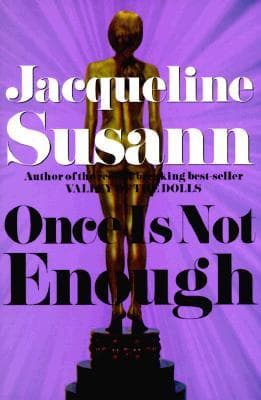
Jacqueline Susann (1973)
Genre
Romance
Reading Time
10-12 hours
Key Themes
See below
Sign in to track this book
In the pill-popping, beanbag-strewn world of 1970s entertainment, January Wayne navigates a glamorous yet morally ambiguous journey through New York and Los Angeles, desperately seeking a lover who can fill the void left by her charismatic, movie-producer father.
January Wayne, a beautiful and naive young woman, returns to Los Angeles after spending several years in a Swiss boarding school. Her father, Mike Wayne, is a powerful and charismatic Hollywood movie producer, and January is deeply devoted to him. She idolizes him, viewing him as the height of strength and success. Mike, while doting, is often busy with his career and numerous affairs. January quickly becomes immersed in the glamorous, yet superficial, world of Hollywood, attending parties and meeting various influential figures. Her return is the beginning of her search for love and belonging, heavily influenced by her complex relationship with her father.
January, longing for a deeper connection, begins an affair with David Milford, a sophisticated and much older playwright. David, while initially charming, is married and emotionally unavailable. January is drawn to his maturity and intellect, seeing in him qualities reminiscent of her father, particularly his worldly experience and commanding presence. She hopes to find stability and love with him, but the relationship is full of secrecy and proves unfulfilling. David treats her more as a muse or a conquest than a partner, never fully committing to her or leaving his wife. This affair leaves January feeling more isolated and heartbroken.
After the painful end of her affair with David Milford, January decides to move to New York City, hoping to escape her past and create a new identity. She quickly falls into a new social circle, populated by the city's media elite. Here, she meets Tom Colt, a dynamic and influential magazine editor known for his ruthless ambition and playboy lifestyle. Tom is drawn to January's beauty and vulnerability, and they begin a passionate, turbulent relationship. January is initially captivated by Tom's energy and the excitement of his world, believing she might finally find the love and acceptance she craves.
As their relationship deepens, January discovers Tom Colt's heavy reliance on amphetamines, referred to as 'vitamins,' which fuel his relentless work ethic and fast-paced lifestyle. She sees the destructive impact of his addiction, as his moods swing wildly and his behavior becomes increasingly erratic and abusive. Tom's inability to maintain emotional stability, coupled with his self-destructive tendencies, takes a heavy toll on January. She tries to help him, but her efforts are met with resistance and further emotional pain, leaving her feeling helpless and trapped in a toxic cycle. This period marks a significant decline in January's mental and emotional well-being.
To escape the turmoil with Tom Colt, January becomes involved with Kirk Benson, a handsome and aspiring actor. Kirk is kind and genuinely cares for January, offering her a brief break from the emotional chaos she has experienced. However, January's deep-seated issues, particularly her unresolved feelings for her father and her constant search for a similar dominant male figure, continue to bother her. She struggles to fully commit to Kirk, constantly comparing him to the powerful men in her past. Their relationship, while initially promising, ultimately suffers from January's inability to break free from her emotional patterns.
The cumulative effect of her failed relationships, emotional abuse, and the constant pressure of her superficial world begins to take a severe toll on January. She starts to self-medicate, relying heavily on tranquilizers and alcohol to cope with her escalating anxiety, depression, and feelings of emptiness. Her drug use is a desperate attempt to numb the pain and escape the reality of her increasingly bleak existence. January's once vibrant spirit diminishes, replaced by a growing sense of despair and self-destruction. Her physical and mental health deteriorates rapidly, alarming those around her, though few truly understand the depth of her suffering.
News of January's deteriorating condition reaches Mike Wayne in Los Angeles. Despite his often-distant demeanor, Mike genuinely loves his daughter. Alarmed by her drug abuse and overall decline, he decides to intervene. He travels to New York and, with a mix of paternal concern and his usual authoritative manner, takes January back to Los Angeles. He hopes that by removing her from the toxic environment of New York and bringing her back under his direct care, she will recover. This reunion, however, reignites the complex and ultimately destructive dynamic between father and daughter.
As January struggles with her recovery in Los Angeles, the disturbing truth about her relationship with Mike Wayne is gradually revealed. It is clear that their bond has always been incestuous, a dark secret that has shaped January's entire life and her subsequent relationships. Her constant search for men who resemble her father, her inability to form healthy attachments, and her deep emotional damage are all rooted in this hidden trauma. The revelation exposes the psychological scars and the deep betrayal that have defined January's existence, painting her previous romantic entanglements in a new, tragic light.
The full realization of the incestuous relationship with her father, coupled with years of emotional neglect, failed relationships, and drug abuse, pushes January to the brink. She experiences a profound mental and emotional breakdown, unable to cope with the weight of her trauma and the shattered illusion of her perfect father. Her grip on reality loosens, and she descends into a state of deep despair and psychosis. Her breakdown is a culmination of all the pain and unresolved issues she has carried, manifesting in a complete collapse of her mental faculties, leaving her utterly vulnerable and broken.
Following her severe breakdown, January Wayne is institutionalized in a mental hospital, her once-bright future now a tragic uncertainty. Mike Wayne is forced to confront the devastating consequences of his actions and the profound damage he inflicted upon his daughter. He is consumed by guilt and remorse, realizing too late the extent of his betrayal and the irreversible harm caused by their incestuous relationship. The novel ends with January in a catatonic state, a permanent victim of her past, and Mike left to grapple with the crushing weight of his responsibility, highlighting the devastating and far-reaching impact of their secret.
The Protagonist
January descends from an innocent, hopeful young woman into a drug-addicted, emotionally shattered individual, culminating in a complete mental breakdown due to her unresolved trauma.
The Antagonist/Supporting
Mike initially appears as a doting father but is revealed to be the source of January's trauma, ending with him consumed by guilt over her breakdown.
The Supporting
David remains largely static, serving as a catalyst for January's exploration of her desires and her pattern of seeking father figures.
The Supporting
Tom's character remains consistent as a driven, addicted, and volatile force, contributing significantly to January's decline.
The Supporting
Kirk serves as a brief, positive influence, but ultimately cannot save January from her self-destructive path.
The Mentioned
Deidre's character is static, serving primarily to illustrate Mike's marital situation and the superficiality of their social circle.
The Mentioned
Linda remains a supporting character, reflecting the environment January inhabits.
The novel's central theme is the devastating consequences of the incestuous relationship between January and her father, Mike Wayne. This hidden trauma warps January's perception of love and intimacy, leading her to seek out powerful, often unavailable men who mirror her father's dominance. Her subsequent failed relationships, drug abuse, and mental breakdown are direct results of this foundational betrayal. The theme shows how unresolved childhood trauma can completely derail an individual's life, preventing healthy emotional development and leading to self-destruction, as seen in January's inability to form lasting, healthy bonds and her eventual catatonia.
“Once is not enough for a real love. Once is not enough for a real life.”
Susann portrays the glamorous yet hollow world of Hollywood and New York's media elite. Characters are driven by ambition, status, and pleasure, often at the expense of genuine human connection. The constant pursuit of fame, wealth, and fleeting relationships leaves many, including January, feeling empty and unfulfilled. The prevalence of drug use ('vitamins') to sustain this relentless lifestyle shows the industry's artificiality and its detrimental impact on mental and physical health. This theme is evident in the casual affairs, the transactional nature of relationships, and the lack of authentic emotional support January receives from those around her, ultimately contributing to her isolation and despair.
“Everyone was on a vitamin kick. It was the only way to keep up, to stay on top.”
January's entire journey is a desperate search for identity and a place where she truly belongs. Having been shuttled off to boarding school and living under the shadow of her powerful father, she lacks a strong sense of self. She attempts to define herself through her relationships, constantly seeking validation and a sense of purpose from the men in her life. This search is complicated by her unresolved trauma, which prevents her from developing a true, independent identity. Her move from Los Angeles to New York represents an attempt to redefine herself, but she ultimately falls into similar destructive patterns, demonstrating how deeply her past has shaped her inability to find true belonging or self-acceptance.
“She wanted to be loved, to be needed, to be someone.”
Addiction, particularly to amphetamines ('vitamins') and tranquilizers, is a pervasive theme, highlighting the characters' attempts to cope with the pressures and emptiness of their lives. Tom Colt's reliance on 'vitamins' to maintain his demanding career and January's subsequent descent into tranquilizer and alcohol abuse illustrate how drugs are used to numb emotional pain and maintain a relentless pace. This theme shows the self-destructive tendencies born from a lack of genuine connection and emotional support. January's addiction is a direct consequence of her trauma and failed relationships, serving as a tragic coping mechanism that ultimately accelerates her mental and physical decline.
“She took another pill. Just one more. To take the edge off. To make the world stop spinning.”
Hints and clues about January's tragic fate and the nature of her relationship with her father.
Foreshadowing is used throughout the novel to hint at the underlying darkness in January's life. Her intense, almost obsessive devotion to her father, Mike, and her repeated pursuit of older, powerful, and often unavailable men who resemble him, subtly suggest a deeper, unhealthy dynamic. Early descriptions of January's fragility and emotional dependency, coupled with the superficiality and drug use prevalent in her social circles, allude to her eventual breakdown. These early clues prepare the reader for the tragic revelations and January's ultimate demise, making her descent feel inevitable rather than sudden.
The reader's growing awareness of the true nature of January's trauma before she fully comprehends it.
Dramatic irony is a key device, particularly regarding the incestuous relationship between January and Mike Wayne. The reader gradually picks up on subtle cues and psychological implications that suggest the abusive nature of their bond, long before January herself explicitly acknowledges or fully understands it. This creates a sense of dread and pity for January, as the reader is aware of the true source of her pain and her self-destructive patterns, while she remains largely oblivious or in denial. This irony amplifies the tragedy of her situation, highlighting her vulnerability and the insidious nature of her trauma.
The use of 'vitamins' (amphetamines) as a symbol for the superficiality and destructive escapism of the era.
The 'vitamins' (a euphemism for amphetamines and other illicit drugs) serve as a powerful symbol throughout the novel. They represent the artificial energy, false confidence, and destructive escapism prevalent in the fast-paced, demanding worlds of Hollywood and New York media. Characters use them to stay awake, maintain a facade of control, and numb their emotional pain, highlighting the superficiality of their lives and their inability to cope with reality. January's eventual reliance on tranquilizers and alcohol mirrors this widespread use of substances as a means of self-medication, symbolizing her own descent into a drug-fueled oblivion and her desperate attempt to escape her trauma.
January's physical and emotional travels as a search for identity and escape.
The journey motif underscores January's continuous search for identity, love, and an escape from her past. Her physical moves from a Swiss boarding school to Los Angeles, then to New York, and finally back to Los Angeles, parallel her emotional and psychological odyssey. Each new location represents a fresh start and a hope for a new self, yet she consistently carries her unresolved trauma with her, leading to repeated patterns of destructive relationships and self-destruction. This motif emphasizes that external changes cannot resolve internal conflicts, illustrating January's tragic inability to outrun her past or find true peace.
“There are no happy endings. Endings are the saddest part, So give me a happy middle and a very happy start.”
— January Wayne's cynical view on relationships and life.
“Once is not enough. Not for anything. Not for one moment, one kiss, one glance, one touch. Once is never enough.”
— The central theme of the book, expressed through January's longing.
“The only way to keep a man is to not need him.”
— Linda Riggs's hard-nosed advice to January.
“Hollywood is a place where they'll pay you a thousand dollars for a kiss and fifty cents for your soul.”
— Mike Wayne's jaded perspective on the film industry.
“She was like a child with a beautiful toy, playing with it until it broke, then looking for another.”
— Description of Deirdre O'Connell's approach to men and life.
“Love is like a drug. You get hooked, and then you can't live without it.”
— January reflecting on her intense emotional attachments.
“Money doesn't buy happiness, but it sure makes misery more comfortable.”
— A pragmatic observation about the role of wealth in their lives.
“Every woman thinks she can change a man. And every man thinks he can't be changed.”
— A general observation on gender dynamics in relationships.
“You can never really escape your past, no matter how far you run.”
— January realizing the inescapable influence of her upbringing.
“The trouble with growing up is that you have to face reality.”
— January struggling with the harsh truths of adulthood.
“Some people are just born to be unhappy, no matter what they have.”
— A somber reflection on inherent dispositions towards sadness.
“Secrets are like cancers; they grow and spread until they destroy everything.”
— The destructive power of hidden truths within the narrative.
“Life is a game, and you have to play it with the cards you're dealt.”
— A philosophical outlook on accepting one's circumstances.
“She was always searching for something, but she never knew what it was.”
— A description of January's perpetual yearning and lack of fulfillment.
Ready to see how well you understood this book? Take our interactive quiz with 10 questions.

Biography coming soon.