“Love isn't about finding the perfect person. It's about seeing an imperfect person perfectly.”
— A reflection on the nature of true love as the protagonist grapples with his feelings.

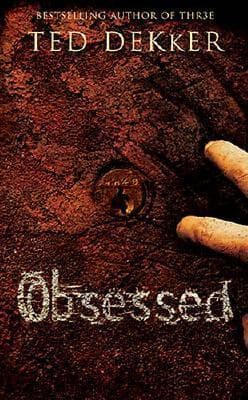
Ted Dekker (2005)
Genre
Romance
Reading Time
10 hours 40 min
Key Themes
See below
Sign in to track this book
An ordinary man inherits a mysterious clue from a Holocaust survivor, drawing him into a deadly game with a serial killer who has waited thirty years for a shared treasure.
Stephen Friedman, an antique dealer in Denver, receives an unusual package. It contains a tattered, ancient Jewish prayer shawl and a small wooden box. Inside the box is a single, perfectly preserved olive from the Garden of Gethsemane. A note, written in Hebrew, hints at a large inheritance tied to his family's past and the Holocaust. Stephen is skeptical at first, but his lawyer, Stan, confirms a trust fund has been set up in his name. To access it, Stephen must understand the olive and the shawl's meaning. This discovery changes his ordinary life, making him face a legacy he never knew existed and starting him on a path of self-discovery and danger.
Meanwhile, in a desolate, fortified compound, Roth Braun, a man with a dark past and a chilling obsession, receives a coded message. This message, identical to Stephen's, signals that the heir to the 'treasure' has appeared. Roth, who believes he is the rightful heir to this ancient secret, has waited decades. He is a careful, ruthless killer, driven by a twisted sense of divine right and deep hatred. The news about Stephen ignites Roth's rage and starts his planned hunt, turning him into a relentless predator.
Driven by curiosity and the inheritance, Stephen researches the olive and its history. He consults with a local rabbi, who explains the Gethsemane olive's symbolism in Jewish tradition. Later, Stephen finds a hidden compartment in the wooden box containing a fragile, ancient scroll. The scroll, written in Aramaic, speaks of a 'Treasure' — not material wealth, but a spiritual truth, and hints at a lineage connected to Jesus's time. This revelation deepens the mystery and the stakes, as Stephen realizes this inheritance is more than money.
As Stephen learns more, Roth Braun closes in. Roth attacks Stephen's home, leaving a chilling message. Stephen escapes, shaken and aware of the real danger. Soon after, he gets an anonymous call from a woman who warns him he is hunted and the 'treasure' is more dangerous than he can imagine. She urges him to stop, but Stephen feels an inexplicable pull toward the truth of his family's legacy, strengthening his resolve.
Through old letters and journals from his great-grandfather, Isaac Friedman, Stephen uncovers his family's secret history. He learns his ancestors were part of an ancient Jewish sect, the 'Keepers of the Olive,' tasked with protecting a spiritual truth, symbolized by the Gethsemane olive, through generations. This truth, the 'Treasure,' is not gold or jewels, but a message of unconditional love and forgiveness that goes beyond religious boundaries. Stephen realizes his inheritance is not just money, but a sacred duty passed down through his bloodline, a duty his family protected even through the Holocaust.
The mysterious woman who warned Stephen reveals herself as Leah. She is also a descendant of the 'Keepers of the Olive,' tasked by her family to watch over the heir. Leah explains that her family, the 'Watchers,' have historically protected the 'Keepers' and the 'Treasure' from those who seek to corrupt or destroy it. She reveals that Roth Braun is a descendant of a rival sect, the 'Devourers,' who twisted the original message and seek to claim the 'Treasure' for their own purposes, believing it grants ultimate power. Leah, at first hesitant to trust Stephen, begins to guide him.
Through Leah, Stephen learns more about Roth Braun and the 'Devourers.' Roth's family believes the 'Treasure' is a literal key to power and control, a tool to impose their will on the world, rather than a message of love. They interpret ancient texts to justify their ruthless methods and see themselves as chosen to rule. Roth's obsession comes from a belief that he is the rightful heir and Stephen is an imposter. His past includes violence and manipulation, all in pursuit of this twisted idea of the 'Treasure,' making him a dangerous adversary.
Following clues hidden in the scroll and other artifacts, Stephen and Leah journey across continents. Their quest takes them from ancient synagogues in Europe to hidden archives in Jerusalem. Roth Braun and his operatives pursue them relentlessly. Each clue brings them closer to understanding the 'Treasure' and its meaning, but also increases the danger. They face traps, near-death experiences, and close calls, forcing them to rely on each other and their understanding of the ancient conflict.
As Stephen and Leah near their destination, Stan, Stephen's lawyer, betrays them. Stan, swayed by Roth's promises, reveals their location, leading to a violent confrontation. Leah sacrifices herself to protect Stephen and the 'Treasure,' allowing him to escape with the final piece of the puzzle. Her death deeply affects Stephen, strengthening his resolve to fulfill his family's legacy and confront Roth, but also leaving him isolated and heartbroken.
The final clue leads Stephen to the Garden of Gethsemane in Jerusalem, where the olive originated. Roth Braun, anticipating this, waits for him. The two men finally confront each other. Roth reveals his full ideology and his belief that he will bring in a new era of power. Stephen, understanding the 'Treasure' — a message of radical love and sacrifice — stands against Roth's ambition. The confrontation is not just physical, but a battle of ideas, a clash between love and hatred, humility and obsession.
In the Garden, Stephen confronts Roth with truth, not weapons. He reveals that the 'Treasure' is not a physical object or power, but the message of unconditional love and forgiveness embodied by Jesus's sacrifice in Gethsemane. It is a call to lay down one's life for others, not to take it. This revelation shatters Roth's delusions of grandeur. Overwhelmed by the truth he rejected, Roth is defeated, broken by the message he sought to corrupt. His obsession consumes him, leaving him empty.
With Roth Braun defeated and the 'Treasure's' true meaning revealed, Stephen's life is changed. He no longer seeks material wealth. He dedicates himself to sharing the message of unconditional love and forgiveness he inherited. He starts a foundation, using the financial inheritance to promote peace, understanding, and reconciliation, fulfilling his family's ancient duty in a modern way. Stephen finds a new purpose, honoring Leah's sacrifice and his ancestors' legacy, becoming a 'Keeper of the Olive' in the truest sense, spreading hope and encouraging radical love.
The Protagonist
Transforms from a materialistic individual into a spiritually awakened 'Keeper' of a profound message of love and sacrifice.
The Antagonist
Remains steadfast in his twisted beliefs, ultimately consumed and broken by the very truth he sought to corrupt.
The Supporting
Overcomes initial distrust to become Stephen's confidante and love interest, ultimately sacrificing herself for the 'Treasure' and Stephen.
The Supporting
From a trusted legal advisor to a betrayer, manipulated by Roth's promises.
The Mentioned
His legacy posthumously guides Stephen's journey and understanding of the 'Treasure.'
The main theme explores the difference between material wealth and spiritual enlightenment. Stephen is initially drawn by the promise of a large financial inheritance. However, he discovers that the 'Treasure' is not gold or power, but a message of unconditional love, forgiveness, and sacrifice. This theme is clear in the Gethsemane olive, symbolizing Jesus's ultimate act of love, and in the contrast between Stephen's selfless search for truth and Roth's greedy quest for power. The book suggests that true wealth lies in spiritual understanding and a life lived for others, rather than for personal gain.
“The greatest treasure is not what you possess, but what possesses you.”
Obsession drives both the protagonist and antagonist, but with different results. Roth Braun's obsession with a twisted interpretation of the 'Treasure' leads him to murder, hatred, and self-destruction. His single-minded pursuit blinds him to truth and compassion. Conversely, Stephen's growing obsession with understanding his family's legacy, though at first materialistic, becomes a spiritual quest for truth. This theme shows how unchecked, selfish obsession corrupts, while a focused, selfless pursuit of truth can lead to enlightenment and redemption, as seen in Roth's defeat.
“Obsession is a fire. It can either forge purpose or consume the soul.”
The novel explores the idea of legacy, not just as inherited wealth, but as a spiritual and moral inheritance passed down through generations. Stephen inherits a fortune and a sacred duty from his ancestors, the 'Keepers of the Olive,' who protected a vital spiritual truth through centuries of persecution. The story emphasizes that a true legacy is about the values, beliefs, and responsibilities passed down, and how one chooses to honor or betray that inheritance. The Holocaust context highlights the importance of preserving such a legacy against destructive forces.
“Some inherit gold. Others inherit a burden more precious than any gem.”
At its core, 'Obsessed' is a spiritual battle between unconditional love and pervasive hatred. The 'Treasure' represents radical love and sacrifice, while Roth Braun embodies pure hatred, vengeance, and a desire for power through destruction. The conflict between Stephen and Roth is not just physical; it is a clash of ideas between these two opposing forces. The story consistently shows how love, even facing great evil and personal loss (like Leah's sacrifice), ultimately triumphs over hatred, demonstrating its transformative and redemptive power.
“Hate is a cage. Love is the key.”
A physical artifact symbolizing the central spiritual 'Treasure.'
The single, perfectly preserved olive from the Garden of Gethsemane serves as a powerful symbol and a key plot device. It is the initial clue that sets Stephen's journey in motion and acts as a constant reminder of the 'Treasure's' true, spiritual nature. Its origin in Gethsemane directly links it to Jesus's sacrifice and unconditional love, contrasting sharply with Roth's violent interpretation. The olive is not merely a relic but a tangible representation of the spiritual truth Stephen must uncover and protect.
Historical documents providing crucial clues and backstory.
A collection of ancient Aramaic scrolls and Isaac Friedman's personal journals are vital plot devices. These documents serve as a breadcrumb trail, guiding Stephen and Leah through the mystery of the 'Treasure' and its history. They provide exposition about the 'Keepers' and 'Devourers,' reveal the family's hidden legacy, and contain coded messages that propel the plot forward. Without these historical texts, Stephen would be lost, unable to understand his role or the true nature of the inheritance.
Two ancient, opposing secret societies driving the central conflict.
The existence of two ancient lineages – the 'Keepers of the Olive' (Stephen's ancestors) and the 'Devourers' (Roth's ancestors) – is a foundational plot device. This established, centuries-old conflict provides the historical context and deep-seated rivalry that fuels the entire narrative. It explains why Stephen is being hunted and why the 'Treasure' is so fiercely contested. The opposing ideologies of these groups define the core thematic battle between love and hatred, making the personal struggle between Stephen and Roth a continuation of an ancient war.
The inciting incident that triggers the entire plot.
The arrival of the mysterious package at Stephen's antique shop is the inciting incident that launches the entire narrative. It contains the Gethsemane olive and the initial cryptic message, pulling Stephen out of his ordinary life and into the extraordinary quest. This device effectively introduces the central mystery and the initial hook for the reader, setting up the immediate conflict and the long-term stakes. Without this unassuming package, Stephen would never have discovered his true inheritance or faced Roth Braun.
“Love isn't about finding the perfect person. It's about seeing an imperfect person perfectly.”
— A reflection on the nature of true love as the protagonist grapples with his feelings.
“Some secrets are meant to stay buried, not because they are evil, but because their truth would shatter the world.”
— The protagonist discovers a profound secret that has far-reaching implications.
“Fear is a choice, and so is courage. The only difference is which one you decide to feed.”
— A moment of introspection as a character faces a daunting challenge.
“The greatest prison people live in is the fear of what other people think.”
— A character offers advice on living authentically, free from external judgment.
“Sometimes the most beautiful things are found in the most unexpected places, or within the most unexpected people.”
— The protagonist's evolving perception of a character he initially misjudged.
“To truly forgive is to set a prisoner free, only to discover that the prisoner was you.”
— A character struggles with forgiveness and ultimately finds liberation.
“We are all broken in some way, but it's in the cracks that the light gets in.”
— A poignant reflection on human vulnerability and resilience.
“Obsession is a powerful fire. It can burn down everything you know, or it can forge something new and unbreakable.”
— The central theme of obsession is explored, highlighting its dual nature.
“The past is a story we tell ourselves. The future is a story we're writing.”
— A character's realization about the power of narrative and self-determination.
“True love doesn't just see the good; it sees the bad and loves it anyway.”
— A deeper understanding of love's unconditional nature.
“There are wounds that time alone cannot heal. They require a different kind of medicine: understanding and connection.”
— A character's journey towards healing from past trauma.
“Every choice you make writes a line in the story of your life. Make sure it's a story worth reading.”
— An encouragement to live intentionally and make meaningful choices.
“The heart has a memory that the mind can't always erase.”
— A character reflects on lingering feelings and memories from a past relationship.
“Sometimes, you have to lose yourself completely to find out who you truly are.”
— The protagonist undergoes a transformative experience that challenges his identity.
Ready to see how well you understood this book? Take our interactive quiz with 10 questions.