“I can see a church by daylight.”
— Beatrice's witty response to Don Pedro's marriage proposal, indicating her desire for a more substantial relationship than a casual 'May-day' marriage.

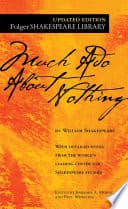
William Shakespeare (2015)
Genre
Romance
Reading Time
240 min
Key Themes
See below
Sign in to track this book
Two couples in Messina find love amid mistaken identities and witty arguments. One pair faces a villain's plot, and the other their own stubbornness, all leading to a joyful resolution.
Don Pedro, Prince of Aragon, arrives in Messina with his soldiers, including Claudio and Benedick. They are guests of Leonato, the governor, who welcomes them. Leonato's daughter, Hero, quickly catches Claudio's eye. Meanwhile, Benedick and Leonato's niece, Beatrice, restart their long-running 'merry war' of wits. She also claims to dislike love and marriage. This sets the scene for both romance and comedy in Leonato's household.
Claudio tells Benedick and Don Pedro he likes Hero. Benedick, always a skeptic, makes fun of Claudio's sudden love, reminding him he used to dislike love. Don Pedro, however, is supportive. He overhears their talk and offers to woo Hero for Claudio during the masked ball that evening. He plans to pretend to be Claudio, win Hero's heart, and then give her to Claudio for marriage. This kind act starts the main love story and introduces the idea of deception, though for a good reason.
At the masked ball, Don Pedro, in disguise, successfully woos Hero for Claudio. However, Don John, Don Pedro's illegitimate and unhappy brother, sees a chance to cause trouble. He tells Claudio, also disguised, that Don Pedro is wooing Hero for himself. Claudio, easily fooled and jealous, believes this lie and is heartbroken. Benedick, also there, overhears a disguised Beatrice speaking badly of him, which adds to their verbal fights. Despite Don John's efforts, the truth soon comes out, and Claudio and Hero are happily engaged, with the wedding set for one week later. Don John, though, still wants to cause trouble.
With Claudio and Hero's wedding coming, Don Pedro, Leonato, and Claudio decide to trick Benedick and Beatrice. They arrange for Benedick to overhear a conversation where they say Beatrice is deeply in love with him but too proud to admit it. Hidden, Benedick, at first doubtful, starts to believe their made-up story, thinking Beatrice's love must be real despite her outward dislike. He decides to return her supposed affection, convinced it is his duty to pity her. This scheme marks a change in Benedick, as he begins to rethink his anti-marriage stance.
After tricking Benedick, Hero and her servant, Ursula, do the same with Beatrice. They make sure Beatrice overhears them talking about Benedick's strong love for her, describing him as suffering from her scorn. They complain about Beatrice's pride and harshness, suggesting she is too proud to see Benedick's good qualities. Beatrice, hidden and listening, is at first dismissive but soon believes them. Like Benedick, she decides to change and return Benedick's supposed love, realizing her own pride has stopped her happiness. Both scenes show how even smart people can be manipulated when their vanity is flattered.
Still wanting to cause unhappiness, Don John gets his servant, Borachio, to help him ruin Claudio and Hero's wedding. Borachio, with help from Margaret, Hero's waiting-gentlewoman, stages a trick. Margaret, dressed in Hero's clothes, meets Borachio at Hero's window late at night. Don John then brings Don Pedro and Claudio to see this 'betrayal,' making it look like Hero is being unfaithful the night before her wedding. Claudio, seeing this seemingly solid evidence, again quickly believes the worst, setting the stage for public shame and sadness.
On the wedding day, as the ceremony begins, Claudio, influenced by Don John's deception, publicly denounces Hero at the altar. He accuses her of being unchaste and disloyal, rejecting her in front of everyone, including her father, Leonato, and Don Pedro. Hero, overwhelmed by the false accusations and public shame, collapses and seems to die. Leonato is devastated and wishes she were dead rather than dishonored. Friar Francis, however, suspects a trick and suggests a plan: they should pretend Hero is truly dead, hoping her apparent death will make Claudio realize his mistake and regret his actions.
After Hero's public shaming and apparent death, Benedick and Beatrice's true feelings finally appear. Beatrice, heartbroken and angry at the injustice to her cousin, demands that Benedick show his love by challenging Claudio to a duel. Benedick, torn between loyalty to his friends and his new love for Beatrice, agrees to defend Hero's honor. This moment strengthens their relationship, changing their 'merry war' into a shared goal based on love and justice. It also shows the seriousness of the situation, contrasting with the earlier comedic tone.
While the tragedy unfolds, the local Watch, led by the incompetent Constable Dogberry and his foolish deputy Verges, arrest Borachio and Conrade. They accidentally overhear Borachio bragging to Conrade about his part in deceiving Claudio and Don Pedro, detailing Don John's entire plot against Hero. Despite Dogberry's confusing attempts to question them, the Watch eventually tells Leonato the important information. This comedic part, with Dogberry's misspoken words, is a key plot device, revealing the truth in an unexpected way.
Leonato, told by Dogberry, confronts Don Pedro and Claudio with the truth about Don John's villainy and Hero's innocence. Borachio's confession confirms the deception. Claudio and Don Pedro are filled with deep regret and guilt, realizing their serious mistake. Leonato, still mourning his 'dead' daughter, sets two conditions for Claudio's apology: he must publicly state Hero's innocence and sing an epitaph at her tomb, and then he must marry Leonato's 'niece,' who is said to be Hero's cousin and looks very similar. Claudio, desperate for forgiveness, readily agrees to these terms, unaware of Leonato's real plan.
On the day of the second wedding, Claudio, keeping his word, prepares to marry Leonato's 'niece.' When the veiled bride is revealed, she is Hero, alive, to Claudio's joyful surprise and relief. With the main problem solved, Benedick and Beatrice, whose love has grown through the chaos, are also encouraged to admit their feelings. Despite their initial hesitation and playful denials, their written love poems are found, confirming their mutual love. The play ends with a double wedding, Don John's capture, and general celebration, showing love and truth winning over deception and evil.
The Protagonist
Beatrice transforms from a cynical, love-scoffing woman into one who embraces love and marriage, shedding her pride for genuine affection and loyalty.
The Protagonist
Benedick evolves from a proud, anti-marriage bachelor to a devoted lover and husband, accepting the vulnerability that comes with true affection.
The Protagonist
Claudio learns a hard lesson about trust and perception, moving from naive jealousy to remorse and finally, a more mature understanding of love and honor.
The Protagonist
Hero endures public humiliation and a feigned death, emerging with her honor vindicated and her love for Claudio restored, demonstrating resilience and forgiveness.
The Supporting
Don Pedro acts as a benevolent catalyst for love, but also learns the consequences of believing false accusations without proper investigation.
The Antagonist
Don John remains a static character, consistently driven by malice, ultimately failing in his destructive schemes and being captured.
The Supporting
Leonato moves from grief and a desire for vengeance for his family's honor to forgiveness and joy as Hero's name is cleared.
The Supporting
Dogberry remains a static, comedic character whose bumbling efforts inadvertently lead to justice.
The play explores how easily people are misled by appearances and how deception, both bad and good, drives the story. Don John's evil plan relies on creating a false image of Hero's infidelity, which Claudio and Don Pedro believe due to their lack of judgment. In contrast, the tricking of Benedick and Beatrice involves good deception, creating false appearances of love to bring them together. This theme shows how fragile trust is and the dangers of quick judgments based on surface evidence, as seen when Claudio publicly shames Hero.
“''Tis well that an ass should know it.”
The play shows two different views of love and marriage: the quick, almost instant love between Claudio and Hero, and the cynical, intellectual sparring that eventually leads to love between Benedick and Beatrice. Claudio and Hero's love is almost destroyed by lies, making us question love based on looks and reputation. Benedick and Beatrice's journey from enemies to lovers suggests a more mature, strong love built on mutual respect and similar minds. The play ultimately celebrates marriage, but it also acknowledges its difficulties and weaknesses.
“I had rather hear my dog bark at a crow than a man swear he loves me.”
Honor, especially for women, is a main concern, particularly with Hero's accusation. A woman's honor was tied to her chastity, and a ruined reputation meant social death. Leonato's extreme reaction to Hero's supposed infidelity – wishing her dead – highlights the social pressure on female purity. Claudio's public shaming of Hero is an act to restore his own perceived honor, but it comes at Hero's terrible cost. The play ultimately clears Hero's honor, suggesting that true honor is about virtue, not just appearance or public opinion.
“O, she is fallen into a pit of ink, that the wide sea hath drops too few to wash her clean again.”
The play is known for its use of language, especially in the 'merry war' between Beatrice and Benedick. Their witty talks, full of puns, metaphors, and sharp comebacks, show their intelligence and act as a form of courtship. Language is also used for deception, as seen in Don John's manipulation and the tricking scenes. Furthermore, Dogberry's misspoken words highlight the comedy and sometimes the frustrating limits of language, as his miscommunications ironically lead to the truth being found. The power of words to build up, tear down, or confuse is always present.
“I was born to speak all mirth and no matter.”
Characters are tricked into believing false information about others' affections.
The gulling scenes, where Benedick and Beatrice are separately led to believe the other is madly in love with them, are crucial plot devices. They serve to break down the characters' pride and anti-romantic facades, allowing their true feelings to emerge. These scenes are comedic, relying on dramatic irony as the audience is privy to the deception. They highlight the power of suggestion and how easily even intelligent individuals can be manipulated when their vanity is flattered, ultimately enabling the central romantic pairing to overcome their self-imposed barriers.
The use of disguises or staged events to mislead characters.
Mistaken identity and deception are central to both the comedic and tragic elements of the play. Don Pedro's initial wooing of Hero on Claudio's behalf, disguised by a mask, introduces benevolent deception. Don John's plot to disgrace Hero relies on a staged scene of infidelity involving Margaret disguised as Hero at a window, a malicious deception. Even Hero's feigned death is a form of deception, intended to evoke remorse and clear her name. These devices create misunderstandings, drive conflict, and ultimately lead to revelation and resolution.
The humorous misuse of a word in place of a similar-sounding one.
The malapropisms of Constable Dogberry and his Watch provide significant comic relief and, ironically, serve as a crucial plot device. Dogberry's inability to use the correct word, often substituting it with a similarly sounding but entirely inappropriate one (e.g., 'dissembly' for 'assembly'), highlights his incompetence. However, it is through his bumbling, malapropism-laden interrogation that Borachio's confession is eventually understood by Leonato, leading to the unraveling of Don John's plot. This device demonstrates how truth can emerge from the most unlikely and comical sources.
Hero's apparent death after being publicly shamed.
Hero's feigned death, proposed by Friar Francis after her public humiliation, is a dramatic and pivotal plot device. It serves multiple purposes: it evokes profound remorse in Claudio and Don Pedro, making them realize the gravity of their actions; it creates a space for Hero's honor to be vindicated without further immediate public scrutiny; and it allows for a dramatic 'resurrection' that symbolizes the triumph of innocence and truth. This device is essential for the emotional arc of Claudio's repentance and the final reconciliation.
“I can see a church by daylight.”
— Beatrice's witty response to Don Pedro's marriage proposal, indicating her desire for a more substantial relationship than a casual 'May-day' marriage.
“For which of them, an' please your worship, but for the name?”
— Dogberry's famously malapropping question when asked to name the offenders, highlighting his inability to grasp simple concepts.
“Sigh no more, ladies, sigh no more, / Men were deceivers ever, / One foot in sea and one on shore, / To one thing constant never.”
— Balthasar's song, offering a cynical yet comforting perspective on male infidelity.
“Silence is the perfectest herald of joy: I were but little happy, if I could say how much.”
— Claudio's expression of overwhelming joy upon believing Hero is alive and returned to him, suggesting that profound happiness transcends words.
“There's a great reckoning in a little room.”
— Don Pedro's comment on the intensity and significance of the events unfolding within the confined space of the wedding ceremony.
“He that hath a beard is more than a youth, and he that hath no beard is less than a man.”
— Beatrice's playful yet pointed critique of potential suitors, using the presence or absence of a beard as a metaphor for maturity and suitability.
“I had rather hear my dog bark at a crow than a man swear he loves me.”
— Beatrice's declaration of her disdain for conventional romantic declarations, preferring genuine, unembellished affection.
“I do love nothing in the world so well as you: is not that strange?”
— Benedick's earnest confession of love to Beatrice, acknowledging the unexpected nature of their feelings given their previous animosity.
“Some Cupid kills with arrows, some with traps.”
— Don Pedro's observation about the different ways people fall in love, particularly referencing the trick played on Benedick and Beatrice.
“Flat treason against the king for thy valour!”
— Dogberry's characteristic malapropism, intending to accuse someone of 'flat perjury' but instead creating a nonsensical accusation.
“I will be sworn upon all the books in Florence, I am a plain-dealing villain.”
— Don John's blunt and self-aware declaration of his villainous nature, embracing his role as an antagonist.
“What, my dear Lady Disdain! Are you yet living?”
— Benedick's initial greeting to Beatrice, highlighting their long-standing witty antagonism and playful insults.
“O, what a tangled web we weave, when first we practise to deceive!”
— Though often misattributed to this play, a similar sentiment about the consequences of deception is present, especially when Hero's reputation is ruined by Don John's plot.
“Happy are they that hear their detractions and can put them to mending.”
— Ursula's observation during the gulling of Beatrice, suggesting that hearing criticism can lead to self-improvement.
“Man is a giddy thing, and this is my conclusion.”
— Benedick's final, reflective thought on the fickle nature of humanity, particularly in matters of love and change.
Ready to see how well you understood this book? Take our interactive quiz with 10 questions.
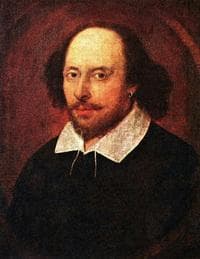
William Shakespeare was an English playwright, poet and actor. He is widely regarded as the greatest writer in the English language and the world's pre-eminent dramatist. He is often called England's national poet and the "Bard of Avon". His extant works, including collaborations, consist of some 39 plays, 154 sonnets, three long narrative poems, and a few other verses, some of uncertain authorship. His plays have been translated into every major living language and are performed more often than those of any other playwright. Shakespeare remains arguably the most influential writer in the English language, and his works continue to be studied and reinterpreted.