BookBrief
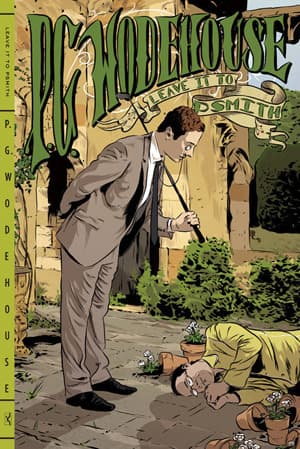
Leave It to Psmith cover
Archivist's Choice

Leave It to Psmith

P.G. Wodehouse (2003)

Genre

Romance

Reading Time

360 min

Key Themes

See below

Track Your Reading

Sign in to track this book

Psmith, a debonair gentleman with a silent 'p', infiltrates Blandings Castle under a false identity to pursue the woman he loves, only to find himself in a farcical plot involving mistaken identities, jewel thieves, and airborne flower pots.

Synopsis

Ronald Psmith, a charming and quick-witted man, meets Eve Halliday during a rainstorm and is instantly drawn to her. When Eve takes a job as Lord Emsworth's secretary at Blandings Castle, Psmith sees an opportunity. Lord Emsworth, expecting an avant-garde poet named Ralston McTodd, mistakes Psmith for him. Psmith, taking advantage of the error, assumes McTodd's identity and goes to the castle to be near Eve. Unknown to him, the real McTodd is also on his way, as are an American millionaire and a jewel thief called 'the Spider.' All converge on Blandings, aiming for the Countess of Walderwick's valuable diamond necklace. Psmith becomes caught in a web of mistaken identities, an attempted jewel theft, and the growing suspicions of Lord Emsworth's former secretary, Baxter, who believes Psmith is a fraud. Through a series of comical events involving thrown flower pots, midnight chases, and gunfire, Psmith uses his cleverness to outsmart the criminals, protect Eve, and win her affection. In the end, identities are revealed, and the necklace is recovered.
Reading time
360 min
Difficulty
Easy
Pacing
Moderate
Mood
Humorous, Witty, Charming, Lighthearted, Amusing
✓ Read this if...
You enjoy classic British humor, witty dialogue, and lighthearted romantic farces.
✗ Skip this if...
You prefer serious, plot-driven novels with deep character development or gritty realism.

Plot Summary

A Chance Encounter and a Case of Mistaken Identity

The novel begins with Ronald Psmith, always short on money but perfectly dressed, offering a borrowed umbrella to Eve Halliday during a sudden London rainstorm. Psmith is immediately smitten. Eve is on her way to Blandings Castle to work as secretary to Lord Emsworth, who recently fired his previous secretary, Rupert Baxter, for throwing flowerpots. On the train, Psmith meets Lord Emsworth. Through misunderstandings and Psmith's quick wit, Lord Emsworth mistakes Psmith for the Canadian poet Ralston McTodd, who is expected at the castle. Psmith decides to impersonate McTodd to be near Eve and heads to Blandings.

Arrival at Blandings and the Introduction of the Spider

Psmith, now at Blandings Castle as Ralston McTodd, begins to charm Eve Halliday and observe the castle's odd residents. He quickly gets along with Lord Emsworth, who cares more about his prize pig, the Empress of Blandings, than poetry. At the same time, 'The Spider' (Edward Cootes), a known jewel thief, and his accomplice, Spike Mullins, arrive nearby, planning to steal Lady Constance Keeble's valuable diamond necklace. The Spider pretends to be a friend of the real Ralston McTodd, making the castle's tangle of identities even more complex. Psmith, always watchful, starts to notice suspicious activities.

The Real McTodd and the American Millionaire

The real Ralston McTodd eventually arrives at Blandings Castle, creating a potentially difficult situation for Psmith. However, McTodd, a shy man, is easily convinced by Psmith to keep up the charade, as Psmith promises to handle all the social duties of a visiting poet. Adding another layer of complexity, Mr. J. Sheringham Adair, a wealthy American businessman, also arrives at Blandings, interested in buying the castle. More importantly, Adair takes a strong liking to Eve Halliday, much to Psmith's annoyance. This creates a romantic rival for Psmith and raises the stakes in his pursuit of Eve.

Baxter's Return and Growing Suspicion

Rupert Baxter, Lord Emsworth's efficient but disliked former secretary, unexpectedly returns to Blandings Castle. Baxter, still upset about his dismissal, immediately suspects Psmith's identity and actions. His careful nature and sharp mind make him a tough opponent for Psmith, who must constantly be careful to maintain his deception. Baxter's presence also complicates the plans of The Spider and Spike Mullins, as Baxter's watchfulness makes their diamond heist much harder. The atmosphere at Blandings grows more tense as various people pursue their hidden goals.

The Diamond Heist and the Misplaced Necklace

The Spider and Spike Mullins attempt to steal Lady Constance Keeble's diamond necklace. Their plan involves a nighttime raid on Lady Constance's room. However, due to a series of coincidences and Psmith's subtle interference, the necklace is moved multiple times, often by accident. In one key moment, Psmith secretly switches a package containing a cat with one containing the necklace, without the thieves knowing. This constant misplacement and recovery of the necklace leads to much confusion and frustration for the criminals, while Psmith remains calmly amused by the unfolding chaos.

Psmith's Intervention and the Flowerpot Incident

Psmith decides to take a more active role in stopping the thieves. He creates a situation where he appears to be stealing the necklace, intending to secure it and then return it, exposing the real criminals. This leads to a memorable confrontation with Rupert Baxter, who, still suspicious of Psmith, catches him seemingly in the act. To escape and further the plot, Psmith throws a flowerpot through a window, echoing Baxter's own infamous act that led to his firing. This incident further solidifies Psmith's reputation as a mischievous and unpredictable character in Baxter's eyes.

The Night of the Chase and Gunplay

The novel's climax happens during a chaotic night chase through Blandings Castle. The Spider and Spike Mullins, desperate to get the diamonds, are pursued by Psmith, Baxter, and even Lord Emsworth (who mostly does not understand what is happening). The chase ends in a tense scene with gunfire, though Psmith disarms the criminals with his usual calm and quick thinking. The diamonds are finally secured, and the criminals are caught, ending the immediate threat to Lady Constance's jewels and the peace of Blandings Castle.

Revelations and Explanations

With the criminals captured and the diamonds recovered, Psmith finally reveals his true identity to Lord Emsworth and the other residents of Blandings. He explains the entire charade, detailing how he impersonated Ralston McTodd and thwarted The Spider's plan. Lord Emsworth is at first confused but quickly recovers, more concerned with the Empress of Blandings than the details of the jewel heist. Lady Constance is relieved, and even Baxter, though still a bit annoyed, acknowledges Psmith's cleverness. Eve, however, is both surprised and amused by Psmith's elaborate deception.

Love Confessed and Loose Ends Tied

After the jewel theft is resolved, Psmith takes the chance to tell Eve Halliday his true feelings. Despite the elaborate deception, Eve is charmed by Psmith's wit, courage, and genuine affection. She accepts his marriage proposal, to Psmith's delight and the story's general satisfaction. The real Ralston McTodd is compensated for his troubles, and the American millionaire, Mr. J. Sheringham Adair, gracefully accepts his loss in the romantic plot. All loose ends are tied, leaving Blandings Castle to return to its usual state of gentle chaos, but with a new romance blooming.

A Future for Psmith and Eve

The novel ends with Psmith and Eve Halliday planning their future together. Psmith, despite his past financial struggles, is now set to inherit a large fortune, giving them a secure foundation for their life. Their engagement is met with approval, and the quirky residents of Blandings Castle offer their congratulations. The ending shows how wit and charm win over difficulties, and how true love grows amidst comical events. Psmith, always resourceful and calm, has not only saved the day but also secured his own happiness, leaving the reader with a sense of contentment and the promise of a bright future for the unconventional couple.

Principal Figures

Ronald Psmith

The Protagonist

Psmith begins as a charming but aimless gentleman and evolves into a hero who uses his wit and daring to solve a crime and win the woman he loves.

Eve Halliday

The Protagonist/Love Interest

Eve navigates the chaotic environment of Blandings, initially wary of Psmith, but ultimately recognizes his genuine affection and character, leading to her engagement.

Lord Emsworth (Clarence Threepwood)

The Supporting

Lord Emsworth remains largely unchanged, serving as a constant source of comedic bewilderment amidst the escalating chaos.

Lady Constance Keeble

The Supporting

Lady Constance experiences anxiety over the necklace's safety but ultimately retains her formidable persona, relieved by its recovery.

Rupert Baxter

The Antagonist/Supporting

Baxter's character remains consistent as the vigilant, suspicious foil, ultimately outsmarted but never entirely defeated in his own mind.

The Spider (Edward Cootes)

The Antagonist

The Spider's arc is one of escalating frustration and ultimate failure as his meticulously planned heist is repeatedly thwarted.

Spike Mullins

The Supporting

Spike Mullins' arc is one of consistent incompetence, culminating in his capture alongside The Spider.

Ralston McTodd

The Mentioned/Supporting

McTodd's arc is minimal; he largely remains a passive figure, briefly disoriented by the impersonation but ultimately accepting of the arrangement.

Themes & Insights

Appearance vs. Reality

This theme is central to the novel, mainly through Psmith's elaborate impersonation of Ralston McTodd. Psmith's success depends on people believing he is someone he is not, showing how outward appearances and confident behavior can easily deceive. The Spider also uses this by pretending to be a legitimate guest. The residents of Blandings, especially Lord Emsworth, are often fooled by these facades, highlighting their own unawareness. Even Eve is initially taken in by Psmith's performance, only later appreciating the man behind the mask. The story constantly plays with what characters believe to be true versus the actual facts, leading to much of the comedic misunderstandings.

“The P is silent, as in pshrimp.”

Ronald Psmith

The Triumph of Wit and Charm

Psmith shows how wit and charm can succeed over conventional methods and even criminal cleverness. He handles complex social situations, stops professional criminals, and wins Eve Halliday's heart, not through force or strict rules, but through his quick thinking, eloquent speech, and unshakeable self-possession. His ability to improvise, to turn any conversation to his advantage, and to stay cheerful even in risky situations allows him to outmaneuver both the careful Baxter and the ruthless Spider. This theme celebrates intelligence and personality as strong forces.

“It is a curious thing, but I have never yet found myself at a loss for a word.”

Ronald Psmith

The Absurdity of the Aristocracy

Wodehouse often makes fun of the English aristocracy, and 'Leave It to Psmith' is no exception. Lord Emsworth, with his intense focus on his pig and his general cluelessness about everything else, represents the charming but ultimately ineffective nature of the upper classes. Lady Constance, while more capable, is driven by social ambition and materialism. The people at Blandings Castle are often more concerned with small matters (like prize pigs or social manners) than with the serious crime happening right under their noses. This theme highlights the detachment and unusual priorities of a privileged class, providing a humorous setting for the more down-to-earth characters like Eve and the clever Psmith.

“If ever there was a man who was devoted to his pig, that man was Lord Emsworth.”

Narrator

Love and Deception

The theme of love is closely tied to deception in the novel. Psmith's initial decision to impersonate Ralston McTodd is solely driven by his desire to be near Eve Halliday. His elaborate charade, while helping to stop the jewel thieves, also becomes his main way of wooing her. Eve is at first attracted to the charismatic 'McTodd' but ultimately falls for the real Ronald Psmith, appreciating his genuine character despite the lies. The story explores whether love can grow from deceit and concludes that Psmith's good intentions and real affection make his elaborate trick acceptable.

“One glance at her was enough for Psmith. He loved her.”

Narrator

Plot Devices & Literary Techniques

Mistaken Identity

A character is believed to be someone else, driving the plot's central conflict and humor.

Mistaken identity is the primary plot device in 'Leave It to Psmith.' Psmith's decision to impersonate Ralston McTodd allows him to gain access to Blandings Castle and pursue Eve. This deception generates numerous comedic situations, as Psmith must constantly improvise to maintain his false persona, often leading to misunderstandings with Lord Emsworth, Baxter, and even the real McTodd. It also enables the jewel thieves to operate under their own false pretenses, further complicating the web of identities. The entire narrative hinges on the characters' inability to discern true identities, creating suspense and farce.

The MacGuffin (The Diamond Necklace)

A desired object that serves to drive the plot, though its specific nature is less important than its role.

Lady Constance Keeble's diamond necklace functions as the MacGuffin of the story. Its value and desirability are what motivate The Spider and Spike Mullins to infiltrate Blandings Castle and attempt a heist. While the necklace itself doesn't possess any inherent narrative significance beyond being a valuable object, its presence is crucial for setting the plot in motion, creating conflict, and providing Psmith with the opportunity to play the hero. The various attempts to steal, hide, and recover it provide the central action sequences and much of the suspense.

The Wodehouseian Butler/Secretary (Rupert Baxter)

A highly efficient, often officious, and perpetually frustrated figure who attempts to maintain order.

Rupert Baxter embodies the archetypal Wodehouseian figure of the overly competent but perpetually vexed butler or secretary. His meticulous nature and sharp observational skills make him the perfect foil for Psmith's casual deception and the criminals' machinations. Baxter's constant suspicion and attempts to expose Psmith, often leading to his own comical downfall (like the flowerpot incident), are a recurring source of humor. He represents the forces of order and rationality constantly being undermined by the unpredictable, the absurd, and Psmith's sheer audacity, driving much of the book's comedic tension.

Critical analysis

Notable Quotes

The Right Hon. F. D. Paradise was a man who, if he had had his just deserts, would have been a pelican. He had all the attributes of that bird: a large, capacious mouth, a long neck, and a somewhat fishy eye.

Psmith's initial impression of Freddie Threepwood's father-in-law.

There are moments, Psmith, when I think you are almost human.

Mike Jackson's recurring observation about Psmith.

I am a man of simple tastes, and am easily satisfied with the best.

Psmith discussing his preferences.

It is not the task of the critic to make things easy for the public. It is his task to make things difficult.

Psmith's musings on literary criticism.

The engaged couple, after the manner of engaged couples, were behaving in a way that made it impossible for anyone to be unaware that they were engaged.

Description of Freddie Threepwood and Aggie Donaldson.

It is always a good plan to be polite to ladies, even if they are your aunts.

Psmith's advice on etiquette.

He looked at her with the respectful admiration of a connoisseur examining a particularly choice piece of bric-a-brac.

Psmith's initial impression of Eve Halliday.

One of the saddest things about life is that one is so seldom able to hit one's friends on the head with a shovel.

Psmith's playful, dark humor.

She was one of those women who seem to have been specially designed by Providence to look nice in anything.

Description of Eve Halliday's appearance.

The course of true love never did run smooth, but it sometimes runs into a ditch.

Psmith's cynical take on romance.

I am not one of those who are content to sit idly by while the world rolls on. I prefer to roll with it.

Psmith's philosophy of active engagement.

He had a face like a benevolent egg, and a manner that suggested a particularly well-meaning but slightly absent-minded sheep.

Description of Lord Emsworth.

There are times, my dear Psmith, when I believe that you are nothing but a talking machine, wound up for the express purpose of annoying me.

Mike Jackson's exasperation with Psmith.

A man's best friend is his mother, unless she happens to be a mother-in-law, in which case he is usually better off without her.

Psmith's humorous perspective on family relationships.

Quiz

Test Your Knowledge

Ready to see how well you understood this book? Take our interactive quiz with 10 questions.

10
Questions
~5
Minutes
?
Best Score

Key Questions (FAQ)

'Leave It to Psmith' revolves around the titular character, Ronald Psmith, a charming and resourceful young man, who, smitten with Eve Halliday, impersonates the poet Ralston McTodd to gain entry to Blandings Castle. His goal is to woo Eve, but he inadvertently steps into a complex plot involving jewel theft and mistaken identities, leading to a series of farcical complications.

About the author

P.G. Wodehouse

Sir Pelham Grenville Wodehouse, was an English writer and one of the most widely read humorists of the 20th century. His creations include the feather-brained Bertie Wooster and his sagacious valet, Jeeves; the immaculate and loquacious Psmith; Lord Emsworth and the Blandings Castle set; the Oldest Member, with stories about golf; and Mr Mulliner, with tall tales on subjects ranging from bibulous bishops to megalomaniac movie moguls.