“He lived only for his dreams, and, in a way, for me too.”
— François's observation about Augustin Meaulnes's character and their bond.

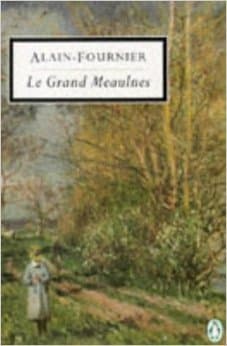
Alain-Fournier (2000)
Genre
Literary Fiction / Romance
Reading Time
240 min
Key Themes
See below
Sign in to track this book
A story about adolescent longing and the pursuit of a lost estate, chasing the memory of an enchanted day.
Fifteen-year-old François Seurel lives a quiet life with his parents, who run the local school in Sainte-Agathe, a small village. His world changes with the arrival of Augustin Meaulnes, a seventeen-year-old boarder. Meaulnes is tall, handsome, and has an air of mystery. He quickly draws François and the other students with his daring spirit and a certain sadness. François, an observant and somewhat shy boy, feels an immediate connection to Meaulnes, which will shape his adolescence. Meaulnes's presence promises to bring excitement to François's life.
During the Christmas holidays, Meaulnes borrows a horse and cart to pick up François's grandparents but gets lost in the Sologne countryside. After wandering for days, he finds a grand, seemingly abandoned estate where a party is happening. He learns it is for the engagement of Frantz de Galais, the owner's son. Meaulnes is mistaken for a guest and joins the joyous, dreamlike festivities, which seem to belong to another time. He is especially taken with a beautiful young girl, Yvonne de Galais, Frantz's sister, and falls instantly in love. The experience feels magical and fleeting, leaving a deep mark on his imagination.
After the party, Meaulnes tries to leave the estate but gets lost again. He eventually finds his way back to Sainte-Agathe, disoriented and tired. He is deeply changed by his adventure, now consumed by the memory of Yvonne de Galais and the 'Lost Domain.' He tells his story to François, who becomes his confidant and shares his obsession. Together, they try to find the estate using Meaulnes's memories and drawings, but they fail. The domain seems to have vanished, becoming a mythical place. Meaulnes dedicates himself to finding Yvonne and the Lost Domain; this quest becomes his life's main goal, greatly influencing François.
One day, a new student, a young boy named Frantz de Galais, arrives at the school. He is sad and speaks of a lost love. Meaulnes recognizes him as Yvonne's brother from the Lost Domain, though Frantz does not immediately recognize Meaulnes. Frantz tells his story of a broken engagement and a lost fiancée, Valentine. He is distraught and seems to be looking for someone. Meaulnes realizes that Frantz is the same young man whose engagement party he attended. This unexpected meeting provides a link to Meaulnes's experience and renews his hope of finding Yvonne and the Lost Domain.
Meaulnes and François become friends with Frantz. Meaulnes eventually reveals who he is and that he was at the engagement party. Frantz is happy to find someone who knows about his past and his sister. He explains that his fiancée, Valentine, ran away on their wedding day, leaving him heartbroken. Meaulnes, feeling empathy and desperate hope, promises Frantz he will help him find Valentine and reunite them. In return, Frantz promises to lead Meaulnes to the Lost Domain and to Yvonne. This agreement ties Meaulnes to Frantz's fate, delaying his own search for Yvonne.
After promising Frantz, Meaulnes leaves Sainte-Agathe to keep his word. He begins a long search for Valentine, traveling across France and facing challenges. François stays in Sainte-Agathe, continues his studies, and becomes a teacher. His thoughts are always with Meaulnes and the mystery of the Lost Domain. He receives letters from Meaulnes, detailing his travels and his commitment to finding Valentine. François longs for his friend's return and for their shared romantic dream to be resolved; this dream continues to shape his own life.
Years later, François, now a young man, takes a teaching job in another village. By chance, he meets Yvonne de Galais, who lives a modest life with her father, Monsieur de Galais, in a small house. The grand estate, the Lost Domain, has been sold. Yvonne is still beautiful but carries a quiet sadness. François recognizes her instantly and is moved. He learns she has never married and still remembers the mysterious young man from her brother's party. François, seeing a chance to fulfill Meaulnes's dream, writes to his friend, urging him to return and reunite with Yvonne.
Meaulnes returns to the Sologne after receiving François's letter. After some hesitation, he and Yvonne reunite. Despite the time passed and their changed circumstances, their connection is clear. They marry and settle into a small house, expecting a future together. However, Meaulnes is still troubled by his unfulfilled promise to Frantz. On the eve of his wedding, he receives a letter from Frantz, reminding him of his vow. Meaulnes, driven by honor and a restless spirit, leaves Yvonne soon after their wedding, promising to return only after he has found Valentine and reunited her with Frantz.
After Meaulnes leaves, Yvonne is alone and heartbroken. She falls ill, her health worsening due to emotional distress and her pregnancy. François stays with her, offering comfort and witnessing her quiet suffering. Yvonne gives birth to a daughter but dies soon after, before Meaulnes returns. François is left to care for the infant girl, a reminder of Meaulnes's romance and the tragic results of his idealism. The child becomes a symbol of the lost dream.
Years later, Meaulnes finally returns. He has found Valentine and, after much effort, convinced her to reunite with Frantz. He brings Frantz's journal, which tells of his own romantic troubles and search for Valentine. Meaulnes returns, having kept his promise, only to learn the devastating news of Yvonne's death and the existence of their daughter. François, who has been raising the child, tells him the tragic events. Meaulnes is overcome with grief and regret, realizing the great cost of his relentless pursuit of an ideal. He takes his daughter and leaves, continuing his solitary, questing life.
The Protagonist
Meaulnes begins as a restless idealist, finds and loses his ideal, and ultimately achieves his promise but loses his love, becoming a perpetual wanderer.
The Narrator and Supporting Character
François evolves from a quiet observer to a devoted friend and caretaker, finding his own purpose in supporting Meaulnes's legacy.
The Love Interest
Yvonne transitions from an idealized figure to a woman experiencing brief happiness, then tragic abandonment and death.
The Supporting Character
Frantz begins heartbroken and lost, finds hope in Meaulnes's promise, and is eventually reunited with his love.
The Supporting Character
Valentine is initially a lost figure, then found and reunited with Frantz.
The Supporting Character
Remains a consistent, stable figure throughout the narrative.
The Supporting Character
Remains a consistent, stable figure throughout the narrative.
The Supporting Character
His character represents a decline from former grandeur.
A main theme is Meaulnes's pursuit of an idealized world and a perfect love. The 'Lost Domain' and Yvonne de Galais represent this ideal, a fleeting moment of childhood magic and romantic perfection. Meaulnes's life is shaped by his desire to recapture this lost paradise, even if it means sacrificing present happiness. This is clear when he leaves Yvonne after their wedding to keep his promise to Frantz, putting an abstract ideal of honor and a past commitment before his immediate happiness. This shows how destructive an unwavering idealism can be.
“Perhaps the true secret of happiness is to keep forever the memory of a lost moment.”
The novel explores the transition from childhood's imagination to the realities of adulthood. The Lost Domain symbolizes the magic and freedom of youth, a world where dreams seem real. Meaulnes's attempt to return to it is an attempt to hold onto this lost innocence. As the characters grow older, they face disillusionment, broken promises, and loss. François's narration, looking back at his youth, captures this nostalgia for a time when life held more wonder and potential, before the complexities of adult life, as seen in Yvonne's quiet suffering.
“Childhood is the only truly beautiful thing, the only thing that is worth living for.”
The deep friendship between Meaulnes and François is a core part of the novel. François's loyalty to Meaulnes, even when his friend's actions cause pain, highlights their strong bond. François becomes the keeper of Meaulnes's dream, his confidant, and later the caretaker of his legacy. This theme also appears in Meaulnes's commitment to his promise to Frantz, which he puts before his own happiness. The story shows the sacrifices and steadfastness of true friendship, and how these relationships can shape one's life, as François's life is tied to Meaulnes's quest.
“He was my friend, my only friend, and I felt that I was bound to him for ever.”
The novel is filled with a sense of memory and nostalgia, as François recounts events from his adolescence. The past, especially the magical experience of the Lost Domain, is constantly revisited and idealized. Characters, particularly Meaulnes, are driven by memories and a desire to recapture past moments of happiness. This theme suggests that memory can inspire but also be a burden, leading to an inability to fully live in the present. The elusive nature of the Lost Domain itself shows how hard it is to return to or perfectly recreate cherished memories.
“We were living in the golden age, and we didn't know it.”
The novel quietly asks what true happiness and fulfillment mean. Is it the pursuit of an ideal, even if it brings sacrifice and sorrow, as Meaulnes believes? Or is it found in quiet, domestic joys and stable relationships, as represented by François and the brief happiness Meaulnes shares with Yvonne? Meaulnes's inability to find lasting contentment, even after marrying his ideal, suggests that fulfillment is more complex than simply achieving a long-sought goal. Yvonne's tragic end shows the cost of putting a grand, abstract quest before tangible, present happiness.
“He sought a happiness that was not of this world.”
François Seurel recounts the story years later, coloring events with memory and reflection.
The story is told from the perspective of François Seurel, looking back on his youth and the events involving Augustin Meaulnes. This retrospective narration imbues the narrative with a sense of nostalgia, longing, and a romanticized view of the past. François's adult reflections add depth and meaning to the youthful adventures, highlighting the significance of Meaulnes's quest and its impact on everyone involved. His personal connection to the events makes the narrative intimate and emotional, allowing the reader to experience the story through his loyal, slightly melancholic gaze, emphasizing the 'lost' aspect of the domain and the fleeting nature of youth.
A symbolic, elusive setting representing an idealized, unattainable paradise.
The 'Lost Domain' is a central, symbolic plot device. It is a mysterious, grand estate in the Sologne countryside where Meaulnes stumbles upon a fantastical party and meets Yvonne de Galais. The domain is elusive and difficult to find again, becoming less a physical place and more a metaphor for lost innocence, the magic of childhood, and an idealized, unattainable past. Its fleeting appearance and subsequent disappearance underscore the theme of longing for what is lost and the impossibility of truly recapturing perfect moments. It drives Meaulnes's entire quest and encapsulates the novel's romantic and melancholic tone.
A binding oath that drives Meaulnes's actions and leads to tragic consequences.
Meaulnes's solemn promise to Frantz de Galais – to find his lost fiancée Valentine and reunite them – serves as a crucial plot device. This promise, made out of a sense of honor and a desire to secure his own reunion with Yvonne, becomes a moral imperative that dictates Meaulnes's actions for years. It forces him to leave Yvonne shortly after their wedding, leading directly to her tragic death. The promise highlights Meaulnes's idealism and his almost fatalistic adherence to a code of honor, even when it conflicts with his personal happiness, ultimately demonstrating the destructive power of a self-imposed, unwavering commitment.
The misty, mysterious Sologne region as a backdrop for adventure and the unknown.
The Sologne region itself acts as a symbolic setting. Its misty, often confusing landscapes, dotted with ponds and forests, provide the perfect backdrop for the mysterious and dreamlike events of the novel. It is in the Sologne that Meaulnes gets lost and discovers the 'Lost Domain,' and where the elusive nature of his quest is constantly emphasized. The region's ambiguity and wildness reflect the transitional, uncertain period of adolescence and the blurred lines between reality and dream that characterize Meaulnes's adventures, making it an almost magical, liminal space where the extraordinary can happen.
“He lived only for his dreams, and, in a way, for me too.”
— François's observation about Augustin Meaulnes's character and their bond.
“Perhaps happiness is not for us, Meaulnes. Perhaps it is only for those who can live without dreams.”
— François ponders the elusive nature of happiness in contrast to Augustin's pursuit of an ideal.
“The true kingdom of God is in the heart of man.”
— A philosophical reflection on inner peace and spirituality.
“And I, who loved him, understood that he would always be a stranger to me, a being apart, forever pursuing some impossible dream.”
— François's realization about the fundamental difference between himself and Augustin.
“It was as if some fairy tale had suddenly become real.”
— Describing the enchantment of the lost domain and the fête.
“What is terrible is not death, but the lives that people live or don't live up to their death.”
— A profound thought on the importance of living fully.
“We were at the age when one believes in everything, when one hopes for everything, when one is ready for anything.”
— Reflecting on the youthful innocence and boundless possibilities of their age.
“He was like a man who has lost his way and can no longer find his path.”
— Describing Meaulnes's state of mind after leaving the lost domain.
“There are moments when one feels a great tenderness for everything that exists.”
— A moment of profound empathy and connection with the world.
“The greatest joy of all is to give happiness to others.”
— A statement on the altruistic nature of true joy.
“He was one of those beings who seem to have come from another world, and who carry within them a secret that they can never share.”
— François's perception of Meaulnes's unique and enigmatic nature.
“We were searching for something we had lost, or perhaps something we had never found.”
— A reflection on the eternal human quest for meaning or a lost ideal.
“And so, the dream remained, like a fragile, precious thing, always on the verge of disappearing.”
— Describing the persistent but tenuous nature of Meaulnes's ideal.
“He carried within him a kind of nostalgia for a paradise he had never known.”
— François's insight into Meaulnes's innate longing for an idealized past or future.
Ready to see how well you understood this book? Take our interactive quiz with 10 questions.
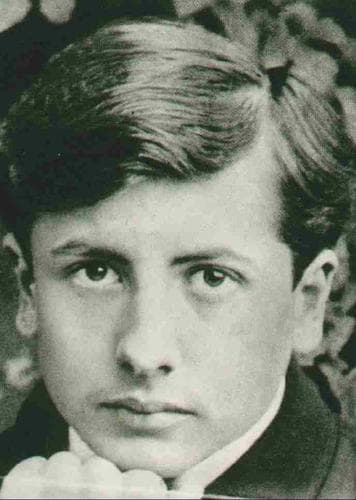
Alain-Fournier was a French author best known for his semi-autobiographical novel, "Le Grand Meaulnes" (The Wanderer). Published in 1913, the book is a seminal work of French literature, celebrated for its lyrical prose and exploration of adolescent idealism and disillusionment. Fournier's promising literary career was tragically cut short by his death in World War I.







