“Beauty is a fleeting gift, but it is a gift nonetheless, and one must enjoy it while it lasts.”
— Don Rigoberto reflecting on Lucrecia's allure.

Mario Vargas Llosa (2006)
Genre
Romance
Reading Time
3-4 hours
Key Themes
See below
Sign in to track this book
A wealthy Lima family's seemingly idyllic life unravels into a tapestry of forbidden desires and erotic games, all under the watchful, artistic eye of a precocious stepson.
Don Rigoberto, a man of refined tastes and meticulous habits, begins his day with an intricate ritual of bathing and grooming. He applies various lotions and perfumes, transforming his body into a temple of sensuality. During this process, his mind often wanders into elaborate erotic fantasies, which he meticulously records in a private notebook. These fantasies frequently feature his wife, Doña Lucrecia, and sometimes even his son, Fonchito, though in an innocent, almost symbolic way. He revels in the tactile sensations and the imagined scenarios, finding a profound connection between physical cleanliness and mental liberation, all before facing the mundane realities of his insurance job.
Doña Lucrecia, a beautiful and vivacious woman, marries Don Rigoberto and moves into his elegant Lima home. Her presence immediately electrifies the atmosphere, especially for Fonchito, Don Rigoberto's young son from his previous marriage. Fonchito, a precocious and imaginative boy, is instantly enchanted by his new stepmother's beauty, warmth, and the attention she showers upon him. He sees her as a figure of light and joy, a stark contrast to the more reserved and ritualistic nature of his father. Doña Lucrecia, in turn, seems genuinely fond of Fonchito, treating him with affection that sometimes borders on the indulgent, much to Don Rigoberto's quiet pleasure and sometimes, subtle unease.
Fonchito, despite his young age, displays an unusual maturity and cunning in his interactions with Doña Lucrecia. He begins a subtle campaign of seduction, using his innocence as a shield. He brings her flowers, writes her notes, and offers her small, tender gestures of affection that Doña Lucrecia initially interprets as the sweet expressions of a loving stepson. These actions, however, carry an underlying erotic charge that only Fonchito seems fully aware of. He uses his charm and vulnerability to draw Doña Lucrecia closer, slowly eroding the boundaries of their stepmother-stepson relationship, all while maintaining an outward facade of childlike devotion.
Don Rigoberto, consumed by his own elaborate fantasies and the meticulous order of his life, remains largely oblivious to the deepening intimacy between Fonchito and Doña Lucrecia. He interprets their close bond as a sign of a healthy, loving family, pleased that his son has taken so well to his new wife. His mind is often elsewhere, either lost in his erotic musings or focused on his daily routines and the philosophical contemplation of sensuality. This self-absorption prevents him from noticing the subtle shifts in their interactions, the lingering touches, or the knowing glances that pass between his wife and son, leaving him vulnerable to the unfolding domestic drama.
Fonchito's seduction of Doña Lucrecia escalates as he begins to frequently claim he has nightmares, using them as an excuse to sleep in her bed. Doña Lucrecia, ever doting and sympathetic, allows him to join her, initially believing she is comforting a frightened child. These nights, however, become opportunities for greater physical intimacy. While the novel never explicitly details the acts, the implication is clear: Fonchito's presence in her bed leads to a blurring of lines, an exploration of forbidden closeness that transcends mere parental comfort. Don Rigoberto, upon discovering his son in his wife's bed, is momentarily surprised but again dismisses it as a child's innocent need for comfort, never suspecting the true nature of their shared nights.
Throughout the novel, Vargas Llosa interweaves the plot with detailed descriptions of famous classical paintings, often depicting mythological or erotic scenes. These artworks, such as Titian's 'Venus of Urbino' or various satyr and nymph compositions, serve as visual metaphors for the characters' hidden desires and the increasingly transgressive nature of their relationships. Don Rigoberto, in his private fantasies, often imagines himself and Doña Lucrecia within these artistic contexts, elevating their carnality to an aesthetic, almost sacred, level. These descriptions not only enrich the narrative's sensual atmosphere but also provide a cultural and historical framework for understanding the characters' complex motivations and the exploration of taboo subjects.
What begins as Fonchito's seemingly innocent advances slowly transforms into a mutual, though clandestine, affair. Doña Lucrecia, initially perhaps flattered or simply too kind to resist, finds herself increasingly drawn into Fonchito's world. Her initial discomfort gives way to a complex mixture of guilt, excitement, and a strange maternal affection intertwined with erotic desire. She becomes a willing, if conflicted, participant in their secret encounters, succumbing to the allure of the forbidden and the intense attention Fonchito bestows upon her. Her complicity highlights the novel's exploration of desire's power to transgress societal norms, even within the confines of a family.
The secret affair between Fonchito and Doña Lucrecia reaches a climax when Fonchito, with a chilling display of premeditation, ensures his father discovers them in flagrante delicto. He leaves clues, arranges scenarios, and subtly manipulates events to lead Don Rigoberto to their shared bed at the opportune moment. The discovery is devastating for Don Rigoberto, shattering his meticulously constructed world of order and idealized sensuality. The image of his wife and young son together in such an intimate way is a profound betrayal, forcing him to confront the dark undercurrents beneath the surface of his seemingly perfect life and the depths of his own self-deception.
Following the shocking discovery, Don Rigoberto confronts Doña Lucrecia. The scene is filled with a mixture of anger, disbelief, and profound heartbreak. Doña Lucrecia, though remorseful, cannot fully explain her actions, caught between her affection for Fonchito and her love for Don Rigoberto. The betrayal is too great for Don Rigoberto to overlook, and he demands she leave the house. Doña Lucrecia, understanding the gravity of her actions, packs her bags and departs, leaving Don Rigoberto to grapple with the ruins of his marriage and the unsettling truth about his son. The household is plunged into a profound silence, the vibrant presence of Doña Lucrecia replaced by a heavy void.
Remarkably, throughout the tumultuous aftermath, Fonchito maintains an unsettlingly calm and innocent demeanor. He expresses no remorse or understanding of the gravity of his actions, instead acting as if he were merely an innocent child caught in adult affairs. His wide-eyed innocence, which was initially his tool of seduction, now serves as a shield against any accusations or blame. Don Rigoberto is left bewildered by his son's lack of contrition, unable to reconcile the sweet child he thought he knew with the calculating figure who orchestrated his stepmother's downfall. This ambiguity surrounding Fonchito's true nature is a central enigma of the novel.
In the wake of Doña Lucrecia's departure, Don Rigoberto retreats further into his private world of rituals and fantasies. He meticulously cleanses his body and mind, attempting to purify himself from the stain of betrayal. His erotic fantasies, once a source of innocent pleasure, now become a refuge, a way to reassert control over his inner world, even as his external life crumbles. He grapples with the philosophical implications of what has occurred, questioning the nature of desire, innocence, and morality. The events force him to re-evaluate his understanding of love, family, and the fragile boundaries between the sacred and the profane, finding solace only in the structured order of his personal habits.
In a surprising turn of events, Doña Lucrecia eventually returns to Don Rigoberto's house. Her reasons are not fully explicit, perhaps a mix of lingering affection, regret, and a desire to reconcile. Don Rigoberto's reaction is complex and fraught with internal conflict. While the pain of her betrayal still lingers, he also feels a deep longing for her presence and the sensuality she brought into his life. The novel leaves their reconciliation ambiguous, suggesting that the wounds are deep, but the power of love and desire, even in its most transgressive forms, might ultimately prevail, albeit with a new, unsettling understanding of their relationship.
Even after Doña Lucrecia's return and their ambiguous reconciliation, the shadow of Fonchito's actions continues to linger over their relationship. His unsettling blend of innocence and cunning has permanently altered the dynamic between Don Rigoberto and Doña Lucrecia. While they may attempt to rebuild their marriage, the knowledge of what transpired, and the unsettling question of Fonchito's true nature, remains an unspoken tension. The novel concludes without a clear resolution, leaving the reader to ponder the lasting impact of the transgression and the complex, often morally ambiguous, nature of human desire and family bonds in the household.
The Protagonist
He initially lives in a world of idealized sensuality, but is forced to confront the messy and transgressive realities of desire, leading to a profound re-evaluation of his understanding of love and innocence.
The Supporting/Love Interest
She transitions from an innocent, loving stepmother to a conflicted participant in a transgressive affair, ultimately facing expulsion and then a complex, ambiguous return.
The Antagonist/Supporting
He remains largely static in his cunning, initiating and orchestrating a transgressive affair while maintaining a facade of innocence, leaving his true moral compass ambiguous.
The Mentioned/Supporting
Remains a constant, observant presence, largely unaffected by the family's turmoil beyond her role as a witness.
The Mentioned
N/A, as she is deceased.
The novel deeply explores the multifaceted nature of human desire, from Don Rigoberto's intellectualized and ritualistic sensuality to Doña Lucrecia's more earthy passion and Fonchito's precocious, transgressive urges. It suggests that desire is a powerful, often uncontrollable force that can blur moral boundaries and manifest in unexpected ways. Don Rigoberto's elaborate fantasies, meticulous hygiene, and appreciation for art are all expressions of his sensual being, which is ultimately challenged by the raw, untamed desire that erupts within his own family.
“''Cleanliness, for Don Rigoberto, was not a hygienic, but a moral imperative, a spiritual discipline.''”
A central theme is the ambiguous line between innocence and guile, primarily embodied by Fonchito. His youthful appearance and charm mask a calculating and manipulative intelligence, making his seduction of Doña Lucrecia all the more disturbing. The novel questions whether true innocence can exist when confronted with powerful desires, and how easily it can be used as a weapon or a shield. Fonchito's unwavering 'innocence' even after causing such scandal challenges the reader's perception of childhood purity.
“''Fonchito had a way of looking at her that was not a child's look, but rather an adult's, full of a secret knowledge.''”
Don Rigoberto meticulously constructs a life of order, ritual, and idealized sensuality, using his fantasies and routines as a shield against chaos. The novel demonstrates how easily this carefully built world can be shattered by unexpected events and the eruption of raw, forbidden desires within his own family. His illusion of a perfect, aesthetically pleasing existence is violently disrupted by the incestuous affair, forcing him to confront the messy, unpredictable realities of human relationships and the limits of control.
“''His life was a fortress of habits, a bulwark against the unexpected.''”
Classical artworks, particularly paintings depicting mythological and erotic scenes, are frequently described throughout the novel. These descriptions serve multiple purposes: they reflect the characters' inner desires and conflicts, provide a historical and cultural context for understanding sensuality, and offer Don Rigoberto a means of intellectualizing and escaping into his fantasies. The art acts as a mirror to the transgressive acts occurring in the family, elevating them to a philosophical plane even as they remain deeply personal and disturbing.
“''He saw in those paintings not mere flesh, but the very essence of human longing and the mysteries of the body.''”
Don Rigoberto's detailed, personal erotic musings recorded in his notebook.
Don Rigoberto's elaborate erotic fantasies, meticulously chronicled in his private notebook, serve as a significant plot device. They offer deep insight into his character, revealing his intellectualized approach to sensuality and his desire for control and aesthetic beauty in his inner world. These fantasies often foreshadow or parallel the real-life events, blurring the lines between imagination and reality. They also provide a counterpoint to the raw, transgressive desires that unfold in his family, highlighting his initial obliviousness to the true nature of passion.
Interspersed descriptions of famous paintings, often with mythological or erotic themes.
The detailed descriptions of classical paintings, particularly those by masters like Titian or Veronese, function as a sophisticated plot device. They act as visual metaphors, enriching the novel's themes of desire, beauty, and transgression. These artworks provide a historical and cultural lens through which to view the characters' actions, elevating the personal drama to a more universal, philosophical level. They also serve to intellectualize the erotic content, aligning with Don Rigoberto's character, and provide moments of respite and reflection within the escalating family drama.
The ambiguous and manipulative childlike demeanor of Fonchito.
Fonchito's persistent facade of innocence is a crucial plot device. It allows him to carry out his seduction of Doña Lucrecia without immediate suspicion and serves as a powerful shield against blame after the affair is discovered. This 'innocence' is what makes his actions so disturbing and challenges the reader's moral judgment. It highlights the deceptive power of appearance and forces other characters, particularly Don Rigoberto, to misinterpret his true intentions, thereby driving the central conflict of betrayal.
“Beauty is a fleeting gift, but it is a gift nonetheless, and one must enjoy it while it lasts.”
— Don Rigoberto reflecting on Lucrecia's allure.
“The greatest freedom is to be oneself, without masks or pretenses.”
— Lucrecia's internal monologue about her desires.
“Love, true love, is always a little perverse, a little forbidden, a little dangerous.”
— The narrator's overarching commentary on the relationships.
“Art is a way of escaping reality, but also of understanding it more deeply.”
— Don Rigoberto contemplating the paintings in his study.
“Desire is a fire that can consume everything, or illuminate everything.”
— Fonchito's awakening desires.
“The imagination is the most powerful tool a human being possesses.”
— Don Rigoberto's elaborate fantasies.
“Happiness is not a destination, but a way of traveling.”
— Lucrecia's perspective on her life choices.
“Every secret holds a truth, and every truth, a secret.”
— The hidden dynamics within the family.
“To live intensely is to accept all risks, all pleasures, all pains.”
— A general theme about the characters' pursuit of sensation.
“The most beautiful things are often the most fragile.”
— Reflections on the delicate nature of beauty and relationships.
“Morality is a cage, but sometimes, a necessary one.”
— The characters grappling with societal norms versus personal desires.
“Children see what adults pretend not to see.”
— Fonchito's keen observations of his parents and stepmother.
“The past is a phantom, but it can still reach out and touch the present.”
— Don Rigoberto's memories and their influence.
“There are no innocent pleasures, only pleasures that pretend to be.”
— The underlying complexity of the characters' enjoyments.
Ready to see how well you understood this book? Take our interactive quiz with 10 questions.
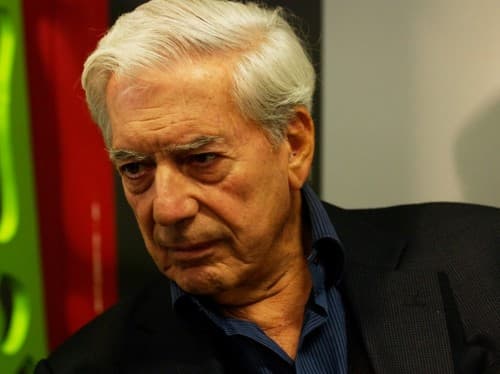
Jorge Mario Pedro Vargas Llosa, 1st Marquess of Vargas Llosa, more commonly known as Mario Vargas Llosa, is a Peruvian novelist, journalist, essayist and former politician, who also holds citizenship of Spain and the Dominican Republic. Vargas Llosa is one of Latin America's most significant novelists and essayists, and one of the leading writers of his generation. Some critics consider him to have had a larger international impact and worldwide audience than any other writer of the Latin American Boom. In 2010 he won the Nobel Prize in Literature, "for his cartography of structures of power and his trenchant images of the individual's resistance, revolt, and defeat." He also won the 1967 Rómulo Gallegos Prize, the 1986 Prince of Asturias Award, the 1994 Miguel de Cervantes Prize, the 1995 Jerusalem Prize, the 2012 Carlos Fuentes International Prize, and the 2018 Pablo Neruda Order of Artistic and Cultural Merit. In 2021, he was elected to the Académie française.