“Sometimes the things we think are the most important are the things that are most easily lost.”
— Blake reflecting on the fragility of life and happiness.

Sign in to track this book
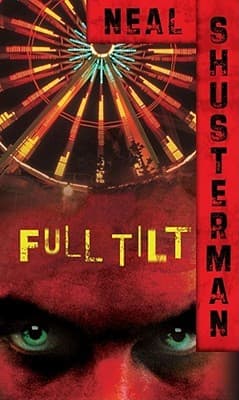
To save his thrill-seeking brother from a phantom carnival that traps souls, responsible Blake must confront his deepest fears on seven deadly rides before dawn, each a twisted reflection of a past he desperately tries to outrun.
Sixteen-year-old Blake always looks out for his younger brother, Quinn, who loves thrills. One night, while Blake is on a date with his girlfriend, Maggie, Quinn and his friends, Russ and Cassandra, dare each other to visit a new, mysterious carnival that appeared suddenly. Blake, uneasy about the carnival's unsettling atmosphere and the strange, old-fashioned ticket booth, tries to dissuade Quinn. However, Quinn, a daredevil, rushes in with his friends. Blake, feeling responsible and a sense of dread, reluctantly follows them, purchasing tickets from the eerie ticket taker who seems to know more than he lets on, and steps into the bizarre, old-fashioned world of the Full Tilt Carnival.
Inside the carnival, Blake quickly realizes something is wrong. The rides are unsettling, the atmosphere is sinister, and the other patrons seem dazed or unnervingly joyful. He finds Quinn, Russ, and Cassandra, but they are all behaving strangely, already under the carnival's spell. A disembodied voice, belonging to the ringmaster, informs Blake that he is trapped. To escape the carnival by dawn, he must survive seven deadly rides, each designed to exploit his deepest fears. If he fails, he, along with Quinn and his friends, will become permanent parts of the carnival, their souls consumed. Blake, terrified but determined to save his brother, accepts the challenge.
Blake's first challenge is the 'Carousel of Beasts,' where the animals are not painted horses but grotesque, living creatures that stampede and try to trample him. He narrowly survives, his fear of being overwhelmed and helpless tested. Next, he faces the 'Hall of Mirrors,' which does not just reflect his image but distorts it into monstrous, deformed versions of himself, reflecting his inner insecurities and fears of becoming something ugly or broken. He sees his father's angry face, his own failures, and the potential for his own darkness. This ride forces him to confront his self-perception and the hidden anxieties he has about his own identity.
The 'Tunnel of Love' is a macabre experience, twisting the romantic ideal into a journey through decaying relationships and lost connections, forcing Blake to confront his anxieties about love and commitment, particularly concerning Maggie. After this, he boards the 'Roller Coaster of Regret,' a terrifying ride that plunges him through vivid, agonizing recreations of his past mistakes and moments of failure, particularly those involving Quinn. He relives his regret over not being able to save his younger brother, Matt, from a drowning accident, a memory that has haunted him for years and makes him overprotective towards Quinn. The ride intensifies his guilt and the burden he carries.
The 'House of Horrors' presents Blake with an onslaught of his personal phobias, from claustrophobia to grotesque creatures, pushing him to the brink of his sanity. He navigates through the chilling, shifting rooms, forced to confront his primal fears directly. Next, he ascends the 'Ferris Wheel of Fate,' which does not offer scenic views but rather terrifying glimpses into potential bleak futures, showing him the consequences of his failures and the loss of Quinn. The height and the visions combine to make him feel powerless over destiny, amplifying his fear of losing control and of an uncertain, terrible future.
The seventh and final ride is the 'Gravitron of Guilt.' As the ride spins, pinning him against the wall, Blake is overwhelmed by memories about his younger brother, Matt, who drowned years ago. The centrifugal force and the disorienting environment strip away his defenses, forcing him to relive the exact moments of Matt's death. He finally admits the full truth to himself: he was there, he saw Matt struggling, and he froze, unable to act, burdened by an inexplicable fear. This confession, a moment of raw, painful honesty, is the true purpose of the Gravitron, forcing Blake to face his deepest, most buried trauma and the immense guilt he has carried silently.
Having confronted his guilt over Matt's death, Blake finds a new strength and clarity. He realizes that the carnival feeds on unresolved fears and guilt. With the dawn approaching, he races to find Quinn, who is now fully under the carnival's influence, almost a part of its structure. Blake confronts the ticket taker, who reveals himself to be the spirit of a young boy who died in a carnival accident, trapped in this purgatorial existence. Blake, understanding that his acceptance of his past is the key, manages to reach Quinn. By embracing his guilt and vowing to live fully, he breaks the carnival's hold over them. The carnival, its purpose fulfilled, begins to dissolve.
As the carnival collapses into dust and shadows, Blake, Quinn, Russ, and Cassandra find themselves back in the real world, standing in the empty field where the carnival had been. They are disoriented but safe. Quinn, though still a thrill-seeker, seems to have a new appreciation for life and a deeper connection with Blake. Russ and Cassandra are also changed, shaken by their experience. Blake, while scarred, feels a sense of release from his lifelong burden of guilt regarding Matt. The phantom carnival is gone, but the lessons learned and the fears confronted will forever shape their lives. The experience strengthens Blake's understanding of his own courage and the unbreakable bond with his brother.
The Protagonist
Blake transforms from a guilt-ridden, overly cautious brother into a self-accepting individual capable of facing his past and embracing life's challenges. He learns to forgive himself for Matt's death.
The Supporting
Quinn starts as a reckless thrill-seeker and, after being saved by Blake, gains a deeper understanding of life's value and a stronger bond with his brother, though his adventurous spirit remains.
The Supporting
Maggie's arc is less about personal transformation and more about her steady role as a beacon of stability and love for Blake.
The Supporting
Russ's primary arc is being trapped by the carnival and then released, shaken but safe, by Blake's actions.
The Supporting
Cassandra's arc is being trapped by the carnival and then released, shaken but safe, by Blake's actions.
The Antagonist
The Ticket Taker's arc is revealed as the tragic origin story of the carnival itself, a being trapped by its own circumstances.
The Mentioned
Matt's influence on Blake's character is explored through flashbacks and Blake's emotional journey, leading to Blake's acceptance of his past.
The central theme is Blake's struggle with the guilt he carries over his youngest brother Matt's drowning. The carnival's rides are designed to force Blake to relive and confront this repressed trauma. Through the 'Roller Coaster of Regret' and especially the 'Gravitron of Guilt,' Blake is compelled to acknowledge his perceived failure and his inaction during Matt's death. His ultimate escape depends on his ability to forgive himself and accept that he was not fully responsible, leading to a sense of liberation.
“''It wasn't your fault, Blake. It never was.'”
The Full Tilt Carnival is a metaphor for fear itself. Each ride physically shows Blake's deepest anxieties and phobias, from the fear of helplessness ('Carousel of Beasts') and distorted self-image ('Hall of Mirrors') to the fear of loss ('Ferris Wheel of Fate') and his most repressed fear of his past actions ('Gravitron of Guilt'). The novel explores how fear can paralyze individuals and how confronting these fears, rather than avoiding them, is essential for growth and freedom. The carnival thrives on these fears, trapping souls who cannot overcome them.
“'Fear makes you freeze, Blake. It makes you a prisoner.'”
The bond between Blake and Quinn is a driving force of the narrative. Blake's overprotective nature comes from his love for Quinn and his guilt over Matt's death. He enters the dangerous carnival solely to save Quinn, showing the depth of his sibling responsibility. The challenges he faces are increased by the knowledge that Quinn's life, and soul, are at stake. The story shows the sacrifices one is willing to make for family and the lasting strength of brotherly love, even amidst conflict and contrasting personalities.
“'I had to save him. He was my brother, and I wasn't going to lose another one.'”
The Full Tilt Carnival exists in a space between reality and illusion. It appears and disappears, its rides are both physically real and psychologically manipulative, and its patrons are trapped in a dreamlike state. The novel questions what is real and what is perceived, especially when fear and guilt distort one's perception. The carnival's ability to show Blake's inner world blurs the lines, suggesting that internal struggles can create their own external realities, and that true escape involves distinguishing between objective reality and subjective terror.
“'The carnival is as real as your deepest fears, Blake.'”
A supernatural, sentient carnival that preys on human fears and guilt.
The Full Tilt Carnival is the central plot device. It is a mysterious, anachronistic carnival that appears and disappears seemingly at will, drawing in thrill-seekers. It's not just a setting but an antagonist, a sentient entity that feeds on the unresolved fears and guilt of its patrons. It manifests personalized, terrifying rides for each individual, specifically designed to exploit their psychological vulnerabilities. Its ultimate goal is to trap souls, transforming them into permanent, dazed attractions. It serves as a purgatorial space where characters are forced to confront their inner demons to escape.
A series of personalized, fear-inducing attractions Blake must survive.
The 'Seven Deadly Rides' are the core challenge Blake must overcome. Each ride (Carousel of Beasts, Hall of Mirrors, Tunnel of Love, Roller Coaster of Regret, House of Horrors, Ferris Wheel of Fate, Gravitron of Guilt) is a distinct, terrifying trial designed to exploit a specific fear or trauma of Blake's. They are not merely physical challenges but psychological ones, forcing him to confront his deepest anxieties, insecurities, and particularly his guilt over Matt's death. Successfully navigating these rides is the mechanism by which Blake achieves self-discovery and earns his freedom.
Interspersed recollections of past events, particularly Matt's death.
Flashbacks and vivid memories are used throughout the narrative, especially during the more psychologically intense rides like the 'Roller Coaster of Regret' and the 'Gravitron of Guilt.' These serve to gradually reveal the full story of Matt's drowning and Blake's role (or perceived lack thereof) in it. They are crucial for understanding Blake's character, his motivations, and the source of his profound guilt. By forcing Blake (and the reader) to relive these moments, the plot device deepens the emotional impact and builds towards the climactic confrontation with his past.
The antagonist's true identity and the carnival's origin are revealed.
The revelation of the Ticket Taker's true identity as a trapped spirit, a young boy who died in a carnival accident, serves as a significant plot device. It explains the carnival's supernatural nature, its purpose, and its connection to unresolved trauma. This twist transforms the antagonist from a purely evil entity into a tragic figure, adding depth to the narrative. It also provides Blake with a deeper understanding of the carnival's rules and how to truly escape, by confronting and resolving his own lingering guilt, thereby breaking the cycle of entrapment.
“Sometimes the things we think are the most important are the things that are most easily lost.”
— Blake reflecting on the fragility of life and happiness.
“Fear is a powerful motivator. It can make you do things you never thought possible.”
— Blake realizing how much fear is driving him and his friends.
“The greatest show on Earth, they called it. And it was. A show of how easily people could be manipulated.”
— Blake's cynical view of the carnival's true nature.
“You can't save everyone. Sometimes you just have to save yourself.”
— Cassandra's pragmatic advice to Blake.
“There's a fine line between bravery and stupidity.”
— Blake questioning his own actions and those of his friends.
“Love isn't about finding someone perfect. It's about finding someone who's perfectly imperfect for you.”
— Blake's evolving understanding of love, particularly for Quinn.
“The carnival feeds on your desires, your fears, your hopes. It takes everything and gives nothing back.”
— Blake describing the insidious nature of the carnival.
“Sometimes the only way out is through.”
— A recurring theme as Blake faces one challenge after another.
“We all have monsters inside us. The trick is not to let them out.”
— Blake's internal struggle with his own dark impulses.
“It's amazing how much you can endure when you have something worth fighting for.”
— Blake's reflection on his motivation to save Quinn.
“The past is a ghost that haunts us, but it doesn't have to define us.”
— Blake coming to terms with his past mistakes.
“Hope is a dangerous thing. It can lead you to believe in the impossible, even when you know it's a lie.”
— Blake's wavering belief amidst the carnival's illusions.
“Sometimes the greatest acts of courage are the ones no one ever sees.”
— Blake's realization about his own quiet struggles and victories.
“Life is a roller coaster, and sometimes you just have to hold on tight.”
— A metaphor for the unpredictable journey Blake experiences.
Ready to see how well you understood this book? Take our interactive quiz with 10 questions.

Biography coming soon.