“It was impossible not to feel sorry for someone who had lost everything, even if they had brought it on themselves.”
— Reflecting on the various characters' misfortunes.

Sign in to track this book
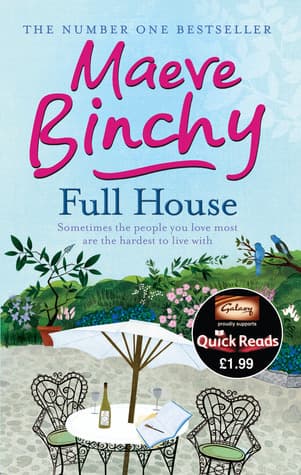
In a Dublin home, a mother's wish for an empty nest clashes with her adult children's comfort until a family crisis makes them all face what independence and belonging truly mean.
Rosie, recently separated from her husband Kevin, moves back into her childhood home in Dublin with her parents, Helen and Charlie. She brings her two young children, Emma and Paul, making the house even fuller. Her older sister, Helen, a high school teacher, also lives at home because she can't afford her own place. Their brother, Anthony, an aspiring musician and songwriter, rounds out the adult children living with their parents. While Rosie first feels like a failure, her parents welcome her and the children. This creates a busy, though crowded, household. Everyone enjoys living together, with the children often with their grandparents and aunts/uncles.
Life at the Walsh house settles into a routine. Rosie, despite her initial sadness, enjoys being a full-time mother to Emma and Paul, helped by her parents. Helen, focused on her teaching career, often feels the money stress of Dublin living, which makes staying at home necessary. Anthony spends his days writing music, sure that he will soon get his big break. He contributes little money but adds a creative, sometimes messy, energy to the house. Charlie, the father, works steadily, while Dee, the mother, manages the house, caring for her adult children and grandchildren, often with love mixed with quiet frustration at the 'full house' situation.
As months pass, Dee Walsh, the mother, starts to feel the strain of her 'full house.' She loves her children and grandchildren, but the constant demands, lack of privacy, and endless cooking, cleaning, and mediating sibling arguments begin to tire her. She watches her adult children, still living for free and mostly without real responsibilities in the house, and a quiet resentment starts. Dee and Charlie rarely have time or space alone. She dreams of a quieter life, maybe even a vacation, something that seems impossible with their current living arrangement.
The comfortable, though crowded, balance of the Walsh house breaks when Charlie Walsh has a sudden, severe heart attack. This medical emergency shocks and scares the whole family. Charlie is rushed to the hospital, and his recovery is slow and unsure. The event is a sharp wake-up call for everyone, especially Dee, who realizes how fragile life is and how much she and Charlie have given up for their children without truly living their own lives. The crisis makes the adult children face their own roles and responsibilities, or lack thereof, in the family.
With Charlie slowly getting better at home, Dee reaches her limit. The stress of his illness, combined with years of making space for her adult children, leads to a firm decision. She gathers Rosie, Helen, and Anthony and, with new determination, tells them it's time for them to find their own places. She explains that she and Charlie need their space and peace, especially now, and that it's important for her children's own growth. The news is met with different levels of shock, disbelief, and even some anger from the siblings, who had gotten used to their comfortable, free life.
Rosie, who was the last to return home, feels a mix of worry and a strange sense of freedom. She loves her parents but sees the truth in Dee's words. With help from her friend, a property agent, she starts looking for an affordable flat. She also begins to seriously think about her financial future, looking into part-time work or going back to college for new skills. The idea of supporting herself and her children, while scary, also sparks a determination to build a new life for her family, separate from her parents.
Helen, the most financially stable of the three, still faces the harsh reality of Dublin's expensive rental market. Her teacher's salary, while steady, does not easily allow for a comfortable apartment for one person. At first frustrated by her mother's demand, she starts actively searching for shared housing. She connects with coworkers and friends, realizing that living with others is a common solution for young professionals in the city. This makes her step outside her comfort zone and consider a more communal living arrangement, something she hadn't needed to do while living with her parents.
Anthony, always the dreamer, is at first the most against his mother's demand, seeing it as a barrier to his creative work. However, the pressure to find his own place sparks a new kind of creativity. He hears about a band looking for a songwriter and a place to practice. He suggests a shared house where they can all live and work together, pooling their money. This unusual solution not only gives him a place to live but also a ready-made band and a dedicated space for his music, moving him closer to his professional dreams in an unexpected way.
Over the next weeks and months, the Walsh house slowly empties. Rosie finds a small, affordable flat and starts a part-time job, feeling a new sense of purpose. Helen successfully gets a room in a shared house with other young professionals, enjoying the companionship and new independence. Anthony, with his new bandmates, rents a large house that serves as both a practice space and a home. The departures are bittersweet, with both parents and children feeling a mix of sadness and excitement. Dee and Charlie finally have their house to themselves, enjoying the peace and quiet they had wanted.
With their children successfully moved out, Dee and Charlie enjoy their new freedom. They go on vacations, have quiet evenings together, and rediscover their shared hobbies. Charlie's health continues to get better, and the less stress in the household certainly helps his recovery. Dee, no longer burdened by the constant demands of a full house, feels a lightness and joy she hadn't felt in years. They visit their children and grandchildren often, but these visits are now a choice, not a constant duty. Their relationship grows in the quiet intimacy of their now-empty nest, showing that sometimes, letting go helps everyone grow.
The Protagonist
Dee transforms from a self-sacrificing mother to an assertive woman who prioritizes her own well-being and her marriage.
The Supporting
Charlie's near-death experience highlights the need for a less stressful home environment, leading to his improved health and happiness.
The Supporting
Rosie evolves from a dependent, separated woman to an independent single mother capable of supporting herself and her children.
The Supporting
Helen moves from comfortable dependence to embracing shared living and greater personal freedom.
The Supporting
Anthony matures from a carefree dreamer to a more pragmatic and collaborative artist who finds a way to integrate his passion with independent living.
The Mentioned
Remains a child, represents the innocence and added demand of the 'full house'.
The Mentioned
Remains a child, represents the innocence and added demand of the 'full house'.
The Mentioned
His separation from Rosie sets the initial conflict for her character, but he does not appear directly.
The novel looks at a different take on the 'empty nest' idea, where parents are overwhelmed by adult children who won't leave, instead of struggling when children move out. Dee's desire for privacy and quiet, against the constant activity of her 'full house,' shows the common parental wish for personal space and the move from active parenting to living independently. Charlie's heart attack is the main turning point, forcing the family to see that this change is needed for the parents' well-being. The peace Dee and Charlie eventually find highlights how important this life stage is.
“'She loved them all, of course she did, but sometimes she longed for a silence that wasn't broken by someone else's music or a child's cry or a discussion about who left the jam out.'”
The story closely examines the complex relationships between adult children and their aging parents, especially the line between support and too much reliance. Rosie, Helen, and Anthony, though adults, depend heavily on their parents for housing and often for emotional and practical help. Dee's demand makes them face their own lack of independence and take responsibility for their lives. This theme connects with current issues of young adults struggling to leave home, emphasizing that parents must encourage self-sufficiency for their children's growth and their own peace of mind.
“'It's time you all learned to stand on your own two feet. Your father and I need our own space, our own lives back.'”
Dee and Charlie have, for years, given up their personal space, time, and desires for their children. While done out of love, this constant self-sacrifice has affected Dee's well-being and, importantly, Charlie's health. His heart attack clearly shows the physical and emotional cost of their generosity. The story suggests that while parental love is endless, unchecked sacrifice can lead to resentment and harm, showing the importance of setting limits and putting one's own needs first, even in a loving family.
“'She looked at Charlie, frail in the bed, and knew that her own quiet suffering had been nothing compared to the toll this life was taking on him.'”
Each of the Walsh siblings is, in their own way, stuck or looking for direction while living under their parents' roof. Rosie is recovering from a failed marriage, Helen is comfortable but uninspired, and Anthony is a dreamer without a clear plan. Dee's eviction notice, though harsh, acts as a strong push for each of them to actively find and define their own independent paths. Rosie finds a job and a new home, Helen embraces shared living, and Anthony creatively mixes his music with a communal living solution. This theme celebrates the growth that comes from being pushed outside one's comfort zone.
“'It wasn't just about finding a flat; it was about finding herself again, a Rosie independent of Kevin, independent of her parents.'”
Charlie's heart attack serves as the turning point for the entire family.
Charlie's sudden heart attack is the primary catalyst that shatters the comfortable but unsustainable status quo in the Walsh household. Before this event, Dee's discontent was simmering but unexpressed. The fear and vulnerability brought on by Charlie's illness empower Dee to finally voice her needs and demand change. Without this dramatic medical emergency, the adult children might have continued living at home indefinitely, and Dee and Charlie might never have found the courage or justification to reclaim their space. It's a classic device to force character development and plot progression.
Dee's direct command for her children to move out.
Following Charlie's heart attack, Dee issues a clear and non-negotiable ultimatum to her adult children: they must find their own places. This device creates immediate conflict and forces each sibling to confront their dependence and take action. It's a stark and effective means of transitioning the plot from a state of passive acceptance to active problem-solving. The ultimatum is delivered with firm resolve, leaving no room for argument, and directly drives the subsequent individual journeys of Rosie, Helen, and Anthony.
The desired state of the parents, contrary to the typical 'empty nest syndrome'.
Unlike the traditional 'empty nest syndrome' where parents feel sadness or loss when children leave, in 'Full House,' the empty nest becomes the explicit goal and symbol of freedom and renewed life for Dee and Charlie. This reversal of expectation highlights the unique challenges of multi-generational living in modern times. The very 'fullness' of the house becomes a burden, and its gradual 'emptying' is presented as a positive, liberating transformation for the parents, allowing them to rediscover their relationship and personal peace.
“It was impossible not to feel sorry for someone who had lost everything, even if they had brought it on themselves.”
— Reflecting on the various characters' misfortunes.
“Sometimes the best thing you could do for someone was to let them make their own mistakes.”
— One character's philosophy on dealing with a headstrong relative.
“Love wasn't about grand gestures; it was about the small, everyday kindnesses.”
— A character's realization about the nature of true affection.
“People always found a way to surprise you, for better or worse.”
— Observing the unexpected turns in the lives of the residents.
“A house was just bricks and mortar until it was filled with people and their stories.”
— Contemplating the meaning of home and community.
“There was a fine line between helping someone and smothering them.”
— A character struggling with how much to intervene in another's life.
“The past was a strange country; they did things differently there.”
— Reflecting on past decisions and their present impact.
“It was amazing how much you could learn about someone just by watching them.”
— An observation made by a character who is a keen people-watcher.
“Everyone had their own version of happiness, and it rarely looked like anyone else's.”
— Considering the diverse aspirations of the many characters.
“Sometimes you had to break things to make them better.”
— A character contemplating radical changes to their life or situation.
“Family was a complicated thing, a mix of love, obligation, and sheer exasperation.”
— A character's honest assessment of their family dynamics.
“The greatest adventures often started with the smallest decisions.”
— Reflecting on how seemingly minor choices led to significant events.
“You couldn't always choose your circumstances, but you could always choose your attitude.”
— A character's resilient outlook on a difficult situation.
“Silence could be more revealing than any words spoken.”
— Observing unspoken tensions or understandings between characters.
Ready to see how well you understood this book? Take our interactive quiz with 10 questions.

Biography coming soon.