“The past is never dead. It's not even past.”
— A recurring theme about the lingering effects of past events on the present.

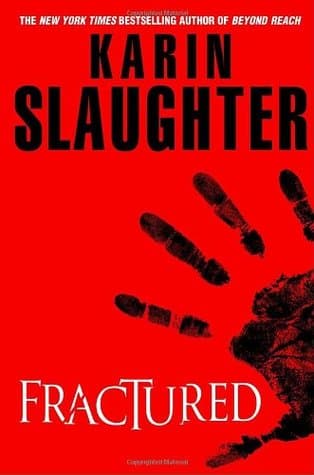
Karin Slaughter (2008)
Genre
Romance
Reading Time
8-10 hours
Key Themes
See below
Sign in to track this book
In wealthy Atlanta, a mother's revenge against a stranger found with her murdered daughter starts a three-day race for detectives Will Trent and Faith Mitchell to find the truth before another girl dies.
The book begins with a terrible scene at the wealthy Payne home in Atlanta. Abigail Payne, a young girl, has been murdered, found in the master bedroom. Her mother, Susan Payne, finds a man, Don Payne (no relation), in her home, covered in blood and holding a knife. Believing him to be her daughter's killer and the kidnapper of her other daughter, Emma, Susan shoots and kills him in anger and grief. The aftermath is chaotic, with law enforcement arriving, including GBI Agent Will Trent and Atlanta Police Detective Faith Mitchell. They must investigate the complex and emotional crime scene. The pressure is high to find Emma alive and learn the truth about Abigail's death and Don's presence.
Will Trent, with his sharp eye and dyslexia, and Faith Mitchell, an experienced detective balancing single motherhood, start their investigation. They immediately face a hostile family, especially Susan, who is full of grief and anger. Will notices several things at the crime scene that don't match Susan's story, like Abigail's body placement and the lack of a clear struggle. He also questions the exact order of events leading to Don Payne's death. Faith, while more understanding of Susan, also starts to notice small clues that suggest the situation is more complex than it seems, setting up a deeper, more troubling mystery.
Will and Faith's main goal becomes finding Emma Payne, the missing sister, before it's too late. Their investigation leads them away from the Payne's wealthy neighborhood. They look into Don Payne's life and connections, including his troubled past and his involvement with a local drug dealer named Leo. This path takes them to rougher parts of Atlanta, revealing a criminal world far from the Payne family's perfect life. Each lead, however, turns out to be a dead end or a distraction, increasing the pressure and frustration for the detectives as Emma's chances of survival lessen with each passing hour.
As Will and Faith look deeper into Don Payne's past, they uncover a shocking truth: Don was not a random intruder but the biological son of Paul and Susan Payne, given up for adoption decades ago. This changes everything about the crime. Don had recently reconnected with his birth parents, seeking answers about his past. His life had been hard, including drug addiction and petty crime, but he was trying to improve his life. This discovery makes Susan's actions look different, suggesting a more complex and sad family situation than first thought.
Paul Payne, the seemingly calm and grieving father, becomes a focus of the investigation. His unwillingness to fully cooperate and his guarded manner make Will suspicious. It soon becomes clear that Paul has been hiding the truth about Don Payne's identity and his recent contact with the family. The detectives learn that Paul tried to pay Don to stay away, fearing scandal and disruption to his perfect family image. This reveals Paul's deep selfishness and his willingness to sacrifice truth to protect his reputation and control the story, further complicating the already tangled case.
After a thorough investigation and putting together fragmented evidence, Will and Faith finally get a lead on Emma's disappearance. Tracking Don's last known movements and examining overlooked details leads them to a secluded cabin in the woods. They find Emma there, alive but severely traumatized and in critical condition, having been held captive. Her discovery brings intense relief but also reminds them of the horrors she endured. Emma's physical and mental state immediately raises questions about her kidnapper and everything that happened at the Payne home.
After getting medical care, Emma, though still deeply traumatized, starts to tell the truth about the night Abigail was murdered and her own kidnapping. She tearfully says that Abigail was not killed by Don Payne, but by her own father, Paul Payne. Emma explains how Paul had been abusing Abigail, and when Abigail threatened to expose him, he murdered her to silence her. Don Payne had arrived at the house shortly after, called by Abigail, and saw part of the terrible scene. Paul then kidnapped Emma to stop her from revealing his crimes, leaving Don's body to frame him for the murder.
With Emma's terrible testimony, Will and Faith confront Paul Payne. At first, Paul keeps up his act of an innocent, grieving father, trying to discredit Emma's story. However, the evidence, combined with Emma's detailed and consistent account, eventually breaks him. Paul is arrested and, after intense questioning, confesses to Abigail's murder and Emma's kidnapping. His confession details his cruelty, the abuse he inflicted, and his desperate attempts to cover up his crimes, finally bringing some justice to the tragic events.
Susan Payne must face the horrifying reality of her husband's true nature and her unwitting role in keeping the family's secrets. Her initial grief and anger at Don Payne turn into a deep sense of betrayal and guilt. She realizes that her blind trust in Paul and her wish to maintain a perfect family image allowed a monster to live in her home. Susan's world is shattered, and she must accept that she killed her own biological son, Don, while protecting the real killer, her husband. Her journey is one of devastating self-discovery and the painful realization of her involvement.
With Paul Payne in custody and Emma safe, the immediate crisis is over, but the emotional impact is deep. Emma faces a long recovery from her physical and mental trauma. Susan Payne is left to rebuild her shattered life, dealing with immense grief, guilt, and the knowledge of her husband's monstrous acts. Will Trent and Faith Mitchell, though successful in solving the case, are also deeply affected by the darkness they found. The book ends with the understanding that while justice has been served, the broken lives of the Payne family and the detectives will forever carry the scars of this terrible ordeal.
The Protagonist
Will's arc involves him slowly opening up to Faith and learning to trust his instincts more, despite his personal demons.
The Protagonist
Faith's arc shows her growing respect for Will and her increasing confidence in her own judgment as a detective, while navigating the challenges of motherhood.
The Supporting
Susan's arc is a tragic descent from righteous anger to devastating self-awareness and guilt as the truth about her husband and children is revealed.
The Antagonist
Paul's arc is one of exposure, as his carefully built lies are systematically dismantled, revealing his monstrous true nature.
The Mentioned
Abigail's story is primarily revealed through flashbacks and the testimonies of others, exposing her as a victim of profound abuse.
The Supporting
Emma's arc is one of survival and finding the strength to speak the truth, ultimately leading to the exposure of her father's crimes.
The Supporting
Don's arc is revealed posthumously, transforming him from a presumed killer to a tragic victim and a crucial piece of the puzzle.
The Supporting
Amanda's arc is largely consistent, showcasing her role as a powerful, albeit sometimes abrasive, guiding force in the GBI.
This theme is central to 'Fractured,' showing how the perfect image of the wealthy Payne family hides terrible abuse and murder. The beautiful home, the respected father, and the grieving mother all create an illusion that covers a deeply troubled and dangerous reality. Will Trent's ability to see past these appearances, noticing small inconsistencies at the crime scene, is key to finding the truth. The difference between the family's public image and their private horrors shows the danger of judging by appearances, as seen when Susan kills Don, believing him to be a stranger and a monster, only to find he was her son and a victim of Paul's framing.
“The house was a testament to money and good taste, but Will knew better than to trust what was on the surface.”
The book carefully shows how old family secrets can grow and lead to terrible results. The secret of Don Payne's adoption, Paul Payne's ongoing abuse of Abigail, and Susan's unintentional role in keeping up a 'perfect' family image all lead to the tragedy. The Paynes' desperate attempts to hide the truth create a harmful environment that ends in murder and kidnapping. The story reveals that these secrets not only destroy the family from within but also lead to more violence and heartbreak, highlighting how silence and lies damage personal and family well-being.
“Every family had its secrets, but the Paynes' were a cancer, eating them alive.”
The theme of justice versus revenge is immediately clear with Susan Payne killing Don Payne. Believing she is getting revenge for her daughter, she unknowingly commits a great injustice. Will and Faith's investigation is a search for true justice, which means finding the complex truth rather than reacting emotionally. The book contrasts Susan's impulsive, destructive act with the detectives' careful, often frustrating, work to find the real killer and hold him accountable. It questions what 'righting a wrong' means and stresses that true justice requires understanding and truth, not just punishment.
“Vengeance was a fire that consumed everything, including the truth.”
'Fractured' strongly shows the strength of those who go through trauma. Emma Payne, despite seeing her sister's murder and being kidnapped and abused, finds the strength to tell the truth, providing the crucial testimony needed to convict her father. Her survival and willingness to recount the terrible events show the human ability to endure unimaginable pain and still seek justice. Similarly, Will Trent's own past as a victim of abuse and neglect in foster care informs his empathy and relentless pursuit of truth, showing how survivors can use their experiences to drive positive change.
“Even shattered, a person could find the pieces to build something new.”
A misleading clue or character designed to divert suspicion.
Don Payne serves as a significant red herring. Initially presented as the obvious killer—found at the crime scene covered in blood, holding a knife, and killed by the victim's mother—he is designed to mislead both the characters and the reader. This misdirection frames the initial investigation and Susan Payne's actions, making the eventual revelation of his true identity as the biological son and a framed victim all the more shocking and impactful. The red herring effectively delays the discovery of Paul Payne's guilt and highlights the deceptive nature of appearances.
Information presented from a perspective that may not be entirely accurate or complete.
While not a single unreliable narrator, the novel employs unreliable perspectives, particularly through Susan Payne's initial account of the events. Her grief, rage, and the trauma of finding her daughter's body lead her to a conclusion (that Don Payne is the killer) that is presented as fact but is later proven false. This device forces the reader to question initial assumptions and rely on the detectives' methodical investigation to piece together the true sequence of events, highlighting how emotion and trauma can distort perception and memory.
Hints or clues that suggest future events in the story.
Foreshadowing is subtly used throughout the narrative. Will Trent's immediate discomfort with the pristine nature of the crime scene, his observation of the unusual placement of Abigail's body, and Paul Payne's evasive behavior all serve as early hints that the truth is far more complex than it appears. These subtle cues, often picked up by Will's keen eye for detail and his ability to see beyond the obvious, prepare the reader for the shocking revelations about Paul Payne's abuse and murder, building suspense and a sense of unease.
A scene that takes the narrative back in time from the current point.
Flashbacks are employed to reveal the hidden history of the Payne family, particularly regarding Don Payne's adoption and Paul's long-standing abuse of Abigail. These brief glimpses into the past provide crucial context and motivation, explaining the complex family dynamics and the roots of the tragedy. They are not extensive but appear strategically to fill in gaps in the present-day investigation, allowing the reader to understand the full scope of the family's secrets and the events leading up to the murders and abduction.
“The past is never dead. It's not even past.”
— A recurring theme about the lingering effects of past events on the present.
“Sometimes the only way to move forward is to go back to the beginning.”
— Sara's internal struggle to understand her past to heal.
“Love isn't supposed to be easy. It's supposed to be worth it.”
— Reflecting on the challenges in Sara and Daniel's relationship.
“We all have our secrets. Some are just buried deeper than others.”
— Exploring the hidden truths among the characters.
“Grief is a tricky thing. It can make you do things you never thought you would.”
— Describing the unpredictable actions of characters driven by loss.
“The truth has a way of coming out, no matter how hard you try to bury it.”
— As the investigation into past events unfolds.
“Sometimes the greatest strength is knowing when to ask for help.”
— Sara's journey to accept support from others.
“You can't outrun your demons. Eventually, they catch up to you.”
— Characters confronting their past mistakes and fears.
“Hope is a dangerous thing. It can keep you alive, or it can destroy you.”
— The dual nature of hope in desperate situations.
“Family isn't always blood. It's the people who stand by you when no one else will.”
— Highlighting the chosen family and loyalty.
“Forgiveness isn't about forgetting. It's about letting go of the anger.”
— A character's struggle to forgive past wrongs.
“Every choice we make has a ripple effect, touching lives we never even knew.”
— Reflecting on the interconnectedness of events and people.
“Some wounds never truly heal, they just leave scars to remind you they were there.”
— Acknowledging the lasting impact of traumatic experiences.
Ready to see how well you understood this book? Take our interactive quiz with 10 questions.
Biography coming soon.