“Every time you make a mistake, they will brand you. They will brand you with an F for flawed.”
— Celestine's internal reflection on the societal system of branding the Flawed.

Sign in to track this book
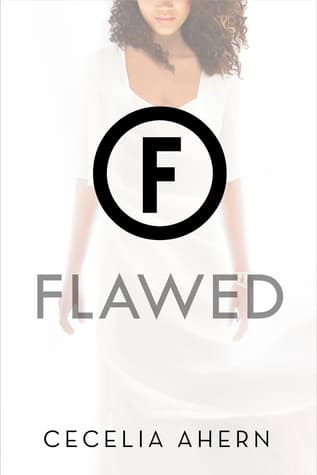
In a society that demands perfection and punishes mistakes with public branding, a seemingly faultless girl risks everything for one act of kindness, exposing a system built on fear.
Celestine North is a model citizen in a society ruled by the Guild, where any fault can lead to being branded as 'Flawed.' She has a family, including her younger sister Juniper, and dates Art Crevan, the son of the powerful Guild Judge Crevan. Her life is ordered, following all societal rules meant to keep an image of faultlessness. She believes in the system, though she has heard whispers of its harshness. Her main concern is an upcoming party where she hopes to improve her social standing, unaware that her world is about to break.
While on a bus with Art, Celestine sees an elderly Flawed man having a bad coughing fit, unable to hold his medical bag. Despite Art's warnings and fear of public judgment, Celestine's compassion takes over. She takes the bag and holds it for the man until he gets off. This simple act of kindness, a direct violation of Guild law against interacting with the Flawed, is seen by several passengers and reported. This moment starts the events that will change Celestine's life and challenge her beliefs about her society.
Soon after her act on the bus, Celestine is arrested by Guild officers and taken to the Guild's interrogation place. There, she faces Judge Crevan, Art's father, who leads the Guild. Judge Crevan questions her in a harsh and manipulative way, trying to make her confess to her 'flaw.' He uses her family, her relationship with Art, and her own self-worth against her, turning her act of kindness into a deliberate rebellion. Celestine, though scared, tries to stay calm and defend her actions, seeing the Guild's true, frightening power.
Celestine's trial is a public show, meant to stop others. Despite her lawyer's efforts, the proof of her interaction with the Flawed man is clear, and the Guild's decision is set. Judge Crevan leads the trial, making the process even more personal and painful for Celestine. She is found guilty of being 'Flawed' and sentenced to five brandings, one for each perceived flaw: Disobedience, Lying, Cheating, Cowardice, and Selfishness. This public shame and pain are meant to remove her identity and break her spirit, turning her into an outcast.
After her branding, Celestine is released back into society, but her life is changed forever. She must wear a gray uniform, live in a special Flawed district, and is constantly watched and scorned. Her family, though supportive, struggles with the societal pressure and shame. Her relationship with Art becomes tense, as he tries to balance his loyalty to her and his father's expectations. Celestine quickly learns the dehumanizing reality of being Flawed, seeing firsthand the prejudice and cruelty of a system she once believed in, and seeing the suffering of others like her.
As Celestine lives her new life, she meets Carrick, a mysterious and rebellious Flawed person who challenges her ideas about the Guild. Carrick, also branded by Judge Crevan, has a more cynical and informed view of the system. He quietly encourages Celestine to look beyond the Guild's stories and question the real reason for their strict rules. Through her talks with Carrick and her own observations of the unfairness around her, Celestine's initial fear turns into a growing sense of defiance and a wish to show the truth.
Celestine's story, especially her public trial and the harshness of her punishment for a small act, starts to resonate with many people, especially those who secretly doubt the Guild. Her strength and quiet defiance, despite her pain, make her a reluctant symbol of resistance. She starts to get anonymous messages of support and sees small acts of defiance from others. The Guild, especially Judge Crevan, sees her growing influence and views her as a threat to their control, increasing their watch and pressure on her.
Art Crevan, torn between his love for Celestine and his loyalty to his powerful father, is in an impossible situation. He tries to help Celestine in small ways, but his fear of his father and his commitment to his privileged life lead him to make choices that betray Celestine's trust. He struggles to understand her new defiance and the depth of her beliefs, leading to more distance and misunderstanding between them. His inability to fully support her further isolates Celestine and strengthens her resolve to fight for herself and others.
Through her own investigations, helped by clues from Carrick and her growing network of support, Celestine starts to uncover the Guild's dark truth. She learns that the Flawed system is not about creating a perfect society, but about keeping control and power for the elite. She finds that the 'flaws' are often random, and the branding process is more about breaking spirits than fixing behavior. She also starts to gather information about the Guild's beginnings and its founder, realizing the whole system is built on lies and manipulation.
With her new knowledge and the support of others, Celestine decides to fight the Guild. She understands the huge risks, including more punishment or even death. Her change from a compliant citizen to a determined rebel is complete. She plans to expose the Guild's corruption and the unfairness of the Flawed system to the public, using her own story to start change. The book ends with Celestine getting ready for this fight, her future uncertain but her resolve strong, setting up a bigger rebellion.
The Protagonist
Celestine transforms from a compliant, perfect citizen into a branded outcast who embraces her 'flaws' and becomes a leader in challenging the oppressive Guild.
The Supporting
Art's initial support for Celestine wanes under family pressure, leading him to betray her trust and prioritizing his own safety and status.
The Antagonist
Judge Crevan remains a steadfast and increasingly threatened figure of authority, whose grip on power is challenged by Celestine's defiance.
The Supporting
Carrick guides Celestine from passive victim to active rebel, helping her understand the larger fight against the Guild.
The Supporting
Juniper experiences the trauma of her sister's branding, forcing her to confront the harsh realities of their society at a young age.
The Supporting
They attempt to support Celestine within the system, but their fear prevents them from actively joining her rebellion.
The Mentioned
His suffering is the initial trigger for Celestine's transformative journey.
This theme looks at a society that aims for an impossible ideal of perfection, punishing any difference as a 'flaw.' Celestine's perfect life breaks when her act of kindness is called a flaw. The book shows how this chase for perfection stops individuality, empathy, and real human connection. The branding system physically shows the societal obsession, turning natural human traits like empathy or disagreement into punishable acts. The story ultimately supports the idea that 'flaws' are a natural and often beautiful part of humanity, not something to remove.
“What is a flaw, after all? A blemish? A fault? Or is it simply a point of view?”
This theme begins with Celestine's key act of helping the elderly Flawed man. Her instinct to show kindness directly conflicts with society's demand for conformity and following the Guild's rules. The story examines the moral problem of choosing between empathy and personal safety in an oppressive system. Celestine's journey shows the great cost of choosing kindness, but also its immense power to start change and show the true 'flaws' within the system itself. The lack of kindness from other citizens on the bus highlights the chilling effect of conformity.
“I made a choice that day. A choice to be human. And that, in their eyes, was my greatest flaw.”
The novel criticizes the idea of justice in a dystopian society where power belongs to a few. Celestine's trial is a clear example of injustice, where the decision is set, and her act of kindness is twisted into a crime. The Guild's 'justice' system is shown to be a tool for control and oppression, not for fairness or rehabilitation. Celestine's fight becomes a search for true justice, not just for herself, but for all the Flawed, challenging the Guild's authority and moral right.
“They called it justice. I called it a circus. A public shaming designed to break the spirit.”
Before her branding, Celestine's identity comes from societal expectations and her 'perfect' status. Being branded as Flawed takes away this external identity, making her face who she truly is beneath the labels. The physical brands are a constant reminder of her new, unwanted identity. Her journey is one of self-acceptance, learning to accept her 'flaws' and redefine her worth not by societal standards, but by her own moral compass and strength. She finds a new, strong identity as a rebel, showing that true identity comes from within.
“They branded my skin, but they couldn't brand my soul.”
A physical and psychological punishment for being 'Flawed.'
The branding system is the central plot device, symbolizing the Guild's control and the dehumanization of its citizens. Each brand (Disobedience, Lying, Cheating, Cowardice, Selfishness) corresponds to a perceived flaw, but also serves as a constant, visible mark of shame and exclusion. It functions as a powerful deterrent, forcing conformity through fear of physical pain and social ostracization. For Celestine, the brands initially represent her downfall, but later become a symbol of her resilience and a rallying point for others, subverting their intended purpose.
The authoritarian governing body that dictates societal 'perfection.'
The Guild is the overarching antagonist and a classic dystopian plot device representing oppressive governmental control. It creates and enforces the 'Flawed' system, using propaganda, surveillance, and public trials to maintain its power. The Guild's mysterious origins and vast authority create a sense of helplessness and fear among the citizens. Its structure, particularly Judge Crevan's role, allows for a personal antagonist to Celestine, making the systemic oppression feel immediate and personal.
Physical segregation and identification for branded individuals.
These devices reinforce the societal division and dehumanization of the Flawed. The grey uniform immediately marks individuals as outcasts, making them targets for public scorn and surveillance. The designated Flawed districts further isolate them, limiting their opportunities and contact with the 'perfect' society. This segregation serves to maintain the illusion of perfection for the compliant citizens and prevent any 'flawed' ideas from spreading. For Celestine, it's a constant reminder of her new status, but also a place where she finds solidarity and a burgeoning resistance.
A theatrical display of Guild power and a warning to citizens.
Celestine's public trial is a key plot device used to demonstrate the Guild's absolute authority and ruthlessness. It's not about seeking justice but about making an example. The spectacle serves as a form of public shaming and a powerful deterrent against rebellion. For Celestine, it's a traumatic and humiliating experience that publicly strips her of her former life. However, its very public nature also inadvertently draws attention to her case, making her a symbol and inspiring quiet dissent among the populace.
“Every time you make a mistake, they will brand you. They will brand you with an F for flawed.”
— Celestine's internal reflection on the societal system of branding the Flawed.
“It was just a moment, a tiny moment, but it was enough to change everything.”
— Celestine's reflection on the small act of compassion that led to her downfall.
“To be Flawed is to be human. To be human is to be Flawed.”
— A central theme of the book, often repeated by characters who question the system.
“The truth has a way of coming out, no matter how hard you try to bury it.”
— Celestine's growing realization as she uncovers more about the Guild and its secrets.
“Fear is a powerful weapon, and they use it well.”
— Celestine observing how the Guild maintains control over the population.
“Sometimes the greatest acts of rebellion are the quietest ones.”
— Celestine contemplating the small acts of kindness and resistance she witnesses.
“We are all just trying to survive in a world that doesn't want us to be ourselves.”
— A conversation between Celestine and another Flawed individual.
“They want us to believe we are alone, but we are not.”
— Celestine finding solidarity and hope among the Flawed.
“The hardest part isn't the physical pain; it's the shame.”
— Celestine reflecting on the emotional toll of being branded Flawed.
“Love, like truth, cannot be hidden forever.”
— Celestine's thoughts on her feelings for Art, despite the dangers.
“A world without flaws would be a world without beauty, without art, without love.”
— A philosophical musing on the importance of imperfection.
“The greatest prison is not built of bars, but of the mind.”
— Celestine realizing the extent of the psychological control exerted by the Guild.
“It's not about being perfect; it's about being brave enough to be yourself.”
— Celestine's evolving understanding of self-acceptance and defiance.
“Sometimes the rules are made to be broken, especially when they're wrong.”
— Celestine's justification for her acts of defiance against the Guild.
Ready to see how well you understood this book? Take our interactive quiz with 10 questions.

Cecelia Ahern is an Irish author known for her heartwarming and often magical realist fiction. Her debut novel, P.S. I Love You, became an international bestseller and was adapted into a popular film. Ahern's other notable works include "Where Rainbows End" (also adapted for film as "Love, Rosie"), "The Gift," and "The Book of Tomorrow." Her writing frequently explores themes of love, loss, and the power of human connection.