“First love is a kind of vaccination which saves a man from catching the complaint a second time.”
— The narrator reflects on the enduring impact of first love.

Sign in to track this book
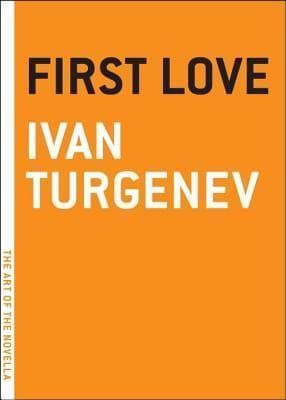
A sixteen-year-old boy's summer turns upside down with first love, jealousy, and a painful discovery: the older woman he loves is having a secret affair with his own father.
The story begins with gentlemen in a drawing-room, sharing stories of their first love. When it is Vladimir Petrovich's turn, he says his story is not typical and asks for a few days to write it down properly, feeling he cannot tell it spontaneously. He later gives his manuscript to his friends, describing his experiences as a sixteen-year-old during a summer at a dacha outside Moscow. This introduction sets the scene for the personal and somewhat sad story, showing the lasting impact this first love had on him.
Vladimir Petrovich, sixteen, is spending the summer with his family at their dacha near Moscow. His quiet life changes with the arrival of new neighbors, Princess Zasyekin and her daughter, Zinaida Alexandrovna. Zinaida, a beautiful and charming twenty-one-year-old, immediately catches Vladimir's eye. He is completely taken by her beauty, wit, and air of mystery. His days, once filled with childish activities, now center on seeing her, hearing her voice, and dreaming of her. This initial attraction quickly becomes a deep and overwhelming first love.
Driven by his growing love, Vladimir finds ways to get closer to Zinaida. He is eventually accepted into her lively group of admirers, which includes various young men: Count Malevsky, Dr. Lushin, Belovzorov, and Maidanov. Vladimir, the youngest and most naive, watches Zinaida as she playfully manipulates and teases her suitors, charming them with a mix of grace and unpredictability. He is both happy to be near her and tormented by jealousy and the feeling that he is just one of many seeking her attention, often feeling like a mere boy compared to the older men.
During one evening gathering, Zinaida suggests a game of forfeits, which quickly becomes a way for her to show her power over her admirers. She makes them do various tasks, often humiliating, which they readily obey. Vladimir, though hesitant at first, also gives in to her will. He feels a strange mix of adoration and pleasure in her control. This game shows Zinaida's manipulative charm and the strong influence she has over the men around her, making Vladimir's fascination and his feeling of being completely captivated by her deeper.
One night, Vladimir finds Zinaida alone in the garden. He takes the chance to speak with her closely. During their conversation, full of youthful awkwardness and strong emotion, Vladimir finally tells her he loves her. Zinaida, while not returning his feelings as he wishes, treats him with surprising tenderness and a hint of maternal affection, acknowledging his feelings without fully accepting them. This moment is a turning point for Vladimir, solidifying his devotion despite her lack of a clear romantic response.
After his confession, Vladimir's emotional state is a rollercoaster. Zinaida's behavior towards him is unpredictable; one moment she is affectionate, the next cold or playfully cruel. He is consumed by jealousy, especially when she seems to favor other suitors, and his days are filled with worry and longing. He constantly seeks her out, watching her every move, trying to understand her true feelings. This time shows the intense suffering and joy that define his first experience with love, highlighting the turbulent nature of young passion.
Vladimir starts to notice Zinaida's increasingly secretive behavior. She withdraws from her usual group of admirers, and he often sees her going out late at night or meeting someone in the garden. His suspicions grow that she has a secret lover, a realization that fills him with agonizing jealousy and confusion. He secretly follows her, desperate to find the truth, his young heart tormented by the thought of her affections going to another. This mystery adds suspense and heartbreak to his already intense emotional state.
Driven by a need to know the truth, Vladimir follows Zinaida one night to an old greenhouse. Looking through a crack, he sees something that shatters his world: Zinaida in a passionate embrace with his own father, Pyotr Vasilyevich. The shock is immense, a betrayal that crushes his innocence and turns his love into a complex mix of horror, pain, and continued, agonizing devotion. This discovery is the story's climax, forever changing Vladimir's view of his father, Zinaida, and the very nature of love and betrayal.
After the shocking discovery, life at the dacha becomes unbearable for Vladimir. His father, seemingly unaffected outwardly, keeps his distant manner. Zinaida, too, stays composed, though Vladimir now sees her through a different, painful lens. Soon after, both families leave their dachas. Vladimir is left to deal with the devastating truth, the image of his father and Zinaida burned into his memory. This departure marks the end of his ideal summer and the start of a deep loss of innocence, leaving him with a deep, unhealed wound.
Some time after the summer, Vladimir sees Zinaida one last time, by chance, in a carriage. She looks different, more mature, and he feels a pang of his old affection mixed with the pain of their past. Years later, while at university, Vladimir's father dies suddenly from a stroke, leaving a brief, mysterious note hinting at his complex feelings for Zinaida. Even later, Vladimir learns from Dr. Lushin that Zinaida had married a wealthy man and died in childbirth. This sad news brings a final, melancholic end to Vladimir's first love, reinforcing its lasting impact on his life.
The Protagonist
From an innocent, romantic boy, he transforms into a more disillusioned, melancholic man after experiencing the complexities and betrayals of first love.
The Object of Affection
She remains largely enigmatic to Vladimir, her inner world only hinted at through her actions, ultimately revealing a secret, passionate life that leads to tragedy.
The Supporting Character / Antagonist (unwitting)
His character arc is revealed through Vladimir's discovery of his secret life, showing him to be a man of hidden passions beneath a conventional exterior.
The Supporting Character
Her character remains static, representing the stable but somewhat unperceptive domestic sphere.
The Supporting Character
He remains a consistent, observant presence, eventually revealing Zinaida's fate to Vladimir.
The Supporting Character
His character remains a constant, though minor, source of antagonism for Vladimir.
The Supporting Character
His character serves to highlight the diverse range of men Zinaida captivates.
The Supporting Character
He is a minor character, serving to illustrate Zinaida's broad appeal.
The novella explores the overwhelming emotional intensity of young first love. Vladimir experiences extreme highs of joy and hope, followed by devastating lows of jealousy, despair, and humiliation. His attraction to Zinaida consumes him, changing how he sees the world. This theme is central, showing how love can be both exhilarating and deeply painful, a formative experience that leaves a lasting mark. For example, Vladimir's obsessive tracking of Zinaida's movements and his agony over her every glance show this all-consuming nature.
“Oh, what a strange, what a sweet, what a terrifying feeling to be sixteen, to believe in everything, to love everything, to be afraid of nothing, and to know nothing!”
Vladimir's journey is from naive boyhood to a more cynical understanding of the adult world. His idealized view of love, his father, and Zinaida is broken by the discovery of the affair. This event forces him to face the complexities of human relationships, betrayal, and hidden passions, leading to deep disappointment. The story shows how one devastating experience can permanently change one's view of life and love, marking the end of childhood innocence. His reaction to seeing his father and Zinaida together is the ultimate cause for this loss.
“My world was turned upside down; everything was confused in it; the beautiful, the noble, the pure were mixed with the base, the vile, the dirty.”
Zinaida's character shows power dynamics. She has great influence over her many suitors, including Vladimir, playfully manipulating them and asserting her dominance. The game of forfeits is a clear example of her controlling nature. However, Zinaida herself is finally subject to her own desires and the social limits of her time, leading her into a secret and finally tragic relationship with Vladimir's father. This theme explores who has emotional control and the results of such imbalances.
“She was a princess, but she treated us like her vassals.”
The story emphasizes how hard it is to understand human emotions and motivations, especially Zinaida's. Vladimir, despite his intense observation, can never fully understand her true feelings or reasons for her actions. His father's hidden passion also highlights this theme, showing a secret life beneath a calm exterior. The novella suggests that even those closest to us can have deep, hidden parts of their personalities and desires, making true understanding difficult. Zinaida's changing moods and secretive behavior illustrate this central mystery.
“What was going on in her soul, I could not guess.”
The narrative is an adult Vladimir recounting his past, emphasizing memory's lasting power and how formative experiences shape a person's life long after they happen. Writing his story suggests a need to process and understand these events years later. Time allows for reflection and a deeper, though sad, appreciation of first love's impact, even as details might fade or gain new meaning. The story begins and ends with the adult narrator, highlighting this theme.
“What is youth? It is the same as the spring in the year. The spring is the time of hope, the time of joy, the time of fresh green leaves.”
An adult narrator recounts a story from his youth.
The novella employs a frame narrative, where the adult Vladimir Petrovich recounts his story of first love to a group of friends. This device allows for a reflective, retrospective tone, providing the perspective of experience and melancholy to the intense, immediate emotions of youth. It also creates a sense of intimacy between the narrator and the reader, as if listening to a personal confession. The framing emphasizes the lasting impact of the events on the narrator's life and his mature understanding of them.
Representing innocence, secrets, and the loss of purity.
The garden, initially a place of youthful freedom and romantic encounters for Vladimir and Zinaida, gradually transforms into a setting for hidden secrets and ultimately, betrayal. The old greenhouse, specifically, becomes the site of Vladimir's devastating discovery of his father's affair with Zinaida. It symbolizes the shattering of innocence and the intrusion of the adult world's complexities and moral ambiguities into Vladimir's pure, youthful love, marking the transition from idyllic romance to harsh reality.
The reader (and adult narrator) knows more than the young protagonist.
Dramatic irony is prevalent as the adult Vladimir narrates his youthful experiences. The reader, along with the older narrator, is aware of the impending heartbreak and the true nature of the relationships before the young Vladimir fully comprehends them. For example, the sophisticated banter between Zinaida and Vladimir's father often holds double meanings that the young Vladimir misses, but the reader can infer, heightening the tension and pathos of the story as it unfolds towards its tragic revelation.
Hints and clues that build suspense towards the climax.
Turgenev uses subtle foreshadowing throughout the narrative to hint at the tragic turn of events. Zinaida's erratic moods, her secret excursions, and the unusual interactions between her and Vladimir's father all serve as clues. Vladimir's own vague sense of unease and his growing suspicions contribute to the suspense, preparing the reader for the shocking revelation. This device creates a sense of inevitability and heightens the emotional impact of the climax when the truth is finally revealed.
“First love is a kind of vaccination which saves a man from catching the complaint a second time.”
— The narrator reflects on the enduring impact of first love.
“I was not yet sixteen; but I already knew what it was to be in love.”
— The young protagonist Vladimir describes his early romantic awakening.
“She was a creature of another world, and I worshipped her.”
— Vladimir idealizes Zinaida, the object of his affection.
“Love... is not a feeling; it is an art, and like every art it requires study and practice.”
— A philosophical observation on the nature of love.
“I felt that I was living in a dream, and that I should wake up to find myself alone again.”
— Vladimir's sense of unreality during his infatuation.
“To love and to be loved is the greatest happiness of existence.”
— A reflection on the central theme of the novella.
“She had a way of looking at you that made you feel she saw right through you.”
— Description of Zinaida's penetrating gaze.
“Youth is the time for dreams, and first love is the sweetest of them all.”
— Nostalgic commentary on youthful romance.
“I would have given my life for one kind word from her.”
— Vladimir expresses the intensity of his devotion.
“The heart has its reasons which reason knows nothing of.”
— An adaptation of Pascal's famous line, reflecting on irrational love.
“There is no despair so absolute as that which comes with the first dawn of love.”
— Describing the painful aspects of nascent love.
“She was like a star that shone brightly but distantly, forever out of reach.”
— Metaphor for Zinaida's unattainable nature.
“In love, as in everything else, experience is the best teacher.”
— A pragmatic view on learning through romantic experience.
“The memory of first love remains with us, a fragrant flower pressed between the pages of life.”
— Poetic reflection on the lasting impression of first love.
Ready to see how well you understood this book? Take our interactive quiz with 10 questions.

Ivan Sergeyevich Turgenev was a Russian novelist, short story writer, poet, playwright, translator and popularizer of Russian literature in the West.