“The only way to get over the fear of flying is to fly.”
— A central theme of the novel, reflecting the protagonist's journey.

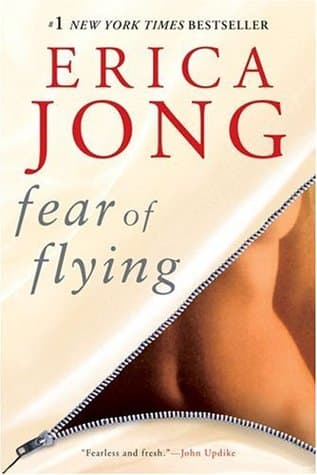
Erica Jong (1971)
Genre
Romance
Reading Time
12-15 hours
Key Themes
See below
Sign in to track this book
In 1970s Europe, a psychoanalyst's wife leaves her husband for a quest of sexual freedom and self-discovery, only to learn that freedom and fulfillment are not always the same.
Isadora Wing, a poet and writer, travels to Vienna with her psychoanalyst husband, Bennett Wing, for a conference. Despite a seemingly stable five-year marriage, Isadora feels deep boredom and sexual unhappiness. She struggles with intense worries, especially a 'zipless fuck' fantasy – a desire for a completely uninhibited sexual encounter without emotional attachment. As Bennett focuses on the conference, Isadora feels more and more alone and restless, observing the many analysts and their wives with a cynical, yet hopeful, eye for something more. Her inner thoughts show a sharp wit and deep self-awareness, but also a paralyzing fear of truly breaking free from her conventional life.
At the conference, Isadora meets Adrian Goodlove, a charming and unusual British anti-psychiatrist. Adrian immediately draws Isadora in with his intellectual debates, his clear dislike for strict traditional psychoanalysis, and his appealing free spirit. He represents everything Bennett is not: spontaneous, passionate, and seemingly without societal burdens. Their first conversations are full of strong mutual attraction, and Isadora begins to fantasize about him, seeing him as a possible embodiment of her 'zipless fuck' ideal and a way to the freedom she wants. This meeting sparks a possibility in her stagnant life.
Adrian suggests a spontaneous road trip through Europe, an idea that greatly excites Isadora. Surprisingly, Bennett agrees to join them, seemingly unaware of the growing chemistry between his wife and Adrian. The three plan to travel from Vienna to London, supposedly for Adrian's work and Bennett's continued conference circuit. For Isadora, however, this journey is a deliberate escape from her marriage and a desperate pursuit of Adrian. She sees the trip as her chance to finally experience the uninhibited passion and freedom she has only dreamed of, believing Adrian holds the key to unlocking her suppressed desires and true self.
The road trip through Europe becomes the setting for Isadora and Adrian's growing affair. They travel through various scenic places, but Isadora focuses only on Adrian, whom she finds more and more appealing. Their stolen moments, lingering looks, and intellectual closeness quickly lead to physical intimacy, often behind Bennett's back or when he is unknowingly present. Bennett, though often lost in his own thoughts or work duties, begins to sense the change in his wife's feelings and the clear connection between Isadora and Adrian. The tension in the car grows thick with unspoken desires and betrayals, pushing Isadora further into her rebellious search for passion.
Eventually, Bennett, perhaps sensing what is coming or needing to return to his own responsibilities, leaves Isadora and Adrian to continue their journey alone. With Bennett gone, Isadora feels a rush of exciting freedom, believing she has finally achieved her longed-for liberation. She and Adrian fully immerse themselves in their affair, traveling through Italy and France, enjoying passionate encounters and intellectual talks. However, the reality of her 'freedom' quickly feels less like liberation and more like an emotional freefall. Isadora starts to question whether Adrian is truly the answer to her desires or just another escape, and the 'zipless fuck' proves to be more complicated than she imagined.
As the affair continues, Isadora begins to see Adrian less ideally. His initial charm gives way to a more possessive and emotionally distant personality. He is unreliable, prone to jealousy, and ultimately unable to offer the deep connection Isadora secretly wants, despite her 'zipless fuck' fantasy. She realizes that while he offers physical excitement, he is emotionally unavailable and perhaps even more detached than Bennett. The romantic illusion she built around him shatters, leaving her feeling more and more alone and disappointed. The freedom she sought with him now feels empty and unfulfilling, forcing her to face her own part in her unhappiness.
Feeling completely lost and betrayed by Adrian, Isadora leaves him and continues her journey alone. This solo part of her trip becomes a crucial time for self-reflection. She thinks deeply about her marriage, her affair, her fantasies, and her understanding of herself. She confronts her own fears of intimacy, her expectations of men, and the societal pressures that have shaped her desires. This period is marked by raw honesty as she grapples with the complexities of female desire, the pursuit of freedom, and the elusive nature of happiness. She is no longer just seeking an outside solution but is beginning to look inside for answers.
Isadora eventually reaches London, where she has a brief, unexciting reunion with Adrian. The encounter confirms her growing understanding of his limitations and her own changing needs. She sees him clearly now, without the romantic ideas she had projected onto him. The reunion lacks the passion and excitement they once shared, confirming her realization that he is not the path to her fulfillment. This final interaction with Adrian closes that chapter of her life, allowing her to fully embrace her journey of self-discovery without the lingering pull of their affair.
After leaving Adrian for good, Isadora finds herself in Paris, a city that represents both romance and independence. Here, among the beauty and anonymity, she experiences a moment of clarity and self-acceptance. She reflects on her entire turbulent journey, recognizing the illusions she chased and the truths she uncovered about herself. She begins to understand that true freedom does not come from a man or a 'zipless fuck,' but from within. This period is less about finding a new lover and more about finding a new relationship with herself, embracing her complexities and her newfound strength as an independent woman.
Near the end of her journey, Isadora calls Bennett. The conversation is hesitant and emotional, showing a small hope for reconciliation, but also a significant shift in Isadora's perspective. She does not return to him as the same woman who left, but as someone who has changed greatly. The ending is open, suggesting that while she might return to her marriage, it will be on entirely new terms. Her journey has been one of self-discovery, and while the path forward is unclear, she has gained a vital understanding of her own desires and what true freedom means, which is not necessarily tied to any man.
The Protagonist
Isadora transforms from a woman seeking external validation and liberation through sexual encounters to one who understands that true freedom and fulfillment must come from within herself.
The Supporting
Bennett remains largely static, serving as a catalyst for Isadora's journey rather than undergoing significant personal change himself, though he is forced to confront the cracks in his marriage.
The Supporting
Adrian's character remains largely unchanged, serving to expose the limitations of Isadora's idealization of external liberation and the 'zipless fuck' fantasy.
The Mentioned
The 'Zipless Fuck' concept evolves from an idealized fantasy to a recognized illusion, as Isadora learns that true liberation is more complex than purely physical release.
The novel explores female sexuality, desire, and the search for freedom in a patriarchal society. Isadora deals with the conflict between society's expectations for women (wife, mother) and her own intense, often rebellious, sexual urges. Her 'zipless fuck' fantasy shows her desire for uninhibited sexual freedom, without emotional ties, yet she constantly questions if such freedom is truly satisfying. Her journey through Europe, and her affair with Adrian, forces her to confront the complexities of her desires and to define freedom on her own terms, beyond purely physical acts. She learns that true freedom is an internal state, not an external goal, as seen when she feels most free alone in Paris, reflecting on her journey.
“I was looking for a man who would make me feel whole, but I ended up discovering that I was whole all along.”
Jong critiques traditional marriage as a potentially restrictive institution for women, especially intelligent and passionate ones. Isadora's marriage to Bennett, though stable and intellectually stimulating, is shown as sexually and emotionally stagnant, leading to her deep boredom and unhappiness. The novel questions if lifelong monogamy is possible and explores the internal and external pressures that keep people in unfulfilling relationships. Isadora's affair is not just about sex, but about breaking free from what she sees as a deadening marital structure. Her eventual return to Bennett, if it happens, would be on completely new terms, suggesting a redefinition of marriage itself.
“What did I want? To be free. To be myself. To be a wife and not a wife. To be a woman and not a woman.”
Isadora's entire journey is a search for self-discovery and authenticity. She feels a deep disconnect between her inner self and the roles she plays (wife, intellectual). Her 'fear of flying' symbolizes her fear of truly embracing her authentic self and taking risks. Through her affair, her travels, and her inner thoughts, she tries to shed societal conditioning and understand her true desires, worries, and identity. Her disappointment with Adrian is a key turning point, as it forces her to realize that the answers she seeks are not in another person but within her own mind. Her moments of clarity, especially when alone, highlight the internal nature of this search.
“The only 'zipless fuck' was the one you had with yourself.”
The novel is an important feminist text, exploring the challenges faced by intelligent, educated women in the 1970s. Isadora, a poet and intellectual, deals with societal expectations that often limit women to domestic roles, even while pursuing intellectual or professional lives. She expresses the frustrations of being a woman with a sharp mind and strong desires in a world still largely shaped by male perspectives. Her experiences reflect the broader feminist discussions of the era, advocating for women's right to sexual independence, emotional freedom, and self-definition apart from their relationships with men. Her inner thoughts are full of observations on gender dynamics and the societal pressures on women.
“Why do women always have to be the ones to make the compromises? Why is it always our needs that are negotiable?”
Isadora's raw and unfiltered thoughts, providing deep insight into her psyche.
The novel is largely driven by Isadora Wing's extensive, often stream-of-consciousness, internal monologue. This device allows the reader direct access to her most intimate thoughts, fears, desires, and witty observations. It's through her internal voice that the novel's themes of female sexuality, identity, and the critique of societal norms are most powerfully expressed. This unfiltered perspective creates a strong sense of intimacy and allows for complex psychological exploration, making Isadora a relatable and multi-faceted character despite her often unconventional actions.
A symbolic ideal of pure, uninhibited sexual liberation without emotional attachment.
The 'zipless fuck' is a recurring concept and fantasy that Isadora articulates throughout the novel. It represents her longing for a purely physical, anonymous, and uninhibited sexual encounter, free from the emotional baggage and complexities of relationships. This device serves as a central metaphor for her desire for ultimate sexual liberation and escape from the stifling aspects of her marriage. Its evolution, from an idealized goal to a recognized illusion, is crucial to Isadora's character arc and the novel's commentary on the limitations of purely physical freedom.
A physical journey mirroring Isadora's internal quest for self-discovery.
The journey across Europe, initially with Bennett and Adrian, then with Adrian alone, and finally by herself, serves as a significant plot device. This physical journey directly mirrors Isadora's internal quest for liberation and self-discovery. Each stage of the trip (Vienna, Italy, France, London, Paris) corresponds to a different phase of her emotional and psychological development. The changing landscapes and interactions with new places and people provide a backdrop against which Isadora confronts her desires, illusions, and ultimately, her authentic self. It is a classic 'hero's journey' structure applied to a modern woman's search for identity.
“The only way to get over the fear of flying is to fly.”
— A central theme of the novel, reflecting the protagonist's journey.
“A woman is not a person until she is a mother.”
— Isadora's reflection on societal expectations for women.
“The zipless fuck was the purest fuck.”
— Isadora's famous concept of uninhibited, consequence-free sexual encounters.
“Marriage is a series of small deaths.”
— Isadora's cynical view of long-term commitment and its impact on individuality.
“All women are born with a internal censor.”
— Isadora discussing the self-censorship and societal pressures women face.
“Sanity is a compromise.”
— Isadora's musings on the fine line between madness and normalcy.
“I was looking for a new self, a new identity, a new life.”
— Isadora's desire for transformation and escape from her current circumstances.
“The greatest danger for women is not that they will be raped, but that they will be bored.”
— Isadora's provocative statement on the emotional and intellectual stagnation women often face.
“Poetry is not a career, it is a way of life.”
— Isadora, a poet, reflecting on her passion and its intrinsic value.
“To be truly free, you have to be free from yourself.”
— Isadora contemplating the internal barriers to true liberation.
“The only thing worse than being alone is being with someone who makes you feel alone.”
— Isadora's reflection on the loneliness that can exist within relationships.
“Every woman has a book in her.”
— Isadora's belief in the untapped stories and experiences within all women.
“I was looking for a man who would set me free, but what I really needed was to set myself free.”
— Isadora's realization about the source of her own liberation.
Ready to see how well you understood this book? Take our interactive quiz with 10 questions.

Biography coming soon.