“I may have lost my heart, but not my self-control.”
— Emma reflecting on her feelings for Mr. Knightley before their engagement.

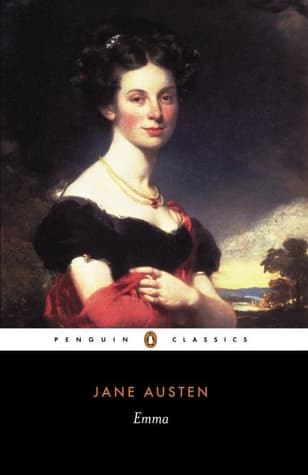
Jane Austen (2015)
Genre
Romance
Reading Time
10-12 hours (approx. 474 pages)
Key Themes
See below
Sign in to track this book
A lively socialite who loves to meddle in others' love lives learns humility and self-awareness through her own romantic missteps in a small village.
Emma Woodhouse, a wealthy, clever, and somewhat spoiled young woman living in Highbury, is pleased with herself for arranging the marriage between her former governess, Miss Taylor, and Mr. Weston. This success strengthens her belief in her matchmaking skills, much to the mild concern of her long-time friend and brother-in-law, Mr. George Knightley, who often offers practical advice. Soon after, Emma befriends Harriet Smith, a sweet but impressionable girl of uncertain background who lives at Mrs. Goddard's boarding school. Emma, convinced Harriet deserves a better match than the local farmer, Robert Martin, immediately begins to prepare her for a higher social standing.
Emma actively discourages Harriet Smith from accepting a marriage proposal from Robert Martin, a kind and respectable farmer whom Mr. Knightley believes would be a good match for Harriet. Emma, however, thinks him socially beneath Harriet and persuades Harriet that she is meant for someone better. Instead, Emma starts to subtly push Harriet towards the local vicar, Mr. Elton. Emma believes Mr. Elton is perfect for Harriet because of his good looks and pleasant manners. Harriet, easily influenced by Emma's stronger personality and social status, soon develops admiration for Mr. Elton, unaware of Emma's true intentions for their pairing.
During a series of social events, including a Christmas Eve party at the Westons' home, Emma continuously tries to bring Mr. Elton and Harriet together. However, during a carriage ride home, after Harriet is unexpectedly left behind, Mr. Elton takes the chance to declare his love and propose, not to Harriet, but to Emma herself. Emma is completely shocked and embarrassed. She had entirely misunderstood his attention, thinking his polite courtesies and compliments to her were indirect signs of interest in Harriet. Mr. Elton is equally surprised by her rejection, having assumed Emma was encouraging his suit. The misunderstanding leaves Emma deeply ashamed and forces her to confront her own vanity and poor judgment.
After Mr. Elton quickly leaves Highbury following his rejection, the village's social scene changes with two important arrivals. Frank Churchill, Mr. Weston's charming and lively son from his first marriage, finally visits Highbury after delays caused by his demanding aunt. His arrival creates much excitement and speculation, especially from Emma, who finds him an engaging companion. At the same time, Jane Fairfax, the beautiful, accomplished, and quiet niece of Miss Bates, also comes to stay with her aunt. Jane is an orphan, dependent on others' kindness, and her quiet elegance and musical talent earn respect, but also much curiosity and some jealousy from Emma, who finds Jane's reserved nature hard to understand.
Emma finds Frank Churchill very pleasant and entertaining. Their shared wit and playful conversations lead Emma to believe she might be falling in love with him, or at least that he could be a good romantic partner. They flirt and enjoy each other's company at various social events. Mr. Knightley, however, remains doubtful of Frank's character, noting his superficiality and lack of real care for others, especially in his long absence from his father. He often tells Emma his concerns, but she ignores them, blinded by Frank's charm and her own desire for an exciting connection. During this time, Emma's focus shifts from Harriet to her own potential romance.
After Mr. Elton returns to Highbury with his new, socially ambitious wife, Augusta, Emma notices Harriet Smith's renewed sadness. Misinterpreting Harriet's feelings, Emma assumes Harriet is still longing for Mr. Elton. However, Harriet confesses that her affections have moved to someone else, but she is too shy to name him. Emma, convinced that Harriet must have fallen in love with Frank Churchill because of his recent attentive behavior (which Emma thinks was just a distraction), encourages this idea. Emma's imagination runs wild, creating complex scenarios where Frank, having been rejected by her (in her own mind), turns to Harriet. This further shows Emma's tendency to project her own ideas onto others and misinterpret social signals.
During a picnic at Box Hill, Emma, in a moment of careless wit and social arrogance, makes a harsh remark to the talkative but kind Miss Bates, suggesting she has nothing but three boring things to say. The comment, made in front of everyone, deeply hurts Miss Bates and creates an awkward silence. Mr. Knightley, witnessing Emma's unkindness, later confronts her with a firm but gentle reprimand. He points out the cruelty of her words towards someone so vulnerable and dependent. This moment is a significant turning point for Emma. Mr. Knightley's disapproval, combined with her own immediate regret, forces her to recognize the hurtful impact of her privileged thoughtlessness and causes a deep sense of shame and self-reflection.
The social life of Highbury is greatly disrupted by the unexpected death of Mrs. Churchill, Frank's demanding aunt. This event allows for a shocking revelation: Frank Churchill and Jane Fairfax have been secretly engaged for months. They had kept their engagement hidden due to Mrs. Churchill's disapproval and their financial dependence on her. This news surprises everyone, especially Emma, who had not only thought of a romance with Frank herself but had also mistakenly believed Harriet was in love with him. The revelation shows Emma's profound misjudgments about both Frank's character and Jane's quiet manner, forcing her to re-evaluate how she sees those around her.
After Frank and Jane's engagement, Emma is still dealing with her mistakes. Harriet Smith, still thinking Emma approves of her feelings, confides in Emma about her true love. To Emma's horror, Harriet reveals that she is deeply in love with Mr. Knightley, having interpreted his consistent kindness and attention as a sign of his affection. This revelation profoundly shocks Emma. It not only exposes another of her huge matchmaking blunders, but it also forces her to confront her own feelings for Mr. Knightley. The idea of Harriet marrying him fills Emma with sudden, overwhelming jealousy and distress, making her realize that she herself is deeply in love with him.
Following the dramatic events and Emma's realization of her love for Mr. Knightley, he, in turn, confesses his long-held affection for her. He admits he has loved her for a long time, despite her flaws and mistakes, and that his departure to London after the Box Hill incident was partly due to his distress over her behavior and his own conflicting feelings. Emma, humbled and overjoyed, accepts his proposal. Their engagement is the peak of their unique relationship, built on deep friendship, mutual respect, and Mr. Knightley's steady guidance and understanding of Emma's true character. The path to their union is paved with Emma's many errors and subsequent self-improvement.
After the various romantic situations settle, Harriet Smith eventually receives a second proposal from Robert Martin, the kind and respectable farmer she had first rejected at Emma's urging. This time, without Emma's misguided interference, Harriet recognizes Robert's true worth and accepts his proposal. This happy outcome for Harriet greatly relieves Emma, who had felt immense guilt over her past manipulation of Harriet's affections and her attempts to guide her towards unsuitable matches. Robert and Harriet's marriage provides a satisfying and fitting end to Harriet's story, showing that true happiness often comes from genuine affection and compatibility rather than social ambition.
The novel ends with happy resolutions and marriages. Frank Churchill and Jane Fairfax, now free from Mrs. Churchill's disapproval and with better financial prospects, marry. Harriet Smith and Robert Martin also marry, settling into a comfortable domestic life. Finally, Emma Woodhouse and Mr. George Knightley, after a short delay due to Mr. Woodhouse's dislike of change, marry. To accommodate Mr. Woodhouse's need for his daughter's constant companionship, Mr. Knightley agrees to move into Hartfield, Emma's family estate, instead of taking her away to Donwell Abbey. These three unions bring order, happiness, and stability to Highbury, completing the romantic journeys of the main characters and emphasizing the themes of social propriety and true affection.
The Protagonist
Emma learns humility and self-awareness, moving from a meddling, self-assured matchmaker to a more mature woman who understands the complexities of human relationships and her own heart.
The Love Interest / Moral Compass
Mr. Knightley maintains his steadfast character throughout, but his arc involves openly expressing his long-held love for Emma and committing to a life that accommodates her unique family situation.
The Supporting
Harriet learns to trust her own heart rather than being solely guided by Emma, ultimately finding happiness with her true love, Robert Martin.
The Supporting / Red Herring
Frank's arc involves revealing his true character and commitment to Jane Fairfax, moving from a deceptive, charming flirt to an openly engaged man.
The Supporting
Jane's arc involves enduring a period of secret engagement and hardship, eventually finding public happiness and security through her marriage to Frank Churchill.
The Supporting / Antagonist (briefly)
Mr. Elton's arc demonstrates his true mercenary nature, as he quickly marries for wealth after being rejected by Emma, solidifying his status as a socially ambitious but unrefined character.
The Supporting
Mrs. Weston finds happiness in her marriage and motherhood, providing a stable and loving environment for her family and maintaining her supportive friendship with Emma.
The Supporting
Mr. Woodhouse remains largely unchanged, a consistent figure embodying gentle domesticity and aversion to change, eventually accepting his daughter's marriage under suitable terms.
The Supporting
Miss Bates remains a static character, her good nature and garrulousness consistent throughout, serving as a foil for Emma's privileged insensitivity.
The Supporting
Robert Martin remains steadfast in his affection for Harriet, eventually marrying her once Emma's misguided influence is removed, securing his own happiness.
The novel carefully shows the strict social classes of Regency England and the limited chances for people to move up in society. Emma, from the gentry, actively tries to raise Harriet Smith, who has an uncertain background, by moving her away from the respectable farmer Robert Martin and towards the vicar, Mr. Elton. This highlights the importance of status, income, and connections. Jane Fairfax's fear of becoming a governess, despite her talents, shows the vulnerable position of women without their own money. The various marriage proposals in the story often involve thoughts of wealth and social standing, showing how these factors determine alliances and one's place in society, as seen with Mr. Elton's pursuit of Emma and later Augusta Hawkins.
“A young woman, if she fall into bad hands, may be safely made a victim of any folly or misconduct that can be devised.”
Emma's biggest flaw is her overly active imagination and her tendency to interfere in others' lives, believing she knows best. Her 'matchmaking' for Harriet Smith is a clear example. It leads to Harriet's rejection of Robert Martin and later crushes on Mr. Elton and Mr. Knightley, both of which are entirely Emma's doing. Emma constantly misinterprets social signals and projects her own desires and ideas onto others, causing major misunderstandings and distress. Her misjudgment of Frank Churchill's character and intentions, and her failure to see Jane Fairfax's secret engagement, further show how her unchecked imagination and interference create problems and reveal her own vanity.
“Seldom, very seldom, does complete truth belong to any human statement; and it is not wonderful that what Emma says to-day should be rather contradicted by what she says to-morrow.”
Emma's journey throughout the novel is one of significant moral and personal development. At first, she is spoiled and self-satisfied, largely unaware of her own flaws and the effect of her actions. Key moments, such as Mr. Elton's proposal, Mr. Knightley's firm rebuke after the Box Hill incident, and the revelation of Frank and Jane's engagement, force her to confront her vanity, pride, and poor judgment. The ultimate realization of her love for Mr. Knightley, triggered by Harriet's declaration of affection for him, is the culmination of her self-discovery. She learns humility, empathy, and the importance of genuine affection over social ambition.
“I was vexed by the impertinence of his manner, which, in a private interview, was not to be borne; and I was vexed at myself for having so blindly blundered.”
The novel explores different kinds of love and marriage, comparing unions based on true affection and compatibility with those driven by social ambition or superficial attraction. The ideal marriage is shown through Mr. Knightley and Emma, whose relationship is built on deep friendship, mutual respect, and intellectual equality, despite their disagreements. The successful marriage of Robert Martin and Harriet Smith, based on shared values and genuine liking, further supports this ideal. In contrast, Mr. Elton's marriage to Augusta Hawkins, driven purely by wealth and social climbing, is portrayed as crude and unfulfilling, highlighting the emptiness of unions without true affection.
“If I loved you less, I might be able to talk about it more.”
The novel subtly critiques and shows the limited roles available to women in Regency England, especially those without independent wealth. Emma, being rich and unmarried, has unusual freedom, yet her main 'job' is social management and matchmaking. Jane Fairfax's future as a governess, a respectable but difficult profession, highlights the vulnerability of women who depend on others. Marriage is presented as the main way for most women to gain security and social standing, determining their financial stability and social identity. The conversations and concerns of the female characters often focus on marriage prospects, social visits, and household duties, reflecting the societal expectations of the time.
“A woman is not to marry a man merely because she is asked, or because he is an agreeable acquaintance, or even because he is a estimable character, or because he is an elegant dancer.”
The audience is aware of truths that Emma and other characters are not.
Austen frequently employs dramatic irony to highlight Emma's misjudgments and the novel's comedic elements. The reader often knows the true affections or intentions of characters (such as Mr. Elton's love for Emma, or Frank Churchill and Jane Fairfax's secret engagement) long before Emma does. This creates a sense of anticipation and allows the reader to observe Emma's errors with a clearer perspective, emphasizing her self-deception and the consequences of her misguided interference.
Characters frequently misread social cues, intentions, and affections.
This device is central to the plot's development and Emma's character arc. Emma consistently misinterprets the actions and words of others: she believes Mr. Elton loves Harriet, she misreads Frank Churchill's flirtation, and she fails to see the true nature of Jane Fairfax's distress. These misunderstandings drive much of the narrative's tension and humor, ultimately leading to Emma's humbling realization of her own fallibility and the true nature of the relationships around her. It also underscores the complexity of human communication and the dangers of projecting one's own biases onto others.
Letters serve as crucial plot devices, revealing secrets and advancing the narrative.
While not a fully epistolary novel, letters play significant roles in advancing the plot and revealing key information. The letter from Robert Martin proposing to Harriet, and Emma's subsequent advice to reject it, is a pivotal early event. Later, Frank Churchill's letters, particularly after Mrs. Churchill's death, are instrumental in revealing his secret engagement to Jane Fairfax and clarifying past behaviors. These letters often serve as concrete evidence of intentions or events, cutting through the ambiguity of social interactions and forcing characters (especially Emma) to confront realities they had previously overlooked or misinterpreted.
A character who offers advice and criticism, guiding the protagonist towards self-improvement.
Mr. Knightley serves as Emma's moral guardian and confidante throughout the novel. He is the only character who consistently challenges Emma's flawed judgments and directly criticizes her behavior, always from a place of genuine affection and concern for her well-being. His reasoned arguments and superior understanding of human nature provide a contrast to Emma's impulsive and imaginative tendencies. His role is crucial for Emma's personal growth, as his disapproval (particularly after the Box Hill incident) forces her to reflect on her actions and ultimately leads to her self-awareness and humility.
“I may have lost my heart, but not my self-control.”
— Emma reflecting on her feelings for Mr. Knightley before their engagement.
“Sorrow, however, of a larger and more affecting character, soon placed the subject in its true light.”
— Emma realizing the seriousness of Harriet's feelings for Mr. Knightley after the proposal.
“Seldom, very seldom, does complete truth belong to any human statement.”
— The narrator's observation on human communication and perception.
“A young woman, beautiful, clever, and rich, with a comfortable home and happy disposition, seemed to unite some of the best blessings of existence; and had lived nearly twenty-one years in the world with very little to distress or vex her.”
— The opening description of Emma Woodhouse.
“It is very difficult for the prosperous to be humble.”
— The narrator's reflection on Emma's character.
“If I loved you less, I might be able to talk about it more.”
— Mr. Knightley confessing his love to Emma.
“The real evils, indeed, of Emma’s situation were the power of having rather too much her own way, and a disposition to think a little too well of herself.”
— The narrator's early assessment of Emma's flaws.
“There is no charm equal to tenderness of heart.”
— Emma's thoughts on what makes a person truly appealing.
“One half of the world cannot understand the pleasures of the other.”
— Emma's thoughts on differing social classes and interests.
“Badly done, Emma! Badly done!”
— Mr. Knightley scolding Emma for her rudeness to Miss Bates at Box Hill.
“It was a delightful sensation, at first, to have him in the house, and to feel that he was to be her only companion.”
— Emma's initial feelings about her father and their life together.
“She was not a woman of many words, for Miss Bates, though one of the best creatures in the world, was a great talker, and Emma found it quite impossible to get in a word.”
— Emma's internal thoughts about Miss Bates's garrulous nature.
“She was then in the happy state of having all the misfortunes of her friends to lament, without any of her own to care about.”
— Emma's early, somewhat detached, view of others' problems.
“The greatest amusement in the world, to a truly benevolent mind, is to see the people about them happy.”
— Emma reflecting on her desire for her friends' happiness, particularly Harriet's.
Ready to see how well you understood this book? Take our interactive quiz with 10 questions.
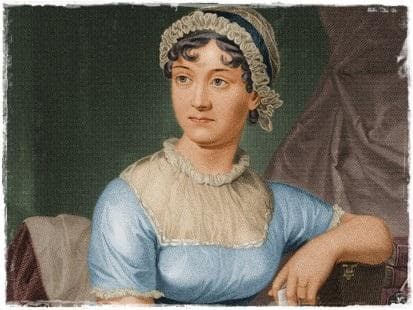
Jane Austen was an English novelist known primarily for her six major novels, which implicitly interpret, critique, and comment upon the British landed gentry at the end of the 18th century. Austen's plots often explore the dependence of women on marriage for the pursuit of favourable social standing and economic security. Her works are an implicit critique of the novels of sensibility of the second half of the 18th century and are part of the transition to 19th-century literary realism. Her deft use of social commentary, realism and biting irony have earned her acclaim among critics and scholars.