“I am not, I hope, a person who is unable to face facts. But I do find that it is sometimes possible to avoid them, and that this is often the pleasanter course.”
— The narrator's general philosophy on confronting unpleasant realities.

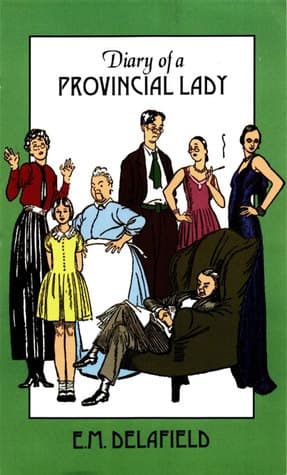
E.M. Delafield (1930)
Genre
Historical Fiction
Reading Time
388 min
Key Themes
See below
Sign in to track this book
In 1930s Devon, a sharp-witted provincial lady navigates a delightful mess of social pretensions, domestic absurdities, and her own charmingly disaster-prone life.
The Provincial Lady begins her diary by discussing the constant demands of her household, particularly the children's governess, Miss Pankhurst, and the need to save money. She often feels torn between her wish for a more cultured life and the realities of her modest income and rural existence in Devon. Her husband, Robert, spends most of his time gardening and managing their estate, leaving her to handle staff issues, the children's education, and the ongoing cycle of meals and social duties. She often observes her village's social dynamics with humor and self-deprecation, trying to keep up appearances and engage in polite society while secretly wanting more.
A frequent source of frustration for the Provincial Lady is her domestic staff. Miss Pankhurst, the children's governess, is a constant presence, often creating more work or demanding special privileges. Later, the Lady describes a series of maids and cooks, each with their own peculiar habits or flaws. There is the cook who leaves without notice, the housemaid who breaks things, and various temporary replacements who add to the chaos. These incidents show the societal expectations placed on a lady of the house to manage a smooth household, often against great odds and with limited resources, providing much of the novel's humor.
The Provincial Lady's children, a boy and a girl, bring both joy and considerable stress. Their adventures, illnesses, and educational needs are frequent topics in her diary. She worries about their future, their manners, and their interactions with Miss Pankhurst. Her son is often portrayed as mischievous and energetic, while her daughter is more studious but also capable of causing parental headaches. The Lady's attempts to guide them, often with limited success, and her tender observations of their development, form a significant part of her daily reflections, showing her deep affection despite the constant demands they place upon her.
Much of the Provincial Lady's life involves social obligations: tea parties, garden visits, and village festivals. She often finds these encounters a source of mild anxiety and amusement, carefully describing the conversations, the food, and the fashion. She frequently feels socially inadequate or finds herself in awkward situations, such as struggling to talk to uninteresting guests or feeling out of place among wealthier neighbors. Her observations of other provincial ladies, their pretensions, and their gossip are sharp and often very funny, illustrating the subtle hierarchies and unspoken rules of their small community and her own attempts to fit in while keeping her individuality.
Robert, the Provincial Lady's husband, is a man mostly focused on his garden and managing their small estate. His responses to her daily problems are often brief or preoccupied, leading to a dynamic where she largely manages the household and social life alone. While she sometimes expresses frustration at his lack of involvement in her concerns, there is an underlying current of affection and respect in their relationship. His calm, sometimes unaware presence acts as a contrast to her inner turmoil and overthinking, and his practical, grounded nature provides a stable background to her more whimsical and anxious reflections. Their interactions, though infrequent, are a source of both frustration and quiet understanding.
Financial strain is a constant theme in the Provincial Lady's diary. She often mentions the need to 'economize,' whether by reusing old clothes, making do with limited resources, or calculating every penny spent. She worries about school fees, household expenses, and the cost of entertaining. These concerns often conflict with her desire for certain luxuries or home improvements, creating an internal struggle. Her attempts at saving money, sometimes successful and sometimes comically thwarted, highlight the economic realities of her social class in the 1930s and her continuous effort to maintain a respectable household on a limited income, often with a sense of quiet desperation.
Periodically, the Provincial Lady manages to leave her country home for brief visits to London. These trips are a treasured break, offering a taste of culture, theater, and shopping that is largely absent from her rural life. She enjoys the anonymity of the city, the excitement of new experiences, and the chance to interact with different people. These trips provide a stark contrast to her daily routine, highlighting her yearning for intellectual stimulation and a broader world beyond her village. Though short-lived, these London visits energize her and offer a temporary escape from the demands of her provincial life, often bringing her back with renewed, though temporary, resolve.
Beyond her domestic duties, the Provincial Lady has quiet writing ambitions. She occasionally thinks about writing a novel or a play, though these aspirations are often overshadowed by the practicalities of her life. Her diary itself serves as her main creative outlet, allowing her to express her observations, frustrations, and humorous insights. She also finds comfort and escape in reading, often retreating with a book when her household's demands become too much. These intellectual pursuits show a deeper, more reflective side to her character, suggesting a mind that seeks engagement beyond purely domestic and social spheres, even if those desires are largely unfulfilled.
The Provincial Lady's life is closely tied to her village community, populated by distinct and often eccentric characters. There is the Vicar, the local doctor, various neighboring ladies, and the tradespeople. She interacts with them in various ways, from attending church to making social calls and dealing with local services. Her diary entries often provide keen, witty observations of their personalities, their flaws, and the unspoken rules of their small society. These interactions, sometimes frustrating, sometimes amusing, paint a clear picture of rural English life in the 1930s and highlight the close-knit, yet often gossipy and judgmental, nature of such communities.
Despite the humorous and often self-deprecating tone, the Provincial Lady's diary has moments of genuine reflection and self-awareness. She grapples with her own shortcomings, anxieties, and desires. She questions her role as a wife and mother, her social standing, and the meaning of her existence. These introspective passages reveal a thoughtful and intelligent woman beneath the surface of the busy housewife. She often ends an entry with a resolve to do better, be more organized, or complain less, only to find herself in similar situations the next day, creating a relatable and lasting portrait of human nature.
As the diary continues, there is no grand resolution or dramatic plot twist. Instead, the Provincial Lady's entries follow their episodic, day-to-day fashion, reflecting the cyclical nature of her life. She continues to deal with domestic staff, children's demands, social obligations, and financial worries. While she occasionally dreams of escape or significant change, she ultimately returns to the familiar patterns of her provincial existence. The diary concludes not with a definitive ending, but with the understanding that life, with all its minor triumphs and troubles, will simply go on, showing the enduring spirit and resilience of the Provincial Lady.
The Protagonist
Her arc is subtle, reflecting a continuous cycle of minor struggles and small triumphs, ultimately finding a form of acceptance and humor in the unchanging nature of her provincial life.
The Supporting
Robert remains largely unchanged throughout the diary, a constant and predictable fixture in the Lady's life.
The Supporting
Her character remains consistent, embodying the ongoing challenges of managing household staff.
The Supporting
They grow slightly and their antics change with age, but they remain a constant, demanding presence.
The Supporting
Remains a consistent representation of provincial social climbing and gossip.
The Supporting
A static character representing the unchanging aspects of village life.
The novel captures the humor and frustration in the daily routines of running a household. From the endless parade of incompetent staff to the demands of children and the constant need to save money, the Provincial Lady faces a continuous comedic struggle. Her detailed accounts of burnt meals, broken china, and social mistakes show how the mundane can quickly become absurd, creating a relatable and lasting picture of domestic chaos. This theme appears in nearly every entry, as the Lady's attempts at order are constantly thwarted by reality.
“I will arise and bake a cake, or something. But what? And oh, the washing up!”
The Provincial Lady is very aware of her social standing and the expectations that come with it, often feeling caught between her modest means and the need to keep up appearances. She observes her village's subtle hierarchies and snobberies with a critical, yet often involved, eye. Her anxieties about entertaining, dressing appropriately, and making polite conversation reveal the pressures of provincial society. This theme is clear in her interactions with neighbors like Mrs. Tressider and her constant worries about money, which threaten her ability to maintain her desired social image.
“I always feel that if one can only get rid of the feeling of being an outsider, half the battle is won.”
Beneath her domestic duties, the Provincial Lady longs for intellectual stimulation, beauty, and a life beyond her immediate provincial world. Her brief trips to London, her thoughts about writing, and her love of reading all show this desire for escape and deeper meaning. She often feels trapped by her circumstances, yet she consistently finds small ways to nourish her mind and spirit. This theme highlights the inner life of a woman who, despite her practical burdens, has a rich imagination and a longing for something more profound.
“One day I shall write a book. A terribly witty book, and it will sell enormously.”
Despite her frequent frustrations and anxieties, the Provincial Lady shows remarkable resilience and an ability to find humor in her problems. There are no grand transformations or dramatic plot resolutions; instead, the diary chronicles the ongoing, cyclical nature of life's small battles. Her ability to recover, often with a wry comment or a renewed, if temporary, resolve, shows the enduring human spirit in the face of persistent, minor difficulties. This theme suggests that true strength often lies in enduring the mundane with grace and humor, rather than in overcoming monumental challenges.
“It is all very difficult. But then, life is like that.”
The entire novel is presented as the intimate, subjective entries of the Provincial Lady's diary.
This device immediately establishes an intimate and informal tone, allowing the reader direct access to the protagonist's thoughts, anxieties, and witty observations. The diary format lends itself to episodic storytelling, mirroring the day-to-day rhythm of life, rather than a linear plot. It also enhances the humor through the Lady's internal monologues and self-deprecating asides, creating a strong sense of her personality and voice. The subjective nature of the narration means we only see events through her unique lens, making her perspective central to the story's charm and comedic effect.
The comedy arises from relatable domestic mishaps, social awkwardness, and the Lady's self-aware observations.
The primary source of humor in the novel is not slapstick or grand farce, but rather the subtle, often understated comedy found in the mundane. This includes the absurdities of managing household staff, the challenges of child-rearing, the awkwardness of social interactions, and the constant struggle with finances. The Provincial Lady's dry wit and self-deprecating commentary on her own predicaments make these everyday struggles highly entertaining and relatable. This device allows the reader to laugh with, and sometimes at, the protagonist, finding universal truths in her specific, provincial experiences.
The plot progresses through a series of loosely connected daily or weekly entries rather than a strong overarching narrative.
The diary format naturally leads to an episodic structure, where each entry functions as a small, self-contained anecdote or observation. There isn't a single, continuous plot arc with rising action, climax, and resolution in the traditional sense. Instead, the narrative unfolds through a series of recurring themes and situations, such as staff problems, social calls, and financial worries. This structure effectively mimics the repetitive, cyclical nature of daily life, emphasizing the enduring quality of the Provincial Lady's struggles and her consistent, humorous response to them.
The Lady's observations of her neighbors and community subtly critique provincial society.
Through the Provincial Lady's keen, often wry, observations of her neighbors, acquaintances, and the social rituals of her village, the novel offers a gentle but incisive social commentary. Her descriptions of Mrs. Tressider's pretensions, the local gossip, and the unspoken rules of polite society highlight the absurdities and superficialities of provincial life in the 1930s. This device allows the author to critique societal norms and class distinctions without resorting to overt didacticism, instead relying on the Lady's humorous and often self-aware perspective to convey these insights.
“I am not, I hope, a person who is unable to face facts. But I do find that it is sometimes possible to avoid them, and that this is often the pleasanter course.”
— The narrator's general philosophy on confronting unpleasant realities.
“It is not, I find, the great sorrows of life that wear us down, but the small, recurrent annoyances.”
— Reflecting on the daily struggles and minor irritations.
“One of the most delightful things about a garden is the way it makes one feel so good and virtuous, even when one has done practically nothing in it.”
— The narrator musing on the psychological benefits of having a garden.
“I often think how much more interesting life would be if one had a little less conscience, and a little more money.”
— A common lament about financial constraints and moral obligations.
“The worst of being a provincial lady is that one is always doing things one doesn’t really want to do, in order to please people one doesn’t really like.”
— A core theme of the book, expressing the social obligations of rural life.
“Husband, as usual, says very little, but looks volumes. I prefer the spoken word, even if it is foolish.”
— Describing her husband's taciturn nature and her preference for direct communication.
“Children, I find, are like very small, very persistent, and very expensive cuckoos in the nest.”
— A humorous, slightly exasperated observation about her offspring.
“One always hopes that one's children will be a credit to one, but I am beginning to suspect that mine will be a debit.”
— Another wry comment on her children's impact, particularly financially.
“I sometimes wonder if the whole object of life is to be uncomfortable, and then to write about it.”
— A meta-commentary on her own diary-keeping and the nature of experience.
“The great advantage of being a provincial lady is that one is always being asked to do things one is quite incapable of doing, and then being praised for attempting them.”
— A slightly cynical, yet accurate, observation on rural social dynamics.
“I have often noticed that the people who are most anxious to give advice are precisely those who are least qualified to do so.”
— Reflecting on unsolicited advice from others.
“There are some people who seem to have a positive genius for making one feel utterly inadequate.”
— Describing encounters with certain individuals who diminish her confidence.
“It is extraordinary how much trouble one takes to be miserable, when one could so easily be happy.”
— A moment of self-reflection on her own tendencies towards unhappiness.
“One must always appear to be busy, even if one is doing absolutely nothing. It is a social necessity.”
— Commenting on the performative aspect of social life, especially for a lady of her standing.
Ready to see how well you understood this book? Take our interactive quiz with 10 questions.

E.M. Delafield was an English writer best known for her satirical "Diary of a Provincial Lady" series, which humorously depicted the life of an English gentlewoman between the World Wars. Her work often explored social conventions and domestic life with wit and keen observation. Delafield was also a prolific author of novels and short stories throughout the early 20th century.







