““I hate how people treat you like you’re nothin’ when they don’t even know you. Like they can just look at you and decide who you are.””
— Maverick Carter reflecting on societal judgment as a young Black man.

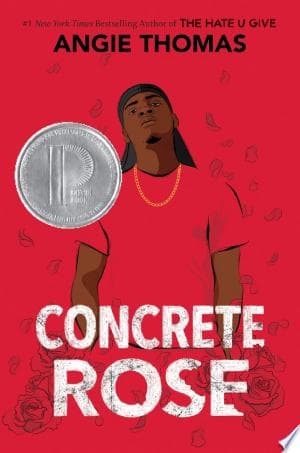
Angie Thomas (2021)
Genre
Romance
Reading Time
360 min
Key Themes
See below
Sign in to track this book
In a world where King Lord blood demands loyalty, a seventeen-year-old dealer named Maverick must navigate the treacherous path to manhood when he unexpectedly becomes a father, forcing him to choose between the streets and a future for his son.
Seventeen-year-old Maverick Carter, son of an incarcerated former King Lord, Wyatt, lives in Garden Heights. He deals drugs for the King Lords, led by Adonis, to help his mother, Faye, who works two jobs. Mav attends school, hangs out with his cousin, Dre, and is in a relationship with Lisa, a smart girl from a stable background. His routine changes when he learns that Iesha, a girl he had a brief encounter with months ago, has given birth to a baby boy, Seven, and claims Mav is the father. Despite his shock, a DNA test confirms his paternity, changing his life.
After the paternity test confirms he is Seven's father, Maverick is overwhelmed but decides to take responsibility. Iesha, struggling, leaves Seven with Mav and his mother. Mav brings Seven home to his small apartment, where his mother, Faye, is initially resistant but eventually helps him care for the infant. Mav struggles to balance his existing commitments – school, dealing, and his relationship with Lisa – with the demands of fatherhood. He quickly learns the difficulties of raising a child, from changing diapers to comforting a crying baby, and starts to feel the weight of his new responsibilities.
Maverick finds it harder and harder to juggle school, his King Lord duties, and caring for Seven. The money from dealing is good, but the risks are high, and he worries about Seven's future. His cousin, Dre, who is like an older brother, encourages Mav to consider leaving the gang life. Dre, a former King Lord who works at a community center, offers Mav advice and support, pushing him to find legal ways to provide for Seven. Dre's guidance influences Mav as he thinks about a path away from the streets.
Following Dre's advice and his own growing desire for a safer life for Seven, Maverick seeks legal employment. He gets a job at Mr. Wyatt's grocery store, a local business owned by Mr. Wyatt, a respected elder in the community and a former friend of Mav's incarcerated father. This job offers Mav a chance to earn money legally and distance himself from the King Lords. It is a big step towards his goal of providing for Seven without the constant threat and moral compromise of dealing drugs, though the pay is considerably less than what he made on the streets.
Lisa initially struggles with the news of Maverick's baby with Iesha, feeling hurt and betrayed. However, her love for Mav and her understanding nature prevail. She sees his commitment to Seven and stands by him, offering emotional support and even helping him care for the baby. Their relationship deepens as they navigate this unexpected challenge together. Lisa's presence and belief in Mav's ability to be a good father become a source of strength for him, even as she expresses her own aspirations for their future, emphasizing education and stability.
Just as Maverick is finding his footing with his new job and fatherhood, tragedy strikes. His cousin and best friend, Dre, is murdered in a drive-by shooting, an apparent retaliation for a past gang conflict involving Dre's brother. Mav is devastated by the loss, feeling grief, guilt, and anger. The murder shatters his newfound stability and reignites the urge for revenge. The King Lords, particularly Adonis, pressure Mav to retaliate, pushing him back towards the life he was trying to escape, even as his mother and Lisa plead with him to stay safe for Seven's sake.
Grief and a desire for revenge consume Maverick, and he re-engages with the King Lords, seeking information about Dre's killers. He considers taking matters into his own hands, despite the consequences for Seven. In his turmoil, Mav visits his father, Wyatt, in prison, seeking guidance. Wyatt, a former gang leader, advises Mav against seeking revenge, emphasizing the cycle of violence and the importance of breaking the pattern for his son's sake. This conversation makes Mav confront his family's past and the path he is choosing.
Through his own investigations and information from the streets, Maverick eventually learns that Dre's killer is Red, a younger member of the rival Garden Disciples gang. Red is also the younger brother of Teesha, a girl from the neighborhood Mav knows. This knowledge adds another layer of moral complexity to Mav's desire for revenge, as he grapples with the impact his actions would have on the community and other families, including his own. He struggles with the urge for retribution versus the lessons about breaking cycles of violence.
After much internal struggle, influenced by his father's words, Lisa's pleas, and his love for Seven, Maverick makes a difficult choice. He decides not to directly seek revenge on Red. Instead, he confronts Adonis, telling him he's leaving the King Lords for good. While he doesn't forgive Red, Mav chooses to focus on building a better life for Seven, understanding that violence would only lead to more suffering and potentially cost him his own life or freedom. This decision is an important moment in his journey towards true manhood and responsibility.
Maverick fully commits to his job at Mr. Wyatt's store and dedicates himself to raising Seven with Lisa's support. He returns to school with determination, understanding that education is key to providing a stable future for his son. He continues to learn and grow, showing strength and the ability to thrive despite his challenging environment. The novel concludes with Maverick embracing his role as a father and a man, embodying the metaphor of a 'concrete rose' – a beautiful and strong life from harsh circumstances, promising a brighter future for himself and his family in Garden Heights.
The Protagonist
Maverick transforms from a street-smart dealer into a responsible father, choosing a path of legitimate work and breaking the cycle of violence for his son's future.
The Supporting
Lisa matures alongside Maverick, solidifying her commitment to him and their shared future despite unexpected challenges, proving her strength and unwavering support.
The Supporting
Dre represents the possibility of leaving gang life behind, and his tragic death serves as a catalyst for Maverick's ultimate decision to break the cycle of violence.
The Supporting
Faye evolves from a weary single mother to a supportive grandmother, finding renewed purpose in helping Maverick raise Seven and guiding him towards a better path.
The Supporting
Seven's existence serves as the primary catalyst for Maverick's transformation, representing the future and responsibility that guides his choices.
The Supporting
Wyatt's arc is largely in the past, but his influence on Maverick shifts from an intimidating legend to a cautionary figure who helps guide his son towards a better path.
The Supporting
Iesha's brief but impactful role initiates Maverick's journey into fatherhood, highlighting the challenging circumstances many young parents face.
The Supporting
Adonis remains a static representation of the gang life, serving as a foil to Maverick's journey towards legitimate manhood.
The Supporting
Mr. Wyatt provides a consistent, positive influence and opportunity for Maverick, representing a stable path away from gang life.
The central theme is Maverick's unexpected journey into fatherhood and the responsibilities it entails. Mav's initial reluctance gives way to protectiveness and a desire to provide a better life for Seven. This theme is explored through his struggles to balance gang life with parental duties, his efforts to find legitimate work at Mr. Wyatt's store, and his decision to break cycles of violence. His love for Seven is the main reason for his growth, forcing him to redefine what it means to be a 'real man' beyond street codes.
“A real man takes care of his family. But what does that even mean?”
The novel challenges traditional, often harmful, ideas of Black masculinity in gang-ridden environments. Maverick's journey asks what it means to be a man – is it about toughness, revenge, and providing through illegal means, or is it about vulnerability, responsibility, and breaking cycles for the next generation? His father's advice from prison, Dre's positive example, and Lisa's expectations all contribute to Mav's re-evaluation of manhood. He chooses a path where providing stability, emotional presence, and safety for his son are most important, moving beyond the 'gangsta' archetype.
“'Being a man ain't about what you do for yourself. It's about what you do for your family.'”
The cycle of gang violence is a dominant theme, especially highlighted by Dre's murder and Maverick's struggle for revenge. The book shows how easily individuals are drawn into this cycle, often out of loyalty, grief, or perceived necessity. Maverick's decision to not retaliate against Red, despite his pain, shows a conscious effort to break this intergenerational pattern, choosing a future for Seven over endless retribution. The theme emphasizes the devastating effects of violence on families and communities in Garden Heights.
“'Sometimes the bravest thing you can do is walk away.'”
The novel explores the complex layers of loyalty within the Garden Heights community – to family, friends, and the King Lords. Maverick's loyalty to Dre is immense, driving his initial desire for revenge. However, his loyalty to Seven and Lisa ultimately outweighs his loyalty to the gang. The community itself is a character, providing both dangers and support systems, from Mr. Wyatt's grocery store offering legitimate work to the ever-present threat of rival gangs. The theme highlights the tension between destructive gang loyalties and the constructive loyalties that build stronger communities and families.
“'We out here to survive, but sometimes surviving means choosing who to be loyal to.'”
Despite the realities of poverty, gang violence, and incarceration, the novel has a strong sense of hope and resilience. Maverick's journey from a drug dealer to a devoted father pursuing legitimate work embodies this theme. Characters like Dre and Mr. Wyatt also represent the possibility of positive change. The 'concrete rose' metaphor itself symbolizes the beauty and strength that can emerge from difficult environments. The book suggests that even in the toughest circumstances, individuals can choose to break free from destructive patterns and cultivate a better future.
“'A rose that grew from the concrete, that's what you are, Mav.'”
A central symbolic image representing beauty, strength, and life emerging from harsh conditions.
The 'concrete rose' is a powerful overarching metaphor for Maverick's journey and the resilience of people in Garden Heights. It symbolizes the ability to thrive and create beauty and life in a seemingly barren or hostile environment. Maverick's transformation from a young man entangled in gang life to a devoted father committed to a legitimate path embodies this metaphor. It suggests that even from the 'concrete' of poverty, violence, and systemic challenges, something beautiful and strong – a 'rose' – can grow, representing hope and the potential for a better future.
Provides intimate access to Maverick's thoughts, struggles, and emotional development.
The story is told from Maverick's first-person perspective, offering readers direct access to his internal monologue, fears, desires, and evolving understanding of the world. This narrative choice allows for a deep exploration of his emotional landscape as he grapples with fatherhood, grief, and the pressures of gang life. It makes his journey of self-discovery and his difficult choices feel immediate and personal, fostering empathy and providing insight into the complexities of his experiences in Garden Heights, particularly his redefinition of masculinity.
Highlights the cyclical nature of gang life and provides a cautionary tale.
References to Maverick's father, Wyatt, a former King Lord legend currently incarcerated, serve as a significant plot device. These allusions, and Mav's visits to his father in prison, highlight the cyclical nature of gang involvement and its long-term consequences. Wyatt's past acts as both an intimidating legacy and a cautionary tale, offering Mav a glimpse into the potential future if he doesn't break free. His father's advice, born from experience, becomes a crucial guide for Mav in his darkest moments, reinforcing the theme of breaking generational cycles.
A constant background tension that drives plot points and character decisions.
While specific gang conflicts are not always at the forefront, the pervasive and ever-present threat of gang warfare between the King Lords and the Garden Disciples (and other rival gangs) serves as a constant background tension. This device creates a sense of danger and urgency, influencing Maverick's choices, particularly his initial involvement in dealing and his desire to leave. It culminates tragically with Dre's murder, which directly results from this ongoing conflict, and forces Mav to confront the direct consequences of this 'unseen' but always felt threat, ultimately leading to his pivotal decision to break the cycle.
““I hate how people treat you like you’re nothin’ when they don’t even know you. Like they can just look at you and decide who you are.””
— Maverick Carter reflecting on societal judgment as a young Black man.
““Love ain’t supposed to be easy. If it is, then it probably ain’t real.””
— Mav's mom, Faye, offering advice about relationships.
““Sometimes you gotta make a way out of no way.””
— A recurring theme and mantra for Maverick as he navigates difficult circumstances.
““Being a man ain’t about what you got. It’s about what you do with what you got.””
— Mav's father, Adonis, sharing his philosophy on manhood.
““The hood is a jungle, and sometimes you gotta be a lion to survive.””
— Maverick describing the harsh realities of his neighborhood.
““You can’t run from who you are, Mav. But you can decide who you’re gonna be.””
— A moment of self-reflection for Maverick about his past and future.
““A real man takes care of his family, no matter what.””
— Maverick's internal monologue about his newfound responsibilities.
““Sometimes the best way to fight is to build something beautiful.””
— A metaphorical quote about creating a better life despite adversity.
““It’s hard to be good when everybody expects you to be bad.””
— Maverick expressing the pressure of societal expectations and stereotypes.
““Love ain’t always a fairytale, but it’s real. And real is better than fake any day.””
— Mav contemplating the complexities of his romantic relationships.
““You gotta learn to forgive yourself, Mav. That’s the hardest part.””
— A moment of advice from someone close to Maverick about moving past mistakes.
““Being a father ain’t just makin’ a baby, it’s raisin’ one.””
— Maverick coming to terms with the true meaning of fatherhood.
““The world tries to make you hard, but you gotta find a way to stay soft where it matters.””
— A poignant reflection on maintaining one's humanity and empathy amidst harsh realities.
Ready to see how well you understood this book? Take our interactive quiz with 10 questions.

Angie Thomas is an American young adult author, best known for writing The Hate U Give (2017). Her second young adult novel, On the Come Up, was released on February 25, 2019.