“Ah, Candida, if only you would marry a clever man!”
— Morell to Candida, expressing a desire for her to have a more intellectually stimulating partner.

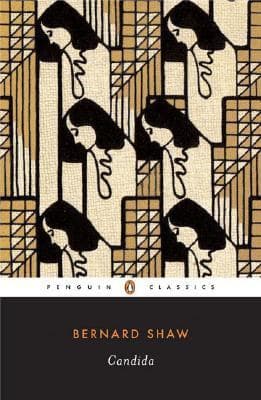
George Bernard Shaw (1934)
Genre
Romance
Reading Time
112 min
Key Themes
See below
Sign in to track this book
A quick-witted woman, Candida, navigates the affections of a passionate young poet and her socialist clergyman husband, challenging Victorian ideas of romance and home life.
The play starts in the study of Reverend James Mavor Morell, a popular and articulate socialist clergyman in London. His secretary, Miss Garnett (Proserpine), handles his mail while he dictates sermons. Morell is a man of strong beliefs and loves his wife, Candida. Their peaceful home life and Morell's public success are clear. But the arrival of Eugene Marchbanks, a sensitive and intense young poet of eighteen, breaks this calm. Marchbanks, who has been staying with the Morells, declares his deep love for Candida, believing she is stuck in a boring marriage and that Morell does not truly appreciate her artistic and spiritual sides. Morell is amused at first, then increasingly bothered by Eugene's intensity and strange view of his marriage.
Eugene Marchbanks, despite his youth and delicate looks, is firm in his feelings for Candida and his view of her true nature. He dismisses Morell's practical and public love as not enough, arguing that Morell takes Candida for granted and does not see her poetic, spiritual essence. Eugene believes he alone understands Candida's need for protection from the harsh world and the 'ordinary' nature of her marriage. Morell, initially condescending toward Eugene's idealism, becomes truly angry at the young man's boldness and his challenge to his home life and his wife's affection. Their argument shows their different views on love, marriage, and women's roles.
Candida Morell returns home from shopping, bringing a warm, comforting presence to the vicarage. She is charming, warm, and practical, easily managing her home and her husband's public image. Morell, still upset by Eugene's accusations, tries to tell Candida about Eugene's odd behavior and declarations. However, Candida, calm and confident, dismisses his worries, treating Eugene's infatuation as a harmless poetic fancy. She reassures Morell of her love, but her casual dismissal of Eugene's intensity increases Morell's worries, making him question if he truly understands his wife as deeply as he thinks.
Morell feels insecure, a new experience for him. Eugene's constant claims that Morell is blind to Candida's true inner self begin to erode the vicar's confidence. He starts to examine his relationship with Candida, wondering if his public role and busy life have indeed overshadowed a deeper, more poetic connection that Eugene says he offers. This internal struggle shows in his talks with his father-in-law, Burgess, and even his secretary, Proserpine, all of whom see Candida's practical devotion but not the 'poetic' ideal Eugene champions. Morell's pride and his image as a strong, confident man are severely tested by Eugene's unusual challenge.
The tension rises during supper. Eugene, confident in his perceived understanding of Candida, openly criticizes Morell's sermons and his practical approach to life. He extends his disapproval to Burgess, Candida's father, a self-serving and materialistic businessman, whom he sees as representing the 'ordinary' world from which he believes Candida needs saving. Candida, always the peacemaker and household manager, skillfully handles these conflicts, defending both her husband and her father while also indulging Eugene's poetic side. Her ability to keep harmony, even amid such provocations, highlights her central role in the home and her unique influence over all the men in her life.
Morell, unable to tolerate Eugene's presence and the constant undermining of his marriage, finally confronts Candida directly. He demands that she choose between him and Eugene, believing her affections are being swayed by the younger man's romantic words. Morell, despite his public eloquence, struggles to express his deep love and reliance on Candida, feeling that his practical contributions to their shared life are being undervalued. He is genuinely hurt and confused by Candida's seemingly neutral treatment of Eugene, seeing it as a sign of wavering loyalty. This moment marks a turning point, forcing Candida to acknowledge the emotional trouble she has unintentionally caused.
Candida, facing the ultimatum, takes control. She reveals that her love for Morell is not based on his strength, but on his weakness and his need for her. She explains that Morell, despite his public strength and eloquence, is actually the 'weaker' of the two, relying on her to manage his life, home, and public image. Eugene, who had romanticized Candida as a fragile, poetic being needing protection, is shocked by this. He realizes his idealized vision of Candida is false and that she is far more grounded and powerful than he imagined. Morell is equally shocked, forced to face his own dependence and vulnerability.
Candida, calm and commanding, states she will go with the man who needs her most. She asks both Morell and Eugene to make their case. Morell, humbled by her earlier revelation, admits his deep dependence on her – his need for her to run his home, manage his affairs, and be the foundation of his life. Eugene, however, having lost his romantic illusions, realizes Candida does not need him in the way he had imagined. He understands her strength lies in her independence and her ability to nurture, rather than in needing protection. This unexpected turn changes the nature of their respective 'needs'.
After Candida's statement, Eugene, with a new understanding of love and reality, leaves quietly and with dignity. He realizes that his romantic idealization of Candida was a self-serving fantasy and that her true strength and love come from her practical devotion to Morell. He has learned a valuable, though painful, lesson about the complexities of human relationships and the difference between poetic ideals and real love. His departure is not one of defeat, but of enlightenment, suggesting he has matured. He leaves with a deep and 'secret' knowledge, implying a greater understanding of life's truths that goes beyond surface romance.
With Eugene gone, Morell and Candida are alone. Their relationship has been tested and, through Candida's honesty, is now stronger and more real. Morell now understands his dependence on Candida, not as a weakness to hide, but as an essential part of their bond. Candida's love is shown to be a nurturing, practical force that supports Morell's public success and personal well-being. The crisis has removed illusions, allowing them to see each other more clearly and appreciate each other more. Their reunion reaffirms their marriage, now based on a more profound and realistic understanding of their mutual needs and strengths.
The Protagonist
Candida's arc involves revealing her true strength and agency, disabusing both men of their idealized perceptions of her and asserting her own definition of love and commitment.
The Protagonist
Morell's arc is one of humility and self-discovery, moving from a confident but blind dependence to a conscious and appreciative understanding of his need for Candida.
The Protagonist/Catalyst
Eugene's arc involves a journey from naive, idealized romanticism to a more mature and realistic understanding of love and human relationships, accepting the complexity of Candida's choice.
The Supporting
Burgess remains largely unchanged, serving as a static representation of materialistic values.
The Supporting
Proserpine's arc is subtle; she remains a static character whose unrequited feelings for Morell are hinted at but not resolved.
The Supporting
Lexy remains a static character, serving as a foil and admirer to Morell.
The play questions traditional ideas of love and marriage, comparing romantic idealism with practical devotion. Eugene Marchbanks' 'love' for Candida comes from an idealized, poetic view, seeing her as a delicate muse to protect. Morell's love, first shown as strong and practical, is revealed by Candida to be a deep, almost childlike dependence. Candida ultimately defines love not as being with the stronger person, but with the 'weaker' and more needy partner, challenging traditional gender roles and romantic expectations. The play suggests that true, lasting love is built on a realistic understanding of mutual needs and vulnerabilities, rather than on surface passion or strength. This is most clear in Candida's 'auction' where she chooses Morell not for his public strength, but for his private dependence on her.
“Ah, James, how little you understand me, to talk of your strength and my weakness! I am your wife, James, not your mother.”
Candida looks at the conflict between idealistic views and the realities of human relationships. Eugene Marchbanks represents pure, unadulterated idealism, believing in a world ruled by poetic truth and spiritual purity, and is shocked by the ordinary and practical. Morell, an idealist in his socialist preaching, is shown as a realist in his home life, valuing order and practical contributions. Candida, however, is the ultimate realist, seeing people as they are, with their flaws and needs, and making her choices based on a grounded understanding of human nature. The play suggests that uncontrolled idealism, while noble, can be blind to the complex truths of real life, and that true wisdom involves accepting reality.
“I am not a child, James. I am a woman, with a woman's heart and a woman's needs.”
Shaw's play challenges the male-dominated ideas of its time by showing Candida as a woman of great strength, intelligence, and control, despite her seemingly traditional role at home. Both Morell and Eugene project their own desires and ideals onto her, seeing her either as a supportive wife or a poetic muse. However, Candida ultimately shows herself to be the true manager and emotional anchor of her household, the 'stronger' one who supports the 'weaker' Morell. Her choice to stay with Morell is not submission, but a conscious decision based on her own understanding of love and responsibility, demonstrating her control over her own life and challenging the traditional image of a submissive wife.
“I give myself to the weaker of the two.”
The play subtly examines the difference between a person's public image and their private self. Morell is a powerful, articulate public figure, a respected socialist clergyman, but in his private life, he is very dependent on Candida and prone to insecurity. Eugene, publicly an awkward and sensitive poet, privately holds a fierce conviction and challenges the established order. Candida, too, maintains a calm, managing exterior, but underneath is a deep understanding of human nature and a quiet strength. The play suggests that true character and the complexities of relationships are often hidden, and that a public image can hide deeper truths.
“You are a clergyman, James, and you are a man. And when you are a clergyman, you are an angel; but when you are a man, you are a child.”
A classic love triangle used to expose the true nature of relationships.
The central dramatic device is the love triangle between Candida, Morell, and Eugene Marchbanks. However, Shaw subverts the traditional expectations of this device. Instead of a simple choice based on passion or societal pressure, the triangle becomes a crucible for examining the deeper, often unacknowledged, dynamics of love, marriage, and personal dependence. Eugene's idealized infatuation acts as a catalyst, forcing Morell to confront his own insecurities and Candida to articulate the true, practical nature of her devotion, leading to a resolution that defies conventional romantic outcomes.
The play parodies romantic ideals by revealing the practicalities beneath them.
Shaw deliberately parodies the literary tradition of courtly love, where a knight (Eugene) idealizes a noble lady (Candida) and seeks to rescue her from a perceived mundane existence. Eugene Marchbanks embodies the courtly lover, showering Candida with poetic declarations and seeing her as a muse. However, Candida herself, far from being a passive damsel, is a pragmatic and powerful woman who ultimately disabuses Eugene of his romantic illusions. The play critiques the superficiality of such idealized love, suggesting that genuine affection is far more complex and grounded in reality than poetic fantasy.
A climactic moment where Candida makes a surprising, revelatory decision.
The dramatic climax occurs when Candida, exasperated by the men's posturing, demands that both Morell and Eugene state their claim to her, declaring she will go with 'the weaker of the two.' This scene is a pivotal plot device, as it forces both men to drop their pretenses and articulate their true needs and vulnerabilities. Candida's unexpected choice, based on a deep understanding of Morell's dependence on her, completely redefines the power dynamics and the nature of love presented in the play, leading to Eugene's enlightenment and the Morells' renewed understanding of their bond.
The audience often understands character motivations or truths before the characters themselves.
Dramatic irony is frequently employed, particularly regarding Morell's self-perception and Candida's true role. The audience quickly perceives Morell's reliance on Candida, even as he prides himself on his strength, and understands Eugene's romantic naivete long before he does. This creates a sense of anticipation and allows Shaw to highlight the characters' blind spots and the societal conventions they embody. Candida herself is often the source of this irony, as her calm demeanor masks a profound insight that eventually disarms both her husband and her young admirer.
“Ah, Candida, if only you would marry a clever man!”
— Morell to Candida, expressing a desire for her to have a more intellectually stimulating partner.
“Do you think a woman's heart is a weathercock to be veered about by every breath of wind?”
— Candida's retort to Morell, asserting the steadfastness of her affection.
“I am not a child, I am a poet.”
— Marchbanks defending his maturity and artistic identity to Morell.
“When you are as old as I am, you will know that the only way out of it all is to make up your mind and stick to it.”
— Morell giving pragmatic advice, reflecting his own steadfast nature.
“I want to be loved for my weaknesses, not for my strengths.”
— Marchbanks expressing a deep desire for unconditional acceptance.
“You are a brute, James. A brute.”
— Candida playfully chiding Morell, highlighting their intimate dynamic.
“There is no love sincerer than the love of food.”
— Burgess, offering a cynical yet humorous observation.
“You have a wife who is not a child, but a woman.”
— Marchbanks's observation to Morell, challenging his perception of Candida.
“It is not for you to understand, James. It is for me to live.”
— Candida asserting her autonomy and the personal nature of her choices.
“I am not a man of sentiment.”
— Morell attempting to portray himself as pragmatic, despite his emotional nature.
“You are a man of words, James. I am a woman of deeds.”
— Candida contrasting her practical nature with Morell's eloquent but less tangible contributions.
“The greatest joy in life is to be loved for yourself, without conditions, without expectations.”
— Marchbanks's ideal of love, a central theme of his character.
“I am a woman, and I have my pride.”
— Candida asserting her dignity and self-respect.
“You have found your romance, James, not in the books, but in me.”
— Candida reminding Morell of the true source of his romantic fulfillment.
Ready to see how well you understood this book? Take our interactive quiz with 10 questions.
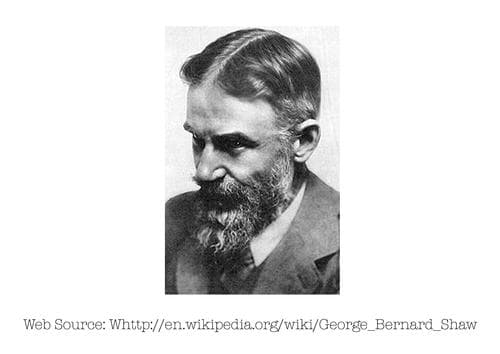
George Bernard Shaw, known at his insistence as Bernard Shaw, was an Irish playwright, critic, polemicist and political activist. His influence on Western theatre, culture and politics extended from the 1880s to his death and beyond. He wrote more than sixty plays, including major works such as Man and Superman (1902), Pygmalion (1913) and Saint Joan (1923). With a range incorporating both contemporary satire and historical allegory, Shaw became the leading dramatist of his generation, and in 1925 was awarded the Nobel Prize in Literature.