“I am not a victim. I am a survivor.”
— The protagonist reflects on her resilience after enduring trauma and abuse.

Sign in to track this book
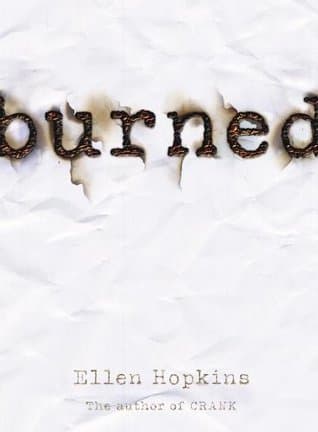
Exiled to rural Nevada after a forbidden dream and a compromising encounter, a religiously-abused teen finds her first taste of love and acceptance, only to discover her past demons are not so easily escaped.
Pattyn Von Stratten lives in rural Nevada, one of ten children in a devout, fundamentalist Mormon family. Her life is dominated by her father's rigid interpretation of religion, which includes physical and emotional abuse, especially towards her and her mother. Pattyn feels stifled and unheard, her only solace found in writing poetry. One night, she has a vivid sex dream about a boy. This deeply disturbs her as it conflicts with everything she has been taught about purity and sin. This dream sparks a new curiosity within her about her own body, desire, and the world beyond her family's oppressive compound, leading her to question the harsh doctrines she has always accepted.
Pattyn meets Derek, a boy from school, and they share an innocent kiss, which she finds both thrilling and terrifying. Later, her younger sister, Jackie, discovers Pattyn's hidden journal containing her poems, which express her forbidden thoughts and desires. Jackie, influenced by their father's teachings, reports Pattyn to him. Enraged by what he sees as Pattyn's sin and rebellion, her father brutally beats her. The incident at school, coupled with her father's discovery of her journal, leads to Pattyn being suspended from school. Her parents decide to send her away to live with her estranged Aunt Jean in the small, isolated town of Paradise Valley, believing it will redeem her.
Pattyn arrives in Paradise Valley, a place completely different from her restrictive home. Her Aunt Jean is a kind, independent woman who is not religious and lives a much more liberal lifestyle. For the first time, Pattyn experiences true freedom and acceptance. Aunt Jean encourages her to express herself, offering her a room of her own and listening to her without judgment. Pattyn starts attending the local public school, where she is introduced to new perspectives and begins to shed the emotional burdens of her past. She is still haunted by her family's teachings, but the open environment with Aunt Jean allows her to breathe and explore her growing identity.
At her new school, Pattyn meets Ethan, a compassionate and understanding boy who sees beyond her guarded exterior. Their relationship quickly deepens, and Pattyn falls deeply in love with him. Ethan introduces her to physical intimacy in a gentle and respectful way, helping her to reconcile her desires with her self-worth. Through Ethan, Pattyn learns about love, trust, and healthy relationships, which contrasts with the abuse and repression she experienced at home. She begins to question the church's teachings about sex and women's roles even more intensely, finding solace and joy in a connection that feels pure and right, despite what her family would deem sinful.
Despite her newfound happiness with Ethan and Aunt Jean, Pattyn remains conflicted, often feeling guilty and unworthy due to her upbringing. Her family's judgment, particularly her father's, weighs heavily on her. Her brother, Caleb, visits her in Paradise Valley, to check on her. During his visit, he subtly reinforces their family's religious doctrines and expresses their disapproval of her choices, particularly her relationship with Ethan. He reminds her of her 'sins' and the need for repentance, making Pattyn feel torn between her love for Ethan and the ingrained fear of eternal damnation and losing her family entirely.
Pattyn receives a devastating call from home: her mother is critically ill. Despite her reluctance and fear, Pattyn feels she must return to her family. Her departure from Paradise Valley is tearful, as she leaves Ethan and Aunt Jean, uncertain if she will ever truly escape her past. Upon her return, she finds her mother's condition dire, and the family environment is as oppressive as ever, with her father's control tightening during the crisis. Pattyn feels the familiar weight of her old life pressing down on her, the freedom she experienced with Ethan feeling like a distant dream.
Pattyn's mother succumbs to her illness, leaving Pattyn heartbroken and her family in deeper turmoil. After his wife's death, Pattyn's father becomes even more controlling and fanatical. Believing Pattyn is a danger to her own soul and the family's spiritual standing due to her 'sinful' behavior, he arranges for her to marry an older, devout Mormon man named Stephen. This forced marriage is presented as a way to redeem her and ensure her place in heaven. Pattyn is horrified and feels trapped, her dreams of a life with Ethan shattered by her father's absolute authority.
Pattyn is forced into the marriage with Stephen. The wedding is a somber affair, without joy for Pattyn. However, Stephen, though devout, proves to be a more complex character than Pattyn initially believed. He is kind and gentle, and surprisingly, he respects Pattyn's boundaries and her emotional distress. He does not force himself upon her and expresses a desire to understand her. This unexpected kindness offers Pattyn a small glimmer of hope, suggesting that perhaps her new life, though unwanted, might not be as bleak as she feared, and that Stephen might be an ally rather than just another oppressor.
Pattyn moves in with Stephen, and they begin their life together. Stephen continues to be patient and understanding, and Pattyn slowly starts to build a new routine. She appreciates his kindness, which is a stark contrast to her father's abuse. However, she struggles with the emotional scars from her past and the constant ache of missing Ethan. She writes letters to Ethan that she never sends, pouring out her heart and longing. Despite Stephen's genuine efforts, Pattyn feels emotionally distant, haunted by what she lost and the life she was denied, making it difficult for her to fully embrace her present.
The emotional burden becomes too much for Pattyn, and she eventually confesses to Stephen that she is still in love with Ethan. Stephen is hurt but responds with understanding and compassion. He acknowledges her pain and the injustice of her situation. This confession, while difficult, opens honest communication between them. It helps Pattyn begin truly healing and considering her future, hinting that while her path is complicated, she might find a way to forge a life that honors her own truth, even if it means challenging the deeply ingrained expectations of her upbringing and community.
The Protagonist
Pattyn transforms from a repressed, abused girl into a young woman who, despite immense challenges, begins to assert her own identity and seek genuine connection.
The Antagonist
He remains a static character, embodying oppressive authority and never wavering from his abusive interpretation of faith.
The Supporting
She provides a temporary safe haven for Pattyn, enabling her initial growth and self-discovery.
The Supporting
Ethan helps Pattyn open up to love and self-acceptance, becoming a symbol of the life she desires.
The Supporting
Stephen evolves from an imposed figure into a surprising source of understanding and compassionate companionship for Pattyn.
The Supporting
She remains a victim of her circumstances, embodying the crushing effects of the family's abusive dynamics until her death.
The Supporting
Caleb remains largely static, upholding the family's rigid beliefs and acting as an agent of their control.
The Mentioned
Jackie's role is pivotal in triggering Pattyn's exile, solidifying the oppressive nature of the family.
Abuse and control is a main theme in 'Burned,' primarily shown through Pattyn's father. His physical and emotional abuse, justified by his extreme religious interpretations, dictates every aspect of the family's life. Pattyn and her mother are constant victims, showing the devastating impact of unchecked patriarchal authority. Scenes like Pattyn's brutal beating after her journal is discovered, and her mother's resigned suffering, show how abuse takes away independence and voice, making escape seem impossible. The father's control extends to arranging Pattyn's marriage, showing the ultimate subjugation of her will.
“My father's God / is a God of fear / and pain / and shame. / My God / is a God of love / and hope / and dreams.”
Pattyn's journey is about discovering her true identity outside the confines of her repressive upbringing. Initially defined by her family's strict rules and her father's judgment, Pattyn begins to question who she is and what she desires after her first sex dream. Her exile to Aunt Jean's house and her relationship with Ethan allow her to shed the layers of guilt and shame, leading to a sense of self-worth and independence. She deals with reconciling her internal desires with the ingrained fear of eternal damnation, ultimately striving to define her own moral compass and find a life where she can be authentically herself, even if it means defying her family's expectations.
“I am not what they want me to be. / I am not what I should be. / I am me. / And that is / all / I can be.”
The novel explores various forms of love and intimacy, contrasting healthy connections with distorted ones. Pattyn's early experiences with love are tainted by her father's abusive control, which confuses love with fear and obedience. Her relationship with Ethan is true, respectful, and passionate love, where she feels seen, valued, and safe to explore physical intimacy. This contrasts sharply with the forced, transactional nature of her arranged marriage to Stephen, though Stephen himself offers patient, compassionate companionship. The theme examines how love can be a source of healing and liberation, but also how its absence or distortion can lead to suffering and emotional scarring.
“He touches me / like a secret prayer, / gentle, / reverent, / as if I am / holy.”
'Burned' examines the conflict between rigid, oppressive religious dogma and a more personal, compassionate spirituality. Pattyn's father's fundamentalist Mormonism is a tool for control, instilling fear and guilt rather than offering solace. Pattyn struggles to reconcile this harsh interpretation with her own innate sense of goodness and her desire for love. Through her experiences, particularly with Aunt Jean and Ethan, she begins to form her own understanding of faith and morality that prioritizes empathy, acceptance, and personal truth over strict adherence to doctrine. The book questions whether true faith can coexist with abuse and intolerance.
“They say God is love. / But my father's God / is a fist.”
Pattyn's journal and her poetry are outlets for her suppressed voice and emotions. In a home where she is silenced and her thoughts are deemed sinful, writing is her only means of self-expression and resistance. The discovery of her journal by Jackie and its use as evidence against her shows the danger of speaking out in an oppressive environment. However, it also shows the human need to articulate one's truth. Later, Aunt Jean encourages her writing, validating her voice and helping her reclaim her narrative, showing the power of expression in healing and asserting identity.
“My words / are my wings. / They lift me / out of this cage.”
The entire novel is written in free verse poetry.
Ellen Hopkins' signature style, the verse novel format, is a crucial plot device in 'Burned.' The fragmented lines, varied stanza lengths, and lack of traditional prose create an immersive and intimate reading experience. This format allows for a raw, unfiltered expression of Pattyn's internal thoughts, emotions, and trauma. It mimics the fractured nature of her mind and the intensity of her experiences, making her pain, confusion, and fleeting moments of joy deeply visceral for the reader. The poetic structure also emphasizes key phrases and images, enhancing the emotional impact and thematic resonance of the story.
The story is told entirely from Pattyn's perspective.
The first-person narrative, exclusively through Pattyn's voice, provides direct access to her deepest fears, desires, and internal conflicts. This perspective is vital for understanding the psychological impact of her abuse and the complexities of her spiritual and sexual awakening. Readers experience her world through her eyes, feeling her confinement, her moments of rebellion, and her longing for love. This closeness to Pattyn's thoughts and feelings builds intense empathy and allows for a nuanced exploration of her character development as she grapples with her past and tries to forge a new future, making her journey deeply personal and relatable.
Pattyn's secret journal, filled with her poems, serves as a catalyst for conflict and self-expression.
Pattyn's hidden journal, containing her forbidden poems, acts as both a narrative device and a powerful symbol. Initially, it is her private sanctuary for expressing thoughts she cannot voice, a testament to her nascent identity and rebellion. Its discovery by Jackie and subsequent revelation to her father directly triggers her severe punishment and exile, acting as a crucial plot catalyst. Later, the act of writing, even unsent letters to Ethan, continues to be her lifeline, a way to process her experiences and maintain her sense of self. The journal represents her authentic voice, suppressed but ultimately resilient.
The stark differences between Pattyn's family home and Aunt Jean's house highlight her journey of liberation.
The contrasting settings of Pattyn's oppressive, rural family home and the more liberal, welcoming environment of Paradise Valley are powerful symbolic and narrative devices. Her family home represents confinement, abuse, and rigid religious dogma, stifling her growth. Paradise Valley, particularly Aunt Jean's house, embodies freedom, acceptance, and the possibility of self-discovery. This geographical shift directly mirrors Pattyn's internal journey from repression to liberation, allowing her to experience different social norms, explore her sexuality, and develop healthy relationships. The return to her original home after her mother's illness underscores the difficulty of truly escaping one's past.
“I am not a victim. I am a survivor.”
— The protagonist reflects on her resilience after enduring trauma and abuse.
“Love is not supposed to hurt.”
— A realization about unhealthy relationships and the nature of true love.
“Sometimes the people you love the most are the ones who hurt you the deepest.”
— Reflecting on the pain caused by close family members or partners.
“I built my own cage, and I have the key.”
— Acknowledging personal responsibility in staying in a toxic situation.
“Fire can destroy, but it can also cleanse.”
— Metaphor for the destructive yet transformative power of painful experiences.
“You can't heal what you don't acknowledge.”
— Emphasizing the importance of facing one's pain to move forward.
“My scars tell a story, but they don't define me.”
— Asserting identity beyond past wounds and trauma.
“In the ashes, I found my strength.”
— Finding inner power after everything has been destroyed.
“Love shouldn't leave bruises on your soul.”
— Critiquing relationships that cause emotional rather than just physical harm.
“I am more than the sum of my broken pieces.”
— A declaration of self-worth despite past fragmentation.
“Sometimes running away is the bravest thing you can do.”
— Justifying the decision to leave a dangerous situation for self-preservation.
“The heart is a fragile thing, easily burned.”
— Commenting on vulnerability in love and relationships.
“I learned to breathe fire so no one could burn me again.”
— Developing defenses and strength to protect oneself from future harm.
“Pain is a teacher, but it doesn't have to be a master.”
— Recognizing the lessons from suffering without letting it control one's life.
Ready to see how well you understood this book? Take our interactive quiz with 10 questions.

Biography coming soon.