“There was some open space between what he knew and what he tried to believe, but nothing could be done about it.”
— Ennis's internal conflict regarding his feelings for Jack.

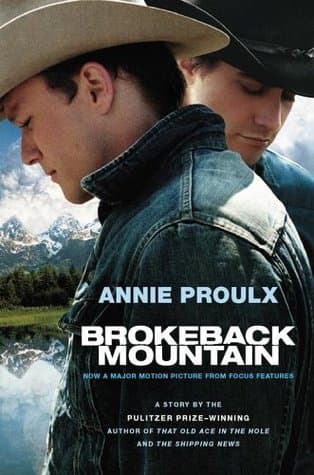
Annie Proulx (1997)
Genre
Romance
Reading Time
45 min
Key Themes
See below
Sign in to track this book
In 1960s Wyoming, two cowboys find a forbidden love as vast and dangerous as the mountains they herd sheep on, a bond that haunts their conventional lives and defies the violence of their world.
In 1963, Ennis del Mar and Jack Twist, two young ranch hands, are hired by Joe Aguirre to herd sheep on Brokeback Mountain in Wyoming. Ennis, quiet and steady, is assigned to the sheep, while the more outgoing Jack works at the camp. At first, they keep a professional distance, but as the isolation and cold grow, they begin sharing the small tent. One very cold night, after drinking whiskey, they share the tent and have sex. Both men initially dismiss this as a one-time event caused by the circumstances. However, their physical relationship continues through the summer, growing into a deep emotional bond that neither man fully expresses or understands at the time.
As summer ends, Ennis and Jack must face their upcoming separation. They descend the mountain, and Joe Aguirre drives them back to their homes. Their parting is awkward and filled with unsaid feelings. Ennis, uncomfortable with his intense emotions and what society would think, struggles to express himself. Jack, more openly emotional, tries to make their goodbye last longer, but Ennis leaves abruptly. Both men are deeply affected by their time on Brokeback Mountain, and the connection they formed, though denied, leaves a lasting mark on their lives.
Four years later, Ennis is married to Alma Beers, with whom he has two daughters, Alma Jr. and Francine. He works odd jobs and struggles financially. Jack, meanwhile, has moved to Texas, where he married Lureen Newsome, the daughter of a wealthy farm equipment dealer, and has a son, Bobby. Unexpectedly, Jack sends Ennis a postcard announcing his visit to Wyoming. Ennis feels a mix of apprehension and excitement. When they finally reunite, their suppressed passion immediately reignites, leading to a strong embrace and a renewed physical relationship, much to Alma's distress and suspicion.
After their reunion, Ennis and Jack establish a routine of meeting several times a year, always pretending these are 'fishing trips' in the mountains. These trips are their only chances to be together, away from their families and society. During these secret meetings, they rekindle their physical and emotional intimacy, sharing the deep bond that began on Brokeback Mountain. Despite the happiness these trips bring, they are also tense, as Ennis's fear of being discovered and Jack's wish for a more permanent life together create constant underlying conflict. Alma, Ennis's wife, eventually confronts him about the true nature of his 'fishing trips'.
Alma, having seen Ennis and Jack's passionate embrace during their first reunion and enduring years of Ennis's evasiveness and emotional distance, confronts him. She directly accuses him of having an affair with Jack, showing her deep hurt and betrayal. Ennis, unable to deny it, reacts with anger and a feeling of being trapped. The confrontation confirms Alma's suspicions and breaks their marriage. They eventually divorce, a painful outcome for Ennis, who despite his feelings for Jack, also cares for his daughters and the life he had built, however imperfectly, with Alma.
Jack, increasingly frustrated with the secrecy and temporary nature of their relationship, suggests a radical idea to Ennis: they should buy a small ranch together, combining their money and creating a life where they could openly be together. He imagines a future where they don't have to hide. Ennis, however, is paralyzed by fear—fear of social exclusion, violence, and losing everything he knows. He remembers a childhood story of a rancher, Earl, who was brutally murdered for living with another man, a memory that deeply traumatizes him and stops him from committing to Jack's dream. This basic disagreement creates a growing divide between them.
As years pass, the stress on their relationship grows. Jack openly expresses his desire for a more normal, shared life with Ennis, even suggesting they could live with their families on separate parts of the same ranch. Ennis, however, remains firm in his refusal to consider such a future, always citing his fears and responsibilities. Their 'fishing trips' become more and more marked by arguments and unsaid resentments. Jack, feeling rejected and unfulfilled, hints at seeking sexual encounters with other men, a revelation that deeply hurts Ennis and shows the growing gap between their desires and expectations.
Ennis and Jack have a particularly difficult last meeting, full of tension and unresolved conflict. Ennis receives a postcard from Jack, dated a few months after their last meeting, saying he plans to visit Wyoming soon. However, before Jack can arrive, Ennis receives a phone call from Lureen, Jack's wife. She tells him that Jack has died in a strange accident, claiming a tire iron fell on him while he was fixing a flat. Ennis immediately suspects foul play, seeing her description of the accident as a thinly veiled account of a violent hate crime, similar to the one he had always feared.
Devastated by Jack's death, Ennis travels to Lightning Flat, Texas, to meet Lureen and arrange for Jack's ashes to be scattered on Brokeback Mountain, as he believes Jack would have wanted. Lureen, however, tells him that Jack's parents insist on burying his ashes in the family plot. During his visit, Ennis finds two shirts in Jack's closet: his own blood-stained denim shirt from Brokeback Mountain, tucked inside Jack's own, also stained. This discovery deeply affects Ennis, showing the depth of Jack's lasting love and his private longing for their shared past, which he had kept hidden for decades.
Ennis takes the two shirts with him, carrying them back to his small trailer. He hangs them carefully in his closet, a silent reminder of the love he shared with Jack. The image of the nested shirts, one inside the other, symbolizes their intertwined lives and the lasting nature of their bond, despite the secrecy and tragedy. Ennis is left with a deep sense of loss, regret, and the weight of a love that could never be fully realized in the harsh realities of their world. He frequently looks at the shirts, a private way to remember and grieve.
Years pass, and Ennis continues to live a solitary life, working as a ranch hand. He occasionally sees his daughters, but his emotional world remains largely closed off. The memory of Jack and their time on Brokeback Mountain never fades. He keeps the shirts, a constant, physical link to his past and his deepest love. The story concludes with Ennis in his trailer, gazing at the shirts, a poignant image of a man forever bound by a love he couldn't publicly acknowledge, a love that defined him, and a mountain that held their secret.
The Protagonist
Ennis begins as a closed-off man who denies his true feelings, and while he never fully overcomes his fear of societal judgment, he eventually acknowledges the profound and irreplaceable nature of his love for Jack.
The Protagonist/Lover
Jack moves from a hopeful, passionate young man to one increasingly frustrated and heartbroken by the limitations of his relationship with Ennis, yet he never stops loving him.
The Supporting
Alma transforms from a loving wife to a heartbroken and resentful ex-wife after discovering Ennis's secret.
The Supporting
Lureen remains largely static, a figure embodying the societal expectations Jack tries to fulfill.
The Mentioned
A minor character who initiates the central relationship, his role is primarily functional.
The Supporting
They grow up amidst their parents' fractured relationship, representing the cost of Ennis's hidden life.
The Mentioned
A minor character whose existence underscores Jack's societal obligations.
The Mentioned
A static, cautionary figure from Ennis's past.
The main theme is the intense, lasting love between Ennis and Jack, which is forbidden by the strict societal rules of their time and place. Their relationship is forced into secrecy, causing immense emotional pain and limiting their lives. Ennis's fear of violence and social exclusion, stemming from a childhood memory of a murdered gay man, directly shows the widespread homophobia that suppresses their love. The 'fishing trips' directly show this repression, giving them the only space where their true selves can emerge, away from judgment. This theme highlights how prejudice harms individual lives and relationships.
“There was some open space between what he knew and what he tried to believe, but nothing could be done about it, and if you can't fix it you've got to live with it.”
The story is filled with a deep sense of loss—the loss of a shared future, the loss of authenticity, and ultimately, the loss of Jack himself. Jack dreams of a ranch where they can live together, a dream repeatedly crushed by Ennis's fear. This unfulfilled desire for a life together haunts both men. After Jack's death, Ennis faces the painful realization of what could have been and the lasting pain of a love that could not be openly lived. The shirts in the closet symbolize this tragic loss and the private grief Ennis carries.
“I wish I knew how to quit you.”
Brokeback Mountain itself becomes a strong symbol of memory and nostalgia for Ennis and Jack. Their time there represents a brief period of freedom and true self-expression. Throughout their lives, the mountain and its memories serve as a touchstone for their love. Ennis constantly revisits these memories, especially after Jack's death, holding onto the image of their shared past. The shirts, with the scent and stains of their time together, are a physical link to this powerful memory, allowing Ennis to privately mourn and remember a love that defined him.
“He'd never had a dream in his life that wasn't of Brokeback Mountain.”
The story explores the complexities of masculinity within the rugged, traditional cowboy culture. Ennis and Jack are typical cowboys, expected to be tough, stoic, marry, and raise families. Their homosexual relationship challenges these strict gender roles and expectations, forcing them to live double lives. The story questions what it means to be a 'man' in a society that defines masculinity so narrowly, suggesting that true identity can conflict with societal performance. Their struggle to balance their inner selves with external expectations is a central conflict.
“There ain't no reins on this one. It's a one-way deal. Nobody's got a handle on it.”
A physical and symbolic space of freedom and authenticity.
Brokeback Mountain is more than just a location; it functions as a sanctuary where Ennis and Jack can be their true selves, away from societal judgment. It's a liminal space, 'above the tree line,' suggesting its detachment from conventional society. Symbolically, it represents freedom, intimacy, and the purity of their love. The eventual inability to return there, or to replicate its freedom in their 'real' lives, underscores the tragedy of their situation. Its memory becomes a powerful anchor for their enduring bond.
A tangible symbol of enduring love, memory, and loss.
The two blood-stained shirts – Ennis's inside Jack's – discovered by Ennis in Jack's closet, are a powerful symbol. They represent the intertwined nature of their lives, Jack's enduring love, and the private, hidden nature of their relationship. The bloodstains hint at the pain and sacrifice inherent in their love. For Ennis, the shirts become a sacred relic, a tangible manifestation of Jack's presence and a constant reminder of their shared past, serving as a focal point for his grief and remembrance in his solitary life.
A recurring euphemism for their clandestine rendezvous and a symbol of their double lives.
The 'fishing trips' serve as a recurring plot device that highlights the necessary secrecy of Ennis and Jack's relationship. This euphemism allows them to escape their conventional lives and reunite, yet it also underscores the dishonesty and emotional toll of their double lives. The trips become increasingly fraught with tension as Jack pushes for more and Ennis resists, illustrating the widening gap between their desires and the constraints placed upon them by society and Ennis's fear. They are both a source of joy and a symbol of their tragic limitations.
Ennis's memory of a murdered gay couple, anticipating Jack's likely fate.
Ennis's vivid, traumatic childhood memory of the brutal murder of a rancher, Earl, and his male partner, serves as a powerful instance of foreshadowing. This memory instills in Ennis a deep, paralyzing fear of discovery and violence, which directly informs his unwillingness to live openly with Jack. When Jack dies, Lureen's description of the 'accident' – a tire iron falling – strongly implies a similar violent hate crime, fulfilling Ennis's deepest fears and adding a layer of tragic inevitability to Jack's demise. It highlights the pervasive danger faced by their community.
“There was some open space between what he knew and what he tried to believe, but nothing could be done about it.”
— Ennis's internal conflict regarding his feelings for Jack.
“It was in a place where there was no time, and no time was passing.”
— Describing the timeless feeling of Ennis and Jack's moments together on Brokeback Mountain.
“He wanted to know what Jack thought, if Jack was thinking the same thing, if Jack was feeling the same thing.”
— Ennis's longing for mutual understanding and connection with Jack.
“There ain't no cure for it.”
— Ennis's realization about the enduring nature of his love for Jack, implying it's an unchangeable part of him.
“He would've been a good man if he'd just let himself be.”
— Ennis reflecting on Jack's life and the constraints that prevented him from being truly himself.
“The truth was that he had a hard time with the idea of being happy.”
— Ennis's general disposition and difficulty embracing joy, even with Jack.
“You know, this is a one-shot thing we got goin' on here.”
— Jack trying to impress upon Ennis the unique and precious nature of their relationship.
“He had a notion that he could have saved Jack, but he couldn't.”
— Ennis's enduring guilt and regret over Jack's death and their unresolved relationship.
“Jack, I swear...”
— Ennis's silent, heartfelt vow to Jack at the end, holding onto Jack's shirt.
“There was a space between them, and it was getting wider.”
— Describing the increasing distance and unspoken tension in Ennis and Jack's relationship over the years.
“He just wanted to be with Jack, to feel Jack's hand on his neck, to hear Jack's voice.”
— Ennis's simple, profound longing for physical and emotional closeness with Jack.
“He was stuck with the knowledge that he had let Jack down.”
— Ennis's deep-seated feeling of failure regarding his inability to fully commit to Jack.
“The jacket and shirt, folded together, were Jack's.”
— Ennis discovering Jack's blood-stained clothes, a poignant symbol of their bond.
“He never knew how to quit you.”
— Ennis's final, iconic admission of his unending love and inability to move on from Jack.
Ready to see how well you understood this book? Take our interactive quiz with 10 questions.
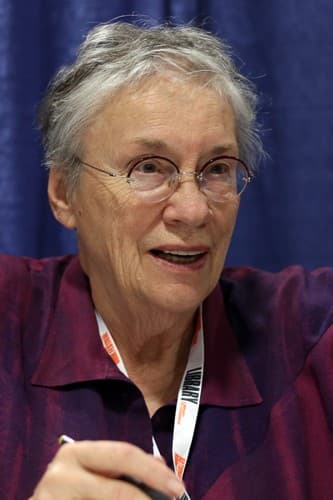
Edna Ann Proulx is an American novelist, short story writer, and journalist. She has written most frequently as Annie Proulx but has also used the names E. Annie Proulx and E.A. Proulx.