“Sometimes the greatest love stories begin with the most unexpected friendships.”
— Reflecting on the evolving relationship between the main characters.

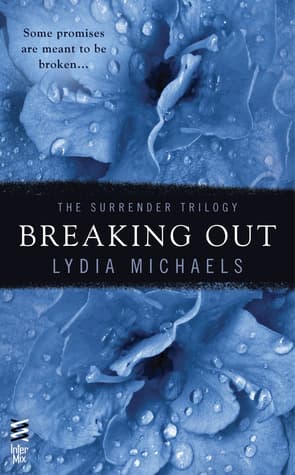
Lydia Michaels (2013)
Genre
Romance
Reading Time
6-7 hours
Key Themes
See below
Sign in to track this book
A woman who survived the streets finds herself caught between two powerful men, both wanting her, and must fight to reclaim her independence in a dangerous game of love and control.
Evelyn "Scout" Keats lives a life of luxury in Lucian Patras's penthouse. She enjoys her new security and her connection with Lucian, believing her past as a street survivor is behind her. But Lucian is distant and troubled, consumed by a secret deal he made with Parker Hughes. To keep Scout safe from Parker, Lucian agreed to stay away from her for thirty days, a period he fears Parker will use to win Scout over. Scout, confused and hurt by Lucian's sudden emotional distance, struggles to understand the change in their intense relationship, unaware she is part of a dangerous game.
Parker Hughes, a manipulative and dangerous man from Scout's past, reappears, taking advantage of Lucian's forced absence. He starts to reinsert himself into Scout's life, using charm and veiled threats to remind her of their shared history and his perceived claim on her. Parker's presence disturbs Scout, bringing back old fears she thought she had overcome. Lucian, bound by his agreement, watches from afar, his heart aching as he sees Parker getting closer to Scout. He struggles with the isolation, knowing his silence is necessary to keep Scout safe, even if it pushes her toward the man he is trying to protect her from.
As the thirty days pass, Scout becomes more suspicious of Lucian's odd behavior and Parker's sudden return. Lucian's distance feels like a betrayal, and Parker's attempts to manipulate her are thinly disguised. Scout, tough from her past, refuses to be a pawn. She begins to question the reasons for Lucian's withdrawal and Parker's constant presence. She feels caught between two powerful men, neither of whom seems to be telling her the whole truth. Her independent spirit, sharpened by years of self-reliance, pushes her to uncover the secrets kept from her.
Driven by her growing frustration and a need for answers, Scout confronts Lucian about his behavior. Cornered, Lucian finally tells her the truth: he made a deal with Parker Hughes to stay away from her for thirty days in exchange for Parker leaving her alone for good. The revelation shocks Scout, not just because of the deception but because it shows her vulnerability and how far Lucian went to protect her. She is angry that her independence was compromised, even with good intentions, and feels like a prize to be traded. This discovery strengthens her resolve to reclaim her independence.
Angered by the revelation of Lucian's deal with Parker, Scout refuses to be a passive part of their power struggle. She confronts both men, making it clear she is not a prize to be won or a bargaining chip. Using her past resilience and self-respect, she declares her independence, stating she does not need either of them to define her or keep her safe. This moment is a turning point for Scout, as she sheds the victim mentality and embraces her strength. She shows that her survival instincts, once for physical survival, now protect her emotional and personal freedom.
Lucian, realizing his mistake and the harm caused by his secrecy, is desperate to win Scout back. He tries to explain his reasons, emphasizing his love and desire to protect her, but Scout is slow to forgive. Meanwhile, Parker Hughes, seeing his control slip, increases his manipulative tactics. He continues to create conflict between Scout and Lucian, using Scout's lingering trust issues and fear of abandonment. Parker's actions become more aggressive, showing his obsession with Scout and his willingness to go to great lengths to possess her, further complicating the strained relationship between Scout and Lucian.
Scout is caught in a storm of conflicting emotions. While she loves Lucian deeply, the betrayal of his secret deal hurts her greatly, challenging her ability to trust. His actions, though meant to protect, made her feel powerless. At the same time, Parker's persistent and increasingly threatening presence reminds her of the darkness she escaped and the constant danger that seems to follow her. She questions whether she can truly have a stable, loving relationship given her past and the men who continue to fight over her. Scout's internal struggle is a battle between her desire for love and security, and her strong need for self-preservation and independence.
The simmering tensions finally explode into a dangerous confrontation. Parker, unwilling to let go of Scout, sets up a situation that forces Lucian and Scout into a direct confrontation with him. The scene is full of raw emotion, threats, and a sense of coming violence. Lucian, having learned his lesson, is no longer willing to stand by and let Parker manipulate Scout. Scout, for her part, stands firm, refusing to be intimidated or controlled by either man. This confrontation is a key moment, where the true nature of each character's resolve and their ultimate desires are revealed, leading to a dramatic climax.
Faced with escalating danger, Scout makes a clear choice. She refuses to be a victim, instead using her street smarts and inner strength. This choice is not just about picking between Lucian and Parker, but about choosing herself and her independence above all else. She actively helps resolve the conflict, showing her capability and resilience. Her decision reflects her journey from a survivor to a woman who controls her own destiny, unwilling to be defined or dictated by the men in her life. This moment solidifies her transformation and her commitment to self-respect.
With the immediate threat from Parker gone, Scout and Lucian face the difficult task of rebuilding their shattered trust. Scout, though hurt, recognizes Lucian's genuine love and his desperate attempts to protect her, even if misguided. Lucian, having learned a painful lesson about honesty and respecting Scout's independence, is committed to earning back her trust through open communication and understanding. Their journey forward is one of careful reconciliation, acknowledging past hurts but determined to build a future based on mutual respect, honesty, and a strong bond tested by extreme circumstances.
The Protagonist
Scout evolves from a grateful survivor into a woman who actively reclaims her agency, refusing to be a pawn in anyone's game.
The Protagonist/Love Interest
Lucian learns that true love requires honesty and respect for his partner's agency, rather than just protection.
The Antagonist
Parker remains a static antagonist, consistently seeking to control Scout and disrupt her happiness.
This theme explores the conflict between a person's right to make their own choices and another's desire to protect them, which often leads to unintended problems. Lucian's deal with Parker, made to protect Scout, ultimately takes away her independence and fuels her anger. Scout's repeated statements that she is not a prize or a bargaining chip directly challenge this dynamic. The novel questions if protection, even with good intentions, is truly helpful when it costs personal freedom, as seen when Scout feels betrayed by Lucian's secrecy.
““I am not a prize to be won or a bargaining chip to be traded. I am my own person.””
The novel highlights how important and fragile trust is in a relationship, especially after past trauma. Scout's past makes her naturally distrustful, and Lucian's secret deal, despite his good intentions, feels like a deep betrayal. This broken trust forces Scout to question her relationship with Lucian and empowers her to rely on herself. The slow and difficult process of rebuilding trust between Lucian and Scout forms a central emotional story, showing that true intimacy requires complete honesty.
““How could I trust a man who kept such a profound secret, even if it was for my own good?””
Scout's journey is about reclaiming and asserting her self-worth after a past that left her feeling vulnerable and objectified. She actively resists being defined by the men in her life or treated as a victim. Her refusal to be a pawn in the power struggle between Lucian and Parker clearly shows her self-respect. This theme is seen in her declarations of independence and her determination to control her own future, showing her growth from a survivor to a woman who commands respect.
““I had survived the streets, I would survive this. I would survive them both.””
The book explores the complexities of love, especially how far one will go for it and the potential problems of possessiveness. Lucian's love for Scout is intense and protective, but initially misguided by his actions. Parker's 'love' is revealed as an unhealthy obsession and desire for control. The story suggests that true love, as Scout ultimately demands, must be built on respect, honesty, and recognizing the other person's individuality, rather than just protection or possession.
““Love wasn’t about ownership or protection at any cost; it was about respect and truth.””
Lucian's agreement with Parker to stay away from Scout for thirty days.
This device serves as the primary conflict driver, creating immediate tension and misunderstanding between Lucian and Scout. It directly facilitates Parker's re-entry into Scout's life, pushing her into a vulnerable position, and forces Lucian into a painful self-imposed exile. The eventual revelation of the deal is the inciting incident for Scout's full reclamation of her autonomy, triggering her anger and determination to control her own destiny. It is a classic romance trope used to create dramatic irony and emotional distance.
Two men, Lucian and Parker, vying for Scout's affection and control.
The love triangle is a central structural device, intensifying the emotional stakes and external conflict. It positions Scout as the focal point of desire and contention, highlighting the contrasting approaches of Lucian's protective (but flawed) love and Parker's manipulative obsession. This device forces Scout to confront her feelings for both men and ultimately make a choice that defines her independence, emphasizing her agency rather than her passivity as a prize.
Scout's history on the streets and Lucian's knowledge of it driving their respective actions.
Scout's past trauma is not just background; it's a powerful motivator for both her and Lucian. Her street survival skills make her resilient and distrustful, fueling her need for autonomy. Lucian's awareness of her past drives his intense protectiveness, leading to his ill-conceived deal with Parker. This device explains character behaviors, deepens their emotional complexity, and provides a constant threat of regression for Scout, making her journey of self-reclamation more poignant and impactful.
“Sometimes the greatest love stories begin with the most unexpected friendships.”
— Reflecting on the evolving relationship between the main characters.
“Freedom wasn't just about escaping a place, it was about finding the courage to be yourself, no matter the cost.”
— The protagonist's internal struggle with her past and future.
“He saw not the scars of her past, but the strength that had forged her into the woman she was becoming.”
— One character's perception of the other, highlighting acceptance.
“True happiness wasn't a destination; it was the journey you shared with the people who understood your soul.”
— A realization about the nature of happiness and companionship.
“Every broken piece of her past was a testament to her resilience, not her weakness.”
— An internal thought about overcoming past trauma.
“Love wasn't about perfection, but about embracing each other's beautiful imperfections.”
— A discussion between the couple about their relationship.
“The heart, once guarded, found its truest beat when it dared to open again.”
— The emotional journey of a character learning to trust and love after being hurt.
“Some secrets were meant to be unearthed, not to destroy, but to set free.”
— The uncovering of hidden truths that impact the characters' lives.
“He didn't just see her; he saw into her, understanding the unspoken fears and desires.”
— A character's deep empathy and understanding of their partner.
“The quiet moments, the shared glances, they often spoke louder than any grand declaration.”
— Highlighting the subtle intimacy developing between characters.
“Breaking out wasn't just about leaving a physical place; it was about shedding the skin of who she used to be.”
— The protagonist's personal transformation and growth.
“Fear could only hold you captive if you let it dictate your next step.”
— A character's internal monologue about overcoming their anxieties.
“Their love story wasn't a fairytale, it was real, messy, and infinitely more beautiful because of it.”
— A reflection on the realistic and profound nature of their relationship.
“Hope was a fragile thing, easily crushed, but when nurtured, it could bloom into something magnificent.”
— A character's renewed sense of optimism after a difficult period.
Ready to see how well you understood this book? Take our interactive quiz with 10 questions.