“I want to make myself for a person.”
— Sara Smolinsky declares her desire for self-determination and education.


Anzia Yezierska (1925)
Genre
Historical Fiction
Reading Time
600 min
Key Themes
See below
Sign in to track this book
In the chaotic Lower East Side of 1920s Manhattan, Sara Smolinsky, an Orthodox rabbi's daughter, makes her own way to independence against the rigid traditions of her upbringing.
The novel begins by introducing the Smolinsky family, recent Jewish immigrants living in poverty on Rivington Street in New York's Lower East Side. Reb Smolinsky, the father, is a pious Orthodox rabbi who spends his days studying the Torah, believing that worldly pursuits are beneath him. His wife, Shenah, and their four daughters—Bessie, Mashah, Fania, and young Sara—support the family. The daughters work in sweatshops and with pushcarts, giving all their money to their father. He often criticizes their 'American' ways and sees women as serving men's spiritual pursuits. Sara, the youngest, sees the unfairness and dreams of a different life. She chafes under her father's authority and the constant struggle for survival.
Bessie, the family's 'burden-bearer,' is the first to face the rabbi's control over her life. She works hard to provide for her parents and sisters. When a fish peddler named Zalmon comes to the house, Reb Smolinsky sees a chance for financial relief and a 'pious' son-in-law. He arranges their marriage against Bessie's wishes. Bessie loves Matese, a kind tailor, but her father forbids the match, calling Matese too poor and not religious enough. Heartbroken, Bessie sacrifices her happiness for her family, marrying Zalmon. Her sacrifice, however, only temporarily helps the family's finances, as Reb Smolinsky's demands remain constant.
Mashah, known for her beauty, wants a refined and easy life, rejecting her family's poverty. Morris Lipkin, a man who claims to be a successful businessman, courts her and promises a life of luxury. Mashah decides to marry Morris, despite her father's initial doubts, believing he will lift her from squalor. However, Morris turns out to be a fraud, with no real money. He quickly wastes what little Mashah brings to the marriage. Their life together becomes one of deeper poverty and disappointment, as Mashah's dreams break, leaving her frail.
Fania, the third daughter, falls in love with and marries Abe Shmukler, a penniless poet. Their love is strong, but their financial situation is bad, causing them to move often from one rented room to another. Reb Smolinsky at first disapproves of Abe, calling him impractical. But Fania defies her father, choosing love over his rules. However, their artistic ideals and romantic love are not enough to overcome the poverty. Fania's spirit eventually breaks from the constant struggle, and her initial defiance gives way to quiet despair, like her older sisters' fates.
Sara has seen her three older sisters crushed by their father's control and the hard facts of their forced marriages. She decides not to follow them. She sees that her father, in his religious fervor, has 'eaten their bread' and consumed their lives. When Reb Smolinsky tries to arrange a marriage for Sara with a pious but unappealing student, Sara strongly refuses. She states her plan to go to college, become a teacher, and earn her own living. This marks a turning point, as Sara openly goes against her father, claiming her right to self-determination and an independent life, even if it means complete separation from her family.
After her declaration, Sara leaves the Smolinsky home, cutting ties with her family to get her education. She rents a tiny, old room and takes on hard, low-paying jobs, often working late, to support herself and pay for night school. She faces extreme hunger, loneliness, and exhaustion, often fighting despair. Despite the huge challenges, Sara's desire to learn and be independent drives her. She focuses on her studies, seeing education as her only way to freedom and self-fulfillment, a sharp contrast to the lives her sisters had to lead. Her journey involves much personal sacrifice and strong will.
After years of hard work and study, Sara saves enough money and gets into New York University. The university, with its knowledge and intellectual discussions, feels like a discovery to her, far from her childhood home. She finds a sense of belonging among her fellow students and professors. Here, she meets Hugo Seelig, a school principal and an educated man who sees Sara's intelligence and ambition. Their relationship grows slowly, built on mutual respect and shared intellectual interests. It offers Sara a look at a different kind of partnership, one based on equality rather than patriarchal control.
Through sheer persistence, Sara finishes her studies and earns her teaching certificate. She gets a job as a public school teacher, finally achieving the dream she fought for. This accomplishment means not only financial independence but also a deep sense of self-worth. She is now a 'bread giver' on her own, earning her living through her intellect and hard work, not being used by others. Her new life shows her resilience and her successful break from the traditional expectations placed on her as a Jewish woman in her community. She becomes a self-sufficient person.
Years later, Sara learns her parents are poor and have been evicted from their home. Despite the deep hurts of her past, Sara feels a sense of duty and care. She lets them move into her apartment, taking on their care. While there is a surface reconciliation, the old tensions quickly return. Reb Smolinsky, now an old man, is still demanding and critical, unable to accept Sara's independent life or her modern ways. Sara finds herself again caught between her desire for personal freedom and the strong sense of family duty, showing the lasting conflict between tradition and modernity within her.
Hugo Seelig, who has patiently supported Sara, proposes marriage. This proposal brings Sara joy but also much worry. She fears that marriage, even to a man like Hugo, might lead her back into a subservient role, like her sisters' fates. Her experiences have given her a deep fear of losing her hard-won independence. Her demanding parents in her home further complicate things, as she worries how a husband would fit into this arrangement and if she can truly escape the 'bread giver' role she has always played. Sara struggles with the decision, torn between love and her fiercely protected autonomy.
Ultimately, Sara decides to marry Hugo Seelig. Their marriage is based on mutual respect, understanding, and a shared intellectual life, very different from her sisters' marriages. Hugo accepts her for who she is, including her complex relationship with her parents. Sara continues to support her parents financially, providing them with a small home nearby. While she never fully heals the emotional scars of her upbringing, she finds a fragile peace. She learns to connect her Jewish heritage with her American independence, finding a way to honor her past without letting it limit her future. Her journey ends with a hard-won sense of self-acceptance and a hopeful, though still challenging, future.
The Protagonist
From a rebellious daughter oppressed by her father's piety, Sara transforms into an independent, educated woman who, while never fully escaping her past, finds a path to self-fulfillment and a more equitable partnership.
The Antagonist
Remains largely unchanged, an unyielding figure of traditional patriarchy, eventually becoming dependent on the very daughter he disowned.
The Supporting
Remains a tragic figure, her spirit gradually worn down by poverty and her husband's demands, finding a fragile peace in old age through Sara's support.
The Supporting
Her spirit is broken by forced marriage and perpetual labor, becoming a symbol of crushed dreams.
The Supporting
From a hopeful romantic seeking beauty, she descends into despair and physical frailty due to her husband's deceit and poverty.
The Supporting
Starts as a defiant romantic but is ultimately crushed by poverty, losing her spirit and succumbing to despair.
The Supporting
Remains a consistent, supportive figure, offering Sara a path to a more balanced and fulfilling partnership.
The Mentioned
His presence serves as a reminder of Bessie's sacrificed happiness, without a significant arc of his own.
The Supporting
Serves as a static character representing the pragmatic, unromantic aspects of Bessie's forced marriage.
The main theme is Sara's search for independence and a self-defined life. She goes against the strict traditions of her immigrant Jewish community and her father's authority, which say a woman's purpose is only to serve her husband and family. Sara's journey through education and work to become a teacher shows her strong desire for freedom, both financial and personal. Her struggle shows the human need to create one's own identity, especially for women challenging social norms. This theme is clear in Sara's decision to leave her family and endure hardship to attend college, eventually reaching her dream.
“I was to be the first in the family to have a room of my own, a real American room with a door that shut.”
The novel shows the severe oppression of women in the traditional Orthodox Jewish community of the Lower East Side. Reb Smolinsky's absolute authority, his belief in women's inferiority, and his view of his daughters as 'bread givers' to support his studies, crush the spirits and dreams of Bessie, Mashah, and Fania. Their forced marriages and lives of constant work show the lack of power women had. Sara's rebellion is a direct challenge to this system, making the novel a strong feminist statement against women's subjugation and their being confined to domestic or exploitative roles.
“A woman ain't supposed to have a head. A woman is only a body, to make children and to look after the house.”
Poverty is a constant and destructive force in the novel, shaping every character's life and choices. The Smolinsky family's constant struggle to survive on the Lower East Side shows the harsh realities many Jewish immigrants faced in early 20th-century America. It causes the daughters' forced labor, their loveless marriages, and the constant tension in the family. The wish to escape poverty is a main reason for Sara's ambition, and its effects even touch her later, more prosperous life. The novel shows how economic hardship can reduce dignity, break dreams, and complicate family relationships among immigrants.
“My life was a hungry mouth, always crying for more, more, more.”
A main conflict in 'Bread Givers' is the clash between the Old World traditions of Eastern European Judaism, shown by Reb Smolinsky, and the appeal of American modernity, shown by Sara's desire for education and individual freedom. Reb Smolinsky holds tightly to his religious customs and values, rejecting anything 'American' as impure. Sara, in contrast, embraces the chances for self-improvement offered by American society. The novel explores the difficult process of assimilation and the generational gap, where children of immigrants often try to join the new culture, while their parents try to keep their heritage. This leads to deep divisions within families and within individuals.
“America was for the children. But I, I must remain in the Old World.”
The novel looks at different kinds of love and marriage, often showing their tragic failures under poverty and patriarchal control. Bessie's forced marriage to Zalmon is one of duty and financial practicality, without love. Mashah's marriage to Morris is based on superficial charm and leads to disappointment. Fania's strong love for Abe is ultimately broken by poverty. In contrast, Sara's marriage to Hugo Seelig represents a modern partnership built on mutual respect, intellectual companionship, and shared values. It offers a hopeful alternative to her sisters' traditional, often oppressive, unions. This theme questions if true love can last or even exist under extreme economic and social limits.
“Love? What is love? Only a word the American girls play with. In the old country, we marry for a living.”
Provides intimate access to Sara's thoughts, struggles, and motivations.
The novel is told from Sara Smolinsky's first-person perspective, allowing the reader to experience her inner world, her frustrations, her burning ambition, and her emotional journey directly. This narrative choice immerses the reader in her struggles and triumphs, fostering deep empathy for her plight. It also enables the author to present a subjective, yet powerful, critique of the patriarchal society and the immigrant experience through the eyes of someone directly affected by it. The 'I' of Sara's voice makes her rebellion deeply personal and resonant.
Highlight Sara's unique path by contrasting her choices and fates with those of her sisters.
Bessie, Mashah, and Fania serve as crucial foil characters to Sara. Each sister represents a different path a young woman might take within their restrictive society, and each ultimately meets a tragic or unfulfilling fate due to their inability to fully escape their father's control or the constraints of poverty. Bessie's sacrifice, Mashah's disillusionment, and Fania's crushed romantic ideals underscore the urgency and necessity of Sara's radical rebellion, emphasizing the profound difference in her chosen path and the magnitude of her achievement. Their stories serve as cautionary tales that solidify Sara's resolve.
Represents those who provide sustenance but are exploited by others.
The title itself, 'Bread Givers,' is a powerful recurring symbol. It refers to the daughters, particularly Bessie and later Sara, who are forced to work tirelessly to earn money to support their father's spiritual studies. Reb Smolinsky is the 'bread eater,' consuming their earnings and their lives without contributing materially. This symbolism extends beyond literal bread to represent the emotional, physical, and financial sustenance that women are expected to provide, often at great personal cost, for the benefit of men or the family unit, highlighting the exploitative nature of their roles.
The Lower East Side embodies the struggles and opportunities of immigrant life.
The Lower East Side of Manhattan in the early 20th century functions almost as a character itself. Its crowded tenements, bustling streets, sweatshops, and pushcarts vividly depict the harsh realities of immigrant life—the poverty, the struggle for survival, and the clash of cultures. It is a place of both confinement and opportunity. For Sara, it represents the world she must escape, a symbol of the old world's grip, while also being the crucible in which her determination is forged. The vibrant, yet oppressive, atmosphere of the neighborhood is integral to understanding the characters' motivations and limitations.
“I want to make myself for a person.”
— Sara Smolinsky declares her desire for self-determination and education.
“In America, women don't need men to boss them.”
— Sara reflects on the opportunities for women in the new world.
“The heart of America is in the school.”
— Sara expresses her belief in education as the key to success in America.
“I'm going to live my own life. Nobody, not even my father, is going to live it for me.”
— Sara defies her father's traditional control over her life.
“The old world is dead. The new world is for the living.”
— Sara contrasts the oppressive traditions of the old world with the possibilities in America.
“A father's love is like no other love. But it can also be a chain.”
— Sara reflects on the dual nature of her father's authoritarian love.
“In the old country, a woman was nothing. In America, she can be everything.”
— Sara compares the limitations on women in Europe to the freedoms in America.
“The hunger for bread is nothing compared to the hunger for knowledge.”
— Sara prioritizes her intellectual and personal growth over mere survival.
“My soul was a battleground, where the old world and the new world fought for mastery.”
— Sara describes her internal conflict between tradition and modernity.
“To be free, you must first free your mind.”
— Sara realizes that true independence requires mental liberation from old beliefs.
“A woman's heart is not a thing to be bought and sold.”
— Sara rejects the idea of marriage as a transactional arrangement.
“The streets of America are paved with gold, but you have to dig for it with your own hands.”
— Sara acknowledges the hard work required to achieve the American Dream.
“I would rather starve in freedom than feast in slavery.”
— Sara chooses poverty and independence over a comfortable but controlled life.
“The past is a ghost that haunts the present.”
— Sara reflects on how her family's traditions continue to influence her life.
Ready to see how well you understood this book? Take our interactive quiz with 10 questions.
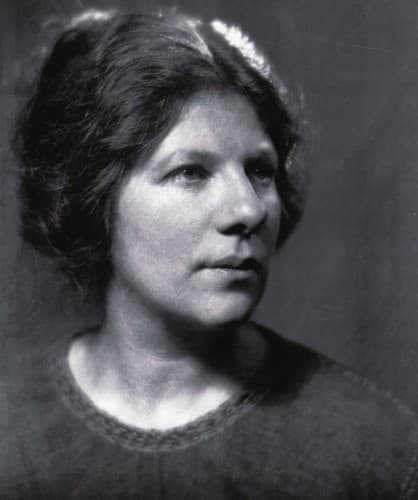
Anzia Yezierska was a pioneering American-Jewish novelist whose work explored the immigrant experience in early 20th-century New York City. Her most famous novel, "Bread Givers" (1925), is a semi-autobiographical account of a young immigrant woman's struggle for independence and self-fulfillment. Yezierska's writing is known for its raw emotional power and unflinching portrayal of poverty, cultural conflict, and the pursuit of the American Dream.







