“Perhaps in the world of art, it is only the beautiful that can truly understand the beautiful.”
— Oki pondering the relationship between Otoko and Keiko.

Yasunari Kawabata (2011)
Genre
Romance
Reading Time
150 min
Key Themes
See below
Sign in to track this book
A celebrated writer's reunion with his former, much younger lover ignites a dangerous game of obsession and revenge, orchestrated by her jealous protégée amidst the ancient beauty of Kyoto.
Oki Toshio, a successful novelist, travels to Kyoto to listen to the New Year's Eve bells, a tradition he once shared with his former lover, Otoko Ueno. Twenty-four years earlier, Oki had an affair with the then sixteen-year-old Otoko, leading to her pregnancy, a stillborn child, and a nervous breakdown. Now, Otoko is a renowned painter, living a reclusive life. Oki watches her from a distance at a temple, noticing her mature beauty. He later attends an exhibition of her work, specifically looking for a painting of the stillborn child. This painting brings him profound guilt and nostalgia. His visit is driven by a desire for closure and perhaps to reconnect, though he knows well the pain he caused her.
At Otoko's exhibition, Oki is approached by a strikingly beautiful young woman, Keiko Sakami, Otoko's protégé and current lover. Keiko recognizes Oki from photographs and immediately shows hostility and possessiveness towards Otoko. She knows about Oki's past with Otoko and sees him as a threat, openly stating her desire to protect Otoko from further pain. Keiko's intense devotion to Otoko borders on obsession, and she subtly manipulates situations to keep Oki away. Her presence creates tension, foreshadowing conflict as Oki tries to re-enter Otoko's life.
Oki, despite Keiko's clear animosity, continues to try to speak with Otoko. He sends her a letter, expressing regret and his wish to see her. Otoko, still deeply affected by their past, is hesitant but eventually agrees to a brief, formal meeting at a tea house, arranged by Keiko. During this meeting, conversation is strained and superficial. Keiko constantly interrupts and controls the interaction. Oki is frustrated by the lack of genuine connection, while Otoko appears fragile and guarded, still visibly traumatized by their shared history. This encounter only deepens Oki's guilt and his sense of the irreparable damage he caused.
Keiko's infatuation with Otoko becomes more intense and possessive, fueled by her hatred for Oki. She sees Oki not just as a past lover but as a symbol of the male betrayal and pain Otoko endured. Her protective instincts turn into a desire for vengeance. She begins to plan ways to hurt Oki, believing it will 'avenge' Otoko and solidify her own place in Otoko's life. Keiko's internal thoughts show a disturbed mind, blurring the lines between love, jealousy, and destructive intent. She even starts to fantasize about harming Oki's family, especially his son, Taichiro.
The novel briefly shows Oki's current family life, revealing a somewhat detached relationship with his wife, Fumiko, and their adult son, Taichiro. Fumiko knows about Oki's past affair with Otoko, and though she seems to have forgiven him, a subtle undercurrent of unspoken resentment remains. Oki's relationship with Taichiro is also formal and distant. This portrayal highlights Oki's emotional isolation and the lasting consequences of his past actions, not just on Otoko but also on his own domestic life. His family life lacks the passion and intensity he once shared with Otoko, leaving him feeling unfulfilled.
Keiko, driven by her growing desire for vengeance, decides to target Oki's son, Taichiro. She carefully plans a chance encounter, pretending to be innocent and charming. She seduces Taichiro, seeing him as a direct extension of Oki and a way to inflict pain. Her actions are calculated and lack genuine affection, motivated purely by her twisted loyalty to Otoko and her hatred for Oki. This act is the first concrete step in her revenge scheme, aiming to disrupt Oki's family life and cause him emotional distress, mirroring the pain she believes he inflicted on Otoko.
Keiko continues her affair with Taichiro, deepening the emotional entanglement and further carrying out her revenge. She deliberately makes sure Oki learns of their relationship, enjoying his discomfort and confusion. Oki is horrified and deeply disturbed by the revelation, recognizing Keiko's manipulative nature and the potential for greater harm. He feels helpless as he watches his son become caught in Keiko's web. This situation forces Oki to confront the full extent of Keiko's vindictiveness and the growing danger she poses to his family.
As Keiko's actions become more extreme, Otoko, initially unaware or choosing to ignore it, begins to sense the dark currents in Keiko's behavior. She notices Keiko's intense possessiveness and the malicious glint in her eyes when Oki's name comes up. While she still loves Keiko, Otoko starts to feel uneasy, sensing that Keiko's devotion is turning dangerous. The realization that Keiko is actively trying to harm Oki and his family causes Otoko distress, forcing her to confront the destructive nature of the relationship she has with her protégé.
Keiko's revenge culminates in a series of disturbing acts. She continues to manipulate Taichiro, using him to torment Oki further. The story reaches a climax when Keiko, driven by her obsession and a desire to completely separate Oki from Otoko, orchestrates a final, devastating act. She attempts to drown herself and Taichiro in a lake, or perhaps deliberately causes an accident. This is a desperate attempt to punish Oki and solidify her bond with Otoko through shared tragedy. The exact nature of the incident remains somewhat unclear, but its intent is clear: to inflict maximum pain upon Oki and to bind Otoko to her in a cycle of shared grief and beauty, forever tainted by sadness.
After Keiko's climactic act, the characters must deal with profound and lasting consequences. The incident leaves deep scars on Oki, Otoko, and Taichiro, forever changing their lives. The novel ends with a lingering sense of beauty intertwined with inescapable sadness. The relationships are irrevocably broken, and the cycles of desire, betrayal, and vengeance have run their course, leaving behind a profound emptiness. The beauty of Otoko's art is now tied to the tragedy of her life, and Oki reflects on the devastating repercussions of his past actions, trapped in guilt and sorrow.
The Protagonist
Oki begins seeking closure and reconciliation, but ultimately finds himself entangled in a destructive cycle of vengeance, leaving him with deeper regret and an intensified sense of sadness.
The Protagonist
Otoko, initially a passive recipient of past trauma, slowly recognizes the destructive patterns in her present relationships, but remains tragically bound by her own sadness and the actions of others.
The Antagonist
Keiko's initial protective instincts for Otoko escalate into a dangerous, vengeful obsession, culminating in destructive acts that leave all involved deeply scarred.
The Supporting
Taichiro, initially an innocent bystander, becomes a victim of Keiko's manipulation, experiencing personal tragedy as a result of his father's past.
The Mentioned
Fumiko remains a largely static character, enduring the consequences of Oki's past without significant personal development within the narrative.
This is the central theme, present throughout the narrative. Kawabata explores how deep beauty often exists alongside, and even comes from, deep sorrow and loss. Otoko Ueno's art, described as intensely beautiful, directly expresses her tragic past—the stillborn child, the breakdown, and the lingering pain of her affair with Oki. The Kyoto landscape, while aesthetically pleasing, brings Oki melancholy, reminding him of lost youth and irreparable damage. Keiko's beauty is also tinged with destructive sadness, as her passionate love for Otoko is inseparable from her vengeful hatred for Oki, leading to tragic acts. The novel suggests that true beauty often carries a melancholic resonance, a fleeting quality amplified by loss.
“Beauty will not come to the woman who does not look sad.”
The novel shows how past events, especially traumatic ones, continue to shape and haunt the present. Oki's affair with Otoko, twenty-four years earlier, starts all subsequent events. It determines Otoko's reclusive life and artistic themes, fuels Keiko's obsessive vengeance, and casts a long shadow over Oki's own family life. The past is not just remembered; it actively dictates present relationships and emotional states. The characters cannot escape its grip, constantly reliving and reacting to old wounds, proving that some scars never truly heal and can lead to new cycles of pain, as seen in Keiko's revenge against Oki's son.
“The past does not die easily. It lives on, a shadow in the present.”
Obsessive love, particularly as shown by Keiko, is a destructive force in the novel. Keiko's intense, almost pathological devotion to Otoko turns into fierce jealousy and hatred for Oki. Her love is not selfless but possessive, driving her to extreme acts of vengeance, including seducing Oki's son. This theme explores the dark side of love, where passion can become distorted into a desire for control and the infliction of pain. It highlights how unchecked emotional intensity, combined with past trauma, can lead to deeply harmful and self-destructive behaviors, ultimately causing more sadness than joy for all involved.
“Love that is too strong can become a poison.”
Art in the novel is both a refuge from and a direct expression of suffering. Otoko's paintings, especially those depicting the stillborn child, are beautiful yet deeply melancholic. They are a way for her to process her trauma and grief. Her artistic success is tied to her personal tragedy, suggesting that profound art often comes from deep emotional pain. For Otoko, art is not just creation but a form of emotional cleansing and a way to preserve the memory of her loss. This theme explores the connection between the artist's inner world and their creative output, where beauty and sorrow become inseparable.
“The beauty of her pictures was the beauty of her sorrow.”
Hints of future events and character motivations are subtly woven into the narrative.
Kawabata employs subtle foreshadowing, particularly through Keiko's dialogue and internal thoughts. From her first encounter with Oki, Keiko explicitly states her intention to 'avenge' Otoko, though the exact nature of this revenge is initially vague. Her intense gaze and possessive remarks hint at her escalating jealousy and capacity for destructive acts. This technique builds tension and a sense of impending doom, preparing the reader for the tragic climax without revealing the specifics, making the unfolding events feel both inevitable and shocking.
Kyoto represents tradition, beauty, and the lingering echoes of the past.
Kyoto, with its ancient temples, traditional ceremonies (like the New Year's Eve bells), and scenic beauty, serves as a powerful symbol. For Oki, it is the setting of his past affair and a constant reminder of lost youth and a love that ended in tragedy. The city's timeless quality reflects the enduring nature of the characters' suffering and the way the past continues to permeate the present. Its serene beauty often contrasts sharply with the turbulent emotions and destructive actions of the characters, highlighting the 'sadness' inherent in its 'beauty'.
A potent symbol of lost innocence, irreparable damage, and the origins of sorrow.
The stillborn child, the tragic outcome of Oki and Otoko's affair, functions as a central symbol. It represents the profound loss, the irreparable damage caused by Oki's actions, and the enduring trauma that defines Otoko's life and art. Otoko's paintings of the child are a direct manifestation of her unresolved grief and a constant reminder of the past. For Oki, it embodies his guilt and the irreversible consequences of his youth. The child's absence is a powerful presence, a silent testament to the 'sadness' that permeates the 'beauty' of their lives.
Alternating focus between characters to reveal internal states and motivations.
While primarily following Oki, the narrative frequently shifts its focus to delve into the internal worlds of Otoko and particularly Keiko. This allows Kawabata to explore the complex motivations behind Keiko's vengeful acts and Otoko's enduring sadness. By presenting events through different characters' perspectives, the novel creates a more nuanced understanding of their emotional landscapes, their interconnectedness, and the subjective nature of their experiences of love, betrayal, and suffering, enriching the psychological depth of the story.
“Perhaps in the world of art, it is only the beautiful that can truly understand the beautiful.”
— Oki pondering the relationship between Otoko and Keiko.
“The sadness of beauty. The beauty of sadness.”
— A recurring theme and reflection on the nature of the characters' lives.
“She was like an old painting, beautiful but with a certain melancholy that only time could bestow.”
— Oki reflecting on Otoko's enduring beauty and sadness.
“To forget was not to forgive. To remember was to live with the pain.”
— Otoko grappling with her past and the lingering hurt from her affair with Oki.
“There are some things that, once broken, can never be truly mended, only carefully reassembled.”
— Oki's internal thoughts about his past relationship and its lasting impact.
“The moon, indifferent to human suffering, shone with its usual cold brilliance.”
— A scene where a character is experiencing emotional distress under the moonlight.
“Beauty often carried with it a cruel edge, a sharp reminder of its own fragility and impermanence.”
— Keiko observing Otoko, and the destructive potential of their beauty.
“In the end, all that remained was a quiet, almost resigned acceptance of fate.”
— A character's ultimate emotional state after a series of events.
“She wanted to destroy what she loved, to possess it utterly by annihilating it.”
— Keiko's intense and destructive feelings towards Otoko.
“The quietest moments often held the most profound truths, if one only knew how to listen.”
— A character reflecting on the unspoken emotions and hidden meanings.
“Was it love, or merely the echo of a past obsession, reverberating through time?”
— Oki questioning his feelings upon seeing Otoko again.
“The world was a stage for beautiful, sad dramas, endlessly replayed.”
— A philosophical observation on the cyclical nature of human experience.
“Her eyes held a depth that seemed to swallow all light, leaving only shadows and unspoken secrets.”
— A description of Otoko's eyes, hinting at her inner turmoil.
“Even the most delicate beauty could harbor a fierce, unyielding will.”
— Keiko's inner strength despite her seemingly fragile appearance.
Ready to see how well you understood this book? Take our interactive quiz with 10 questions.
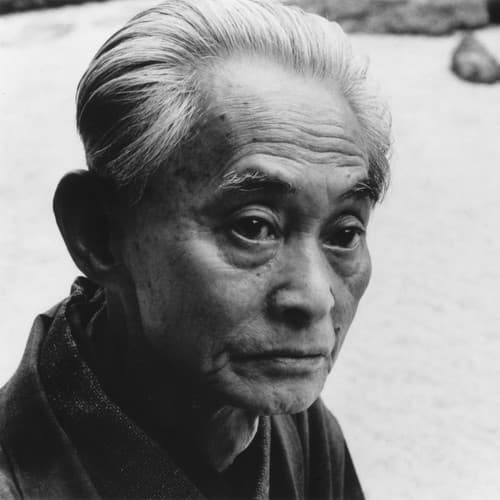
Yasunari Kawabata was a Japanese novelist and short story writer whose spare, lyrical, subtly shaded prose works won him the Nobel Prize in Literature in 1968, the first Japanese author to receive the award. His works have enjoyed broad international appeal and are still widely read.