“I was eighteen years old and I was in love with my aunt.”
— Mario, the protagonist, confesses his feelings for his aunt Julia.

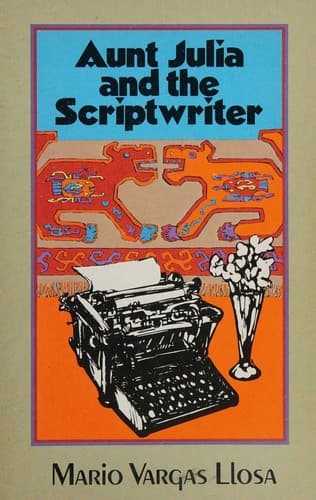
Mario Vargas Llosa (2012)
Genre
Romance
Reading Time
900 min
Key Themes
See below
Sign in to track this book
An 18-year-old radio news editor's scandalous affair with his 32-year-old aunt unfolds amidst the increasingly bizarre and interwoven plots of a friend's wildly popular radio soap operas.
The novel opens in Lima, Peru, in the 1950s, introducing Mario, an eighteen-year-old law student who also works as a news editor at Radio Panamericana. His life involves bohemian aspirations, writing short stories, and frequenting brothels. His ordinary existence is interrupted by the arrival of his Aunt Julia, a thirty-two-year-old Bolivian divorcee, sister to his Uncle Lucho. Julia is sophisticated and independent, captivating Mario with her charm and beauty. Their initial interactions are casual, often involving family gatherings and discussions about her new life in Lima. Mario, despite the age difference and familial taboo, finds himself increasingly drawn to her, sensing a connection that goes beyond typical nephew-aunt relations.
A new figure, Pedro Camacho, a diminutive, intense Bolivian, joins Radio Panamericana as a scriptwriter, tasked with creating daily radio soap operas. His melodramatic, often violent, and increasingly bizarre serials quickly become popular across Lima. Meanwhile, Mario and Julia's connection deepens. They begin spending time together outside of family surveillance, initially under the guise of casual outings. Their conversations become more intimate, revealing their shared intellectual interests and Julia's desire for a new beginning. The flirtation escalates into a secret romance, marked by stolen kisses and covert meetings, adding a thrilling, dangerous dimension to Mario's otherwise predictable life.
Mario and Julia start a passionate, secret affair. They meet whenever possible, often at Julia's apartment or discreet locations, their love intensifying with each encounter. The age difference and the familial relationship make their romance scandalous and unacceptable in their conservative society. They are constantly on edge, fearing discovery by their families, particularly Mario's parents and Julia's brother, Uncle Lucho. Despite the risks, their bond strengthens, fueled by a shared sense of rebellion and a genuine affection that transcends societal norms. Mario, in particular, is exhilarated by the illicit nature of their relationship.
As Mario and Julia's romance progresses, Pedro Camacho's radio serials become increasingly erratic and absurd. Camacho, consumed by his work, starts losing control of his narratives. Characters from one serial inexplicably appear in others, their names change mid-story, and their fates become intertwined in illogical ways. He kills off beloved characters only to resurrect them or have them reappear with different identities. The radio station staff, including Mario, are bewildered and frustrated by his bizarre creative choices, which are often communicated in frantic, late-night calls. Despite the chaos, the serials maintain their popularity, captivating listeners with their unpredictability.
The inevitable happens: Mario and Julia's secret affair is discovered. The revelation sends shockwaves through their extended family. Mario's parents are furious and scandalized, viewing Julia as a manipulative older woman corrupting their son. Julia's brother, Uncle Lucho, also expresses his strong disapproval. The couple faces immense pressure and condemnation from all sides, with family members attempting to separate them and force them to end the relationship. Despite the intense backlash, Mario and Julia remain defiant, determined to be together, further solidifying their bond in the face of adversity and societal judgment. They realize that their love will require significant sacrifices.
Determined to formalize their relationship, Mario and Julia decide to marry. However, their age difference and familial ties present significant legal hurdles. Mario is still a minor, so he requires parental consent, which is vehemently denied. They attempt to elope and marry in secret, seeking out sympathetic officials and navigating complex bureaucratic procedures. Their families, however, are relentless in their efforts to prevent the marriage, tracking their movements and intervening at every turn. This period involves a series of dramatic escapes, near-misses, and desperate attempts to find a way to legally unite, showing their unwavering commitment to each other despite the overwhelming opposition.
At the same time as Mario's romantic troubles, Pedro Camacho's mental health rapidly declines. His already eccentric behavior escalates into full-blown madness. He begins to believe that the characters in his serials are real and that he is an omnipotent creator. His scripts become utterly incoherent, filled with self-contradictory plots, anachronisms, and characters who die and are reborn across different stories. The radio station's attempts to manage him fail, and the quality of the serials plummets, though they still retain a bizarre fascination for some listeners. Camacho's breakdown is a chaotic counterpoint to the romantic drama unfolding in Mario's life, reflecting a broader theme of art imitating, or perhaps distorting, life.
After many failed attempts and relentless pursuit by their families, Mario and Julia manage to marry in a small, remote village, thanks to the help of a sympathetic mayor who bends the rules. The marriage, though legitimate, is still viewed as scandalous by their families. For a brief period, they experience marital bliss, finding solace in their shared defiance and love. They move into a small apartment, attempting to build a life together away from the immediate scrutiny of Lima society. This period represents a fleeting victory against societal norms, a moment of triumph for their unconventional love, though the underlying tensions and difficulties of their situation remain.
Pedro Camacho's increasingly bizarre behavior and incomprehensible scripts reach a breaking point. After a particularly egregious episode where he completely loses control on air, the radio station management can no longer tolerate his madness. He is finally fired, marking the end of his chaotic but immensely popular radio serials. Camacho, now fully delusional, believes he is being persecuted by his own creations and leaves Lima, effectively disappearing from the narrative. His departure signals the end of an era at Radio Panamericana and leaves a void, both creatively and in terms of the entertainment value of his deranged narratives.
After the initial euphoria, Mario and Julia's marriage settles into a more mundane reality. They face financial struggles and the ongoing social ostracism from their families. While their love remains, the daily pressures begin to test their bond. Mario, now more mature, becomes increasingly serious about his ambition to become a writer. He dedicates himself to his studies and his craft, finding inspiration in his experiences and the characters around him. This period marks a shift in his focus, from the passionate, impulsive lover to the aspiring artist, laying the groundwork for his future literary career, a path that ultimately leads him to Paris.
The narrative jumps forward many years. Mario, now a celebrated and successful writer living in Paris, returns to Lima for a visit. He reflects on his past, his turbulent marriage to Julia, and the lasting impact she had on his life. He learns about the fate of various characters from his youth, including the tragic end of Pedro Camacho, who died in obscurity. This section provides a mature, retrospective look at the events of his youth, allowing Mario to process the complexities of his first love and his journey as an artist. He acknowledges the significant role Julia played in shaping him and inspiring his literary pursuits.
During his visit to Lima, Mario has a chance encounter with Julia. She has also moved on with her life, having remarried and established a new existence. Their meeting is cordial but tinged with nostalgia and unspoken emotions. They acknowledge the impact they had on each other's lives, recognizing that their youthful passion, though scandalous and ultimately transient, was a defining moment for both. The novel concludes with Mario's reflection on love, memory, and the ways in which personal experiences, even the most unconventional ones, contribute to one's life and artistic output, leaving a lasting impression on his identity as a writer.
The Protagonist
Mario transforms from a naive, aspiring writer into a more mature, determined artist, shaped by his passionate and forbidden first love.
The Supporting
Julia finds a renewed sense of passion and independence through her relationship with Mario, challenging societal norms before eventually settling into a more conventional life.
The Supporting
Camacho descends from a popular, if eccentric, scriptwriter into complete madness, losing control of his narratives and his mind.
The Supporting
Lucho remains a steadfast upholder of family honor and societal norms, ultimately failing to prevent the marriage but maintaining his disapproval.
The Supporting
Panchito's role remains consistent as a bewildered but professional radio announcer, adapting to the escalating chaos of Camacho's narratives.
The Supporting
They remain staunchly opposed to the marriage, representing the unyielding societal norms that Mario and Julia defy.
The Mentioned
Pablito's 'arc' is defined by his constant, illogical transformations and reappearances across Camacho's increasingly chaotic narratives.
The Supporting
Alberto remains a stable presence, observing Mario's journey from a more conventional perspective.
The Mentioned
Chabuca's 'arc' is characterized by her unpredictable deaths and resurrections within Camacho's narratives.
The novel constantly blurs the lines between fiction and reality, particularly through the parallel narratives of Mario's life and Pedro Camacho's radio serials. Camacho's descent into madness, where he loses control over his characters and plots, mirrors Mario's own struggle to control his life story and his romantic narrative. The novel questions the authority of the author and the impact of narrative on perception. Mario's eventual success as a writer suggests a mastery over this blurring, using his real-life experiences to craft compelling fiction, while Camacho's failure highlights the dangers of becoming consumed by one's own creations.
““Literature is fire, fire and ice, ice and fire.””
The central romance between Mario and Julia, an eighteen-year-old nephew and his thirty-two-year-old divorced aunt, is an act of rebellion against the conservative Peruvian society of the 1950s. Their relationship challenges familial taboos, societal expectations, and traditional morality. Their struggle to marry and their subsequent ostracization show the intense pressure individuals face when they defy established norms. This theme explores the liberating, yet often painful, consequences of choosing personal desire over societal approval, and the strength required to forge one's own path in love and life.
““Love, like a good story, must defy logic and reason.””
Mario's journey is one of artistic self-discovery. His youthful experiences, particularly his scandalous affair with Julia and his observations of Pedro Camacho's creative process, become the raw material for his future literary career. The novel suggests that intense personal experiences, even traumatic or socially unacceptable ones, are important for an artist's development. Mario's transformation from a law student with vague writing aspirations to a dedicated author supports the idea that life itself is the greatest teacher and source of inspiration for a writer. His relationship with Julia, in particular, ignites his passion and provides rich emotional material for his future work.
““I wanted to write, to live, to create, to invent, to lie, to invent lies that would be truths.””
The novel embraces the absurd, particularly through the character of Pedro Camacho and his increasingly nonsensical radio serials. Camacho's stories, filled with improbable plot twists, sudden deaths, and miraculous resurrections, mirror the often-unpredictable and melodramatic nature of real life, especially in a Latin American context. The juxtaposition of Camacho's exaggerated fiction with Mario's intensely personal, yet equally dramatic, romance shows how life itself can often feel like a soap opera. This theme suggests that while life can be chaotic and illogical, there is a certain charm and truth in its inherent melodrama.
““The truth, my dear, is always more unbelievable than fiction.””
The narrative is framed by Mario, as an older, successful writer, looking back on his youth in Lima. This retrospective gaze gives the story a sense of nostalgia and allows for reflection on the impact of past events. The act of remembering and recounting shapes the narrative, showing how memory can be selective, embellished, and reinterpreted over time. The novel explores how youthful experiences, particularly first loves and formative artistic encounters, leave a lasting mark and continue to influence one's identity and creative output decades later. The ending, with Mario's chance encounter with Julia, reinforces the enduring power of these memories.
““Memory is a tricky business, always editing, always adding a little spice.””
Alternating chapters between Mario's personal story and Pedro Camacho's radio serials.
The novel employs a distinctive dual narrative structure, alternating between chapters detailing Mario's semi-autobiographical romance with Aunt Julia and chapters presenting excerpts from Pedro Camacho's increasingly bizarre and convoluted radio soap operas. This device creates a constant interplay between 'real' life and fiction. As Camacho's stories descend into chaos, they subtly comment on, parallel, or even ironically reflect the dramatic events unfolding in Mario's life, blurring the lines between art and reality and highlighting the novel's meta-fictional concerns about storytelling itself.
The novel comments on its own creation and the nature of writing.
Vargas Llosa frequently breaks the fourth wall and references the act of writing within the novel. Mario, as an aspiring writer, constantly observes and internalizes his experiences, explicitly stating his intention to turn them into stories. The older Mario, as the narrator, reflects on the process of shaping his past into fiction. This device underscores the novel's exploration of authorship, inspiration, and the relationship between lived experience and literary creation, inviting the reader to consider the novel they are reading as a product of these very processes.
Pedro Camacho serves as a foil to Mario, highlighting different aspects of artistic ambition.
Pedro Camacho functions as a foil to Mario. While both are writers, their approaches and fates diverge dramatically. Camacho is a prolific, obsessive, and ultimately mad creator whose art consumes him entirely, leading to incoherence. Mario, on the other hand, learns to harness his life experiences, including his tumultuous romance, to create art with greater control and insight, ultimately achieving success and sanity. Camacho's downward spiral offers a cautionary tale about the dangers of unchecked artistic ego and the blurring of reality, contrasting with Mario's more balanced, albeit passionate, artistic journey.
The novel uses humor and exaggeration to comment on society and human nature.
The novel is rich in irony and satire, particularly in its depiction of Peruvian society, family values, and the melodramatic conventions of popular entertainment. The exaggerated reactions of Mario's family to his forbidden romance, the absurdities of bureaucracy, and especially the increasingly preposterous plots of Pedro Camacho's radio serials are all targets of Vargas Llosa's comedic and critical gaze. This device allows the author to critique societal hypocrisy and the sensationalism of popular culture while simultaneously entertaining the reader with its clever and often hilarious observations.
The protagonist's life mirrors the author's own early experiences.
The character of Mario is widely understood to be a semi-autobiographical representation of Mario Vargas Llosa himself. The plot mirrors the author's own scandalous youthful marriage to his older, divorced Aunt Julia Urquidi. This device lends a layer of authenticity and intimacy to the narrative, allowing the author to explore his formative experiences, artistic awakening, and the challenges of defying societal norms from a deeply personal perspective, while also transforming these personal truths into universal themes about love, art, and identity.
“I was eighteen years old and I was in love with my aunt.”
— Mario, the protagonist, confesses his feelings for his aunt Julia.
“Love is a disease that makes you blind, deaf, and stupid.”
— Mario reflects on the irrational nature of love.
“In love, as in art, you have to be a little crazy.”
— Mario contemplates the connection between creativity and romance.
“She was thirty-two, divorced, and had a past that was a mystery to me.”
— Mario describes Aunt Julia, highlighting their age difference and her enigmatic nature.
“We were two rebels against the world, united by a secret passion.”
— Mario expresses the bond he shares with Julia amidst societal disapproval.
“Love doesn't ask for permission; it just happens.”
— Mario justifies his feelings for Julia as inevitable.
“The heart has its reasons which reason knows nothing of.”
— Mario paraphrases Pascal to explain his irrational love.
“I wanted to write stories as passionate as our love.”
— Mario connects his romantic experiences to his aspirations as a writer.
“In her eyes, I saw a world I had never known.”
— Mario describes the transformative effect of Julia's gaze.
“We were living in a soap opera of our own making.”
— Mario compares their dramatic romance to the radio serials he writes.
“Love is the only adventure that is worth the risk.”
— Mario defends his risky relationship with Julia.
“She taught me that love is not a quiet thing; it is a storm.”
— Mario reflects on the tumultuous nature of his relationship with Julia.
“Our love was a secret script, written only for us.”
— Mario uses a metaphor from his writing to describe their private romance.
“In the end, love is the only story that matters.”
— Mario concludes that romance is the central theme of life and art.
Ready to see how well you understood this book? Take our interactive quiz with 10 questions.
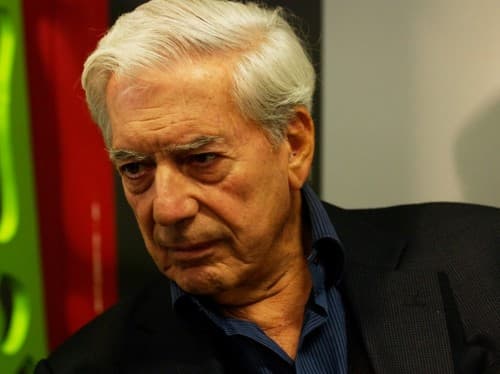
Jorge Mario Pedro Vargas Llosa, 1st Marquess of Vargas Llosa, more commonly known as Mario Vargas Llosa, is a Peruvian novelist, journalist, essayist and former politician, who also holds citizenship of Spain and the Dominican Republic. Vargas Llosa is one of Latin America's most significant novelists and essayists, and one of the leading writers of his generation. Some critics consider him to have had a larger international impact and worldwide audience than any other writer of the Latin American Boom. In 2010 he won the Nobel Prize in Literature, "for his cartography of structures of power and his trenchant images of the individual's resistance, revolt, and defeat." He also won the 1967 Rómulo Gallegos Prize, the 1986 Prince of Asturias Award, the 1994 Miguel de Cervantes Prize, the 1995 Jerusalem Prize, the 2012 Carlos Fuentes International Prize, and the 2018 Pablo Neruda Order of Artistic and Cultural Merit. In 2021, he was elected to the Académie française.