“All the world's a stage, And all the men and women merely players; They have their exits and their entrances, And one man in his time plays many parts, His acts being seven ages.”
— Jaques' famous monologue on the stages of human life.

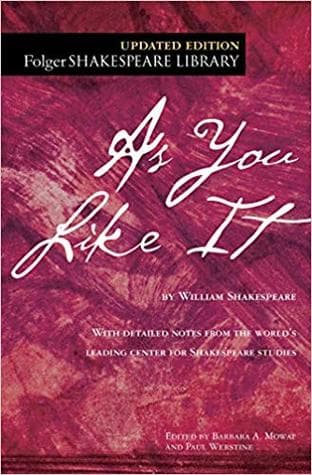
William Shakespeare (2016)
Genre
Romance
Reading Time
263 min
Key Themes
See below
Sign in to track this book
In the Forest of Arden, Rosalind, exiled and disguised as a boy, tests her beloved Orlando's feelings amidst philosophers, banished dukes, and intertwined romances.
The play begins with Orlando de Boys complaining to Adam, an old family servant, about the poor treatment he receives from his older brother, Oliver. Their father's will provided for Orlando, but Oliver denies him an education and keeps him in servitude. At Duke Frederick's court, Rosalind, daughter of the banished Duke Senior, and her cousin Celia, Duke Frederick's daughter, discuss Rosalind's sadness. A wrestling match is announced, featuring the strong Charles. Orlando decides to compete despite warnings about Charles's strength. Rosalind and Celia try to stop him, but Orlando is set on it. He defeats Charles, surprising and impressing the court, especially Rosalind, who immediately falls in love with him.
Duke Frederick, despite promising to protect Rosalind, suddenly banishes her from his court. He fears her popularity might outshine his own daughter, Celia. He gives her ten days to leave, threatening death if she stays. Celia, loyal to Rosalind, says she will go with her. They decide to disguise themselves for safety on their trip to the Forest of Arden, where Duke Senior lives. Rosalind pretends to be a boy named Ganymede, while Celia dresses as a shepherdess named Aliena. They convince the jester, Touchstone, to join them, adding humor and some protection to their dangerous journey. They leave the court's dangers for the unknown wild.
In the Forest of Arden, Duke Senior and his loyal lords live a simple, thoughtful life, finding comfort and wisdom in nature. Among them is Jaques, a sad lord known for his critical views of people. Back at court, Duke Frederick, angry about Orlando's victory and his connection to Rosalind, orders Oliver to find his brother and bring him back, threatening to take Oliver's lands if he fails. Oliver, who already dislikes Orlando, readily agrees to this task, though his real plan is to harm his brother. Orlando, fearing for his life after learning of Oliver's plot, also flees to the Forest of Arden with his faithful servant, Adam.
Rosalind (as Ganymede) and Celia (as Aliena), with Touchstone, arrive in the Forest of Arden, tired from their journey. They meet Corin, an old shepherd, and Silvius, a lovesick young shepherd who pines for Phoebe. Corin tells them that the owner of a flock of sheep and a nearby cottage wants to sell. Rosalind and Celia, with their remaining money, decide to buy the property, hoping to start a new life. Soon after, they meet Jaques, who gives his famous 'All the world's a stage' speech, reflecting on how human life changes and its different stages, further showing the thoughtful mood of the forest.
Orlando, now in the forest, expresses his love for Rosalind by carving her name into trees and hanging love poems on branches. Rosalind and Celia find these romantic messages. Rosalind, touched but also amused, meets Orlando while disguised as Ganymede. She playfully criticizes his bad poetry and, pretending to be wise, offers to cure him of his lovesickness. Ganymede suggests that Orlando should woo 'him' as if 'he' were Rosalind, believing this will either cure Orlando or teach him about true love. Orlando, interested by the 'youth's' wit and resemblance to his beloved, agrees to this unusual plan.
The pretend courtship between Orlando and 'Ganymede' begins. Rosalind uses her disguise to test Orlando's affection, wit, and understanding of love. She challenges his romantic ideals, advises him on how a true lover should act, and even playfully criticizes women's fickleness, all while subtly showing her own deep feelings. Celia, disguised as Aliena, often watches these interactions, sometimes adding her own comments. Touchstone, meanwhile, talks with Corin and other forest dwellers, providing comedy and a country contrast to the romantic situations.
Silvius continues to long for Phoebe, a shepherdess who, despite his devotion, treats him with scorn. Rosalind, still disguised as Ganymede, sees Phoebe's harshness towards Silvius and steps in, scolding Phoebe for her pride and lack of kindness. Ironically, Phoebe, charmed by Ganymede's confident manner and looks, immediately falls in love with 'him'. She sends Silvius to deliver a love letter to Ganymede, creating a complex love triangle where Silvius loves Phoebe, Phoebe loves Ganymede, and Ganymede (Rosalind) loves Orlando, who in turn loves Rosalind.
Oliver, sent by Duke Frederick to find and harm Orlando, enters the Forest of Arden. He falls asleep under a tree, where a lioness and a venomous snake threaten him. Orlando, despite his brother's past abuses, finds Oliver in danger and bravely saves him from the attacking lioness, getting injured in the process. This act of selfless love deeply affects Oliver, leading to a real change of heart and reconciliation between the brothers. Oliver then meets Celia (as Aliena), and they immediately fall in love, a quick and intense connection that reflects the magical mood of the forest.
With Orlando injured and Oliver now changed and in love with Celia, the stage is set for a big resolution. Rosalind, still as Ganymede, learns of Oliver and Celia's sudden engagement. Seeing the complex web of affections — Orlando's love for Rosalind, Phoebe's love for Ganymede, and Silvius's steady love for Phoebe — she decides it is time to reveal her true identity. She promises everyone that the next day, she will use her 'magic' to ensure each lover finds their right partner, setting the scene for multiple weddings and the return of harmony.
On the promised day, all the lovers gather. Rosalind, after getting promises from Phoebe that she will marry Silvius if Ganymede cannot be hers, and from Orlando that he will marry Rosalind, disappears briefly. She then reappears in her true female clothes, stunning everyone. Orlando is overjoyed, Phoebe is shocked but accepts Silvius, and Duke Senior is reunited with his daughter. A messenger arrives with news that Duke Frederick, on his way to attack Duke Senior, met a religious hermit and converted, giving up his worldly ambitions and returning his brother to the dukedom. Four couples — Orlando and Rosalind, Oliver and Celia, Silvius and Phoebe, and Touchstone and Audrey — marry, and the play ends with joyful celebration and a dance.
The Protagonist
Rosalind transforms from a melancholic banished princess to a confident and self-possessed woman who deftly manages the romantic entanglements of the forest before revealing her true identity.
The Protagonist
Orlando evolves from a frustrated, lovesick youth to a more mature and understanding lover, having been tested and guided by Rosalind in disguise.
The Supporting
Celia's steadfast loyalty to Rosalind leads her to personal happiness and a surprising love match with Oliver.
The Supporting
Duke Senior maintains his philosophical composure throughout his exile, ultimately being restored to his dukedom without having to fight for it.
The Supporting
Jaques remains a consistent observer, ultimately choosing to remain in the forest to learn from Duke Frederick's conversion rather than return to court.
The Supporting
Oliver undergoes a complete moral transformation, moving from a villainous antagonist to a loving brother and husband.
The Supporting
Touchstone consistently provides comic commentary and ultimately finds his own unconventional love match in the forest.
The Supporting
Phoebe moves from scornful pride to infatuation with 'Ganymede' and finally accepts Silvius, learning a lesson in humility.
The play explores many kinds of love, from Orlando's idealized, poetic love for Rosalind to the practical, sudden love between Oliver and Celia. It also looks at unrequited love (Silvius for Phoebe), foolish love (Touchstone for Audrey), and Jaques's critical view of love. Rosalind, disguised as Ganymede, actively tests and teaches Orlando about true love, challenging superficiality and encouraging depth. The forest helps characters experience love in its purest, most transforming forms, free from social rules.
“Men have died from time to time, and worms have eaten them, but not for love.”
A main theme is the difference between Duke Frederick's corrupt, artificial court and the natural, freeing Forest of Arden. The court has banishment, unjust takeovers, and sibling rivalry (Duke Frederick versus Duke Senior, Oliver versus Orlando). In contrast, Arden is a place of freedom, thought, reconciliation, and romantic fulfillment. Characters find peace, self-discovery, and moral change in the forest, suggesting that nature offers a more real and virtuous life than the strict, dangerous court society. Even Duke Frederick eventually finds redemption through a hermit near the forest.
“Hath not old custom made this life more sweet / Than that of painted pomp? Are not these woods / More free from peril than the envious court?”
Disguise is a key theme, especially with Rosalind becoming Ganymede. This cross-dressing gives her great freedom of speech and action, allowing her to change events, test Orlando's love, and observe others without being limited by her gender or status. Celia's disguise as Aliena also gives her freedom and leads to her unexpected love. The play uses disguise to explore how fluid identity can be, the performance aspects of gender, and how changing one's appearance can reveal deeper truths about character and desire. The many layers of disguise (a boy actor playing a girl playing a boy pretending to be a girl) make this theme richer.
“I will be more active than you, you dull Celia, I will be the Ganymede, the page, the boy. / Nay, come, I am sure you have some boy's clothes.”
The play ends with a strong message of forgiveness and reconciliation. The bitter sibling rivalries that start much of the plot—Duke Frederick's takeover from Duke Senior and Oliver's cruelty to Orlando—are resolved through acts of kindness. Oliver's change after Orlando saves his life is a clear example of redemption from compassion. Also, Duke Frederick's sudden conversion and giving up power lead to Duke Senior's return without conflict. The Forest of Arden is a place where past wrongs can be acknowledged and overcome, leading to happy endings.
“I do not shame to tell you what I was, / A most unnatural brother.”
Rosalind and Celia's male and female disguises that enable freedom and manipulation.
The most significant plot device is Rosalind's disguise as Ganymede and Celia's as Aliena. This allows Rosalind to circumvent societal restrictions placed on women, granting her agency and the ability to directly engage with Orlando in a way impossible as herself. It facilitates the 'mock courtship,' which serves to test Orlando's sincerity and educate him about love. The disguise also complicates romantic entanglements, as Phoebe falls for 'Ganymede.' Celia's disguise as Aliena allows her to meet and fall in love with the reformed Oliver. This device is crucial for character development, comedic situations, and the ultimate resolution of the plot.
A pastoral setting that functions as a sanctuary and transformative space.
The Forest of Arden acts as a magical, almost mythical, setting that contrasts sharply with the corrupt court. It is a 'green world' where societal rules are relaxed, identities can be shed or altered, and personal growth occurs. It is a place of banishment that paradoxically offers freedom and solace. Characters find philosophical enlightenment (Duke Senior, Jaques), reconciliation (Orlando and Oliver), and true love (all the main couples). The forest facilitates the play's romantic and comedic elements, allowing for encounters and transformations that would be impossible in the structured world of the court.
An unexpected and sudden resolution to the play's political conflict.
The sudden conversion of Duke Frederick to a religious life, leading him to restore his dukedom to Duke Senior, is a classic example of a deus ex machina. This unexpected event quickly resolves the primary political conflict of the play without any direct confrontation or struggle. While somewhat abrupt, it allows the focus to remain on the romantic and comedic resolutions in the forest, ensuring a wholly joyful and peaceful ending. It highlights the play's preference for harmony and reconciliation over extended conflict.
The immediate and intense romantic connection between characters.
Love at first sight is a recurring motif, particularly between Rosalind and Orlando, and later, Oliver and Celia. This device accelerates the romantic plotlines, establishing strong, immediate attractions that drive much of the characters' actions and desires. While seemingly superficial, the play often uses Rosalind's 'Ganymede' persona to test and deepen this initial attraction, moving it beyond mere physical infatuation. It serves as a romantic ideal that the characters strive to fulfill, often through humorous and challenging circumstances.
“All the world's a stage, And all the men and women merely players; They have their exits and their entrances, And one man in his time plays many parts, His acts being seven ages.”
— Jaques' famous monologue on the stages of human life.
“Blow, blow, thou winter wind, Thou art not so unkind As man's ingratitude.”
— A song sung by Amiens in the Forest of Arden, contrasting nature's harshness with human betrayal.
“Men have died from time to time, and worms have eaten them, but not for love.”
— Rosalind, disguised as Ganymede, cynically dismissing the idea of dying for love to Orlando.
“O, how full of briers is this working-day world!”
— Celia's lament about the difficulties and obstacles in everyday life.
“Sweet are the uses of adversity, Which, like the toad, ugly and venomous, Wears yet a precious jewel in his head.”
— Duke Senior reflecting on the benefits of hardship and exile in the Forest of Arden.
“I like this place and willingly could waste my time in it.”
— Orlando's initial impression of the peaceful Forest of Arden.
“The fool doth think he is wise, but the wise man knows himself to be a fool.”
— Touchstone's witty observation on wisdom and folly.
“He that wants money, means, and content, is without three good friends.”
— Touchstone's pragmatic view on the necessities of life.
“No, faith, I will not cry. I have had my say.”
— Rosalind, after a poignant moment, asserting her resilience.
“Down on your knees, and thank heaven, fasting, for a good man's love.”
— Rosalind, disguised as Ganymede, advising Phebe on accepting Silvius's love.
“From henceforth all things shall be set right.”
— Hymen's declaration at the conclusion of the play, signifying resolution and order.
“I would not be cured of love, though for a million.”
— Orlando's passionate declaration of his love for Rosalind.
“The more pity that fools may not speak wisely what wise men do foolishly.”
— Touchstone's observation on the freedom of speech for fools versus the constraints on the wise.
“Do you not know I am a woman? when I think, I must speak.”
— Rosalind, disguised as Ganymede, explaining her talkative nature.
“It is a melancholy of mine own, compounded of many simples, extracted from many objects, and indeed the sundry contemplation of my travel, in which my often rumination wraps me in a most humorous sadness.”
— Jaques describing his unique and cultivated melancholy.
Ready to see how well you understood this book? Take our interactive quiz with 10 questions.
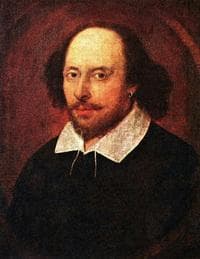
William Shakespeare was an English playwright, poet and actor. He is widely regarded as the greatest writer in the English language and the world's pre-eminent dramatist. He is often called England's national poet and the "Bard of Avon". His extant works, including collaborations, consist of some 39 plays, 154 sonnets, three long narrative poems, and a few other verses, some of uncertain authorship. His plays have been translated into every major living language and are performed more often than those of any other playwright. Shakespeare remains arguably the most influential writer in the English language, and his works continue to be studied and reinterpreted.