“It was a truth universally acknowledged that a single man in possession of a good fortune must be in want of a wife.”
— Opening line, setting the stage for the societal expectations and comedic tone.

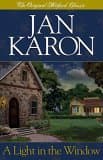
Jan Karon (1995)
Genre
Romance
Reading Time
480 min
Key Themes
See below
Sign in to track this book
In Mitford, Father Tim and Cynthia's love story shows romance can bloom anew, even in quiet places.
Father Tim Kavanagh, the rector of Lord's Chapel in Mitford, North Carolina, likes his simple life. His days involve parish duties, writing his column, time with his dog, Barnabas, and his housekeeper, Puny. He often thinks about his past and his routines. However, his quiet life changes with the arrival of a new resident next door: Cynthia Coppersmith, a children's book illustrator. Her presence brings new energy to Mitford and an unexpected change to Father Tim's predictable world, making him curious and a little uneasy.
Cynthia Coppersmith quickly settles into the Mitford community. Her bright, creative spirit shows in her new home, which she decorates colorfully. She shops at the local bookstore and art supply store, and her friendly manner wins over many townspeople, including Olivia and Dooley. Father Tim finds himself both interested and slightly bothered by her different ways. He watches her with curiosity and some of his usual skepticism, often seeing her modern ideas as a contrast to his own traditional outlook. Despite his first thoughts, he likes her charm and the subtle warmth she brings to their small town.
Despite their first differences, Father Tim and Cynthia become true friends. They connect over their shared love for books and quiet thought, often discussing literature and life during casual meetings. Cynthia often borrows books from Father Tim's large library, and he starts to look forward to their talks. Their interactions become a quiet joy for Father Tim, who begins to like Cynthia's view and kind heart. He learns about her work as an illustrator, and she learns about his life as a rector, leading to a deeper understanding and respect between them.
As their friendship grows, Father Tim and Cynthia face small challenges and misunderstandings. Father Tim's shyness and occasional gruffness sometimes cause awkward moments, and his traditional views can clash with Cynthia's modern ideas. He also deals with his health issues, including diabetes, which adds vulnerability to his character. Cynthia also has professional pressures and personal worries, which she sometimes shares with Father Tim. These small bumps, however, strengthen their bond as they learn to deal with each other's quirks and offer support through hard times, solidifying their growing affection.
The close-knit Mitford community plays a role in Father Tim and Cynthia's relationship. Characters like Puny, the housekeeper, and Olivia, the bookstore owner, offer quiet encouragement. Dooley, the young boy Father Tim helps, also interacts with Cynthia, further bringing her into Father Tim's world. The townspeople, with their quirks and kindnesses, create a warm background that helps the connection between the rector and the artist grow. Their presence shows the theme of community and shared life in Mitford, giving a safe and caring place for their budding romance.
Through small, important moments, Father Tim slowly sees how much he feels for Cynthia. He thinks about her often, misses her when she is away, and values their talks. Her laughter, insights, and real affection start to break down his emotional walls. He sees her kindness to others, her dedication to her art, and her gentle spirit, realizing she brings a joy and light into his life he did not know was missing. These discoveries are often internal, marked by quiet thought and a growing wonder at this unexpected turn in his life.
After much thought and nervousness, Father Tim finds the courage to propose marriage to Cynthia. He proposes in his quiet, but very sincere, way. He thinks about his age, his routines, and the unusual nature of a late-life romance, but his love and desire for Cynthia's company win over his doubts. The moment is tender and heartfelt, showing the quiet strength of their bond. It marks a big change, not just for their relationship, but for Father Tim's personal journey of opening his heart to new things.
Cynthia, touched by Father Tim's proposal, accepts. Her acceptance brings great joy and a sense of completeness to Father Tim. The news is met with warmth and excitement by the Mitford community, who have quietly watched and supported their growing relationship. Wedding preparations begin, in a modest and heartfelt way, reflecting the couple's mature and unpretentious personalities. The focus is on their commitment to each other and the joining of their lives, not elaborate parties, showing the deep and lasting love they have found.
The wedding day arrives, simple and full of real affection. Father Tim and Cynthia marry in a quiet ceremony at Lord's Chapel, surrounded by close friends and the supportive Mitford community. The service is meaningful and personal, showing their shared faith and the deep love that has grown between them. It is a joyful event, full of warmth and the promise of a shared future. The wedding shows the end of their journey from hesitant neighbors to loving partners, confirming that love can come at any stage of life and bring deep happiness.
After their wedding, Father Tim and Cynthia begin life as husband and wife. Their marriage brings a new feel to the rectory, blending their lives and routines. Father Tim finds great contentment and companionship with Cynthia, discovering new depths of joy and understanding. Cynthia, in turn, embraces her new role and the warmth of the Mitford community. Their marriage shows the power of connection, the beauty of unexpected love, and the enriching experience of sharing one's life with another, promising a future of quiet happiness and shared adventures.
The Protagonist
He transforms from a solitary, routine-bound bachelor to a loving, committed husband, embracing unexpected joy and partnership.
The Protagonist/Love Interest
She finds love and a new home in Mitford, integrating her independent artistic life with a loving partnership.
The Supporting
Remains a constant, loving presence, adapting to the new family structure with ease.
The Supporting
Remains a steadfast and supportive presence, welcoming Cynthia into the rectory family.
The Supporting
Continues to grow under Father Tim's care, gradually opening up to others and finding stability.
The Supporting
Remains a steady, supportive friend and community anchor.
The Mentioned
Serves as a consistent background character, representing the heart of Mitford's daily life.
The Supporting
Remains a steadfast and helpful member of the community.
The Mentioned
Serves as a symbol of the enduring faith and community in Mitford.
This theme is central to the novel, exploring the joy of finding love in later years. Father Tim, a bachelor in his sixties, at first resists romance, but Cynthia's arrival gradually opens his heart. The story shows the mature aspects of love—companionship, respect, shared interests, and quiet affection—rather than passionate infatuation. It questions ideas about when and how love can appear, showing it can bring deep happiness at any life stage, enriching a life that was full but perhaps lacked a specific intimacy. Their journey highlights the courage it takes to accept change and vulnerability, even after decades of routine.
“He had not known, until she came, how utterly lonely he had been.”
Mitford itself is a character, showing the theme of community and belonging. The residents, from Puny to Olivia to Dooley, create a supportive, connected group that helps Father Tim and Cynthia's relationship. The town offers stability, shared life, and gentle care, where everyone knows and cares for their neighbors. This close environment provides a safe place for personal growth and helps characters feel rooted. The community's acceptance and quiet support of Father Tim and Cynthia's romance show that true belonging comes from shared life and mutual support, making Mitford an ideal setting for change.
“Mitford was like that, a place where people knew your name and your troubles, and weren't afraid to lend a hand.”
Father Tim's life has deep routines—parish duties, writing, walks with Barnabas. While these routines offer comfort, they also at first stop him from new experiences. Cynthia's arrival challenges these patterns, making Father Tim face his resistance to the unfamiliar. The theme explores the balance between routine's security and growth's necessity. Father Tim learns that while routines offer comfort, true fulfillment often comes from leaving one's comfort zone and accepting life's unpredictability, leading to a richer, more expansive existence.
“He had always prided himself on his settled habits, but now he wondered if they had settled him too much.”
As an Episcopal rector, Father Tim's faith is a main part of his character and the novel. Faith and spirituality appear throughout the story, not through direct preaching, but through Father Tim's quiet thoughts, pastoral duties, and reliance on prayer. His spiritual journey connects with his personal one as he seeks guidance in his relationship with Cynthia. Lord's Chapel is a spiritual anchor for the community, and the story quietly explores how faith can give comfort, perspective, and a way to handle life's unexpected turns, including late-life love and new blessings.
“God moves in a mysterious way, His wonders to perform.”
The idea of 'home' changes during the story. At first, Father Tim's rectory is his home, a place of solitude and routine. Cynthia's arrival and their marriage change this understanding. Home becomes not just a physical place but a shared life, a partnership, and a place where two people find comfort and belonging together. The novel explores how home is built on love, companionship, and understanding, not just a building. For Cynthia, Mitford becomes her new home, bringing her into a community and giving her a loving family, showing that home can be found and created in unexpected places.
“Home, he was beginning to understand, wasn't just a place. It was a person.”
The story is primarily told through Father Tim's introspective point of view.
The novel is largely narrated from Father Tim Kavanagh's first-person perspective, allowing readers intimate access to his thoughts, feelings, and internal struggles. This device is crucial for understanding his initial resistance to change, his subtle observations of Cynthia, and his gradual realization of his affection for her. His often curmudgeonly but ultimately tender voice shapes the tone of the story, making his journey of unexpected love deeply personal and relatable. It emphasizes his internal world, his reflections on faith, and his dry humor, drawing the reader into his unique way of seeing Mitford and its inhabitants.
The small, idyllic town of Mitford acts as a central character and nurturing environment.
The fictional town of Mitford, North Carolina, functions as much more than just a backdrop; it is a vital plot device and a character in itself. Its close-knit community, charming local businesses (the bookstore, the diner), and quirky residents create a nurturing, supportive environment where personal growth and relationships can flourish. The predictability and warmth of Mitford provide a stark contrast to Father Tim's internal anxieties and subtly encourage his opening up to Cynthia. The town's small-town dynamics facilitate frequent, organic interactions between characters, making the development of their relationships feel natural and inevitable.
Light and windows symbolize new perspectives, hope, and emotional openness.
The title, 'A Light in the Window,' itself suggests a key symbolic device. Light often represents hope, clarity, and new beginnings, while windows symbolize looking out, looking in, and the opening of one's heart and mind. Cynthia's arrival next door, literally putting a 'light in the window' of the previously dark Cunningham house, signifies the new light and joy she brings into Father Tim's life. It represents his gradual emotional awakening and his willingness to look beyond his established routines and embrace a brighter, more connected future. The imagery reinforces the theme of finding unexpected happiness and companionship.
Father Tim's frequent internal thoughts and reflections drive his character development.
Much of Father Tim's character arc is conveyed through his extensive internal monologues and reflections. He frequently ponders his life, his faith, his routines, and his observations of others. This device allows readers to witness his struggle with his emotions, his dry wit, and his eventual acceptance of love. It builds a deep connection between the reader and Father Tim, making his transformation feel authentic and earned. His internal debates about Cynthia, his anxieties about change, and his quiet appreciation for life's simple joys are all revealed through this introspective narrative technique.
“It was a truth universally acknowledged that a single man in possession of a good fortune must be in want of a wife.”
— Opening line, setting the stage for the societal expectations and comedic tone.
“I cannot fix on the hour, or the spot, or the look, or the words, which laid the foundation. It is too long ago. I was in the middle before I knew that I had begun.”
— Elizabeth reflecting on when she started to fall in love with Darcy.
“To be fond of dancing was a certain step towards falling in love.”
— Narrator's observation on the social rituals and their romantic implications.
“There is a stubbornness about me that never can bear to be frightened at the will of others. My courage always rises at every attempt to intimidate me.”
— Elizabeth's defiant response to Lady Catherine de Bourgh's attempts to control her.
“You must allow me to tell you how ardently I admire and love you.”
— Mr. Darcy's first proposal to Elizabeth, despite its initial arrogance.
“From the very beginning, from the first moment I may almost say, of my acquaintance with you, your manners, impressing me with the fullest belief of your arrogance, your conceit, and your selfish disdain of the feelings of others, were such as to form the groundwork of disapprobation on which succeeding events have built so immovable a dislike.”
— Elizabeth's scathing rejection of Darcy's first proposal.
“It is not the object of admiration, but of love.”
— Elizabeth's internal thought about the difference between admiration and genuine affection.
“I am the happiest creature in the world. Perhaps other people have said so before, but not one with such justice.”
— Elizabeth's joyous realization of her love for Darcy and impending marriage.
“A lady's imagination is very rapid; it jumps from admiration to love, from love to matrimony, in a moment.”
— Mr. Darcy's somewhat cynical observation about women's romantic inclinations.
“Till this moment I never knew myself.”
— Elizabeth's profound realization after reading Darcy's letter, understanding her own prejudice.
“There are few people whom I really love, and still fewer of whom I think well. The more I see of the world, the more am I dissatisfied with it; and every day confirms my belief of the inconsistency of all human characters, and of the little dependence that can be placed on the appearance of merit or sense.”
— Elizabeth's cynical reflection on humanity and society, spoken to Jane.
“I have been a selfish being all my life, in practice, though not in principle.”
— Darcy's confession to Elizabeth, acknowledging his past pride and arrogance.
“She had always felt that Jane's affection was a thing to be trusted.”
— Elizabeth's secure feeling about her sister Jane's unwavering love and kindness.
“What a charming amusement for young people this is, Mr. Darcy! There is nothing like dancing after all. I consider it as one of the first refinements of polished societies.”
— Miss Bingley's attempt to engage Darcy in conversation and show off her social graces.
“I could easily forgive his pride, if he had not mortified mine.”
— Elizabeth's initial justification for her dislike of Darcy, highlighting her own pride.
Ready to see how well you understood this book? Take our interactive quiz with 10 questions.

Biography coming soon.