“I will get inside your head, I will make myself at home, I will never leave.”
— The narrator's chilling inner monologue about his control over his victim.

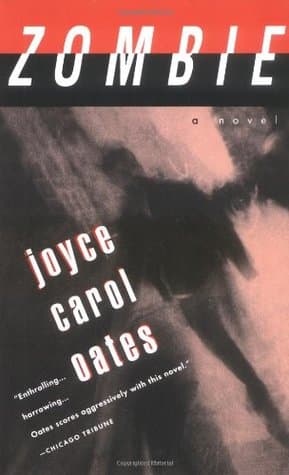
Joyce Carol Oates (1995)
Genre
Literary Fiction / Thriller / Mystery
Reading Time
150 min
Key Themes
See below
Sign in to track this book
This novel explores the chilling mind of Quentin P., a sexual psychopath whose twisted logic turns the story into a terrifying journey through a killer's thoughts.
Quentin P., an intellectually disabled young man in a suburban town, writes in a journal. He wants to create a 'zombie' — a submissive, lobotomized boy to be his perfect friend. Quentin focuses on various young boys in his neighborhood, stalking them and imagining their capture. His home life involves a distant mother and an absent father, leaving him mostly unsupervised. He works at a grocery store, but his mind is filled with dark fantasies he sees as logical and right. His first attempts to interact with potential victims are awkward and socially inept, often seen as strange rather than threatening by others.
Quentin picks Timothy K., a local boy, for his 'zombie' project. He starts following Timothy, watching his routines and home. Quentin's thoughts show his growing frustration with the world and his inability to form real connections, which he blames on others' 'weakness' or 'stupidity.' He believes making a 'zombie' will give him a perfect, uncritical bond. His stalking becomes bolder, leading to a tense meeting where he lures Timothy to a secluded spot but is interrupted before he can complete his plan. This near-miss only strengthens Quentin's resolve, making him feel more powerful and closer to his goal.
After several failed tries, Quentin successfully abducts a young boy named Michael H. He lures Michael into his car and takes him to a hidden, soundproofed room in the basement of his family's old summer cottage, in a remote area. Quentin has carefully prepared this space with restraints and tools he thinks are needed for his 'procedure.' Michael is scared and confused, but Quentin sees his fear as a sign he can be molded. Quentin records every detail of the abduction and Michael's first captivity, including the boy's cries and his own growing sense of victory and control.
Quentin begins the 'procedure' on Michael, planning a crude lobotomy with tools he got, including an ice pick. His understanding of the procedure comes from fragmented information and his own deluded ideas, leading to a brutal act. He believes that by cutting parts of Michael's brain, he will remove the boy's will and personality, turning him into a docile 'zombie' for Quentin's pleasure and companionship. The process is described through Quentin's detached view, showing his complete lack of empathy and distorted reality. Michael suffers greatly, and Quentin watches the changes in him with a perverse, scientific satisfaction.
After the lobotomy, Michael H. has severe brain damage, in a vegetative or semi-vegetative state. Quentin tries to interact with him as his perfect companion, dressing him, feeding him, and talking to him, but Michael does not respond. His 'zombie' is not the intelligent, submissive partner Quentin imagined. Despite Michael's condition, Quentin treats him like a living doll, a silent witness to his twisted desires. He carefully records Michael's physical decline and his own attempts to 'care' for him, while dealing with the unexpected emptiness of his accomplishment.
Michael H.'s disappearance starts a police investigation. The community is worried, and flyers with Michael's picture circulate. Quentin watches the search with smugness and paranoia, believing he is untouchable and smarter than the police. However, small clues and inconsistencies in his behavior begin to draw attention from his mother and, later, a local detective. Quentin's journal entries show his increasing anxiety about being found, even as he dismisses every potential threat. He believes his intelligence and careful planning will keep him free.
As weeks pass, Quentin's internal thoughts become more frantic. He continues to justify his actions, blaming society, his parents, and even Michael for his situation. He sees himself as a victim, misunderstood, and views his 'zombie' project as a valid scientific effort or a necessary act of creation. He records his thoughts, often contradicting himself, showing his deep delusion and psychological breakdown. He shifts between feeling all-powerful and intensely paranoid, convinced everyone is either too stupid to understand him or plotting against him. His journal becomes a confession and a statement of his distorted worldview.
Michael H.'s decaying body is found in the summer cottage basement, not by police, but by Quentin's mother, who, sensing a strange smell and her own suspicions about Quentin's secrecy, checks the rarely used property. The gruesome discovery immediately points to Quentin. Quentin panics and tries to flee, leaving his journal and any pretense of normal life. He tries to escape, believing he can outsmart the police, but his poor social skills and lack of planning beyond the immediate act make his escape clumsy. He is now a hunted fugitive, his fantasy world collapsing.
Police start a full manhunt for Quentin P. His journal, found at the cottage, becomes key evidence, offering insight into his motives and actions. The journal's contents confirm the monstrous nature of his crimes and his delusion. Quentin, confused and desperate, is eventually found and arrested. The capture is presented as anticlimactic, emphasizing Quentin's ultimate powerlessness against the structured world he hates. Despite his capture, Quentin's internal narrative suggests he still lacks remorse or understanding of his actions, seeing himself as a misunderstood genius.
Quentin P. is jailed and faces legal consequences. However, his prison journal entries show he remains largely unrepentant and lives in his own distorted reality. He sees his imprisonment as unjust punishment for his 'experiments' and still believes in his 'zombie' project. He reflects on his past actions with chilling detachment, still rationalizing his violence and expressing frustration that the world cannot understand his 'vision.' The story ends with Quentin still trapped in his own mind, unable to grasp the horror he caused, leaving the reader with a disturbing sense of his deep pathology.
The Protagonist/Antagonist
Quentin's arc is less about development and more about a horrifying revelation of his existing pathology, culminating in his capture but not his repentance.
The Victim
Michael's arc is tragically cut short, a symbol of lost innocence and the ultimate victim of Quentin's madness.
The Supporting
Her arc involves a slow dawning of suspicion, culminating in the horrific discovery that exposes her son's crimes.
The Mentioned
Timothy's arc is one of near-victimization, serving as a warning sign of Quentin's escalating danger.
The Supporting
The detective's arc involves the methodical investigation that closes in on Quentin.
The novel explores the mind of a sexual psychopath, showing evil not as an outside force, but as a logical idea within Quentin P.'s warped perception. It shows how a complete lack of empathy, along with intellectual disability and neglect, can lead to monstrous acts. Quentin's journal entries reveal his justifications, his belief in his own superiority, and his inability to understand the suffering he causes, highlighting the self-justification in psychopathy. The book avoids sensationalism, focusing instead on the disturbing internal logic of madness.
“For the zombie is not a person, not a human being like you or me. The zombie is a perfect companion, a slave, an instrument, a thing. A thing that loves you.”
The novel suggests that societal and family structures fail to recognize or stop Quentin's growing pathology. His mother's detachment and the community's blindness to his odd behaviors allow his dark fantasies to grow and become violent. The lack of proper care, understanding, or intervention for his intellectual disabilities and disturbing tendencies creates a void where his psychopathy can thrive. The story implies that while Quentin is responsible for his actions, his environment unintentionally helped his unchecked development.
“They don't understand me. Nobody understands. They think I'm stupid but I'm smarter than all of them.”
Quentin's first-person narration is an example of unreliable storytelling, showing how a disturbed mind twists reality and language to fit its own goals. He redefines 'love,' 'companionship,' and 'care' in horrific ways, using medical terms to justify his acts. His journal uses euphemisms and rationalizations, turning victims into 'zombies' and torture into 'procedures.' This theme shows how internal narratives shape perception and how a loss of empathy can lead to a complete separation from objective reality and moral truth.
“The procedure went well. He is changing. He is becoming my perfect friend.”
A main drive for Quentin P. is his need for control and power, stemming from his feelings of inadequacy and social isolation. He wants to have absolute dominance over another person, turning a living boy into a compliant 'zombie' that exists only to serve him. This search for power makes up for his perceived powerlessness in the world. The act of abduction, torture, and lobotomy is the ultimate expression of his desire to control, to create a perfect, uncritical companion who will never reject or betray him, as he believes society has.
“He will do everything I want. He will never talk back. He will be mine.”
The story is told entirely from the perspective of the psychopathic killer, Quentin P.
The entire novel is presented as Quentin P.'s journal, making him the sole narrator. This device is crucial as it plunges the reader directly into the mind of a killer, forcing them to experience his distorted logic, rationalizations, and complete lack of empathy firsthand. The unreliability stems from Quentin's intellectual disability and psychopathy, which cause him to interpret events and motives in ways that are deeply skewed and self-serving. This perspective creates a chilling intimacy, blurring the lines between the reader's understanding and Quentin's deranged reality, making the horror more profound and disturbing.
The narrative is structured as Quentin P.'s meticulous, self-written journal entries.
The novel's structure as a journal provides an unfiltered, raw glimpse into Quentin's thoughts, plans, and actions. This format allows for a detailed, almost forensic, examination of his psychological deterioration and the methodical planning behind his crimes. It serves as both a confessional and a manifesto, documenting his twisted philosophy and his 'scientific' approach to creating his 'zombie.' The journal's existence also functions as a crucial plot point, eventually serving as undeniable evidence against him, providing the reader with a terrifying, intimate understanding of his internal world.
Quentin P. uses sterile, medical, or euphemistic language to describe his horrific acts.
Quentin P. frequently employs clinical and detached language to describe his violent and depraved acts. He refers to the lobotomy as a 'procedure' or 'operation' and his victim as a 'zombie' or 'specimen.' This linguistic device highlights his profound dehumanization of his victims and his inability to acknowledge the moral gravity of his actions. It also reveals his desperate attempt to rationalize and legitimize his behavior, creating a veneer of scientific rigor over his brutal fantasies. This detachment amplifies the horror, as the reader is forced to confront the stark contrast between the clinical terms and the gruesome reality they describe.
Quentin's early obsessions and fantasies clearly predict his later actions.
From the very beginning of the novel, Quentin's detailed fantasies about capturing, subduing, and 'transforming' young boys serve as strong foreshadowing for his eventual abduction and lobotomy of Michael H. His meticulous planning, the acquisition of tools, and his internal monologues about the 'perfect zombie' explicitly lay out his intentions long before they are acted upon. This device builds a sense of dread and inevitability, as the reader watches Quentin's obsessions slowly but surely translate into horrifying reality, making his crimes feel less like sudden outbursts and more like the logical conclusion of a deeply disturbed mind.
“I will get inside your head, I will make myself at home, I will never leave.”
— The narrator's chilling inner monologue about his control over his victim.
“It was my secret, the best secret, the most important. To know someone, to possess them.”
— The narrator reflecting on his desire for ownership and intimacy with his victims.
“They say the eyes are the windows to the soul. I say the eyes are the windows to the skull.”
— A macabre observation by the narrator about the physical reality beneath the surface.
“I was just trying to help. That's all. Just trying to help her.”
— The narrator's warped justification for his actions, revealing his distorted self-perception.
“The world is full of people who want to be told what to do. They're just waiting for someone to tell them.”
— The narrator's cynical view of human nature and vulnerability.
“Sometimes you have to break things to make them better.”
— A disturbing rationalization for violence and destruction.
“She was like a doll. A beautiful doll. Waiting to be played with.”
— The narrator's objectification of his victim, stripping her of humanity.
“The darkness inside me was a hungry thing. Always hungry.”
— The narrator describing the insatiable nature of his inner demons.
“Love is just another word for wanting something so bad you'll do anything to get it.”
— The narrator's cynical and possessive definition of love.
“Nobody understands. Nobody ever will.”
— The narrator's sense of isolation and uniqueness in his pathology.
“I wanted to be inside her head. To know everything she knew. To be her.”
— The narrator's extreme desire for fusion and complete control over his victim's identity.
“The silence was the best part. The absolute, perfect silence.”
— The narrator finding solace and satisfaction in the aftermath of his actions.
“You can't trust anyone. Not really. Not ever.”
— The narrator's pervasive paranoia and distrust of others.
“Some things are meant to be broken. Some people are meant to be broken.”
— A chilling and nihilistic belief held by the narrator about the nature of existence and humanity.
Ready to see how well you understood this book? Take our interactive quiz with 10 questions.

Biography coming soon.







