“Every man has a death, but not every man has a dying. Some just go.”
— Jeffrey ponders the nature of mortality and his father's project.

Don DeLillo (2010)
Genre
Literary Fiction / Fantasy / Science Fiction
Reading Time
360 min
Key Themes
See below
Sign in to track this book
In a secret compound where death is a choice and immortality a promise, a son confronts his billionaire father's pursuit of a technologically-resurrected future, making him face the beauty and terror of life in the present.
Jeffrey Lockhart, the narrator, travels to a remote, secret compound known as the Convergence. He is there to visit his billionaire father, Ross Lockhart, a major investor in the facility. Ross's much younger wife, Artis Martineau, is very ill and has chosen to undergo cryopreservation at the Convergence, hoping for a future revival when medical technology has improved. Jeffrey observes the sterile, almost futuristic environment, filled with various individuals — some preparing for cryopreservation, others working at the facility, and a few family members like himself. The compound is a stark, controlled world, a clear contrast to the chaotic 'outside' world Jeffrey has left behind.
Artis Martineau, despite her worsening health, shows calm determination about her decision to enter cryostasis. She discusses her reasons with Jeffrey and Ross, expressing a desire to go beyond the limits of natural death and embrace a future where consciousness might be reborn. Her conversations are often philosophical, touching on identity, time, and the human desire for immortality. Jeffrey struggles with her choice, both intrigued and repulsed by the concept. Ross, deeply in love with Artis, fully supports her decision, seeing it as a logical next step in human evolution and a way to keep their connection.
During his stay, Jeffrey learns the full extent of his father's commitment to the Convergence. Ross Lockhart reveals that he not only invested heavily in the facility but also plans to undergo cryopreservation himself, eventually joining Artis. This news deeply disturbs Jeffrey, who sees it as giving up on life and rejecting the present. Ross, however, views it as a rational choice, a way to defy the finality of death and potentially reunite with Artis in a future beyond human understanding. Their discussions show a basic difference in opinion between father and son about life, death, and human destiny.
Jeffrey is present during the first phase of Artis's cryopreservation. He sees the medical procedures and the careful preparation of her body and mind for the transition. The process is clinical and detached, yet given a strange, almost sacred importance by the participants. Artis's last moments of consciousness are carefully managed, her senses dulled, and her body prepared for stasis. Jeffrey observes the scene with a mix of awe, sorrow, and intellectual curiosity, struggling to connect the scientific precision with the human implications of what is happening. The experience profoundly affects him, making him face his own death and beliefs.
After Artis enters cryostasis and Ross stays at the Convergence, Jeffrey leaves the compound and returns to his life in New York City. He finds it hard to adjust, the ordinary realities of the world seeming stark and chaotic after the controlled environment of the Convergence. His girlfriend, Emma, tries to understand his experience, but Jeffrey struggles to explain the profound changes in his perspective. He is haunted by the images and ideas from the compound, constantly replaying the philosophical debates and the unsettling sight of Artis's 'surrender.' The 'outside' world now feels both alive and desperately fragile to him.
Jeffrey spends time with his girlfriend, Emma, and learns more about her past. She shares details about her work with children affected by war and disaster, especially her experiences in a conflict zone. Emma's stories are difficult, filled with the harsh realities of suffering and the strength of the human spirit. Her dedication to humanitarian aid and her deep involvement with the suffering of others contrast sharply with the Convergence's pursuit of individual immortality. This contrast further sharpens Jeffrey's internal conflict, highlighting the different ways of engaging with life's finite nature versus trying to go beyond it.
Months later, Jeffrey receives an unexpected message from his father, telling him to return to the Convergence. Upon his arrival, he discovers that Ross is now preparing for his own cryopreservation, much sooner than Jeffrey had expected. Ross seems determined, having fully embraced the facility's ideology. He sees his upcoming stasis as a logical step, a reunion with Artis in a future that promises renewed existence. Jeffrey is again confronted with the significant implications of his father's choice, feeling a mix of sadness, frustration, and a lingering sense of abandonment, even as he tries to understand Ross's view.
During his second visit, Jeffrey is allowed into a special monitoring room within the Convergence. Here, he sees rows of individuals who have already undergone cryopreservation, their bodies preserved and monitored by advanced technology. It is a silent, eerie scene of humanity in stasis, waiting for a future that may or may not arrive. The scene is both clinically impressive and deeply unsettling, a visible sign of the facility's promise of immortality. Jeffrey thinks about the vast unknown that awaits these preserved individuals, pondering the nature of consciousness and identity over long periods of time.
Jeffrey has a final, long conversation with Ross before his father undergoes cryopreservation. Their talk is charged with unspoken emotions and unresolved issues. Ross expresses his hopes for the future and his belief in the Convergence's mission, while Jeffrey struggles to voice his own deep reservations about going beyond natural life. There is a poignant sense of finality, yet also an uncertainty, as both acknowledge the possibility of a future reunion. Jeffrey grapples with the idea of 'saying goodbye' to someone who believes they are merely pausing their existence, rather than ending it.
After Ross enters cryostasis, Jeffrey leaves the Convergence for the last time. He returns to his life in the 'outside' world, now with a heightened awareness of its fragility and beauty. His experiences at the compound have deeply changed his perspective, leading him to a deeper appreciation for the present moment, the inevitability of death, and the richness of human connection. He continues his relationship with Emma, finding comfort and meaning in the shared, finite experiences of everyday life, choosing to embrace the 'mingled astonishments of our time, here, on earth,' rather than seeking to escape them.
The Protagonist
Jeffrey moves from a state of detached observation and mild cynicism to a more profound engagement with life's impermanence and the value of present existence.
The Supporting
Ross moves from supporting Artis's choice to fully committing to cryopreservation himself, embracing the ideology of the Convergence entirely.
The Supporting
Artis makes the conscious decision to surrender to cryopreservation, maintaining her intellectual clarity until the very end.
The Supporting
Emma remains a steadfast presence, grounding Jeffrey in the realities of the present and the importance of human connection.
The Mentioned
They remain constant, dedicated to their mission.
The Mentioned
They remain in a state of suspended animation, awaiting a hypothetical future.
The main theme is humanity's desperate attempt to defy death through cryopreservation at the Convergence, contrasted with the beauty and meaning found in accepting mortality. Ross and Artis embrace the promise of immortality, seeing it as an evolutionary step, while Jeffrey struggles with the idea, finding comfort in life's finite nature. The sterile, controlled environment of the Convergence, where death is 'managed,' contrasts sharply with the chaotic, alive, and ultimately mortal 'outside' world, which Jeffrey returns to, embracing its impermanence.
“We are born without choosing to be. Should we have to die in the same manner? Isn't it a human glory to refuse to accept a certain fate?”
The novel explores what makes up consciousness and identity when a body is put into suspended animation. Artis and Ross believe their 'selves' will be preserved and revived, raising questions about the continuity of self over long periods of time and technological intervention. Jeffrey questions whether a revived body would truly be the same person, or just a copy. The discussions about Artis's 'surrender' look into the mind-body problem, wondering if identity is only in the biological brain or if it goes beyond it, and if a future self can truly reclaim the past.
“What happens to the self when it's put on ice? Does it wait, like a dog at the door?”
DeLillo examines the complex relationship between advanced technology and basic human experience. The Convergence represents the height of scientific ambition, offering a technological solution to death. However, this technological marvel often feels sterile and dehumanizing, creating a sharp contrast with the messy, emotional, and unpredictable nature of human life. The novel questions whether such technological 'advances' truly improve humanity or lessen it, by trying to remove its most defining characteristic: finitude. The 'monks' of the facility are almost extensions of the technology, showing its detached precision.
“This is where science and the sacred meet. Or perhaps where the sacred is entirely replaced.”
A major theme is the tension between living fully in the present moment and sacrificing it for a future that may or may not happen. Ross and Artis invest entirely in a future where death is overcome, effectively putting their present lives on hold (or ending them) for a promise. Jeffrey, in contrast, increasingly values the 'mingled astonishments' of the here and now, finding meaning in the immediate, tangible world and human connections. The novel suggests that an obsession with going beyond the present can lead to a deep detachment from the richness of current existence, even when facing global chaos.
“All I could see was the present. The thing I was losing.”
Despite the grand philosophical and scientific questions, the novel is also about love and the deep impact of loss. Ross's deep love for Artis is a main reason for his commitment to cryopreservation, as he cannot bear the thought of losing her permanently. Jeffrey also struggles with the 'loss' of his father, even as Ross believes he is merely pausing his life. The attempts to avoid death are, in part, attempts to avoid the pain of separation and grief, highlighting the lasting human desire to maintain connection with loved ones beyond the limits of natural existence.
“He wanted to live with her forever, and this was the only way.”
A remote, futuristic cryopreservation compound.
The Convergence serves as the primary setting and a central symbolic device. Its remote, undisclosed location and sterile, highly controlled environment emphasize its separation from the 'outside' world and its pursuit of an unnatural goal. It functions as a utopian ideal for its inhabitants and investors, a place where death is conquered, but also as a dystopian vision for Jeffrey, representing a chilling detachment from humanity. The facility's architecture and operational procedures reinforce the themes of technology, control, and the attempt to transcend natural limits.
A first-person, observational, and intellectually analytical voice.
Jeffrey's narrative voice is characterized by its intellectual detachment, philosophical musings, and keen observation. He often describes events and characters with a removed, analytical tone, creating a sense of distance that mirrors his own emotional struggles with the events unfolding. This detachment allows for deep exploration of abstract concepts (like consciousness and identity) without being overwhelmed by sentimentality. It also positions him as a skeptical observer, making his eventual shift towards embracing the present more impactful, as he is forced to move beyond pure intellectualization.
Extensive conversations exploring the implications of cryopreservation.
The novel heavily relies on extended philosophical dialogues, particularly between Jeffrey, Ross, and Artis. These conversations are not merely plot exposition but are integral to the thematic exploration, allowing characters to articulate their beliefs, fears, and hopes regarding life, death, and the future. They serve to present different viewpoints on cryopreservation, the nature of self, and the meaning of existence, forcing the reader to engage with complex ideas alongside the characters. The dialogues are often dense and abstract, reflecting the intellectual nature of the themes.
The stark juxtaposition of the Convergence with the 'outside' world.
DeLillo consistently contrasts the highly controlled, sterile, and future-oriented environment of the Convergence with the chaotic, vibrant, and present-day 'outside' world (represented by New York City, Emma's humanitarian work, and media reports of global crises). This juxtaposition highlights the novel's central conflict between escaping mortality and embracing it. The 'outside' world, with its suffering and beauty, provides a powerful counterpoint to the Convergence's promise of eternal life, grounding the abstract philosophical debates in tangible human experience and emphasizing the value of the finite.
“Every man has a death, but not every man has a dying. Some just go.”
— Jeffrey ponders the nature of mortality and his father's project.
“The future is a thing you cannot avoid, but it is also a thing you cannot know.”
— Discussing the uncertainty of the future, especially regarding cryopreservation.
“We are born to be a certain height, and we die, and we are still that height.”
— A reflection on the unchanging physical self despite the passage of time.
“The meaning of life is that it stops.”
— A stark and philosophical statement on the ultimate end of existence.
“What is the point of living if you don't believe in the future?”
— Jeffrey questions the motivations of those seeking to extend life indefinitely.
“The more technology advances, the more we want to live forever.”
— An observation on the human desire for immortality fueled by technological progress.
“We don't know what it means to be alive until we face the end.”
— Reflecting on how the proximity of death clarifies the experience of life.
“The world is full of noise, and we are part of it.”
— A commentary on the overwhelming sensory input and human place within it.
“Every word is a tiny death.”
— Jeffrey's internal thought about the finality and limitations of language.
“He didn't want to die. He wanted to go on living, but in a different way.”
— Describing Ross's motivation for entering the cryopreservation facility.
“The body is a temporary thing, but the mind is something else.”
— A distinction made between the physical and the cognitive aspects of being.
“We are all walking into the future, even if we don't know where it leads.”
— A general reflection on the unavoidable progression of time and life.
“To be alone is to be surrounded by the self.”
— Jeffrey's contemplation of solitude and introspection.
“The past is a story we tell ourselves, over and over.”
— A thought on the subjective and narrative nature of memory.
Ready to see how well you understood this book? Take our interactive quiz with 10 questions.
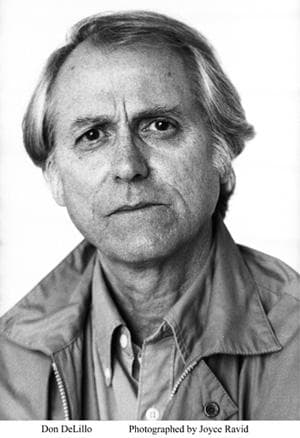
Donald Richard DeLillo is an American novelist, short story writer, playwright, screenwriter and essayist. His works have covered subjects as diverse as television, nuclear war, the complexities of language, art, mathematics, politics, economics, and baseball.







