“The Internet was designed to be resilient, not secure. That's a fundamental difference many people still don't grasp.”
— Jeff White reflecting on the inherent vulnerabilities of the internet's architecture.

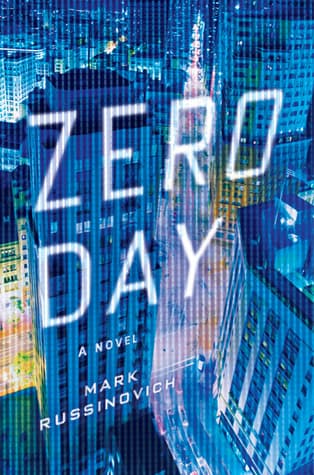
Mark Russinovich (2011)
Genre
Thriller / Mystery / Technology / Science Fiction
Reading Time
270 min
Key Themes
See below
Sign in to track this book
As global critical systems fail from coordinated cyberattacks, a former analyst races to expose the enemy before society collapses.
The story begins with several unrelated technological disasters: an airliner's controls fail mid-flight, an oil tanker runs aground, and hospitals experience database failures leading to patient deaths. A nuclear power plant also faces a near-meltdown as its cooling systems malfunction. These events, though spread out and affecting different areas, share a common problem: critical computer systems are failing without explanation. The world watches in confusion, blaming isolated glitches or human error, but the scale and variety of the failures suggest something more sinister beneath the surface of global technology.
Jeff Aiken, a brilliant but disillusioned former government analyst, becomes involved in the unfolding chaos. Having left his previous role due to frustration with bureaucracy and failures leading to 9/11, Jeff has a unique understanding of system weaknesses. He observes the escalating global incidents—the plane nearly crashing, the tanker running aground, the hospital errors, and the nuclear plant crisis—and immediately dismisses official explanations of random malfunctions. His intuition tells him these are not isolated events. Instead, he suspects a sophisticated, coordinated cyberattack targeting critical infrastructure, a 'zero day' exploit on an unprecedented scale, and he begins to investigate independently, driven by urgency and fear of global catastrophe.
As the cyberattacks intensify and the threat becomes clear, the Department of Homeland Security (DHS) recognizes the seriousness of the situation. Despite his earlier difficult departure from government service, Jeff Aiken's cybersecurity expertise makes him the only viable candidate to lead the response. DHS agent Sarah Daniel, recognizing his skill, recruits him. Initially resistant, citing his distrust of government bureaucracy, Jeff is eventually swayed by the potential disaster and the realization that his unique skills are needed. He agrees to join the task force, but on his own terms, demanding operational freedom and direct access to resources, setting the stage for a tense collaboration.
Jeff Aiken, now working with Sarah Daniel, immediately starts investigating, trying to trace the attacks' origin. They face significant challenges, including the complexity of the compromised systems and the attacker's methods of hiding their tracks. Bureaucratic hurdles within various government agencies also prove to be a major problem, as departments are reluctant to share information or admit weaknesses. Jeff's unconventional approach often clashes with established protocols, causing friction with other government officials. The attacker leaves very few traces, making attribution difficult. Jeff and Sarah realize they are dealing with an adversary of exceptional skill and resources, operating with stealth that makes traditional cyber-forensics nearly impossible.
Through careful analysis, Jeff begins to find a pattern in the seemingly unconnected attacks. He discovers that all the compromised systems share a common, deeply hidden vulnerability: a sophisticated rootkit, called 'Titan,' silently installed on critical infrastructure systems worldwide. This rootkit allows the attacker complete, undetectable control over the target machines. The revelation is unsettling, indicating a long-term, pre-planned infiltration rather than a quick assault. Jeff realizes that the attacker has been patiently preparing for months, if not years, embedding this malicious software into systems from power grids to financial networks. This discovery shifts the investigation from reactive damage control to understanding the full scope of the clandestine network and predicting the attacker's next move.
As Jeff and Sarah dig deeper, they begin to piece together clues about the attacker's identity and motivations. The sophistication of the 'Titan' rootkit and the precision of the attacks suggest a highly skilled individual or small group, rather than a state-sponsored entity. Evidence starts to point towards a reclusive but brilliant programmer, possibly disillusioned with modern society's reliance on technology and its vulnerabilities. The attacker's actions are not purely destructive; there is an underlying message, a calculated demonstration of fragility. Jeff theorizes that the goal is not just chaos, but to expose the dangers of global interconnectedness and perhaps force a societal re-evaluation of technology, or even to provoke a specific political or economic outcome.
With the 'Titan' rootkit identified, Jeff and Sarah realize the current attacks are just a prelude to something far worse. They deduce that the attacker is building towards a 'zero day' event, a coordinated, simultaneous shutdown of multiple critical global systems designed to cripple the world. Targets could include financial markets, communication networks, or even defense systems. Pressure mounts as they work around the clock, trying to predict the attacker's final target and method. They face the daunting task of not only identifying the attacker but also developing countermeasures to neutralize the 'Titan' rootkit across thousands of compromised systems before the ultimate strike can be launched. The investigation becomes a desperate race against an impending global collapse.
Through technical skill and psychological profiling, Jeff and Sarah pinpoint the attacker's location and identity. Jeff, driven by a deep understanding of the hacker's mindset, confronts the individual in a tense, high-stakes encounter. The confrontation is not just physical; it's an intellectual battle, with Jeff trying to reason with the ideologically driven attacker, to understand their motives, and to convince them to halt the impending catastrophe. The climax involves a desperate scramble to disable the final, most devastating stage of the 'Titan' attack, which threatens to plunge the world into a digital dark age. The resolution depends on Jeff's ability to outmaneuver the attacker both technically and psychologically, preventing the ultimate 'zero day' event.
After the averted catastrophe, the world is left shaken. While the most devastating attack was prevented, the preceding incidents exposed the fragility of global interconnectedness and the deep vulnerabilities in modern technology. Governments and corporations must now confront the reality that their critical infrastructure is more susceptible to attack than previously imagined. Jeff Aiken, though exhausted, feels a grim satisfaction in preventing total collapse, but remains cautious. The incident serves as a warning, forcing a global re-evaluation of cybersecurity protocols, international cooperation, and trust in a digitally dependent world. The book ends with a sense of unease, acknowledging that while this threat was neutralized, the underlying vulnerabilities remain, making future 'zero day' events a constant danger.
The Protagonist
Jeff moves from cynical detachment to reluctant re-engagement, ultimately embracing his role as a protector of global systems, though his skepticism of bureaucracy remains.
The Supporting
Sarah grows in her understanding of the cyber threat landscape and develops a deep respect for Jeff's unique abilities, becoming an indispensable part of the solution.
The Antagonist
The attacker escalates their campaign to a global scale, culminating in a final attempt to trigger a system collapse, ultimately being outmaneuvered but leaving a lasting ideological impact.
The Supporting
General Thompson moves from initial skepticism of Jeff's approach to grudging respect and reliance on his expertise, demonstrating the need for adaptability in new forms of warfare.
The Supporting
Thorne initially struggles with the scope of the attacks but eventually collaborates with Jeff, learning to adapt his perspective on advanced cyber threats.
The main theme of 'Zero Day' is society's overlooked vulnerability due to its reliance on interconnected technology. The novel shows how everything from air travel and medical care to energy grids and financial markets can nearly collapse from a single, sophisticated cyberattack. The initial series of seemingly random failures—the plane, the tanker, the hospitals, the power plant—illustrate how deeply integrated and fragile these systems are. The book argues that this interconnectedness, while enabling progress, also creates a single point of failure that an adversary can exploit, revealing the illusion of security in a digitally dependent world.
“We've built a world on sand, and we call it progress.”
The novel explores the difference between conventional expertise and intuitive genius, especially in high-stakes situations. Jeff Aiken embodies the latter: his ability to connect disparate events, to 'see' patterns where others see chaos, is central to solving the mystery. While other government experts rely on protocols and data analysis, Jeff's blend of experience, insight, and cynicism allows him to think creatively and anticipate the attacker's moves. This theme highlights that with new threats, traditional methods may not be enough, and true innovation often comes from those who challenge norms and trust their instincts.
“Sometimes, the biggest threats aren't found by following the rules, but by breaking them.”
A recurring theme is the tension between government bureaucracy and the need for agile action during a crisis. Jeff Aiken's initial reluctance to rejoin government service stems from his disillusionment with its inefficiencies and political infighting, which he believes hindered past responses (e.g., 9/11). Throughout the investigation, Jeff and Sarah often clash with bureaucratic red tape, inter-agency rivalries, and a general slowness to adapt. The novel suggests that while structure is necessary, too much reliance on rigid protocols can cripple a response to a fast-moving, unconventional threat, underscoring the need for flexible leadership and decisive action.
“The only thing more dangerous than the enemy is the committee trying to stop them.”
The book explores the ethical questions surrounding advanced technology and its potential for both good and harm. The attacker's motivation, for instance, comes from a twisted sense of ethical responsibility—to expose humanity's over-reliance on technology by demonstrating its fragility. This raises questions about who controls technology, its potential for misuse, and the moral implications of creating systems that are powerful yet vulnerable. The novel makes readers consider the societal responsibility that comes with technological advancement and the constant battle between innovation and the need for security and ethical deployment.
“We built these gods, and now we wonder why they demand sacrifice.”
A sophisticated, deeply embedded malicious software allowing undetectable system control.
The 'Titan' rootkit is the central technological plot device. It represents the ultimate 'zero day' exploit, a piece of malware so advanced and deeply integrated that it can bypass conventional security measures and grant an attacker complete, undetectable control over critical systems. Its discovery by Jeff Aiken is the turning point in the investigation, shifting the focus from random failures to a coordinated, pre-meditated attack. The rootkit's capabilities drive the plot's urgency, as its pervasive nature means that countless global systems are silently compromised, waiting for the attacker's final command. It embodies the chilling 'what if' scenario that grounds the novel's techno-thriller premise.
A highly skilled individual, alienated from authority, compelled to act by crisis.
Jeff Aiken's character arc and personality serve as a key plot device. His past disillusionment with government, particularly after 9/11, provides a compelling reason for his initial reluctance and his subsequent demand for autonomy. This allows him to operate outside bureaucratic constraints, facilitating faster progress than would be possible within traditional government structures. His 'outsider' status also grants him a fresh perspective, enabling him to identify patterns that others, too ingrained in the system, might miss. This device allows for sharp commentary on government inefficiency while simultaneously providing a hero who is both relatable and exceptionally capable.
A series of increasingly severe and widespread technological failures that build suspense.
The narrative uses a series of escalating global incidents as a primary driver of suspense and urgency. Starting with seemingly isolated events (plane, tanker, hospitals, power plant), the scale and severity of the cyberattacks steadily increase. Each new incident reinforces the gravity of the threat and the attacker's growing control, pushing the plot forward and forcing characters to react with greater urgency. This device effectively demonstrates the pervasive nature of the 'Titan' rootkit and the attacker's ultimate goal of global destabilization, keeping the reader on edge as the world teeters closer to total technological collapse.
A villain driven by a belief system rather than material gain, making them harder to predict.
The antagonist is not a typical villain seeking wealth or power, but one driven by a profound, albeit radical, ideology. This makes them a more complex and unpredictable adversary. Their goal is not merely destruction but to make a statement about the fragility of modern society and its technological dependence. This ideological motivation forces Jeff Aiken to engage with the attacker on an intellectual and philosophical level, rather than just a technical one. It deepens the novel's thematic resonance, transforming the conflict from a simple good-vs-evil dynamic into a debate about the ethical implications of technology and societal progress.
“The Internet was designed to be resilient, not secure. That's a fundamental difference many people still don't grasp.”
— Jeff White reflecting on the inherent vulnerabilities of the internet's architecture.
“Every line of code is a potential vulnerability, a tiny doorway for someone to exploit.”
— Discussing the risks embedded in complex software systems.
“You can't patch human nature. That's where the real zero days are.”
— A character's cynical observation about social engineering and human error being the ultimate exploit.
“The scariest thing isn't the unknown, it's realizing what you thought you knew was wrong.”
— Jeff White's internal monologue as he uncovers deeper layers of deception.
“A perfect system is a myth. There are always cracks, always ways in, if you know where to look.”
— An antagonist's perspective on the futility of absolute security.
“Power in the digital age isn't about armies or bombs; it's about who controls the information.”
— Discussing the geopolitical implications of cyber warfare and data control.
“Trust is the weakest link in any security chain.”
— Highlighting the role of human trust in facilitating breaches.
“The greatest trick the devil ever pulled was convincing the world he didn't exist. The greatest trick a hacker pulls is convincing you there's nothing wrong.”
— A character's analogy comparing deception to stealthy cyber attacks.
“Sometimes, the only way to protect something is to understand how it can be destroyed.”
— Jeff's approach to analyzing and mitigating threats.
“The digital world is a reflection of our own. All its flaws, all its brilliance.”
— A philosophical observation on the relationship between technology and humanity.
“Every system has a designer, and every designer has biases. Those biases can be exploited.”
— Exploring how inherent design choices can create vulnerabilities.
“The problem with a truly complex system is that no single person can fully comprehend it. That's its strength and its greatest weakness.”
— Discussing the inherent challenges in securing large-scale, intricate technological infrastructures.
“A zero day isn't just about finding a flaw; it's about the timing, the surprise, the absolute lack of defense.”
— Defining the critical elements that make a zero-day exploit so dangerous.
“The line between security and surveillance is often blurred, especially when you're trying to protect a nation.”
— A discussion on the ethical dilemmas faced by national security agencies.
Ready to see how well you understood this book? Take our interactive quiz with 10 questions.

Biography coming soon.







