“Perhaps that is what people mean when they say they have a calling—not a divine message, but an inescapable pull toward a specific kind of suffering.”
— The narrator reflecting on her own compulsive behaviors and the nature of desire.

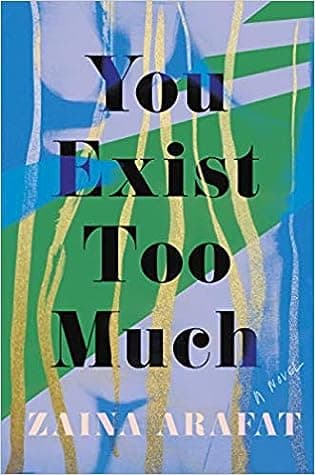
Zaina Arafat (2020)
Genre
Literary Fiction
Reading Time
12 Minutes
Key Themes
See below
Sign in to track this book
Haunted by a childhood shaming in Bethlehem and her mother's condemnation of her queer identity, a Palestinian-American woman navigates a turbulent journey of love addiction and self-discovery between the U.S. and the Middle East.
The narrative opens with a childhood memory: a 12-year-old Palestinian-American girl, the unnamed protagonist, is publicly shamed by men in Bethlehem for wearing shorts near the Church of the Nativity. This incident creates shame and a hyper-awareness of her body and perceived wrongdoings. Growing up in a bicultural home in the US, she feels caught between her American upbringing and her Palestinian heritage, often internalizing her mother's criticisms. Her early life includes a growing awareness of her queer identity, which she keeps hidden, increasing her feelings of being 'too much' or flawed.
As a teenager, the protagonist explores her sexuality, initially through intense, secret crushes on other girls. She recounts a significant, unrequited infatuation with a girl named Maya, which shows her tendency towards obsessive attachment and longing. These early experiences are hidden by secrecy and guilt, reinforced by her conservative cultural background and her mother's unspoken disapproval of anything outside traditional norms. She struggles with her identity, feeling a constant tension between her desires and expectations, leading to a pattern of concealing herself and her relationships.
The protagonist eventually tells her mother about her queer identity. Her mother's response, the titular phrase, "You exist too much," is devastating. This dismissal reinforces the protagonist's deepest fears about her identity being unacceptable and amplifies her feelings of shame and unworthiness. This moment becomes a defining trauma, cementing her belief that her authentic self is problematic and pushing her further into seeking external validation and self-destructive behaviors to manage her internal turmoil. The strained relationship with her mother remains a central theme.
Moving to Brooklyn as an adult, the protagonist becomes a DJ and aspiring writer. She enters her first serious, long-term relationship with a woman named Anna, moving in with her. While the relationship offers stability and comfort, the protagonist feels an underlying restlessness and a lack of true intimacy. She struggles with domesticity and predictability, finding herself drawn to the excitement of new connections and the intensity of infatuation. Despite Anna's love and support, the protagonist's unresolved internal conflicts and her pattern of seeking external validation begin to appear in destructive ways.
Unable to find true satisfaction with Anna, the protagonist begins a series of affairs and obsessive pursuits of other women. These relationships are often intense, short-lived, and marked by a desperate yearning for emotional connection and validation. She describes an affair with a married woman, a fling with a performance artist, and various other encounters, each an attempt to fill a void she cannot name. Her actions become increasingly self-sabotaging, driven by a cycle of intense infatuation, the thrill of the chase, and the inevitable disappointment when these connections fail to provide lasting fulfillment.
Recognizing the destructive patterns in her romantic life and her inability to control her impulses, the protagonist seeks professional help. She admits herself to The Ledge, an unconventional treatment center that specializes in 'love addiction.' The center is a secluded, almost cult-like environment, where patients are encouraged to confront their addictive behaviors and the underlying traumas that fuel them. This is a turning point, as she begins to acknowledge her 'love addiction' as a real affliction, rather than just a series of bad choices or character flaws. The Ledge provides a structured, if strange, setting for self-reflection.
Inside The Ledge, the protagonist participates in group therapy sessions and individual counseling. She learns about 'love addiction' as a way to avoid deeper emotional pain and trauma. She observes and interacts with other patients, each dealing with their own forms of obsessive attachment and self-destructive romantic behaviors. Through these interactions and the structured environment, she begins to see parallels between her own internal divisions and the geopolitical divisions of her homeland. The Ledge's unique approach forces her to confront the roots of her compulsive desires and her inability to form healthy attachments.
During her time at The Ledge, the protagonist engages in deep introspection, revisiting her childhood in Bethlehem and her complex relationship with her mother. She connects her personal struggles with identity, shame, and belonging to her bicultural upbringing and the political situation of Palestine. The concept of 'division' – both internal and external – becomes a central theme, as she explores how her experiences of displacement and cultural tension have shaped her emotional life and her patterns of attachment. She starts to understand how the trauma of her past, particularly her mother's rejection, fueled her need for external validation.
The narrative explores the protagonist's ongoing struggle with cultural and familial expectations, particularly regarding marriage and traditional roles. She reflects on the societal pressures she faces as a queer Palestinian-American woman, and how these pressures have contributed to her feelings of alienation and her fragmented sense of self. Her unfulfilled longing for a stable, healthy, and authentic connection is a recurring idea. She recognizes that her 'love addiction' is a symptom of deeper wounds, a desperate attempt to feel whole and accepted in a world that often made her feel 'too much' or not enough.
By the end of her time at The Ledge, the protagonist does not achieve a complete cure, but she gains significant insight and a foundation for healing. She learns to identify her triggers, understand the roots of her 'love addiction,' and recognize her patterns of self-sabotage. While recovery is ongoing, she emerges with a clearer sense of self and a greater capacity for self-compassion. The novel concludes with her on the edge of a new understanding, suggesting that true healing involves embracing her multifaceted identity and finding a sense of home within herself, rather than constantly seeking it in others.
The Protagonist
From a shame-ridden, self-sabotaging woman trapped in cycles of obsessive love, she begins a journey toward self-awareness, acceptance, and understanding the roots of her 'love addiction' and fragmented identity.
The Supporting
Her character remains largely static, serving as a catalyst for the protagonist's internal struggles rather than undergoing significant change herself.
The Supporting
Her arc is primarily defined by her relationship with the protagonist, enduring her infidelity before their eventual separation, highlighting the protagonist's destructive patterns.
The Supporting
Her role is to establish the protagonist's early patterns of obsessive desire; she does not have a personal arc.
The Mentioned
Her role is limited to being an object of the protagonist's affair, serving as a catalyst for the protagonist's deepening self-destructive patterns.
The Mentioned
Her role is to highlight another instance of the protagonist's 'love addiction' pattern; she does not have a personal arc.
The Supporting
As a therapist, he primarily facilitates the protagonist's arc, providing guidance and insights without a personal arc of his own.
The Supporting
Their individual arcs are not deeply explored, but collectively they contribute to the protagonist's understanding and self-reflection.
The novel explores the protagonist's struggle to create a coherent identity among conflicting cultural, religious, and sexual pressures. Her Palestinian-American heritage, paired with her queer identity, creates constant internal tension. Her mother's 'You exist too much' comment captures her feeling of being inherently flawed or excessive. Her journey to The Ledge is a quest to understand who she is beyond her 'love addiction,' ultimately seeking to integrate her fragmented self and find a sense of belonging within her own skin. This is clear in her reflections on her bicultural upbringing and how it shapes her emotional life.
““You exist too much,” my mother had told me, and it was a phrase that had followed me, a ghost, into every relationship, every room.”
Central to the narrative is the protagonist's 'love addiction,' a compulsive need for intense romantic validation, often leading to self-destructive behaviors and a cycle of infatuation and disappointment. Her affairs while with Anna, and her numerous fleeting obsessions, show this theme. The Ledge treatment center directly addresses this affliction, forcing her to confront the underlying traumas that fuel her addictive patterns. The book details the psychological mechanisms of obsession, showing how love becomes a way to escape deeper emotional pain and a substitute for genuine self-worth.
“I was an addict, not to a substance, but to the feeling of being wanted, to the chase, to the intensity of a new connection.”
From the opening scene in Bethlehem, shame is a strong force in the protagonist's life. The public shaming for her exposed legs, her mother's rejection of her queer identity, and her own guilt over her infidelities all contribute to a deep sense of unworthiness. This shame drives her to conceal parts of herself and seek external validation, continuing her destructive cycles. The novel explores how cultural expectations, religious norms, and familial disapproval can become deep-seated feelings of shame that dictate behavior and hinder authentic self-expression.
“The feeling of shame, a tight knot in my stomach, had been a constant companion since that day in Bethlehem.”
The protagonist's bicultural background, split between the US and the Middle East (Palestine, Jordan, Lebanon), creates a constant sense of displacement. She feels like an outsider in both worlds, always searching for a 'home' that she struggles to define. This external displacement mirrors her internal fragmentation and contributes to her difficulty in forming stable attachments. Her longing for a place to belong, both geographically and emotionally, is linked to her 'love addiction,' as she often seeks this sense of home in the intensity of romantic relationships, only to find it fleeting.
“I carried two worlds inside me, and neither one felt entirely like home.”
The complex and often difficult relationship between the protagonist and her mother is a foundational part of the narrative. Her mother's inability to fully accept her daughter's queer identity, culminating in the stinging "You exist too much" remark, leaves deep emotional scars. This relationship is a primary source of the protagonist's shame, her need for external validation, and her difficulty with intimacy. The protagonist's ongoing struggle to understand and reconcile with her mother's influence is a key aspect of her self-discovery and healing journey, even as her mother remains largely unchanged.
“Her words had been a branding, a mark on my soul that whispered: you are too much, you are not enough.”
A fragmented narrative style reflecting the protagonist's internal state and journey.
The novel is told in a non-linear, vignette-style structure, jumping between different time periods and geographical locations (US, Palestine, Jordan, Lebanon). This fragmented approach mirrors the protagonist's own fractured sense of self, her 'love addiction,' and her struggle with a coherent identity. Each vignette offers a snapshot of a memory, an affair, or an introspection, creating a mosaic of her experiences rather than a straightforward chronological plot. This structure allows for deep psychological exploration and emphasizes the recurring patterns in her life without always providing clear resolutions.
Deep dives into the protagonist's thoughts and feelings, revealing her internal conflicts.
The entire narrative is presented through the protagonist's subjective first-person perspective, offering unfiltered access to her thoughts, desires, anxieties, and self-analysis. This device is crucial for understanding the nuances of her 'love addiction,' her shame, and her complex relationship with her identity. Her introspective voice allows the reader to experience her internal turmoil directly, making her struggles feel immediate and deeply personal. It also highlights her tendency to overthink and analyze her own behavior, a characteristic of her journey towards self-awareness.
A literal and metaphorical place for confronting addiction and seeking balance.
The Ledge, the love addiction treatment center, functions as both a literal setting and a powerful symbol. Literally, it's a place for structured therapy and self-confrontation. Metaphorically, 'the ledge' represents the precarious position the protagonist finds herself in – on the brink of self-destruction, yet also on the verge of a breakthrough. It symbolizes the emotional precipice she has reached due to her addictive behaviors, and the difficult, often isolated, journey required to find balance and pull back from the edge. Its secluded nature emphasizes the internal work required for healing.
A recurring motif and source of profound trauma and self-perception.
The phrase "You exist too much," spoken by the protagonist's mother, functions as a central motif and a branding statement for the protagonist's core trauma. It encapsulates her deepest fears of being inherently flawed, excessive, and unacceptable. This phrase is referenced repeatedly throughout the novel, resurfacing in different contexts to explain her self-sabotaging behaviors, her shame, and her quest for external validation. It serves as a constant reminder of the maternal rejection that shaped her identity and fueled her 'love addiction,' making it a powerful symbol of her internal conflict.
Alternating settings highlighting the protagonist's bicultural identity and internal divisions.
The narrative frequently juxtaposes scenes set in the United States (primarily Brooklyn, New York) with those in the Middle East (Bethlehem, Jordan, Lebanon). This geographical juxtaposition is not merely a backdrop but a reflection of the protagonist's bicultural identity and her internal sense of division. The contrasting cultural norms, social expectations, and political landscapes of these places contribute to her fragmented self. This device emphasizes her feeling of being caught between worlds, never fully belonging, and how this external displacement mirrors her internal emotional landscape and her struggles with 'love addiction.'
“Perhaps that is what people mean when they say they have a calling—not a divine message, but an inescapable pull toward a specific kind of suffering.”
— The narrator reflecting on her own compulsive behaviors and the nature of desire.
“I’ve always been drawn to the kind of love that feels like a wound, a place where I can keep returning to pick at the scab.”
— Describing her pattern of relationships and her attraction to tumultuous love.
“To want is to expose yourself, to make yourself vulnerable to the whims of another.”
— Exploring the vulnerability inherent in desire and romantic longing.
“The past is not a story you can simply tell; it’s a landscape you inhabit, and it changes with every step you take.”
— Reflecting on memory, trauma, and how personal history shapes identity.
“Maybe the truest form of freedom is not the absence of desire, but the ability to choose which desires to follow.”
— Contemplating freedom in the context of her own addictive patterns.
“I often wonder if my mother and I are two halves of the same mistake, forever trying to correct each other.”
— Reflecting on her complex and often fraught relationship with her mother.
“There’s a certain kind of peace in giving in to your worst impulses, a temporary surrender that feels like relief.”
— Describing the fleeting satisfaction of succumbing to self-destructive urges.
“How do you explain a hunger that isn’t for food, but for a feeling, a specific kind of intensity?”
— Grappling with her insatiable emotional needs and the difficulty of articulating them.
“Every time I fall for someone, it feels like I’m trying to solve a puzzle, and they are the missing piece I can never quite fit.”
— Illustrating her pattern of seeking completion in others through romantic relationships.
“The greatest lie we tell ourselves is that we can control our desires. We can only control our reactions to them.”
— A moment of realization about the limitations of self-control over deep-seated urges.
“I learned early on that attention, even negative attention, was a form of love.”
— Reflecting on her childhood and the origins of her need for external validation.
“To be seen fully is to risk being rejected fully. It’s a terrifying prospect, but also the only path to true connection.”
— Exploring the paradox of vulnerability and the fear of exposure in relationships.
“There are some wounds that never heal, they just change their shape, become a part of the landscape of who you are.”
— Contemplating the lasting impact of trauma and how it integrates into one's identity.
“Perhaps I exist too much because I am always trying to fill a void that can never be filled.”
— A direct reflection on the book's title and the narrator's core struggle with insatiability.
Ready to see how well you understood this book? Take our interactive quiz with 10 questions.

Biography coming soon.







