“Mama says, 'Don't worry, Syvia. The war will be over soon.' But it is not soon.”
— Syvia's early experience with the war and her mother's attempts to reassure her.

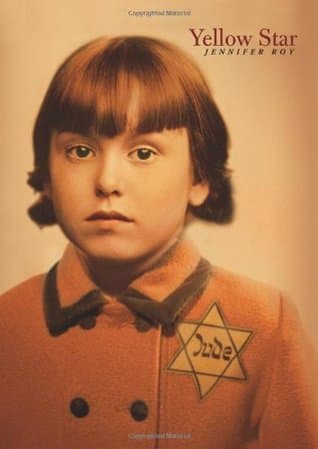
Jennifer Roy (2006)
Genre
Children's / Historical Fiction / Young Adult
Reading Time
240 min
Key Themes
See below
Sign in to track this book
A young girl named Syvia shows courage and endures heartbreak in the Lodz ghetto, fighting for survival, told in free verse.
In September 1939, five-year-old Syvia Perlmutter lives happily in Lodz, Poland, with her parents, Mendel and Chana, and her older sister, Dora. Her world includes playing with her doll, Chana-le, and looking forward to a new sibling. This peace is broken by planes overhead and the German invasion. Soon, Jewish families, including the Perlmutters, are forced to wear yellow stars, marking them as different and starting their persecution. Life changes quickly, with food becoming scarce and fear a constant presence as the Nazis take control of the city.
In 1940, the Nazis create the Lodz Ghetto, a crowded district where all Jewish residents of Lodz and nearby areas must move. Syvia, her parents, and Dora are among those forced to leave their home, taking only what they can carry, and move into the ghetto's poor conditions. Their new 'home' is a single room shared with other families, offering no privacy or comfort. Food rations are minimal, causing constant hunger, and disease spreads quickly due to unsanitary conditions and lack of medicine. The once lively streets of Lodz are replaced by the grim, fenced-off reality of the ghetto, where every day is a fight for survival.
Life in the Lodz Ghetto quickly worsens. Syvia's baby brother, born after their relocation, dies soon after birth due to the harsh conditions and lack of proper care, a devastating loss for the family. Food becomes everyone's main concern. Syvia's father, Mendel, risks his life to find scraps of food, sometimes trading family possessions for a few potatoes or a piece of bread. Syvia and Dora also help the family survive, often feeling intense hunger. The children see constant suffering and death around them, their innocence slowly lost to the brutal realities of their lives.
As the war continues, the Nazis demand that all able-bodied individuals in the ghetto work for the German war effort. This policy includes children, as work is seen as the only way to avoid deportation to concentration camps, called 'resettlement to the East.' Syvia and Dora, despite being young, are put to work in ghetto factories, often knitting socks or assembling small parts. The work is repetitive and tiring, but the children understand its importance for their family's survival. Their small earnings, often food coupons, are essential for supplementing their starvation rations.
In September 1942, the ghetto experiences the 'Gehsperre' or 'Children's Aktion,' a terrifying time when Nazis round up children under ten, the elderly, and the sick for deportation. Syvia, now eight, is just above the age cutoff, and Dora, a few years older, is also considered 'safe.' However, the Perlmutters face a hard choice. Syvia's parents, Mendel and Chana, disguise Syvia to appear older, fearing she might be taken. The family hides in a cellar, listening in terror as German soldiers search for victims. They see the horrifying sight of children being forcibly taken from their parents, a memory that will always stay with them.
Throughout the ghetto's existence, 'selections' occur. Residents are lined up and evaluated by German soldiers, often with Chaim Rumkowski, the 'Elder of the Jews,' present. Those deemed unfit for work — the sick, the weak, or the very young — are chosen for deportation. Syvia and her family constantly fear these selections. They learn to stand tall, look healthy, and try to appear useful. They see countless friends and neighbors taken away, their absence a stark reminder of their own uncertain lives. Each selection is a gamble of life and death, and the family's survival seems increasingly lucky.
Despite the constant fear, hunger, and loss, Syvia finds small ways to keep her humanity and spirit. She values the few books her father manages to get, finding temporary escape in their stories. She continues to play with her doll, Chana-le, finding comfort and a link to her lost childhood. Her parents, Mendel and Chana, also try to provide hope and normalcy, sharing stories and teaching her small lessons. These moments, though brief, are important for Syvia's emotional survival, giving a fragile sense of hope and a reminder of the life that was, and might one day be again.
By the summer of 1944, the Soviet army is advancing, and the Nazis begin the final emptying of the Lodz Ghetto, the last major ghetto in Eastern Europe. The remaining residents, including the Perlmutters, are rounded up and forced onto crowded trains. Their destination is unknown, but many fear it is Auschwitz. Syvia, her parents, and Dora are packed into cattle cars, enduring a terrifying and inhumane journey. Conditions are horrific, with no food, water, or sanitation, and the air is filled with despair and uncertainty. This final deportation marks the end of their ghetto life and the start of an even more terrifying chapter.
The train arrives at Auschwitz-Birkenau. Upon leaving, the Perlmutters are immediately subjected to a brutal selection. Syvia, Dora, and their mother, Chana, are sent to one line, while Mendel, Syvia's father, is sent to another. This is the last time Syvia sees her father. The women and girls are then processed, including having their heads shaved and being stripped of their clothes and personal belongings. They are given striped uniforms and tattooed with identification numbers, becoming prisoners in the largest Nazi extermination camp. The horror of Auschwitz is immediate and overwhelming.
Syvia, Dora, and Chana stay together for survival in Auschwitz and later in other camps, including Bergen-Belsen. They face cruelty, starvation, forced labor, and the constant threat of death. Syvia describes the bitter cold, the lack of hygiene, and the widespread sickness. Her mother, Chana, shows great strength and resourcefulness, often finding ways to keep her daughters alive, sharing small rations, and offering encouragement. The sisters, Syvia and Dora, also support each other, their bond growing stronger in the face of such extreme hardship, helping each other through the daily horrors of the camps.
As Allied forces advance, the Nazis evacuate the concentration camps, forcing prisoners on brutal 'death marches.' Syvia, Dora, and Chana are among those made to march for days in freezing conditions, with little to no food or water. Many prisoners die from exhaustion, hunger, or are shot by guards. Syvia's mother, Chana, becomes increasingly weak during the march, her body worn out by years of deprivation. Despite her own failing strength, Chana continues to urge her daughters forward, her will to survive for their sake a powerful force.
In April 1945, Syvia, Dora, and their mother, Chana, are freed by Allied soldiers near Volary, Czechoslovakia. They are emaciated, sick, and traumatized, but alive. Chana, however, is critically ill and dies shortly after liberation, having used her last strength to ensure her daughters' survival. Syvia and Dora, now orphans, are taken to a displaced persons camp. They slowly begin to recover physically and emotionally. Though scarred, they carry their mother's strength and resilience, looking towards an uncertain but hopeful future, determined to rebuild their lives after the Holocaust.
The Protagonist
Syvia transforms from an innocent child to a resilient survivor, forever marked by the Holocaust but determined to live.
The Supporting
Chana's arc is one of selfless sacrifice, culminating in her death after ensuring her daughters' survival.
The Supporting
Mendel transitions from protector to a lost figure, his love and efforts for his family serving as a lasting memory.
The Supporting
Dora, like Syvia, matures from a child to a survivor, her bond with Syvia strengthening through their shared trauma.
The Supporting
Chana-le remains a static symbol, representing Syvia's enduring connection to innocence and hope.
The Mentioned
Rumkowski's influence is a constant, oppressive presence in the ghetto, shaping the daily reality for Syvia and her family.
The most prominent theme is the brutal loss of Syvia's childhood innocence because of the Holocaust. She begins as a typical five-year-old, playing with her doll and looking forward to a new sibling. This innocence is systematically taken away as she sees death, starvation, and the constant threat of violence. Events like the death of her baby brother, the daily struggle for food, and the terrifying Children's Aktion force her to confront realities no child should ever face. Her memories are filled with the grim details of survival rather than carefree childhood moments, showing how war changes young lives forever.
“My childhood ended. / It ended / when the Nazis came.”
Despite the immense suffering, the human spirit's ability to endure and hope is clear. Syvia, her sister Dora, and especially her mother Chana, show incredible strength in the face of hardship. Chana's determination to keep her daughters alive, even sacrificing her own health, is a powerful example. Syvia finds comfort in small actions, like reading smuggled books or playing with her doll, Chana-le. These acts, though seemingly small, are vital for maintaining a sense of humanity and a fragile hope for a future beyond the camps. Their will to survive, even against all odds, shows this theme.
“Mama always said, / 'As long as we have each other, / we have hope.'”
Family love and loyalty are essential for survival during the Holocaust's dehumanizing conditions. The Perlmutter family — Mendel, Chana, Syvia, and Dora — provides mutual support, comfort, and a reason to live. Mendel's efforts to find food, Chana's unwavering protection, and the sisters' shared companionship are all examples of this theme. The pain of separation, particularly Mendel's at Auschwitz and Chana's death after liberation, highlights how these bonds were tragically broken but also how their strength endured through loss. The family's shared struggle and support allow Syvia and Dora to survive.
“We were a family. / And in the ghetto, / family was everything.”
The novel clearly shows the systematic dehumanization of Jewish people during the Holocaust. From being forced to wear yellow stars, to being confined in the ghetto, to having their heads shaved and tattooed in Auschwitz, every step aims to strip individuals of their identity and humanity. Syvia's struggle to hold onto her name, her doll, and her memories is a quiet act of resistance against this process. The book shows how the Nazis tried to reduce people to numbers and objects, and how the survivors fought to keep their essential selfhood and dignity.
“No longer Syvia. / Now just a number. / A number on my arm.”
The entire novel is written in free verse.
The use of free verse poetry is a significant plot device, allowing the narrative to convey complex emotions and experiences with stark simplicity and directness. The short lines and stanzas create a sense of immediacy and fragmentation, mirroring the shattered world Syvia inhabits. It also makes the heavy subject matter more accessible, especially for younger readers, by focusing on essential details and emotional impact rather than extensive prose. This style emphasizes key moments, making Syvia's observations and feelings particularly poignant and memorable, enhancing the emotional resonance of her story.
The story is told entirely from Syvia's point of view as a young child.
Telling the story through Syvia's eyes as a child (ages five to eleven) is a powerful device. It filters the horrific events of the Holocaust through an innocent, yet increasingly aware, perspective. This perspective often simplifies complex atrocities, making them more understandable and emotionally impactful. Syvia's focus on concrete details – hunger, her doll, her mother's touch – makes the abstract horrors of genocide intimately personal. It also highlights the profound loss of childhood and the unique trauma experienced by young victims, allowing readers to connect with the events on a deeply empathetic level.
The yellow star serves as a potent symbol of persecution and forced identity.
The yellow star, which Jewish people were forced to wear, is a recurring and powerful symbol. Initially, it marks Syvia and her family as 'different,' signaling the beginning of their persecution. It represents the loss of their freedom, their identity, and their place in society. As the story progresses, the star becomes a constant, visible reminder of their vulnerability and the systematic discrimination they face. Its presence on their clothing is a constant threat, symbolizing the Nazi regime's dehumanizing policies and the isolation imposed upon the Jewish community.
Syvia's doll represents her lost innocence and enduring hope.
Chana-le, Syvia's beloved doll, serves as a poignant symbol throughout the narrative. She represents Syvia's lost childhood, a tangible link to her pre-war life of innocence and normalcy. As Syvia clings to Chana-le, even in the most desperate circumstances, the doll embodies Syvia's resilience and her refusal to entirely surrender her humanity. Chana-le is a silent witness to the horrors, but also a source of comfort and a fragile symbol of hope that some semblance of a normal life might one day return. Her preservation against all odds signifies the enduring spirit of childhood.
“Mama says, 'Don't worry, Syvia. The war will be over soon.' But it is not soon.”
— Syvia's early experience with the war and her mother's attempts to reassure her.
“The yellow star is big on my coat. It is bigger than my hand. It is bright yellow. Everyone can see it.”
— Syvia describing the mandatory yellow star she must wear.
“We are hungry all the time. My stomach aches. It is a hollow ache.”
— Syvia's constant struggle with hunger in the ghetto.
“Papa says, 'We must be brave, Syvia. We must try to live.'”
— Her father's encouragement to Syvia amidst their hardships.
“Every day, more people are gone. Just gone. Like they were never here.”
— Syvia observing the disappearances of people from the ghetto.
“The snow is falling. It covers everything. It makes the world clean, but it does not make us clean.”
— Syvia reflecting on the contrast between the purity of snow and their grim reality.
“I try to remember what it was like before. Before the star. Before the ghetto. But it is hard.”
— Syvia struggling to recall a time before the war and persecution.
“Mama sings a lullaby. Her voice is soft. It is the only soft thing in our lives.”
— Syvia finding comfort in her mother's singing during difficult times.
“We are like mice in a trap. Waiting. Always waiting.”
— Syvia's feeling of helplessness and constant fear.
“My shoes are too big. My clothes are too small. Nothing fits anymore.”
— Syvia's physical growth amidst the lack of resources and changing circumstances.
“I draw a picture of a bird flying. It has no star. It is free.”
— Syvia finding a small escape through her drawing, imagining freedom.
“Papa says, 'Hold my hand, Syvia. Hold it tight.' And I do.”
— Syvia's reliance on her father for comfort and security.
“The war ends. But it does not end for everyone. Not inside.”
— Syvia's realization that the emotional and psychological scars of the war remain even after its official end.
“I am Syvia. I am a girl. I remember.”
— Syvia affirming her identity and the importance of remembering her experiences.
Ready to see how well you understood this book? Take our interactive quiz with 10 questions.

Dan Gemeinhart
4.5

Kate O'Hearn
4.4

Jeanne Birdsall
4.4

Jen Wang
4.4
Wendelin Van Draanen
4.3

John Marsden
4.3

Chris Van Allsburg
4.3
Jennifer A. Nielsen
4.2