“The hardest thing was not the work, not the beatings, not the hunger. It was the knowing that you belonged to someone else, that your body, your children, your very breath was not your own.”
— Lisbeth reflecting on the true cruelty of slavery.

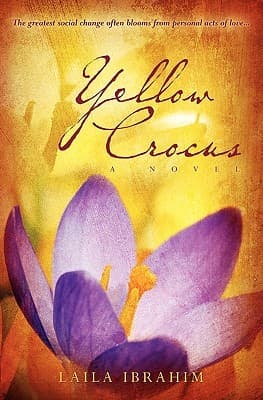
Laila Ibrahim (2010)
Genre
Historical Fiction / Romance
Reading Time
240 min
Key Themes
See below
Sign in to track this book
Raised by her enslaved wet nurse in antebellum Virginia, a privileged white girl grapples with the heartbreaking realities of slavery and the impossible choice between familial loyalty and the woman who truly raised her.
Lisbeth Wainwright is born to wealthy white plantation owners, Mr. and Mrs. Wainwright, in antebellum Virginia. From infancy, Mattie, an enslaved woman who has recently lost her own child, nurses and cares for her. Lisbeth quickly forms an unbreakable bond with Mattie, who becomes more of a mother figure to her than Mrs. Wainwright. Mattie teaches Lisbeth about faith, music, and the annual tradition of searching for yellow crocuses in the early spring, a symbol of hope and resilience. This early upbringing sets Lisbeth apart, as she absorbs Mattie's worldview and experiences the stark contrast between her privileged life and Mattie's bondage, even as she remains largely unaware of the full implications of slavery.
As Lisbeth grows older, her childhood's idyllic bubble begins to crack. She overhears conversations among the enslaved people, particularly Mattie and her husband, Samuel, about wanting freedom and the constant fear of separation. Lisbeth starts to notice the subtle power dynamics and the unfairness of the system, though her understanding remains limited by her youth and sheltered existence. She witnesses small acts of defiance and resilience from Mattie and the other enslaved individuals, further solidifying her emotional connection to them and sowing seeds of doubt about the 'natural order' presented by her parents.
A turning point occurs when Mr. Wainwright faces financial difficulties and considers selling Samuel, Mattie's husband, to another plantation. This news devastates Mattie, who fears losing the last remaining member of her immediate family after the death of her own child. Lisbeth, witnessing Mattie's grief and terror, begins to grasp the brutal reality that enslaved people are considered property, subject to arbitrary sale and separation from their loved ones. This event deeply impacts Lisbeth, reinforcing her loyalty to Mattie and sparking a growing sense of injustice within her.
Lisbeth is sent to a ladies' seminary, where she interacts with other young women from similar backgrounds. While most of her peers uphold the prevailing societal views on slavery, Lisbeth finds herself questioning these beliefs, influenced by Mattie's teachings and her own observations. She encounters a teacher who subtly challenges the morality of slavery, providing Lisbeth with an intellectual framework for her growing doubts. This exposure to different viewpoints, however limited, strengthens Lisbeth's internal conflict and her growing conviction that the system she lives within is wrong.
After Samuel is sold, Mattie secretly tries to send messages to him, risking severe punishment. Lisbeth, now older and more aware, discovers Mattie's hidden activities. Driven by her deep love and loyalty to Mattie, Lisbeth decides to help her, acting as a go-between or assisting in other ways that put her at risk of her parents' disapproval and potential consequences. This act of defiance marks a significant step in Lisbeth's journey, as she actively chooses to align herself with Mattie and against the oppressive system her family embodies, demonstrating her growing moral courage.
The final vestiges of Lisbeth's childhood innocence are shattered when she witnesses a particularly brutal whipping of an enslaved man on her family's plantation. The cruelty and dehumanization of the act, inflicted by her own father or an overseer, deeply traumatizes Lisbeth. This event is a moment, forcing her to confront the full, horrific reality of slavery head-on, beyond abstract concepts or overheard whispers. It solidifies her resolve that she cannot remain complicit in such a system and fuels her desire to act.
Following the traumatic incident, Lisbeth experiences a moral awakening. She fully comprehends the vast difference between her own freedoms and Mattie's bondage. She realizes that her privileged position not only protects her but also gives her a unique opportunity to potentially effect change, however small. The love she holds for Mattie, coupled with her newfound understanding of justice, compels her to consider drastic actions. She understands that inaction is a form of complicity and that she must use her agency to challenge the system.
Driven by her love for Mattie and her conviction against slavery, Lisbeth makes the difficult and dangerous decision to help Mattie escape to freedom. This is not a decision made lightly, as it means defying her family, risking her own social standing, and potentially facing severe legal consequences. She meticulously plans the escape, drawing on her knowledge of the plantation and the surrounding area. This act represents the culmination of her moral development, demonstrating her willingness to sacrifice her own comfort and security for the sake of justice and the person she considers her true mother.
With careful planning and immense courage, Lisbeth executes the escape plan for Mattie. This involves navigating the dangers of being discovered, the physical challenges of the journey, and the emotional toll on both women. Lisbeth uses her knowledge and resources to facilitate Mattie's passage, providing her with supplies, directions, and perhaps even direct aid in getting away from the plantation. The escape is fraught with tension and fear, highlighting the immense risks involved for both the enslaved person seeking freedom and those who dared to help them.
After Mattie's escape, Lisbeth must contend with the consequences of her actions. Her family, particularly her parents, reacts with anger, confusion, and betrayal, leading to a profound rift. Lisbeth endures the social ostracization and the emotional pain of defying her family, but she finds solace in the knowledge that she acted according to her conscience. The novel concludes with Lisbeth reflecting on her journey, her unbreakable bond with Mattie, and the lasting legacy of their intertwined lives, emphasizing themes of love, sacrifice, and the pursuit of justice amidst profound injustice.
The Protagonist
Lisbeth transforms from a naive child oblivious to the full horrors of slavery into a morally courageous young woman who actively defies the oppressive system.
The Supporting/Co-Protagonist
Mattie endures the hardships of slavery with remarkable resilience and hope, ultimately achieving her long-sought freedom through Lisbeth's help.
The Antagonist (Systemic)
He remains largely static, representing the entrenched power structure and moral blindness of the slave-owning class.
The Supporting
Her character remains largely static, representing the societal forces Lisbeth rebels against.
The Supporting
His arc primarily serves to highlight the emotional toll of slavery and the yearning for reunion and freedom.
The Supporting
Her character is largely static, serving as a symbol of enduring spirit and community support.
The novel shows how slavery dehumanizes not only the enslaved but also corrupts the morality of the enslavers. Mr. Wainwright, despite potentially being a 'good' man by his own standards, is shown to be capable of cruelty, such as the brutal whipping Lisbeth witnesses, because the system permits and even encourages it. The casual discussions of selling human beings, like Samuel, highlight the systemic erosion of empathy and the reduction of people to property. Lisbeth's internal struggle demonstrates how even those born into the system can recognize its inherent evil once they truly see its impact.
“That knowledge must have filled me as quickly and surely as the milk from her breasts. Although my family ‘owned’ her, although she occupied the center of my universe, her deepest affections lay elsewhere.”
At its heart, the novel explores the unconventional mother-daughter bond between Lisbeth and Mattie. Despite their vast differences in status, Mattie provides Lisbeth with more emotional nourishment, guidance, and love than her biological mother. This bond transcends racial and social barriers, demonstrating that love and family are not defined by blood or legal ownership, but by care, sacrifice, and shared experience. Mattie's love instills in Lisbeth a moral compass that ultimately guides her actions against her own family and society.
“So along with the comfort of her came the fear that I would lose her some day. This is our story...”
Lisbeth's journey is one of moral awakening. Initially sheltered and somewhat naive, she gradually comes to understand the reality of slavery through her intimate connection with Mattie and specific traumatic events, like the whipping. Her internal conflict between loyalty to her family and her growing sense of justice culminates in an act of courage: helping Mattie escape. This theme highlights the individual's capacity to challenge deeply entrenched societal evils and act on their conscience, even at great personal cost.
“Lisbeth realizes she must make a choice, one that will require every ounce of the courage she learned from her beloved Mattie.”
Despite the pervasive cruelty of slavery, the novel subtly includes themes of hope and resilience, primarily embodied by Mattie and the tradition of the yellow crocus. The yellow crocus, blooming in early spring, symbolizes renewal, endurance, and the promise of a better future. Mattie's unwavering faith, her secret efforts to connect with Samuel, and her ultimate yearning for freedom are all examples of the enduring human spirit. This theme suggests that even in the darkest times, hope can persist and drive individuals towards freedom and justice.
“Growing up under the tender care of Mattie, Lisbeth adopts her surrogate mother’s deep-seated faith in God, her love of music and black-eyed peas, and the tradition of hunting for yellow crocuses in the early days of spring.”
A recurring symbol of hope, resilience, and the bond between Mattie and Lisbeth.
The yellow crocus serves as a powerful leitmotif throughout the novel. Mattie teaches Lisbeth the tradition of searching for these early spring flowers, imbuing them with personal meaning. The crocuses represent the enduring hope for freedom and happiness, the resilience of life in harsh conditions, and the unique, unbreakable bond forged between Lisbeth and Mattie. Their annual appearance symbolizes renewal and the persistent, quiet strength that both women possess, even amidst the brutal realities of slavery.
The story is told from Lisbeth's point of view, offering an intimate look at her evolving understanding of slavery.
Telling the story through Lisbeth's first-person perspective allows the reader to experience her gradual moral awakening directly. We see the world through her initially naive eyes, then witness her growing discomfort, and finally her profound realization of injustice. This narrative choice makes her transformation more impactful, as the reader is privy to her internal conflicts and emotional journey, making her eventual act of defiance more poignant and believable. It also highlights the psychological impact of growing up within a morally corrupt system.
The stark juxtaposition of Lisbeth's privileged life and Mattie's enslaved existence.
The novel effectively uses the contrast between Lisbeth's world of comfort and opportunity and Mattie's world of bondage and deprivation to highlight the inherent injustice of slavery. Lisbeth's early life, spent straddling these two worlds, forces her to confront the disparity. This device is crucial for her moral development, as it constantly reminds her of her own freedoms versus Mattie's lack thereof, ultimately compelling her to act. It underscores the arbitrary nature of their fates and the systemic inequality.
The names 'Wainwright' and 'Mattie' carry symbolic weight.
The surname 'Wainwright' can be interpreted as 'wagon maker' or 'one who makes ways,' subtly hinting at the family's role in constructing and maintaining the 'way' or system of slavery. In contrast, 'Mattie,' a diminutive of Martha, means 'lady' or 'mistress of the house,' ironically highlighting her true maternal role in Lisbeth's life despite her enslaved status. This subtle use of nomenclature reinforces the themes of societal roles versus inherent worth, and the power dynamics at play.
“The hardest thing was not the work, not the beatings, not the hunger. It was the knowing that you belonged to someone else, that your body, your children, your very breath was not your own.”
— Lisbeth reflecting on the true cruelty of slavery.
“Love was not a gentle whisper, but a roaring fire that consumed everything in its path.”
— Mattie contemplating her intense feelings for Lisbeth.
“Some things, once broken, can never be truly mended. Only patched, and the cracks remain.”
— Lisbeth's thoughts on the lasting damage of past traumas.
“Hope was a dangerous thing, a tiny spark that could ignite a devastating fire of disappointment.”
— Mattie's internal struggle with allowing herself to hope for a different future.
“The world was a cruel place, but even in its cruelty, there were moments of unexpected grace.”
— Lisbeth observing small acts of kindness amidst hardship.
“A secret shared was a burden halved, but also a weapon sharpened.”
— Mattie considering the implications of confiding in someone.
“Freedom was not a gift to be given, but a right to be taken.”
— Lisbeth's growing conviction about her own agency.
“The past was a shadow that followed you, no matter how fast you ran.”
— Mattie trying to escape the memories of her upbringing.
“Sometimes the greatest strength lay in enduring, in simply surviving one more day.”
— Lisbeth finding power in her ability to persevere.
“The heart does not choose who it loves, only that it loves.”
— Mattie grappling with the unconventional nature of her affections.
“Knowledge was a seed, planted in darkness, but destined to bloom in light.”
— Lisbeth reflecting on the power of learning, even in secrecy.
“A mother's love was a fierce, protective thing, capable of moving mountains and defying masters.”
— Lisbeth's determination to protect her children.
“The yellow crocus, pushing through the cold earth, was a testament to life's stubborn refusal to be defeated.”
— A recurring symbol in the book, representing hope and resilience.
Ready to see how well you understood this book? Take our interactive quiz with 10 questions.







