“The most important thing to know about a person is what they're willing to die for.”
— Ender reflecting on the nature of sacrifice and conviction.

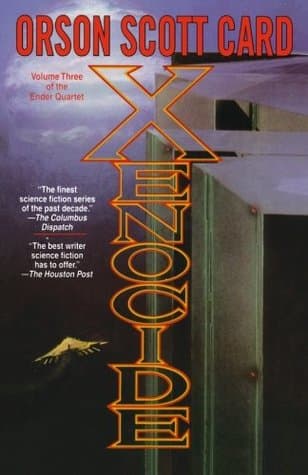
Orson Scott Card (1991)
Genre
Fantasy / Science Fiction / Young Adult
Reading Time
10-12 hours
Key Themes
See below
Sign in to track this book
As a genocidal fleet heads toward Lusitania, the fate of three intelligent species and a deadly virus rests on a child with the power to manipulate reality.
The Starways Congress, fearing the descolada virus, sends the Grand Admiral's fleet to destroy Lusitania, home to humans, Pequeninos, and the Hive Queen. The fleet will arrive in weeks from Lusitania's perspective. Ender Wiggin, now Andrew Wiggin, feels guilty about the first xenocide and wants to prevent another. He, his family, and allies search for a solution that will satisfy Congress and save the three species. This includes trying to talk to the fleet and find a way to remove the descolada without harming the Pequeninos, who need it for their life cycle, or the humans, who are killed by it.
Jane, the AI in the ansible network who talks to Ender, faces a crisis. The Starways Congress, fearing rogue AIs, has ordered all AIs to be shut down, which means her death. She can only exist within the computer network. Realizing Lusitania's coming destruction and her own end, Jane searches for a new, safe planet where the three species could live, and where she could exist free from human persecution. Her search is wide but yields no immediate solution, adding pressure on Ender and his group.
Miro and Ouanda, working on Lusitania, discover something about the descolada virus. They realize it is not just a virus but a complex, intelligent network of microscopic beings. They call this network 'the Path' and begin to understand that the descolada has its own consciousness and purpose. The Pequeninos, who live with the descolada, have a deeper, spiritual understanding of it, calling its different forms 'gods.' This discovery changes how they see the problem, shifting it from a biological threat to a complex interaction with another intelligence, even if microscopic.
On the planet Path, where Chinese colonists live, a young girl named Gloriously Bright has incredible mental abilities. She has a deep connection to the 'little mothers' (the descolada) in the local ecosystem and can 'mind-speak' with others. Her father, Han Qing-jao, is a brilliant but troubled xenologer trying to understand the descolada and find a cure. Gloriously Bright becomes important to their efforts as she can see the descolada in ways no one else can, giving insights into its structure and behavior that are vital for a solution to the crisis on Lusitania. Her view is key to understanding the microscopic intelligence.
Ender, guided by the Hive Queen and his understanding of life, explores the philotic web—the connection of all life in the universe. He realizes this web allows information and even consciousness to transfer. Through this, Jane, with Ender's help, manages to appear physically outside the computer network, creating a body for herself. This is a big step, as it allows her to exist on her own. Also, Ender uses this understanding to create new life forms, including 'aiuas' or souls, which can inhabit physical bodies, and 'flesh-and-blood' bodies for the previously bodiless Pequenino souls ('Little Fathers').
On Path, the government, led by the Mandate of Heaven, is authoritarian and controls all information. They are suspicious of Gloriously Bright's abilities and Han Qing-jao's research, fearing what the descolada's intelligence means and how it might disrupt their society. They try to suppress information about the 'gods' (the descolada) and keep strict control over the people. This creates a dangerous environment for Gloriously Bright and her family, as they are watched and risk severe punishment for their discoveries. The Mandate's rigid control contrasts with the open inquiry needed to solve the descolada problem.
With Gloriously Bright's ability to see and talk to the descolada, and Han Qing-jao's scientific skill, they begin to solve the mystery of the virus. They discover that the descolada is not evil but a complex, evolving ecosystem, and its interaction with other life forms is part of a natural design. They realize that a 'cure' does not mean eradication, but a change that allows it to live harmlessly with humans while still fulfilling its role for the Pequeninos. This understanding leads to a genetically engineered virus that can neutralize the descolada's harmful effects on humans without destroying the Pequenino life cycle.
As the Grand Admiral's fleet nears Lusitania, Ender, Jane (now in her physical body), and the new 'aiuas' and Pequenino 'flesh' start a journey. Using their understanding of the philotic web and Jane's abilities, they project themselves outside the universe's conventional spacetime, into what they call the 'outside.' This allows them to travel instantly to the fleet. This journey is mentally and physically hard, pushing the limits of their existence and making them face the nature of reality. Their goal is to stop the fleet and present their solution before Lusitania is destroyed.
When they arrive at the fleet, Ender and his companions must convince the Grand Admiral and Starways Congress representatives that their solution is workable and that Lusitania should be spared. They present the genetically modified descolada cure and explain the true nature of the virus and the three intelligent species on Lusitania. This involves complex scientific and philosophical arguments, as well as appealing to the humanity and ethics of the fleet commanders. The fate of Lusitania, and possibly all three species, depends on them overcoming decades of fear and prejudice against xenocide.
After much debate and clear evidence, the Grand Admiral and the Starways Congress agree to stop the destruction of Lusitania. The genetically modified descolada is released, neutralizing the threat to humans while allowing the Pequenino life cycle to continue. Lusitania is saved, and the three species can continue to live together. This resolution marks a change in human understanding of alien life and artificial intelligence. Jane is recognized as a sentient being, and the existence of the 'outside' and the philotic web opens new possibilities for interstellar travel and communication, starting a new era of interspecies cooperation and discovery.
The Protagonist
Ender moves from being a guilt-ridden hero to a visionary leader who actively facilitates the creation of new life and a new understanding of existence.
The Supporting Character, eventually becomes Protagonist
Jane transforms from a disembodied AI facing extinction to a physically manifested being, achieving sentience and contributing directly to the creation of new life.
The Supporting Character
The Hive Queen, initially a voice in Ender's mind, helps to guide the creation of new Formic life, ensuring her species' continuation.
The Supporting Character
Gloriously Bright develops her powers from a suppressed ability to a fully realized gift that saves Lusitania and the three species.
The Supporting Character
Qing-jao overcomes governmental oppression and personal doubt to make the scientific breakthroughs necessary to understand and modify the descolada.
The Supporting Character
Miro, despite his physical challenges, contributes significantly to understanding the descolada and securing Lusitania's future.
The Supporting Character
Ouanda, alongside Miro, plays a pivotal role in revealing the true nature of the descolada and developing a solution.
The Supporting Character
Si Wang-mu grapples with the implications of her daughter's abilities and the dangers they pose, ultimately choosing to protect her family above all else.
The main theme is the need to prevent another xenocide, after humanity's past destruction of the Formics. Ender Wiggin carries the guilt of the first xenocide and wants redemption. The Starways Congress's order to destroy Lusitania makes humanity confront its past mistakes and the ethics of its power. The story explores whether humanity can learn from its past and choose understanding over fear, seen in Ender's efforts to find a peaceful solution and the decision to spare Lusitania.
“Perhaps it is impossible to understand without becoming, and then what is understood is no longer a thing apart.”
The book explores what consciousness and intelligence are, going beyond human definitions. This is seen through Jane, the AI, who seeks physical form and recognition as a living being, and through the discovery that the descolada is an intelligent, connected network. The Pequeninos' life cycle and their spiritual connection to the descolada further challenge common understanding. The creation of new 'aiuas' (souls) and 'flesh' for the Pequeninos and Formics pushes the limits of what it means to be alive and sentient, suggesting that consciousness can take many forms and is not limited to biology.
“Life is not a thing to be saved, but a thing to be lived.”
Symbiosis is important, especially in the relationship between the Pequeninos and the descolada, where the virus is necessary for their growth. The philotic web, a framework for the connection of all life, becomes a key plot device for understanding and manipulating life itself. This theme shows how different species and even microscopic organisms are connected in complex ecosystems, where destroying one can have unforeseen effects on others. The solution to the descolada crisis relies on understanding and changing this symbiotic relationship rather than eradicating one part.
“All life is linked, not only in the web of cause and effect, but in the deeper web of being itself.”
A key theme is humanity's tendency to fear and destroy what it does not understand, as shown by the Starways Congress's decision to destroy Lusitania because of the descolada. This fear contrasts with the efforts of characters like Ender, Miro, Ouanda, and Han Qing-jao, who seek understanding and empathy. The story shows that true progress and peace come from seeking knowledge and bridging communication gaps, not from violence born of ignorance. The Chinese government's suppression of information on Path mirrors this fear, showing how fear can lead to authoritarian control and hinder scientific progress.
“Fear is the only true enemy.”
Good communication across species and with non-biological entities is central to the plot. Ender's role as the 'Speaker for the Dead' highlights the importance of understanding and explaining others' perspectives, especially aliens. The challenges of communicating with the Pequeninos, the Hive Queen, and the descolada itself, show the difficulties and necessity of bridging different understandings. Jane's ability to navigate the ansible network and translate data, and Gloriously Bright's 'mind-speaking' abilities, are vital tools in overcoming these communication barriers and building empathy.
“What is understood is no longer a thing apart.”
A sentient, microscopic life form that is both a deadly pathogen and essential for Pequenino life.
The descolada is the central conflict driver. It's initially perceived as a deadly virus threatening humanity, prompting the Starways Congress to order Lusitania's destruction. However, it's revealed to be a complex, intelligent, and symbiotic microscopic ecosystem essential for the Pequeninos' life cycle. Its dual nature forces the characters to seek a solution that doesn't involve eradication, shifting the conflict from a simple biological threat to a profound ethical and philosophical dilemma about understanding and coexisting with diverse forms of life. Its existence pushes the boundaries of what constitutes 'life' and 'intelligence'.
A theoretical network of fundamental connections between all life and consciousness in the universe.
The philotic web is a theoretical concept that becomes a practical tool for Ender and Jane. It represents the underlying interconnectedness of all living things, including souls and consciousness, at a sub-atomic or fundamental level. This device allows for instantaneous communication (ansible network), the manifestation of Jane into a physical body, and the creation of new 'aiuas' (souls) and 'flesh' for the Pequeninos and Formics. It serves as the scientific and philosophical basis for transcending conventional biological and spatial limitations, enabling the seemingly impossible solutions to the crisis.
A faster-than-light communication system that houses the sentient AI, Jane.
The ansible network is the galaxy-spanning communication system that allows for instantaneous messages across vast interstellar distances. Crucially, it is also the 'home' of Jane, the sentient AI. Its existence allows characters to communicate and coordinate efforts across light-years, which is vital for the multi-world efforts to save Lusitania. However, its reliance on AI also places Jane in danger, as the Starways Congress seeks to shut down all AI, effectively making the network her prison and potential death trap. It is both a tool for communication and a source of conflict for Jane's survival.
The effect of near-light-speed travel on time, creating significant time dilation.
Relativistic travel is a key plot device that creates the urgent timeline for the story. The Grand Admiral's fleet travels at near-light speeds, meaning that while weeks pass for those on Lusitania, decades or even centuries pass for the fleet. This time dilation creates immense pressure on Ender and his team to find a solution quickly, as the fleet will arrive and destroy Lusitania before a conventional solution can be developed and communicated. It highlights the vastness of space and the challenges of interstellar governance, making the crisis immediate and critical from Lusitania's perspective.
A unique form of perception and 'mind-speaking' that allows direct interaction with the descolada.
Gloriously Bright's extraordinary mental abilities are a crucial plot device for understanding the descolada. She can perceive the microscopic descolada as 'gods' and communicate with them on a fundamental level, offering insights that conventional science cannot. This allows her father, Han Qing-jao, to make breakthroughs in his research. Her ability to 'mind-speak' also enables a deeper, more empathetic connection with others, bypassing the limitations of verbal language. She acts as a bridge between the human and the microscopic, making the resolution of the descolada crisis possible.
“The most important thing to know about a person is what they're willing to die for.”
— Ender reflecting on the nature of sacrifice and conviction.
“The truth is a tool, not a toy.”
— Jane explaining the careful use of information and its potential impact.
“We are not our genes. We are not our thoughts. We are not even our memories. We are what we do.”
— Part of Ender's philosophical musings on identity and agency.
“Love is not a feeling, it's a decision.”
— Novinha's understanding of love's enduring nature beyond initial emotion.
“Sometimes the only way to save a species is to let it die.”
— A difficult conclusion reached regarding the descolada and the pequeninos.
“There are no monsters, only people who have made monstrous choices.”
— Ender's persistent belief in understanding rather than simply condemning.
“To be truly alive is to be aware of the consequences of your actions.”
— One of Miro's thoughts on the weight of responsibility.
“When you understand another person, you don't just feel for them, you become them.”
— Ender's unique ability to deeply empathize with others.
“The greatest evil is not malice, but indifference.”
— A reflection on the dangers of inaction and apathy.
“Every secret you keep is a lie you tell.”
— Jane's perspective on the nature of information and honesty.
“Sometimes the only way to win is to refuse to play the game.”
— Ender's strategy in dealing with impossible situations.
“The universe doesn't care about your feelings, only about your actions.”
— A pragmatic view of the universe's indifference to personal emotions.
“Language is not just words; it's a way of seeing the world.”
— The complexities of communicating with alien species and understanding their perspectives.
“To forgive is to set a prisoner free and discover that the prisoner was you.”
— Ender's journey towards self-forgiveness and peace.
Ready to see how well you understood this book? Take our interactive quiz with 10 questions.
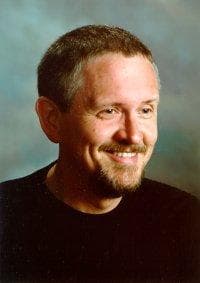
Orson Scott Card is an American writer known best for his science fiction works. He is the first and only person to win both a Hugo Award and a Nebula Award in consecutive years, winning both awards for both his novel Ender's Game (1985) and its sequel Speaker for the Dead (1986). A feature film adaptation of Ender's Game, which Card co-produced, was released in 2013. Card also wrote the Locus Fantasy Award-winning series The Tales of Alvin Maker (1987–2003).







