“Why is the measure of love loss?”
— A recurring question throughout the book, reflecting on the nature of love and its aftermath.


Jeanette Winterson (1994)
Genre
Literary Fiction / Romance
Reading Time
180 min
Key Themes
See below
Sign in to track this book
An unnamed, ungendered narrator explores a consuming affair with a married woman, looking at desire, identity, and the body's language.
The story begins with the unnamed, ungendered narrator describing their intense, immediate attraction to Louise, a married woman they meet through friends. The narrator describes Louise with anatomical detail, focusing on her physical traits and the strong desire she causes. Louise is beautiful, intelligent, and captivating, an obsession for the narrator. Despite Louise being married to Elgin, a successful cancer researcher, the narrator wants to pursue her, believing they have a deep connection. The first meetings are full of unspoken tension and longing, setting up a secret affair.
The narrator and Louise start a passionate, secret affair. Their relationship has intense physical and emotional intimacy. The narrator describes Louise's body and their shared experiences in detail. These descriptions are often poetic and philosophical, looking at love, desire, and the body as a place of memory and emotion. Louise, at first hesitant because of her marriage, is drawn into the affair. She finds a deep connection with the narrator that she seems to lack with Elgin. Their stolen moments are urgent and full of forbidden joy as they manage their illicit love.
Elgin, Louise's husband, mostly does not know about the affair; he is busy with his work as a cancer specialist. The narrator watches Elgin from afar, noting his dedication to science and his seemingly conventional love for Louise. The narrator feels some guilt for betraying Elgin, but their love for Louise is stronger than these moral feelings. The narrator believes their connection with Louise is unique and fated, and that Louise deserves a love as deep as the one they offer. The secrecy makes the affair more intense, making each stolen moment feel more precious and risky.
As the affair deepens, the narrator's fascination with Louise's body grows. They explore every part of her, not just physically, but also metaphorically, seeing her body as a text to read. The narrator details Louise's skin, hair, scars, and how her body responds to touch. These observations become a deep look at love and human connection. This exploration is not just sexual; it is an attempt to understand Louise's essence through her physical form. The narrator believes the body holds the true story of a person's life and emotions. This time marks the peak of their intimacy and passion.
The passionate affair stops suddenly with bad news: Louise has a rare and aggressive blood disease, a type of leukemia. The news breaks the lovers' ideal world. Louise's health quickly gets worse, and she gets different treatments. This medical crisis brings Elgin, her husband, back to the forefront. As a medical professional, he gets deeply involved in her care. The narrator falls into despair, facing life's fragility and the possible loss of Louise.
To save Louise, Elgin suggests a new, experimental treatment: a bone marrow transplant. He says he is a suitable donor, offering his own body to save his wife. This act of self-sacrifice puts Louise in a hard spot. She is torn between her love for the narrator and her husband's life-saving devotion. The narrator understands the moral issues and the huge pressure on Louise. They know Elgin's offer is not just a medical procedure but a deep emotional claim on her life and loyalty. Louise's choice becomes clear.
Given Elgin's life-saving sacrifice, Louise makes the painful decision to stay with her husband. The narrator understands the seriousness of the situation and Louise's moral duty. They realize their presence is in the way of Louise's recovery and her reconciliation with Elgin. Despite deep heartbreak, the narrator chooses to leave. They believe it is the only way for Louise to heal, both physically and emotionally. This departure is an act of love and self-sacrifice. It marks the end of their intense affair and puts the narrator into deep grief and solitude.
After leaving Louise, the narrator lives alone, dealing with the loss and heartbreak. The story becomes more introspective and philosophical. The narrator thinks about love, memory, and the physical body as a storage of experiences. They revisit their memories of Louise, recalling every detail of her body and their intimacy. This time is marked by deep longing and an attempt to understand what remains when the beloved is physically gone. The narrator tries to find meaning in their suffering and to keep the essence of their love for Louise, even in her absence.
In solitude, the narrator looks deeper into the philosophy of the body. They think about how the body tells a story—a 'history' written on its skin, scars, and shape. This becomes a main idea. The narrator tries to 'read' Louise's body from memory, seeing it as a complete text of her being, their love, and their experiences. The narrator concludes that even when absent, the beloved's body, as remembered and internalized, continues to exist within them. This intellectual and emotional journey helps cope with loss and makes Louise lasting in their mind and heart.
Towards the end, the narrator accepts Louise's departure and the end of their physical relationship. The pain of loss remains, but it is softened by a deep understanding that their love for Louise is a part of who they are. The narrator acknowledges that love, in its purest form, goes beyond physical presence and societal rules. They find peace in knowing that Louise's memory and their shared love are 'written on their body' and will always be a part of them. The ending is not a complete resolution, but a poignant thought on the lasting impact of love and loss.
The Protagonist
The narrator moves from an all-consuming, passionate affair to a period of profound loss and philosophical introspection, ultimately finding a measure of acceptance and enduring love.
The Love Interest
Louise experiences a passionate awakening with the narrator, followed by a devastating illness that forces her to make a heartbreaking choice between her lover and her life-saving husband.
The Supporting
Elgin moves from being an unwitting husband to a selfless savior, ultimately reclaiming his wife through his life-saving act.
The Mentioned
Not applicable, as she is a past figure.
The Mentioned
Not applicable, as she is a past figure.
The Mentioned
Not applicable, as he is a background figure from memory.
The Mentioned
Not applicable, as she is a background figure from memory.
The Mentioned
Not applicable, as a functional character.
The novel explores how identity is understood through the body. The unnamed, ungendered narrator shows that true identity goes beyond labels, existing in experiences, desires, and connections. The narrator's detailed 'reading' of Louise's body—her skin, scars, and reactions—aims to understand her essence. This suggests the body is a living text of one's history and self. This theme states that our physical forms are not just containers but parts of who we are, holding memories and defining our being, especially in love.
“What is the body? That keeps coming back to me. What is the body? Is it a house, a cage, a garment, a vessel? Or is it us?”
Winterson looks at the many sides of love, separating passionate, forbidden desire from conventional marital affection. The narrator's love for Louise is consuming and goes beyond societal norms, driven by an almost spiritual connection. This contrasts with Elgin's stable, devoted love, which, while life-saving, lacks the intense exploration of the narrator's bond with Louise. The novel argues that love is not always rational or moral, but a powerful force that can both lift and destroy, and that its core can last even when absent.
“I had found you, I had found the one whose body was the map of my desire, the one whose geography was the landscape of my life.”
The novel shows the experience of deep loss and the journey through grief. When Louise is diagnosed with a serious illness and chooses Elgin, the narrator falls into deep sorrow. The story then looks at the aftermath of this loss, focusing on how one copes with the absence of a loved one. The narrator's introspection and philosophical thoughts are a direct response to their grief. They try to understand and internalize their love for Louise, keeping it in memory and thought, even when her physical presence is gone.
“How do you do it? How do you survive the loss of someone who is not dead, but gone?”
A main theme is the narrator's ambiguous gender. By not giving this information, Winterson challenges traditional ideas of gender and sexuality in love stories. This ambiguity lets the novel focus on the universal aspects of human connection, desire, and emotional intimacy. It is not limited by specific gender roles or expectations. It suggests that love goes beyond gender, and that the emotional and intellectual connection between two people is most important, emphasizing the fluid nature of identity in matters of the heart.
“I love you. I love your hands, your feet, your arms, your legs, your hair, your voice, your eyes, your mouth. I love your skin, your bones, your blood, your organs. I love your body, inside and out.”
The novel itself shows the power of language. The narrator uses rich, poetic, and philosophical prose to build and rebuild their love for Louise. Writing and storytelling become ways to preserve memory, process grief, and understand oneself. The narrator describes Louise's body in detail, not just as a physical thing, but as a 'text' to be read. This shows how language can shape perception, make experiences lasting, and create meaning from intense emotions. The book's structure is a narrative exploration of love.
“I am telling you a story. I am telling you my story. I am telling you the story of my body, and the story of your body, and the story of our bodies together.”
Creates universality and focuses on the essence of love.
The most prominent device is the narrator's lack of a name or specified gender. This choice universalizes the experience of love and desire, allowing readers of any gender or sexual orientation to identify with the protagonist. It shifts the focus from societal labels to the raw, emotional, and intellectual aspects of human connection. By removing these markers, Winterson emphasizes that love is about the individual soul and body, rather than predefined roles or identities, challenging conventional romantic narratives and making the story timeless and inclusive.
Explores identity and memory through physical form.
The narrator consistently uses the metaphor of Louise's body as a 'text,' a 'map,' or a 'landscape' to be read and explored. This device allows for a profound philosophical inquiry into identity, memory, and the nature of love. By detailing every physical aspect of Louise, the narrator is not merely describing her, but attempting to understand her life, her history, and their shared intimacy as if deciphering a personal narrative written on her skin. This metaphor elevates physical intimacy to an intellectual and spiritual endeavor, suggesting that the body holds the complete story of a person.
Deepens thematic exploration and the narrator's introspection.
Throughout the narrative, the intensely personal account of the affair is interspersed with philosophical meditations on love, time, absence, and the body itself. These interludes often break the linear flow of the plot, offering abstract reflections that transcend the immediate events. This device serves to deepen the thematic content, allowing the narrator (and the author) to explore complex ideas directly with the reader. It highlights the narrator's intellectual and introspective nature, transforming a love story into a profound philosophical inquiry into the human condition and the nature of existence.
Creates intimacy and immediacy in the narrator's voice.
Much of the novel is addressed directly to Louise using 'you.' This second-person address creates an intense sense of intimacy and immediacy, as if the reader is overhearing a deeply personal confession or a letter written directly to the beloved. It allows the narrator to relive and recount their memories with a passionate, direct voice, drawing the reader into the emotional core of the relationship. This device blurs the line between internal monologue and direct communication, making the narrator's love and longing palpable and engaging.
Reflects the subjective nature of memory and emotion.
While there is a general progression of the affair, the narrative frequently jumps between past memories, present reflections, and philosophical digressions. This non-linear structure mirrors the subjective and often fragmented nature of memory and intense emotional states. It allows the narrator to revisit crucial moments, explore their significance from different angles, and weave together their intellectual musings with their personal experiences. This device enriches the narrative by offering a multi-layered exploration of love and loss, rather than a straightforward chronological account.
“Why is the measure of love loss?”
— A recurring question throughout the book, reflecting on the nature of love and its aftermath.
“I’m not an easy person to love. I’m a mess. I’m a hurricane.”
— The narrator's self-assessment of their tumultuous nature and its impact on relationships.
“Language is a virus from outer space.”
— A philosophical observation on the power and limitations of language in conveying experience.
“To be loved is to be seen. To be seen is to be known.”
— Exploring the profound connection between love, recognition, and intimacy.
“The body is a book. A book of blood. Wherever I go, I leave a trail of blood.”
— A powerful metaphor for the body as a repository of experiences, memories, and a testament to life.
“There are no new feelings. Only new people to feel them.”
— A reflection on the universality of human emotions despite individual experiences.
“I wanted to be written on your body. I wanted to be your book.”
— The narrator's desire for deep, indelible connection and to be a central part of their lover's life.
“Love is not a game. It is a war. And I am losing.”
— A dramatic and intense view of love as a struggle, highlighting the pain of unrequited or failing love.
“The past is a foreign country; they do things differently there.”
— A classic line, though not original to Winterson, used here to emphasize the distance and otherness of past experiences.
“The story of my life is not a story, it's a map.”
— Suggests that life is not a linear narrative but a complex, interconnected journey.
“Sex is a conversation. It's a dialogue. It's not just a monologue.”
— Emphasizes the importance of mutual engagement and communication in physical intimacy.
“How can you tell a love story without a body?”
— Highlights the central role of the physical body in the experience and expression of love.
“We are not always what we seem. And we can't always choose what we are.”
— A commentary on the complexities of identity, appearance, and fate.
“I’m not looking for love. I’m looking for truth.”
— The narrator's deeper quest beyond superficial romance, seeking authenticity and understanding.
“The universe is made of stories, not atoms.”
— A profound statement on the power of narrative to shape our understanding of reality.
Ready to see how well you understood this book? Take our interactive quiz with 10 questions.
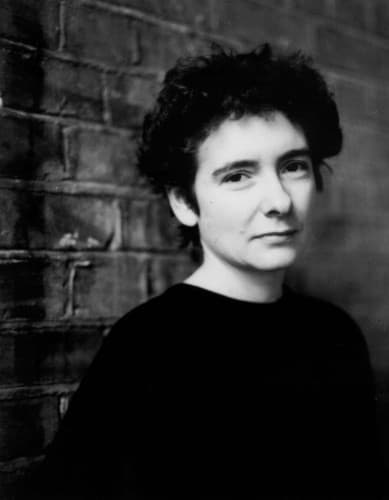
Jeanette Winterson is an English author. Her first book, Oranges Are Not the Only Fruit, was a semi-autobiographical novel about a sensitive teenage girl rebelling against convention. Other novels explore gender polarities and sexual identity and later ones the relations between humans and technology. She broadcasts and teaches creative writing. She has won a Whitbread Prize for a First Novel, a BAFTA Award for Best Drama, the John Llewellyn Rhys Prize, the E. M. Forster Award and the St. Louis Literary Award, and the Lambda Literary Award twice. She has received an Officer of the Order of the British Empire (OBE) and a Commander of the Order of the British Empire (CBE) for services to literature, and is a Fellow of the Royal Society of Literature.







