“Every girl dreams of her wedding day. But not every girl dreams of a wedding day where she is the sacrifice.”
— Mairead reflects on her impending forced marriage.

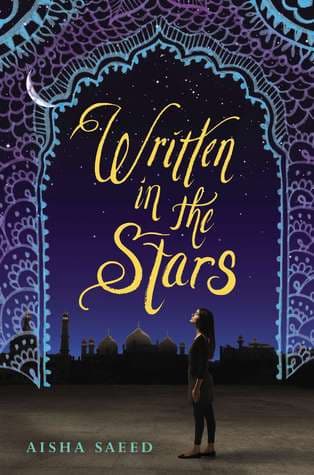
Aisha Saeed (2015)
Genre
Young Adult / Romance
Reading Time
277 min
Key Themes
See below
Sign in to track this book
Trapped in an unwanted arranged marriage in Pakistan, a young Pakistani-American woman must defy her family and culture to escape back to the boy she loves in America before she loses all agency over her own life.
Naila, a seventeen-year-old Pakistani-American in suburban America, navigates her conservative immigrant parents' strict expectations. While they allow her freedom in academics and personal style, they insist on choosing her husband through an arranged marriage. Naila, however, secretly begins dating Saif, a kind and ambitious fellow student. Their relationship deepens over several months, filled with secret meetings and shared dreams of a future together. Naila is torn between her love for Saif and her desire to respect her parents, but she cannot imagine a life without him. She knows revealing their relationship would cause immense conflict, but she hopes to gradually convince her parents to accept Saif after she finishes school.
After Naila's younger brother catches her talking to Saif on the phone, her parents become suspicious. They decide to take Naila and her siblings on an extended summer trip to Pakistan, saying it is a cultural journey to reconnect with their heritage and visit family. Naila is apprehensive, fearing it will separate her from Saif, but her parents assure her it's just a vacation. Saif, despite his concerns, promises to wait for her and keeps in touch through secret messages. Naila tries to enjoy the initial days in Pakistan, visiting relatives and exploring Lahore, but an underlying unease persists.
The trip's true purpose is revealed when Naila's parents tell her they have found a husband for her, a distant cousin named Imran, and that the wedding will take place in a few weeks. Naila is devastated and refuses, pleading with her parents to understand her love for Saif and her desire to return to America. Her parents are unyielding, believing she has brought shame upon the family and that marriage to Imran is the only way to restore their honor. They take her passport and phone, trapping her in Pakistan and cutting off all contact with the outside world, especially Saif.
Naila is confined to her relatives' home, guarded by family members. She makes several attempts to escape, trying to sneak out of the house and appealing to other relatives for help, but her efforts are stopped. She refuses to eat, hoping to appear unwell and delay the wedding, but her resistance only strengthens her family's resolve. Her parents, especially her mother, try to reason with her, explaining it's for her own good and that she will learn to love Imran. Naila feels increasingly isolated and helpless, her dreams of a future with Saif slipping away.
The wedding day arrives, a blur of traditional ceremonies and forced smiles. Naila is dressed in bridal attire, her protests silenced by her family. She feels like a puppet, her will disregarded. She goes through the motions of the nikah, the Islamic marriage contract, feeling numb and defeated. Imran, while seemingly kind, is a stranger to her, and the thought of being married to him fills her with despair. The ceremony solidifies her new reality: she is no longer Naila, the American girl with dreams, but Imran's wife, a woman trapped in a life she never chose.
Naila moves into Imran's home in a small, rural village, a stark contrast to her life in America. She struggles with the language barrier, the lack of modern amenities, and the constant presence of Imran's family. Imran is initially patient and tries to make her comfortable, but Naila remains distant, unable to accept her fate. She misses her home, her friends, and most of all, Saif. She finds small ways to resist, like refusing to wear traditional clothing or participate fully in family life, but her attempts are met with gentle persuasion or firm disapproval. She feels a deep sense of loss and isolation.
Months pass, and Naila slowly finds a small measure of control. She manages to obtain a hidden phone and, with the help of a sympathetic relative, finally sends a message to Saif, who has been tirelessly searching for her. Saif is overjoyed to hear from her and immediately begins making plans to rescue her. This renewed connection sparks hope in Naila, and she starts to actively plan her escape. She carefully observes her surroundings, looking for opportunities and allies, realizing she must be strategic and patient to succeed against the obstacles.
Naila and Saif meticulously plan her escape. Saif arranges for a car to pick her up at a designated time and place, far enough from the village to avoid immediate detection. Naila, pretending to visit a friend, sneaks away from Imran's house, her heart pounding with a mix of fear and excitement. The journey is tense and has close calls. She reaches the meeting point, and after a tense wait, sees Saif's car approaching. The reunion is emotional, filled with relief and a renewed sense of purpose, but they know their ordeal is far from over.
Saif takes Naila to the American embassy in Islamabad, where they seek assistance. Naila recounts her story of forced marriage and illegal detainment, providing evidence of her American citizenship. The embassy officials begin the process of verifying her claims and arranging for her safe return to the United States. This period is filled with uncertainty and bureaucratic hurdles, as Naila and Saif wait for official decisions. They are both exhausted but determined, finding strength in each other's presence and their shared goal of freedom and a life together.
After a difficult process, Naila is finally granted safe passage back to America. She returns to her home in the suburbs, but her life is irrevocably changed. Her parents disown her, viewing her actions as an unforgivable betrayal and a great shame on the family. Naila struggles with the emotional weight of her parents' rejection and the trauma of her experience. Saif remains by her side, offering unwavering support. She begins to rebuild her life, pursuing her education and working towards a future where she can truly be herself, even as the scars of her past remain.
The Protagonist
Naila transforms from a somewhat naive teenager into a strong, determined survivor who reclaims her agency and defines her own destiny, albeit with significant personal cost.
The Supporting
Saif evolves from a loving boyfriend into Naila's steadfast protector and partner, demonstrating immense resolve and resourcefulness in the face of adversity.
The Antagonist
They remain largely unchanged in their traditional views, ultimately choosing cultural honor over their daughter's individual happiness and autonomy.
The Supporting
Imran remains a static character, representing the societal norms Naila is fighting against. He is a kind man within his cultural context but cannot bridge the gap with Naila's desire for self-determination.
The Supporting
Auntie Shazia acts as a brief but crucial ally for Naila, showing quiet courage in challenging family expectations.
The Mentioned
N/A
The novel explores the conflict between traditional Pakistani culture and modern American values, particularly through Naila's struggle. She feels caught between her parents' expectations of arranged marriage and family honor, and her own desire for individual choice and romantic love, shaped by her American upbringing. This theme is clear when Naila is forced to leave her life in America for a rural Pakistani village, showing the differences in lifestyle and expectations. Her identity crisis is central, as she grapples with who she is expected to be versus who she truly is. Her parents' belief that she has 'forgotten who she truly is' highlights this clash.
“My parents had always told me I could choose what to study, how to wear my hair, and what I wanted to be when I grew up. But they would choose my husband.”
The main theme is the impact of forced marriage and the loss of personal control. Naila's entire journey is a fight against being stripped of her right to choose her partner and her future. The novel details her resistance, her feelings of helplessness, and her desperate attempts to reclaim control over her body and her life. This theme is powerfully shown by her confinement, the confiscation of her passport, and the emotional and physical pressure she endures, all while her family believes they are acting in her best interest. It highlights the global issue of forced marriage and its violation of human rights.
“I was a puppet, and they were pulling my strings, making me dance to a tune I didn't want to hear.”
The enduring power of love, both romantic and familial, is a significant theme. Naila's love for Saif drives her rebellion and her will to escape. Their commitment to each other, despite the distance and danger, shows a love that goes beyond cultural barriers and personal risk. Conversely, the novel also explores the complicated nature of familial love, where Naila's parents believe their actions are born of love and a desire to protect her, even as they inflict pain. The sacrifices made by both Naila and Saif to be together show the depth of their bond.
“He was my anchor, my reason to fight, the future I refused to let slip away.”
Despite being in a vulnerable and oppressive situation, Naila shows remarkable resistance and strength. From her initial refusal to marry Imran to her desperate attempts to escape and her eventual planning with Saif, Naila never gives up. Her inner strength allows her to endure isolation, psychological manipulation, and the complete loss of her former life. This theme is clear in her small acts of defiance, her refusal to be completely broken, and her determination to return to her chosen life. It highlights the human spirit's capacity to fight for freedom against overwhelming odds.
“They could take my passport, my phone, my freedom. But they couldn't take my will.”
Hints of future events or conflicts.
The novel uses subtle foreshadowing early on, such as Naila's parents' increasingly strict rules and their comments about her 'forgetting her culture,' to hint at the escalating conflict regarding her relationship with Saif. The abrupt decision to take an 'extended vacation' to Pakistan, despite Naila's growing unease, also serves as foreshadowing that this trip will be more than just a family visit, preparing the reader for the eventual revelation of the arranged marriage.
Objects representing Naila's freedom and connection to her former life.
Naila's passport and phone serve as powerful symbols of her freedom, identity, and connection to America and Saif. When her parents confiscate them upon revealing the arranged marriage, it symbolizes her complete loss of autonomy and her entrapment. The eventual acquisition of a hidden phone is a turning point, symbolizing her regaining a sliver of control and a lifeline back to her old life and hope for escape.
Placing a character in an unfamiliar and challenging environment.
The entire second half of the novel places Naila in a profound 'fish-out-of-water' scenario. Transplanted from her suburban American life to a rural Pakistani village, she struggles with the language barrier, lack of modern amenities, different social customs, and the constant scrutiny of Imran's family. This device emphasizes her isolation and the dramatic shift in her circumstances, highlighting the cultural clash and the severity of her forced confinement.
A character's physical and emotional voyage towards a goal.
Naila's story is fundamentally a quest for freedom and self-determination. Her journey begins with a forced physical journey to Pakistan, which then transforms into an internal and external quest to escape her forced marriage and return to her life in America. This device structures the narrative, providing a clear goal and a series of obstacles she must overcome. Saif's tireless search for her also forms a parallel quest, reinforcing the theme of love and perseverance.
“Every girl dreams of her wedding day. But not every girl dreams of a wedding day where she is the sacrifice.”
— Mairead reflects on her impending forced marriage.
“There are two kinds of happiness. The kind you feel when you're soaring, and the kind you feel when you're just existing.”
— Mairead contemplates her limited joy under her parents' control.
“Love is not a choice, it’s a destiny. But sometimes, destiny is cruel.”
— Mairead struggles with her feelings for someone she cannot be with.
“A woman's honor is not in her body, but in her heart.”
— Mairead challenges traditional views on female honor.
“Sometimes, the hardest thing to do is to be true to yourself when everyone else wants you to be someone else.”
— Mairead grapples with societal and familial expectations.
“Silence can be a weapon, but it can also be a shield.”
— Mairead learns to use silence strategically in difficult situations.
“Hope is a dangerous thing. It can keep you alive, but it can also break your heart.”
— Mairead reflects on the double-edged nature of hope.
“Freedom isn't just about going where you want. It's about being who you are.”
— Mairead understands the deeper meaning of true freedom.
“The stars hold our fate, but our choices shape our journey.”
— Mairead believes in agency despite predestination.
“Even in the darkest night, there are always stars.”
— A metaphor for finding hope in difficult times.
“Some traditions are meant to be honored, and some are meant to be broken.”
— Mairead questions the validity of certain cultural practices.
“To be truly seen is a gift, especially when you feel invisible.”
— Mairead appreciates someone who genuinely understands her.
“A secret shared is a burden halved, but a secret kept can crush you.”
— Mairead considers the weight of her hidden struggles.
“The greatest prison is not behind bars, but within a mind that believes it has no escape.”
— Mairead realizes the importance of mental fortitude.
Ready to see how well you understood this book? Take our interactive quiz with 10 questions.