“The dead don't care about your feelings. They just are.”
— David Hunter reflecting on the objective nature of his work.

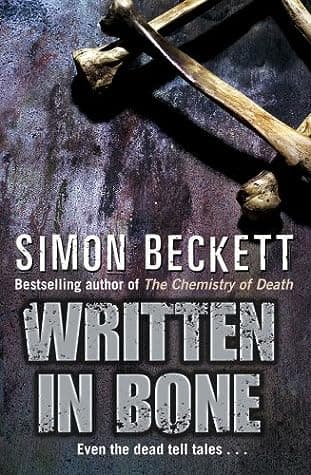
Simon Beckett (2007)
Genre
Thriller / Mystery
Reading Time
7 hours 30 min
Key Themes
See below
Sign in to track this book
Trapped on a storm-battered Scottish island with a killer, forensic anthropologist Dr. David Hunter must piece together a gruesome, incinerated body to unmask a murderer before he becomes the next victim.
Forensic anthropologist Dr. David Hunter, still dealing with past traumas, travels to the isolated Scottish Hebridean island of Runa. His colleague, Dr. Sophie Anderson, asked him to help local police with a puzzling case. A body, believed to be that of local recluse Jed Macleod, was found almost completely burned in his cottage, with only the feet and one hand somewhat intact. Local police, led by Inspector Fraser, quickly called it spontaneous human combustion or an accidental fire. Hunter, however, is immediately skeptical. The scene does not match accidental fires he has seen, and the unusual burn pattern raises his suspicions, setting the stage for his deeper investigation into the island's secrets.
Hunter begins his detailed examination of the remains and the cottage. Despite severe damage, he uncovers important details. The body's position, the nature of the charring, and the lack of certain fire indicators lead him to strongly doubt the accidental fire theory. He notes no 'wick effect' evidence for spontaneous combustion and finds no accelerants that would explain the intensity and pattern of the burn. He also observes that the few unburnt areas, like the feet, do not fit with a person caught in an uncontrolled blaze. His findings challenge Inspector Fraser's initial assessment, suggesting a more sinister cause for Jed Macleod's death. Hunter senses the growing unease among the close-knit islanders as his investigation continues.
As Hunter continues his work and speaks his suspicions more openly, a violent storm hits Runa. High winds and heavy rain batter the island, quickly becoming a full hurricane. Power lines fall, and the single ferry service stops, completely cutting off Runa from the mainland. Communications, including mobile phone service, fail, plunging the island into darkness and isolation. This sudden and extreme weather intensifies the already tense atmosphere, creating a claustrophobic setting. Hunter realizes that he, Sophie, and the other islanders are now trapped with a potential murderer among them, greatly increasing the stakes of his investigation.
The isolation caused by the storm is soon made worse by a terrifying discovery. Another body is found – this time, clearly a murder victim. The victim is Hamish, a local fisherman known for his rough manner and knowledge of the island. Unlike Jed Macleod, Hamish's death is violent and obvious, with clear signs of a struggle and blunt force trauma. This discovery confirms Hunter's earlier suspicions that Jed's death was also murder, and that a killer is actively operating on Runa. Panic begins to spread through the small community, and loyalties are tested as the islanders realize the danger is immediate and personal. Hunter must now work quickly to find connections between the two deaths.
With two murders confirmed, Hunter, alongside Sophie and the increasingly overwhelmed Inspector Fraser, begins investigating the islanders themselves. They learn about the complex relationships, old grudges, and dark secrets beneath Runa's calm surface. Suspects emerge: the reclusive lighthouse keeper, the local doctor with a troubled past, the owner of the island's only pub, and various other residents with motives from land disputes to illicit activities. Hunter starts to connect the victims and their roles within the tight-knit community, realizing the killer is likely someone known to them all. The storm outside reflects the growing internal chaos and suspicion among the trapped islanders.
As Hunter digs deeper, his own painful past, especially the death of his wife and daughter, begins to resurface. This is made worse by the claustrophobic atmosphere and the brutality of the murders. He feels a strong connection to the victims and a desperate need to stop the killer. The danger becomes more personal when he finds evidence suggesting the killer knows about his investigation and might even be taunting him. Hunter finds subtle clues left at crime scenes that seem directed at him, increasing the psychological tension. He realizes he is not just solving a crime; he is in a deadly game with a very intelligent and ruthless person who knows the island well.
Hunter, using his forensic expertise, starts to identify a disturbing pattern linking the victims. He realizes the murders are not random acts of violence but are carefully planned and executed, possibly connected to a specific event or secret from the island's past. He uncovers hints of a long-buried incident, perhaps an old crime or a collective cover-up, that might be fueling the killer's rage. The motive appears to be revenge, targeting those involved or complicit in this past wrongdoing. This realization narrows the field of suspects and gives Hunter a clearer direction, but also puts him in greater danger as he gets closer to the truth the killer desperately wants to keep hidden.
Through forensic evidence, witness testimonies, and his own deductions, Hunter finally unmasks the killer. The perpetrator is someone unexpected, deeply part of the island community. Their seemingly ordinary appearance hid a dark and vengeful core. The killer's motive is a complex mix of past trauma, perceived injustice, and a desire for retribution against those they held responsible for a devastating event years ago on Runa. The confrontation is tense and dangerous, happening during the ongoing storm, as Hunter tries to reason with the unstable killer, who believes their actions are justified and that they are delivering long-overdue justice to the island's inhabitants.
The climax shows Hunter in a desperate fight for survival against the killer, who wants to silence him and complete their mission. The raging storm outside reflects the internal turmoil and violence of the confrontation. Hunter uses his wits and scientific knowledge to outsmart the killer, narrowly escaping several attempts on his life. With the help of Sophie Anderson and a few loyal islanders, he manages to subdue the perpetrator. The immediate threat ends as the storm finally breaks, symbolizing a tentative return to order and the lifting of the oppressive atmosphere that had gripped Runa. The island is damaged, but the immediate danger is over, and the truth has been revealed.
Afterward, Runa is left to deal with the devastating revelations and the physical damage from both the storm and the murders. Hunter oversees the final processing of the crime scenes and prepares to leave the island. He reflects on human darkness, the lasting power of secrets, and the fragile nature of justice. While the immediate threat is gone, the community will carry the scars. Hunter, though physically and emotionally drained, finds a renewed sense of purpose in his work, understanding that even in the bleakest circumstances, truth can still be uncovered. He leaves Runa, carrying the weight of its secrets, but also the satisfaction of having brought a killer to justice.
The Protagonist
Hunter moves from a hesitant, somewhat withdrawn professional to a determined investigator who actively confronts danger, reigniting his passion for justice despite personal risks.
The Supporting
Sophie grows from a somewhat overwhelmed local doctor into a courageous and indispensable ally to Hunter, demonstrating unexpected resilience and bravery.
The Supporting
Fraser transitions from a dismissive and somewhat defensive local official to a cooperative, albeit still stressed, law enforcement partner, acknowledging the severity of the situation.
The Mentioned
N/A (deceased)
The Supporting
N/A (deceased)
The Antagonist
The killer's actions escalate throughout the novel, revealing their intricate plan and deepening their psychological unraveling as Hunter closes in.
The novel explores how past events, especially unaddressed injustices or tragedies, can fester and lead to devastating consequences. Runa's peaceful exterior hides a dark history the community has tried to bury. The murders are directly linked to this hidden past, showing how secrets, when unresolved, can poison a community and lead to violent retribution. Hunter's investigation uncovers layers of old grievances and cover-ups, demonstrating that the past is never truly gone and always demands reckoning, as seen in the killer's motive for revenge.
“Secrets don’t stay buried forever, especially not on an island this small. Eventually, they always claw their way back to the surface.”
The remote setting of Runa, combined with the extreme storm, creates intense isolation and claustrophobia. This theme is central to the thriller, trapping Hunter and the islanders with a killer. The physical isolation from the mainland reflects the emotional and psychological isolation many characters experience, especially the killer. The storm increases fear and suspicion, forcing characters to confront each other and their fears without escape. This sense of being cut off and having no exit intensifies the stakes and fuels paranoia, making every interaction dangerous, as seen when communications fail.
“The storm wasn’t just physical; it was a cage, trapping us all with whatever darkness lurked within.”
A core conflict in the novel is the difference between seeking justice and enacting vengeance. The killer believes they are delivering justice for a past wrong, taking matters into their own hands when the official system failed or was bypassed. Hunter, as a forensic scientist, represents the methodical and objective pursuit of truth and legal justice. The novel makes the reader consider the moral complexities of retribution, especially when a community has failed to address a significant injustice. The killer's actions, though horrific, stem from a strong sense of grievance, blurring the lines between what is right and what is simply revenge.
“There’s a difference between justice and revenge, though sometimes, in the darkest corners, that line can blur until it disappears completely.”
Runa, initially presented as a close-knit island community, shows its weakness under pressure. The murders and the storm expose deep cracks, resentments, and suspicions below the surface. Trust quickly erodes, and paranoia sets in, turning neighbors against each other. The novel shows how a shared history, while often binding, can also hold destructive secrets that, once revealed, can tear a community apart. The islanders' initial reluctance to cooperate with Hunter highlights their insular nature and their desire to protect their own, even at the cost of justice, showing how easily unity can shatter.
“An island can feel like a family, but when fear takes hold, even family can turn on itself.”
Misleading clues or characters designed to divert suspicion from the true killer.
The novel employs several red herrings to keep the reader guessing about the killer's identity and motive. Initial suggestions of spontaneous human combustion or accidental fire for Jed Macleod's death serve as a major red herring, diverting attention from murder. Various islanders with suspicious behaviors, grudges, or secretive pasts are introduced as potential suspects, leading Hunter and the reader down false trails. This device effectively builds suspense and ensures the killer's true identity remains a surprise until the climax, making the eventual reveal more impactful and unexpected. It highlights how initial assumptions can be dangerously misleading.
Hints or clues about future events, often creating suspense or a sense of dread.
Foreshadowing is used throughout the novel to build tension and hint at the dark secrets of Runa. Hunter's initial unease about Jed Macleod's death, despite others' dismissal, foreshadows the revelation of murder. Mentions of old disputes, cryptic comments from islanders about 'things best left buried,' and the impending storm all subtly prepare the reader for the escalation of violence and the uncovering of a long-held secret. The growing intensity of the weather itself foreshadows the increasing danger and chaos on the island, creating an atmosphere of impending doom and heightening the stakes.
The use of a physically restricted location to heighten tension and psychological pressure.
The remote island of Runa serves as a classic confined setting. Once the storm hits and cuts off all communication and travel to the mainland, the characters are physically trapped. This geographical isolation intensifies the psychological pressure, creating a claustrophobic atmosphere where everyone is a potential suspect and escape is impossible. The confined setting ensures that the conflict remains internal to the island community, forcing characters to confront each other and the killer without external interference, thus amplifying the suspense and making the threat feel more immediate and personal for Hunter and the other inhabitants.
While Hunter is reliable, other characters' perspectives or testimonies are often unreliable or incomplete.
While Dr. Hunter himself is a reliable narrator in terms of his observations and deductions, the novel subtly uses the unreliability of other characters' accounts. Islanders often provide incomplete, biased, or deliberately misleading information due to fear, loyalty, or a desire to protect long-held secrets. Their initial dismissals of Jed's death, their reluctance to share information about the island's past, and their shifting allegiances contribute to the difficulty in solving the case. This forces Hunter to rely primarily on forensic evidence and his own deductions, highlighting the challenge of uncovering truth in a community steeped in secrecy and suspicion.
“The dead don't care about your feelings. They just are.”
— David Hunter reflecting on the objective nature of his work.
“Sometimes the greatest monster isn't the one you're looking for, but the one you've already found.”
— A realization about the true nature of the killer.
“Every body tells a story, if you know how to listen.”
— David Hunter explaining his approach to forensic anthropology.
“The past is never truly buried; it just waits for the right moment to surface.”
— As old secrets begin to emerge during the investigation.
“Fear is a powerful motivator, capable of making people do terrible things.”
— Considering the potential reasons behind a character's actions.
“In the end, all that's left are the bones, the silent witnesses to what once was.”
— A reflection on the permanence of skeletal remains.
“The truth is rarely simple, and often, it's the last thing people want to hear.”
— David Hunter facing resistance to his findings.
“There are some places where darkness seems to cling, to seep into the very fabric of the earth.”
— Describing the oppressive atmosphere of the crime scene.
“Grief, like rust, can slowly erode everything it touches.”
— Observing the long-term impact of loss on a character.
“Sometimes you have to break a few rules to find the answers you need.”
— Hunter contemplating unconventional investigative methods.
“The most dangerous lies are the ones we tell ourselves.”
— A character's self-deception leading to further complications.
“You can't outrun your own shadow, no matter how fast you go.”
— A character struggling with their past actions.
“The living often inflict more pain than the dead ever could.”
— A poignant observation about human cruelty.
“Silence can be more terrifying than any scream.”
— The unnerving quietness of a crucial moment in the story.
Ready to see how well you understood this book? Take our interactive quiz with 10 questions.







