“Love makes fools of us all.”
— Gwen's reflection on her feelings for Merthin.

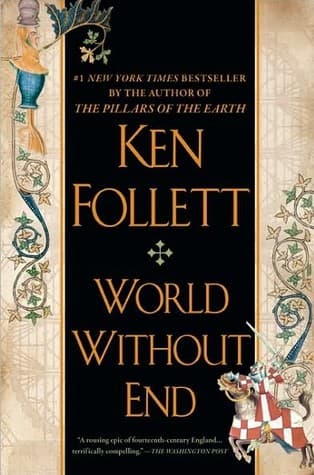
Ken Follett (2007)
Genre
Fantasy / Historical Fiction / Romance
Reading Time
25-30 hours
Key Themes
See below
Sign in to track this book
Amidst the Black Death, Kingsbridge citizens clash over medicine, commerce, and justice, two centuries after their ancestors built the great cathedral.
In 1327, in the forest outside Kingsbridge, eight-year-old Caris, her younger brother Ralph, their friend Merthin, and his sister Gwenda find a knight, Sir Thomas Langley, being ambushed and murdered by two men. Before dying, Sir Thomas gives a mysterious letter to Ralph, who hides it in a hollow tree. The children agree to keep the incident secret. Soon after, Ralph, known for his violent behavior, attacks Gwenda, but Merthin helps her. This event strengthens the bond between Merthin and Caris, while Ralph's cruelty hints at his future actions. The letter's contents stay hidden, but its existence will affect their lives for decades, connecting them to royal plots and England's future.
Years later, Merthin, a skilled carpenter, wants to be a master builder and improve Kingsbridge. He loves Caris, who, despite their feelings, wants a life of service and healing. Caris studies medicine with the town's wise woman, Mattie Wise, and later with Brother Godwyn, the sub-prior. This is frowned upon by the patriarchal society. Merthin works for a master builder, but his new ideas often face resistance from the conservative guild and the corrupt prior, Godwyn, who has replaced the kind Brother Godwyn. Meanwhile, Ralph, now a violent thug, continues to bother Gwenda and others, his ruthlessness growing, causing a deep split with Merthin.
Prior Godwyn, ambitious and selfish, constantly blocks Merthin's building projects, especially his plans for a new bridge. He prefers cheaper, less stable options for his own profit. Godwyn also manipulates Caris, pressuring her to become a nun, fearing her influence and new ideas, and hoping to separate her from Merthin. Ralph, wanting to improve his own standing, allies himself with Godwyn and the powerful Earl of Shiring, William Hamleigh, who is Prior Godwyn's uncle. Through betrayals and false accusations arranged by Ralph and Godwyn, Merthin is framed for theft and forced to leave Kingsbridge to avoid execution. He travels to Florence, Italy, a center of architectural innovation, to improve his skills.
After Merthin leaves, Caris is pressured into becoming a nun. She does so reluctantly, hoping to continue her medical work within the priory. She sets up a successful infirmary, challenging traditional, often ineffective, medical practices. However, her progressive methods and independent spirit earn her the dislike of the more conservative nuns and Prior Godwyn. As news of the Black Death spreads across Europe, Caris works to understand and fight the disease. She faces accusations of witchcraft and heresy for her scientific approach, but her dedication to healing the sick becomes most important as the plague reaches Kingsbridge, bringing much death and chaos.
The Black Death devastates Kingsbridge, killing many people, including monks, nuns, and Prior Godwyn. Caris works tirelessly, often alone, to care for the dying, using hygiene and quarantine measures that, while not fully understood, save some lives. Amidst the destruction, Merthin returns from Florence, a skilled and respected master builder, having learned advanced architectural techniques. He finds Kingsbridge in ruins, both physically and socially. His return brings hope, and he immediately begins planning to rebuild the town, especially the collapsing cathedral spire and the important bridge, using his new knowledge to create strong and beautiful structures.
Merthin, now an accomplished architect, takes on the large task of rebuilding Kingsbridge. He designs a new bridge and a taller, more elegant spire for the cathedral, facing resistance from conservative groups and financial problems. Caris, elected prioress after the plague, works with Merthin, using her administrative skills and medical knowledge to restore the town. Their love rekindles, but their positions in the church and society create new problems for their union. Meanwhile, Ralph, having survived the plague and risen through military ranks, becomes a powerful and ruthless knight, still fixated on Gwenda and determined to destroy Merthin, leading to more conflict.
The mysterious letter given to Ralph years ago finally reappears. It contains proof of a conspiracy involving the murder of King Edward II and his replacement by a look-alike, arranged by powerful nobles. Ralph, now Sir Ralph, gets the letter and tries to use it for his own gain, siding with those who benefit from the deception. Merthin and Caris become involved in the political plotting around the letter, realizing how important it is. They understand that exposing the truth could destabilize the kingdom but also bring justice. The letter becomes a dangerous item, sought by many, and its existence puts everyone involved in great danger, especially as Ralph uses it to gain influence and power.
Merthin's innovative spire design faces many problems, including sabotage attempts by his rivals and the constant threat of collapse. He continues, using advanced techniques learned in Italy, eventually completing a magnificent spire that becomes a symbol of Kingsbridge's strength and Merthin's skill. Caris, torn between her love for Merthin and her commitment to the priory and her medical work, decides to remain a nun. She believes she can do more good for the community in that role. This decision, though painful, allows her to continue her progressive medical practices and manage the priory well, serving the people of Kingsbridge in a way that marrying Merthin would prevent.
Ralph's ambition and cruelty eventually lead to his downfall. His involvement in the conspiracy about the king, his repeated violence, including the rape of Gwenda and other women, and his constant persecution of Merthin and Caris, finally catch up to him. The evidence from the Langley letter, combined with statements from his victims, including Gwenda and her son, Sam, whom Ralph fathered, leads to his arrest and trial. Despite his attempts to manipulate the legal system, justice is finally served. Ralph is executed for his many crimes, ending his terror and allowing the people of Kingsbridge, particularly Gwenda and her family, to find peace.
With Ralph's tyranny over, Kingsbridge enters a new time of prosperity and learning. Merthin, now a respected master builder, continues to innovate, designing and constructing new buildings that improve the townspeople's lives. Caris, as prioress, transforms the priory into a center of learning and healing, establishing a medical school and supporting scientific inquiry. Their partnership, though not a traditional marriage, creates a powerful force for progress. The novel ends with Kingsbridge doing well, showing the human spirit, the power of innovation, and the dedication of individuals like Merthin and Caris to building a better world, leaving a lasting impact.
The Protagonist
From an ambitious but naive youth, Merthin evolves into a world-renowned master builder who transforms Kingsbridge with his genius, overcoming immense personal and professional obstacles.
The Protagonist
Caris transforms from a free-spirited girl with a passion for healing into a powerful and respected Prioress, pioneering medical practices and leading her community through crisis.
The Antagonist
Ralph's character arc is one of escalating depravity and unchecked ambition, culminating in his violent downfall and execution.
The Supporting
Gwenda endures a life of hardship and abuse but finds strength in motherhood and ultimately achieves a measure of justice and peace.
The Antagonist
Godwyn's arc is defined by his relentless pursuit of power and wealth, which ultimately leads to his demise during the plague, a just end for his corrupt reign.
The Mentioned
His brief appearance sets the entire plot in motion, making him a catalyst for the story's major conflicts.
The Supporting
Mattie serves as a foundational mentor for Caris, passing on valuable medical knowledge before her natural passing.
The Supporting
Sam matures from a boy burdened by his father's legacy to a key figure in achieving justice for his mother and himself.
The Antagonist
William remains a consistently cruel and powerful figure, his influence gradually waning as the political landscape shifts.
The Supporting
Annet endures personal tragedy and hardship but finds enduring love and eventually a measure of stability.
The novel shows the conflict between new ideas and old ways. Merthin's architectural designs for the bridge and spire are often opposed by traditional guild masters and the corrupt Prior Godwyn. They prefer old methods and personal profit over public safety and progress. Similarly, Caris's scientific approach to medicine, focusing on hygiene and observation, meets suspicion and accusations of witchcraft from the church and superstitious townsfolk who rely on prayer and ineffective remedies. This theme is central to Kingsbridge's development, showing that societal advancement is often a difficult fight against resistance.
““The trouble with the world was that it was full of people who were confident in their ignorance.””
The search for justice, often slow and hard to get, is a main theme. Gwenda's lifelong effort to hold Ralph Fitzgerald accountable for his crimes is a central part of the story. It shows the difficulties the poor face in seeking justice against powerful people. The long-hidden secret of Sir Thomas Langley's murder and the royal conspiracy also highlight how hidden truths try to come out. Ralph's eventual downfall and execution and the exposure of the royal plot show that while justice may be slow, it can ultimately win, bringing moral order to a chaotic world.
““The law was a living thing, and it changed.””
The book celebrates how knowledge can change things, especially in architecture and medicine. Merthin's time in Florence exposes him to advanced building techniques that improve Kingsbridge's infrastructure. This proves that practical knowledge is better than just following tradition. Caris's dedication to observational medicine and hygiene, particularly during the Black Death, shows how scientific inquiry can save lives and improve public health, even when facing institutional resistance. Their combined efforts show that curiosity and a willingness to challenge old ideas are important for societal progress and survival.
““Knowledge was power. And power was dangerous.””
The lasting love between Merthin and Caris is the emotional center of the novel, but it is a love often tested by events, ambition, and societal rules. Both characters make personal sacrifices for their work and for Kingsbridge's well-being. Caris chooses to become a nun to pursue her medical work and lead the priory, knowing it means giving up a conventional life with Merthin. Their relationship becomes a strong partnership based on mutual respect and shared goals. This shows that love can appear in different forms beyond traditional marriage, often needing personal sacrifice for a greater good.
““Love was an action, a choice, not just a feeling.””
The Black Death is a major turning point, showing how natural disaster can affect society. The plague reduces Kingsbridge's population, breaks down social structures, and changes many characters' lives. It shows human vulnerability but also strength, as survivors must rebuild and adapt. Caris's hard work during the plague shows the importance of compassion and practical action when facing great tragedy. The catastrophe forces characters to face death, rethink priorities, and ultimately creates an opportunity for new leadership and innovation to appear.
““Death was a part of life, but this was different. This was a tidal wave of death.””
A hidden document revealing a royal conspiracy, driving much of the political intrigue.
The letter entrusted to Ralph by the dying Sir Thomas Langley is a classic MacGuffin, a plot device that drives much of the narrative. It contains explosive information about the murder of King Edward II and the existence of a replacement king. Its concealment and eventual reappearance fuel decades of political intrigue, putting characters like Merthin and Caris in danger and ultimately leading to the downfall of Ralph Fitzgerald. The letter represents the hidden truths and dangerous secrets that can shape the fate of nations and individuals.
Architectural projects symbolizing progress, ambition, and the town's fate.
Merthin's ambitious projects to build a new bridge and a magnificent spire for Kingsbridge Cathedral serve as powerful symbols and plot drivers. The bridge represents the town's connection to the outside world and its economic prosperity, while the spire embodies Merthin's architectural genius and the town's aspiration. The struggles to fund and construct these projects, facing resistance from traditionalists and sabotage, mirror the broader conflicts between progress and conservatism. Their eventual completion signifies the triumph of innovation and the resilience of Kingsbridge.
A historical catastrophe acting as a major turning point and catalyst for change.
The Black Death is not just a historical backdrop but a crucial plot device that reshapes the entire narrative. Its arrival in Kingsbridge causes immense death and social upheaval, removing many antagonists (like Prior Godwyn) and opening opportunities for protagonists like Caris (who becomes Prioress) and Merthin (who returns to rebuild). It acts as a reset button for many power structures, forcing characters to adapt, innovate, and confront their mortality. The plague highlights the fragility of human life and institutions, while also emphasizing the resilience and resourcefulness of those who survive.
Multiple, interconnected character journeys that influence each other's fates.
Follett employs interwoven character arcs, where the lives of Merthin, Caris, Ralph, and Gwenda are deeply intertwined from childhood. Their relationships, rivalries, and choices constantly impact one another's destinies. Ralph's cruelty directly affects Gwenda and Merthin, while Merthin and Caris's ambitions often clash with the established order. This device creates a rich tapestry of cause and effect, demonstrating how individual actions ripple through a community and how personal destinies are often inextricably linked, creating a complex and engaging narrative.
“Love makes fools of us all.”
— Gwen's reflection on her feelings for Merthin.
“The world was a dangerous place, and the only way to survive was to be cleverer than the others.”
— Caris's early realization about the harsh realities of Kingsbridge.
“Fear was a powerful weapon, and the Church knew how to wield it.”
— Merthin's observation on the power of the Church over the populace.
“It was impossible to make the world a better place without breaking some rules.”
— Godwyn's internal justification for his ambitious and often ruthless actions.
“To build something beautiful, you had to be willing to sacrifice.”
— Merthin's dedication to his architectural projects, often at personal cost.
“Knowledge was power, but it could also be a curse.”
— Caris's experience with her medical knowledge, which often put her at odds with authority.
“Even in the darkest times, the human spirit found a way to endure.”
— A general theme reflecting the resilience of the characters through plague and hardship.
“The future was not set in stone; it was made by the choices people made every day.”
— Characters often facing dilemmas that shape their destinies and the town's.
“There was no greater sin than to waste the gifts God had given you.”
— A recurring thought for characters like Caris who struggled against societal expectations.
“Money was a tool, but it could also be a master.”
— Reflecting on the influence of wealth and poverty on the lives of the characters.
“Sometimes, the greatest love was letting go.”
— Specific to relationships where characters make difficult decisions for the good of others.
“Justice was a luxury few could afford, and fewer still ever saw.”
— Characters frequently encountering corruption and a biased legal system.
“The greatest cathedrals were built not just with stone, but with faith and the sweat of men.”
— A reflection on the enduring legacy of Merthin's work and the collective effort.
Ready to see how well you understood this book? Take our interactive quiz with 10 questions.

Kenneth Martin Follett, is a British author of thrillers and historical novels who has sold more than 160 million copies of his works.







