Biography coming soon.

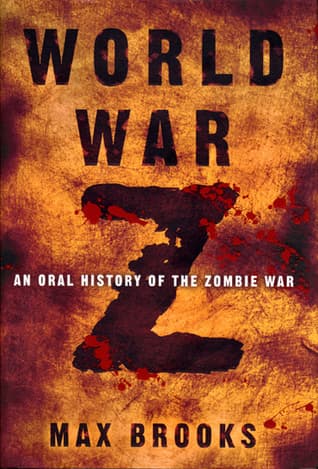
Max Brooks (2006)
Genre
Fantasy / Science Fiction
Reading Time
12 Minutes
Key Themes
See below
Sign in to track this book
Decades after a zombie apocalypse nearly wiped out humanity, an interviewer gathers harrowing firsthand accounts from survivors, revealing the truth behind the war and the human spirit that endured.
The story starts with an interview with Kwang Jingshu, a former doctor from Chongqing, China. He describes the first 'rabies-like' symptoms in a rural village, starting with a young boy, Patient Zero. The Chinese government quickly suppresses these cases, calling them a new flu strain to avoid social unrest and international attention. Jingshu details the government's strong censorship and misinformation campaign, which kept the world from understanding the real threat. This period of denial allowed the infection to spread, both in China and globally, through black markets and human movement, setting the stage for the worldwide pandemic.
As the infection spreads, initial government responses are mostly ineffective. Bad information, underestimating the threat, and using traditional military tactics lead to massive failures. Breckinridge 'Breck' Scott, a former intelligence operative, explains how the global economy collapses, driven by widespread panic, hoarding, and a desperate search for safety. During the 'Great Panic,' major cities fall, governments break down, and millions die, often from human violence and logistical failures more than direct zombie attacks. This time shows how fragile modern civilization is when it faces a new and deadly threat.
General Travis D'Ambrosia, a U.S. armed forces veteran, describes the Battle of Yonkers. This was a moment when the world's most advanced military forces, including the U.S. Army, fought zombie hordes in an open-field battle. Despite having much better technology, the military's tactics were completely wrong for fighting the undead. Their loud, high-caliber weapons attracted more zombies, and their armored vehicles were easily overwhelmed and stopped. The battle was a huge defeat for human forces, breaking morale and forcing a complete change in military strategy. It was a harsh lesson that traditional warfare was useless against the zombie threat.
Paul Redeker, a former South African intelligence officer, explains his 'Redeker Plan.' Realizing it was pointless to fight zombies directly, Redeker proposed sacrificing large parts of the population to create strong, zombie-free safe zones. This involved intentionally moving people into vulnerable areas to be bait or to delay the zombies, allowing important personnel and resources to be saved. While many found it morally wrong, the plan eventually saved humanity by creating secure strongholds and letting nations regroup and develop new strategies. Its use shows the extreme ethical problems faced during the war and the terrible choices needed for survival.
Various interviews show life inside the safe zones. Todd Wainio, a former infantryman, describes the tough conditions in the U.S. 'Rocky Mountain Redoubt,' where survivors lived under strict military rule, facing constant threats of zombie attacks and internal conflict. Other stories detail the cleverness and strength needed to rebuild basic services, grow food, and stay sane in isolated, often crowded, and resource-scarce places. These parts highlight the mental toll of long isolation and the constant watchfulness needed, showing humanity's ability to adapt and build community even in the face of terrible hardship.
Admiral Xu Zhicai of the Chinese Navy describes the move to living on the ocean. Knowing zombies could not swim and the relative safety of the sea, many naval forces, including nuclear submarines, became important havens for survivors and mobile command centers. Xu recounts the difficulties of keeping morale up, managing resources, and adjusting to long periods of isolation underwater. These submarines became key for gathering intelligence, scouting, and eventually, for launching coordinated attacks against zombies along the coast. This adaptation shows humanity's cleverness in using the enemy's weaknesses and finding new ways to survive.
Interviews with military personnel and civilian inventors detail the creation of new anti-zombie tactics and weapons. The 'Lopec' (Lightweight Ordnance for Pest Extermination and Control), a special pickaxe, becomes the standard close-quarters combat tool because it works well against zombie brains and makes little noise. Soldiers learn to fight in small, coordinated groups, focusing on headshots and silent kills. Quiet vehicles, like bicycles and modified electric vehicles, are emphasized. These accounts show the difficult learning process and the eventual mastery of special techniques needed to turn the tide against the seemingly overwhelming zombie threat.
Many survivors recount the deep psychological harm caused by the war. Jesika Hendricks, a former child soldier, describes losing her innocence and the harsh realities of combat at a young age. Other accounts detail 'Phalanx Syndrome,' a form of PTSD where survivors are haunted by war memories, often experiencing extreme alertness and difficulty returning to normal society. The vast scale of death and destruction, the loss of loved ones, and the constant threat of annihilation leave lasting marks on the human mind. This section shows that victory came at a huge and lasting human cost, far beyond the physical deaths.
After the tide turns, humanity faces the hard task of taking back territory from the zombie hordes. Accounts from 'cleaners' and 'reconstructors' detail the dangerous and hard process of clearing cities, often involving burning whole blocks, and slowly rebuilding infrastructure. Challenges include dealing with remaining zombie threats, environmental pollution, and the mental impact of working in desolate, corpse-filled areas. This phase of the war emphasizes the long-term effort and strength needed not just to defeat the enemy, but to heal the planet and rebuild civilization from its ruins, piece by painstaking piece.
The final interviews explore the global and social changes after the war. Nations like the United States have moved their capitals and changed their governments. Russia undergoes a major spiritual and political transformation. The global population is greatly reduced, leading to a rethinking of resource management and environmental practices. There is a renewed sense of global cooperation, but also new forms of nationalism and isolationism. The world is permanently changed, shaped by the memory of the war and the lessons learned about human nature, societal weakness, and the importance of working together against global threats.
The Protagonist
Though unseen, his journey reflects humanity's collective healing as he pieces together the fragmented narrative of survival and recovery.
The Supporting
From a silenced witness to a voice of truth, his account exposes the critical initial failures that led to the global pandemic.
The Supporting
Initially a profiteer of chaos, his testimony later reflects a degree of remorse for his wartime actions.
The Supporting
From leading a monumental failure, he evolved into a key figure in developing effective anti-zombie warfare, embodying military adaptation.
The Supporting
His plan, born of brutal logic, transformed from a desperate measure into a cornerstone of human survival.
The Supporting
From a terrified recruit, he became a hardened veteran, embodying the common soldier's resilience and evolution in combat.
The Supporting
Forced into combat as a child, she embodies the tragic loss of innocence and the enduring trauma of the war.
The Supporting
From a reclusive hikikomori, he transforms into a valuable scout and survivor, finding purpose in the apocalypse.
The Supporting
As a detached observer of global collapse, his perspective offers insight into the geopolitical failures and eventual regrouping of nations.
The Supporting
Witnessing Russia's brutal transformation, she embodies the nation's spiritual and strategic metamorphosis.
The book shows how quickly modern civilization can fall apart under extreme pressure. The systems of government, economy, and social order are surprisingly weak against a threat like the zombie plague. The initial global panic, the collapse of infrastructure, and widespread societal breakdown reveal that our advanced societies rest on a delicate balance, easily broken by a truly devastating crisis. This theme makes the reader consider what fundamental elements hold society together and how quickly they can unravel.
“Humanity is not a species that adapts to the environment. It is a species that adapts the environment to itself. When that ability is removed, we are naked, defenseless, and utterly lost.”
Despite focusing on zombies, the book is about human nature—its strengths and weaknesses—when facing an apocalypse. It explores the range of human behavior, from self-sacrifice and bravery to greed, fear, and cruelty. The initial denial and cover-ups by governments, the profiteering during the panic, and moral compromises like the Redeker Plan all point to human flaws. Conversely, the resilience, cleverness, and ability to adapt and cooperate show humanity's lasting spirit and will to survive. The book argues that understanding this 'human factor' is vital for learning from history.
“By excluding the human factor, aren't we risking the kind of personal detachment from history that may, heaven forbid, lead us one day to repeat it? And in the end, isn't the human factor the only true difference between us and the enemy we now refer to as 'the living dead'?”
A main theme is humanity's ability to adapt and invent new solutions when facing a threat to its existence. Initial failures, like the Battle of Yonkers, force a difficult but necessary re-evaluation of tactics, technology, and social structures. From developing new weapons like the Lopec and quiet vehicles to creating fortified safe zones and new forms of government, humanity constantly learns and changes. This theme highlights that survival does not depend on brute force or existing technology, but on flexibility, creative problem-solving, and a willingness to abandon old ideas for new, effective ones.
“The greatest lesson of the war was that the old world had to die for the new one to be born.”
The story consistently explores the huge and often terrible cost of humanity's survival. This includes not just physical casualties but also moral compromises, psychological harm, and irreversible societal changes. The Redeker Plan, child soldiers, the 'Great Cleansing' in Russia, and widespread PTSD ('Phalanx Syndrome') all show that victory came at a terrible price. The book forces readers to confront the ethical dilemmas of survival and the lasting scars left on individuals and nations, suggesting that even a 'victory' can be deeply bittersweet and leave a permanent mark on everyone.
“There are some wounds that never heal, some scars that never fade. It's called the human condition.”
The book highlights the dangerous role of misinformation and propaganda early in the war. The Chinese government's cover-up of Patient Zero, the media's downplaying of the threat, and the spread of fake cures all show how official stories can hinder effective responses and worsen a crisis. Conversely, the narrator's goal to compile an 'oral history' emphasizes the importance of truth and accurate historical records, even when painful, to learn from past mistakes and prevent future disasters. This theme highlights the critical role of transparency and honest communication.
“Truth, like all other natural resources, is finite. It must be mined, refined, and disseminated.”
First-person accounts from diverse global perspectives.
The entire novel is presented as a collection of first-person interviews conducted by a UN Postwar Commission agent. This format allows for a mosaic of perspectives, showcasing the global impact of the zombie war from various social, economic, and national viewpoints. It creates a sense of authenticity and immediacy, making the reader feel like a direct recipient of these testimonies. This device also allows Brooks to explore different facets of the conflict—political, military, social, psychological—without a single, omniscient narrator, emphasizing the subjective and fragmented nature of historical truth.
The interviewer's presence is implied but never explicitly detailed.
The interviewer, the 'Max Brooks' character, is never directly seen or heard, only implied through his questions and the structure of the interviews. This allows the reader to project themselves into the role of the listener, enhancing immersion. It also reinforces the idea that the story is not about the chronicler, but about the collective experiences of the survivors. The narrator serves as a silent guide, allowing the diverse voices of the war to speak for themselves, lending greater authenticity and impact to their individual stories.
Early interviews hint at later global catastrophes.
Throughout the early interviews, particularly those from China, there are subtle hints and suppressed reports of a rapidly spreading, unusual illness. These early, dismissed warnings serve as foreshadowing for the global pandemic that is to come. This device builds tension and highlights the tragic consequences of ignorance, denial, and political cover-ups. It underscores the idea that the disaster was not entirely unforeseen, but rather ignored, making the subsequent unfolding of events more poignant and cautionary.
A specialized pickaxe symbolizing humanity's tactical adaptation.
The Lopec (Lightweight Ordnance for Pest Extermination and Control) is a fictional, specialized pickaxe that becomes the standard close-quarters combat weapon against zombies. This device symbolizes humanity's painful but necessary adaptation in warfare. It represents the rejection of conventional, noisy, and inefficient firearms in favor of a silent, effective tool designed specifically for the unique enemy. The Lopec becomes an iconic representation of the shift from technological superiority to practical, specialized combat, marking a turning point in the war and a testament to human ingenuity.
Ready to see how well you understood this book? Take our interactive quiz with 10 questions.
Biography coming soon.







