“Perhaps that's what books are, a way to have a conversation with someone you'll never meet.”
— Rachel reflects on the nature of books and human connection.

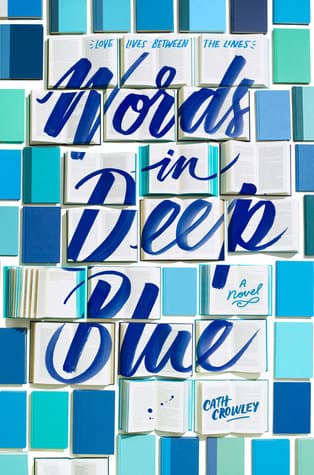
Cath Crowley (2016)
Genre
Young Adult / Romance
Reading Time
273 min
Key Themes
See below
Sign in to track this book
In a beloved bookstore filled with letters to strangers and lost loves, a grieving Rachel returns to find friendship, new connections, and comfort in shared words, linking her past and future to the enigmatic Henry.
Rachel Sweetie returns to Gracetown after a year away, following her older brother Cal's sudden death. She immediately goes to Howling Books, the used bookstore owned by the family of her former best friend, Henry Jones. The bookstore means a lot to Rachel and Henry, who spent much of their childhood there, leaving notes in books. Rachel still grieves Cal and feels disconnected from her family. She finds comfort in the smell of old paper and the chance of finding hidden messages from others, or even Cal, in the books.
Rachel's reunion with Henry Jones is strained. A year earlier, before she moved, Rachel told Henry she loved him, but he didn't feel the same. Henry, still dealing with his breakup from his long-term girlfriend, Amy, also struggles with his parents' decision to close Howling Books. He doesn't fully grasp Rachel's grief, thinking her sadness is mainly about their broken friendship and the bookstore's future. Their interactions are tense; both hesitate to discuss the past or their current feelings, preferring to communicate through the silent language of the books.
Henry is upset by his parents' decision to close Howling Books. The bookstore is more than a business; it is full of his family's history, his memories, and the 'Letter Library' — a system where customers write notes to strangers, loved ones, or the books themselves. Henry feels a strong duty to save the bookstore for himself and the community. He struggles to understand his parents' reasons, especially his father's sudden distance, and feels increasingly alone in his efforts to save what he considers a vital part of his world.
Rachel gets a job at Howling Books, which makes Henry uncomfortable at first. Working there lets her explore the 'Letter Library,' a system she and Henry helped create. She carefully reads the letters, looking for connection and understanding in their words, and hoping to find a message from Cal. This immersion into the hidden lives of books and readers helps her cope with grief, offering glimpses into other people's joys, sorrows, and hopes. Her presence in the bookstore, despite the ongoing tension with Henry, subtly changes the atmosphere, bringing a quiet energy to the impending closure.
Rachel is haunted by her last conversation with Cal before he died. She had been angry with him, and her final words were harsh. This memory fuels her guilt and deepens her grief, making it hard to move on. She constantly rethinks the conversation, wishing she could take back her words and have one last chance to express her love. This internal struggle blocks her emotional healing and her ability to fully reconnect with her family and friends, including Henry, who does not know the specific nature of her torment about Cal's death.
Henry is still affected by his breakup with Amy, who now works at the rival chain bookstore, The Big Store. He often sees her and struggles with jealousy and regret, making it hard for him to be open to new possibilities, including rekindling his friendship with Rachel. Meanwhile, Rachel, through her work at Howling Books, starts to connect with regular customers, like Mr. Golding and George. These interactions give her a sense of purpose and community outside her strained relationship with Henry and her overwhelming grief.
Henry eventually learns the real reason his parents are closing Howling Books: his father has cancer. This news shatters Henry's previous assumptions and explains his father's withdrawn behavior and his mother's quiet resolve. The discovery forces Henry to face life's fragility and the importance of family, shifting his focus from just the bookstore to understanding his parents' deeper struggles. This adds another layer of grief and responsibility to Henry's already burdened shoulders, pushing him to support his family in new ways.
As they work together in the closing bookstore, Rachel and Henry start to communicate in their old way: leaving notes for each other in books. These hidden messages, often responses to letters left by others in the 'Letter Library,' allow them to express feelings and thoughts they cannot say directly. This shared language of words and paper slowly breaks down the wall between them, reminding them of their deep, shared history and unique bond. It is a slow, tender process of reconnection, fueled by nostalgia and the quiet understanding only they share.
News of Howling Books' impending closure spreads, and the community responds with support and affection. Regular customers, local artists, and former employees organize events to celebrate the bookstore's history. This collective act of remembrance shows the deep impact Howling Books has had on many lives, highlighting its role as a cultural and emotional center. Rachel and Henry, seeing this community outpouring, begin to understand the wider meaning of the bookstore they have always known, and the importance of its 'Letter Library' as a collection of shared human experience.
Overwhelmed by guilt and grief, Rachel finally breaks down and tells Henry about her last conversation with Cal. She reveals the harsh words she spoke, expressing deep regret and the belief that her anger might have contributed to his decision to go surfing that day, leading to his death. Henry listens with compassion, offering comfort and reassurance. This honest confession marks a turning point for Rachel, allowing her to voice her deepest pain and begin to forgive herself, helped by Henry's steady support and understanding.
Inspired by the community's passion and his desire to keep the spirit of Howling Books alive, Henry makes a plan. Instead of letting the bookstore disappear, he decides to turn it into a mobile bookstore, using a refurbished van. This solution allows the 'Letter Library' and the unique experience of Howling Books to continue, though in a different form. It shows Henry's growth and his commitment to carrying on his family's legacy while adapting to new circumstances, ensuring that the magic of shared words will last in Gracetown and beyond.
With the bookstore's future secure in its new mobile form, and Rachel having released her guilt, their relationship deepens. Henry expresses his true feelings for Rachel, acknowledging his past mistakes and the depth of his affection. Rachel, now able to grieve Cal more openly and forgive herself, returns his feelings. They share a tender moment, symbolizing their renewed connection and the promise of a future together. The ending is hopeful, suggesting that while grief and change are inevitable, love, friendship, and the power of words can help navigate life's complexities and lead to new, meaningful beginnings.
The Protagonist
Rachel moves from profound, isolating grief and guilt to self-forgiveness and a renewed capacity for love and connection, finding her voice and place in the world.
The Protagonist
Henry transforms from a somewhat passive and heartbroken individual, burdened by the past, to a proactive and emotionally open young man who takes ownership of his family's legacy and his feelings for Rachel.
The Supporting/Mentioned
Cal's arc is entirely in memory; he serves as the emotional anchor for Rachel's journey of grief and forgiveness.
The Supporting
Amy's arc is less about personal development and more about serving as a catalyst for Henry's emotional journey.
The Supporting
George remains a consistent source of wisdom and support, his arc serving to guide Rachel and reinforce the themes of connection and communication.
The Supporting
They move from being a source of conflict for Henry to revealing their vulnerabilities, fostering deeper family understanding and unity.
The novel explores grief, especially through Rachel's experience with her brother Cal's death. It covers the guilt, anger, and deep sadness that come with loss, and the isolation it can cause. Rachel's journey shows that healing is not forgetting, but learning to live with absence and honoring memory while moving forward. Her confession to Henry about her last conversation with Cal (plot_summary 10) is a key moment in her healing, showing how sharing pain helps recovery.
“Grief is a house where the chairs have moved. The windows are different. The light falls in a way it never used to.”
Words, written and spoken, are central to the novel. Howling Books shows this with its 'Letter Library' where readers leave notes between pages. This practice lets characters like Rachel connect with strangers' experiences, find comfort, and even communicate with Henry when direct talk is too hard (plot_summary 8). The story highlights how words preserve memories, bridge distances, express unspoken feelings, and help healing and understanding, showing their lasting impact on human connection.
“Sometimes I think the words in books are more real than anything else.”
The novel explores different kinds of love: the strong bond between siblings (Rachel and Cal), the lasting nature of childhood friendship (Rachel and Henry), and the start of romantic love. It covers the complexities of these relationships, including unspoken feelings, fear of rejection, and the challenges of rebuilding trust after a break. The slow, tender rekindling of Rachel and Henry's connection, often helped by their shared history with books and notes, shows how love can last through hardship and grief, offering comfort and a path to a shared future (plot_summary 12).
“He didn't just love books. He loved the spaces between the words, the silences, the things that were left unsaid.”
The closing of Howling Books drives change, forcing characters, especially Henry, to face the impermanence of things they value. Initial resistance to change gives way to acceptance and, finally, innovation. Henry's decision to turn Howling Books into a mobile bookstore (plot_summary 11) symbolizes that while physical forms may change, the essence of something beloved can endure through adaptation. This theme also applies to personal growth, as Rachel learns to adapt to life without Cal and Henry adapts to a future without the traditional bookstore.
“The world keeps moving, even when you don't want it to. Even when you're stuck.”
A collection of notes and letters left by readers within the pages of books at Howling Books.
The Letter Library is a central plot device, serving as a unique form of communication and a repository of human experience. It allows characters like Rachel to process grief by reading others' stories and provides a safe, indirect way for Rachel and Henry to reconnect and express feelings they can't articulate face-to-face (plot_summary 8). It also symbolizes the interconnectedness of readers and the enduring power of words to transcend time and personal boundaries. The library's existence is a key reason for the community's attachment to Howling Books and Henry's desire to preserve its essence.
The impending closure of the beloved used bookstore.
The threat of Howling Books closing is the primary external conflict driving much of the narrative. It forces Henry to confront his responsibilities and future, and it brings Rachel back into his orbit. The bookstore's closure symbolizes the end of an era and the challenges of preserving traditions in a changing world. It also acts as a catalyst for community engagement (plot_summary 9) and ultimately leads to Henry's innovative solution of the mobile bookstore, representing adaptation and the continuation of legacy rather than complete loss.
Rachel's final, angry exchange with her brother Cal before his death.
The 'last conversation' between Rachel and Cal is a powerful internal plot device, fueling Rachel's profound guilt and grief throughout the story. It is a secret she carries, preventing her from fully healing or connecting with others. The memory of her harsh words (plot_summary 5) serves as a constant emotional barrier. Its eventual revelation to Henry (plot_summary 10) is a crucial turning point, allowing Rachel to begin the process of self-forgiveness and opening the door for deeper emotional intimacy with Henry.
“Perhaps that's what books are, a way to have a conversation with someone you'll never meet.”
— Rachel reflects on the nature of books and human connection.
“Every book has a soul. The soul of the person who wrote it and the soul of those who read it and dream about it.”
— Henry, Rachel's uncle, shares his philosophy about books.
“You can't just fall in love with a person. You have to fall in love with their books.”
— Rachel's perspective on what it means to truly love someone, especially in a bookstore setting.
“Books are a way to find your own voice, to find your own way of seeing the world.”
— A general reflection on the impact of reading.
“Sometimes, the hardest part of letting go is realizing you were holding onto something that wasn't there.”
— Rachel grapples with past relationships and expectations.
“The world is full of books, and sometimes, that's enough.”
— Rachel finds solace and comfort in the presence of books.
“There are some people you meet, and you just know you're meant to know them. Even if you don't know why, or how, or what will happen next.”
— Rachel reflects on her connection with Henry and the people around her.
“It's a strange thing, isn't it? To spend so much time with someone, and then suddenly, they're just... gone.”
— Rachel's thoughts after the death of her brother, Cal.
“Maybe love isn't about grand gestures. Maybe it's about finding the small, quiet moments that make life worth living.”
— Rachel's evolving understanding of love.
“The best kind of letters are the ones you write to yourself, in a book, and then forget about until you find them again.”
— Rachel discovers old letters she wrote to herself in library books.
“You can't live your life waiting for someone else to make you happy. You have to do that for yourself.”
— Rachel's journey of self-reliance and finding happiness.
“Sometimes you have to break things to make them better.”
— Rachel dealing with the aftermath of emotional turmoil.
“A book is never just a book. It's a memory, a conversation, a hope.”
— A recurring theme about the deeper meaning of books.
“The quietest people often have the loudest thoughts.”
— Reflecting on the inner world of characters like Rachel.
Ready to see how well you understood this book? Take our interactive quiz with 10 questions.