“The past is never dead. It's not even past.”
— Spoken by Paul Brenner, reflecting on the enduring impact of past events.

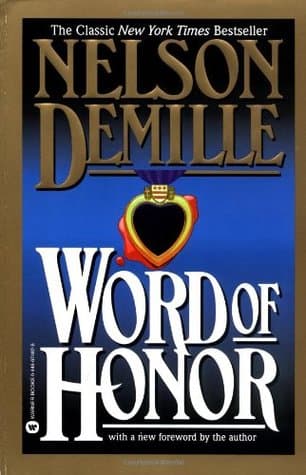
Nelson DeMille (1985)
Genre
Thriller / Historical Fiction / Mystery
Reading Time
1470 min
Key Themes
See below
Sign in to track this book
A respected executive's life falls apart when a secret Vietnam War atrocity, long buried, resurfaces, threatening to expose his past and destroy everything he values.
Ben Tyson, a successful corporate executive and respected family man, receives a subpoena from Major Frank Crozier of the U.S. Army Criminal Investigation Division. The summons concerns an incident during his Vietnam tour in 1968, specifically the alleged massacre of Vietnamese villagers at Son Tay. This event, which Tyson and his men swore to keep secret for decades, now threatens his carefully built life. Tyson is initially dismissive, believing the past is buried, but Crozier makes it clear the Army is serious about reopening the case, prompted by new evidence and public interest. This sudden return to his traumatic past immediately causes Ben anxiety.
As Ben prepares for his testimony, he must confront suppressed memories of his time as a lieutenant in Vietnam. The incident at Son Tay involved his platoon, the 'Tiger Force,' and the killing of unarmed villagers. He recalls the rising tension, fear, and dehumanization that led to the massacre. He also remembers the immediate aftermath: the pact among the surviving soldiers to never speak of what happened, driven by self-preservation and shared trauma. These fragmented, painful memories begin to resurface, challenging his current identity and forcing him to reconcile the man he is with the young, desperate soldier he once was. The weight of this secret affects his interactions and inner turmoil.
The military court proceedings begin, and Ben Tyson faces intense scrutiny. The prosecution, led by Colonel John Nelson, presents a damning picture of Tyson and his men, with evidence and witness testimonies suggesting a premeditated act of brutality. Ben's defense is handled by Major Crozier, who, despite summoning him, seems genuinely interested in the truth. The court becomes a place where Ben's past actions are dissected and judged. The pressure on him is immense, from the legal proceedings and the media frenzy. He struggles to explain the complex circumstances of war, where morality often blurs, making his defense difficult.
Driven by the need to understand what truly happened and to strengthen his defense, Ben begins to find his former platoon members, the 'Tiger Force.' His journey takes him to various parts of the country, where he meets men who have dealt with their shared trauma in different ways. Some are haunted and broken, others defiant, and a few have tried to erase their past. Each reunion brings back many memories, some conflicting, some supporting, but all showing the lasting impact of the Son Tay incident. These encounters are emotional, forcing Ben to confront the varied perspectives and lingering guilt among his former comrades, revealing the fractured legacy of their shared secret.
Ben discovers that Catherine Farrell, a determined journalist investigating the Son Tay massacre independently, has important and potentially damaging evidence. Catherine, whose own brother was killed in Vietnam, seeks truth and justice. She initially views Ben with suspicion, seeing him as another soldier avoiding accountability. However, as they interact, a complex relationship forms, marked by tension and growing mutual respect. Catherine's investigation has uncovered details that could either condemn Ben or clear him, placing her in a position to influence the trial's outcome and reveal the full scope of the Son Tay tragedy.
Ben's seemingly perfect family life begins to collapse under the accusations. His daughter, Susan, who admires her father, is especially devastated and confused by the revelations. The public scrutiny and graphic details from the trial challenge her view of Ben as an honorable, moral man. She struggles to reconcile the loving father she knows with the accused war criminal shown in the media. Her questions and doubts, though not always spoken, add another layer of emotional pain for Ben, forcing him to confront the impact of his past on those he loves most. The strain on their relationship becomes clear.
As the trial continues, Ben suspects ulterior motives and hidden agendas are at play, beyond a simple pursuit of justice for the Son Tay massacre. He uncovers evidence suggesting that powerful individuals or factions within the military or government want to use his trial for political gain, possibly to discredit parts of the military or rewrite the Vietnam War narrative. This realization adds paranoia and danger to his situation, as he understands he is fighting not just for his freedom, but against a more hidden enemy. The truth of Son Tay becomes a pawn in a larger game.
During the trial, testimonies from various witnesses, including former 'Tiger Force' members and Vietnamese survivors, present a confusing and often contradictory picture of the Son Tay massacre. Some soldiers recount acts of brutality, while others minimize their involvement or claim to have been following orders. The Vietnamese witnesses, scarred by the events, provide harrowing accounts of loss and violence. These conflicting narratives show how unreliable memory can be, especially under extreme stress and trauma, and how difficult it is to reconstruct a single, objective truth from such a chaotic event. Ben struggles to piece together the definitive sequence of events amidst the fog of war and conflicting recollections.
Working together, Ben and Catherine investigate further, assembling fragmented reports, old photographs, and declassified documents. Their persistent search leads them to a critical piece of evidence—a hidden report or an overlooked detail—that fundamentally changes the understanding of what happened at Son Tay. This discovery reveals crucial context or a previously unknown command decision that significantly impacts Ben's responsibility and the overall narrative of the massacre. The truth is more complex and nuanced than initially presented, suggesting a deeper conspiracy or a more significant failure of command rather than just the actions of a few rogue soldiers.
The military court delivers its verdict, heavily influenced by the new evidence and Ben and Catherine's combined efforts. Regardless of the legal outcome—whether full exoneration, conviction, or a mixed ruling—Ben must deal with the deep personal consequences of the trial. His life, family, and career are irrevocably changed. He must confront the lasting scars of Vietnam, the burden of his past, and the public's perception of him. The ending leaves him with a sense of both resolution and lingering trauma, showing the impossibility of truly escaping the past and the complex nature of honor and justice after war. His relationship with Catherine also finds a new balance.
The Protagonist
Ben transforms from a man in denial of his past into one who actively confronts and seeks to understand the truth, ultimately finding a complex form of redemption and self-acceptance.
The Supporting
Catherine evolves from a detached truth-seeker to a more empathetic figure, personally invested in Ben's story and the broader implications of the war's legacy.
The Supporting
Crozier maintains his commitment to justice, but his understanding of the 'truth' becomes more nuanced as he uncovers the complexities of the Son Tay incident.
The Antagonist
Nelson remains steadfast in his prosecutorial role, representing the unyielding arm of military justice.
The Supporting
Susan's character arc involves a painful loss of innocence and a difficult journey toward understanding the complexities of her father's past.
The Supporting
Nash's arc is one of continuing struggle with his past, showing the enduring psychological damage of war.
The Supporting
Phelan's arc illustrates an attempt at spiritual redemption and coping with past sins through faith.
The Mentioned
N/A (Deceased character, influences another's arc)
The novel explores how past events, especially traumatic ones like the Son Tay massacre, continue to affect individuals decades later. Ben Tyson's present life is shattered by the return of his Vietnam War experiences, showing that one cannot truly escape history. The lingering guilt, the silence, and the psychological scars affect Ben, his former comrades, and his family, illustrating how unresolved trauma can fester and eventually demand confrontation. The entire plot is driven by the past catching up.
““The past wasn’t dead. It wasn’t even past.””
A central theme is the elusive nature of truth, especially in war and with suppressed memories. The novel shows how individual perceptions, trauma, and self-preservation can distort or selectively recall events. The conflicting testimonies from former soldiers and Vietnamese villagers at the trial highlight the difficulty of establishing an objective reality. Ben Tyson's own struggle to remember and reconcile his actions further emphasizes that 'truth' is often subjective and multi-faceted, influenced by personal experience, political agendas, and time. The media's portrayal also shapes public perception, which often differs from the complex reality.
““There were a dozen truths about Son Tay, and none of them were the whole truth.””
The novel examines the complex definitions of honor and duty, particularly in military service and its aftermath. Ben Tyson's personal sense of honor is challenged by the accusations, forcing him to re-evaluate his actions in Vietnam and the 'code of silence' he kept. The story questions what true honor involves: is it loyalty to comrades, following orders, or moral integrity even under extreme pressure? The military court itself tries to uphold duty and justice, but the narrative often reveals the moral ambiguities in wartime decisions and the subsequent struggle to define honorable conduct.
““What was honor in a place where men did dishonorable things just to survive?””
Nelson DeMille clearly shows the dehumanizing and morally damaging effects of war, specifically the Vietnam War. The Son Tay massacre is presented not as an isolated incident but as a tragic result of the psychological toll, fear, and brutality inherent in combat. The novel explores how soldiers are forever changed by their experiences, carrying physical and emotional scars for decades. The aftermath of war extends beyond the battlefield, affecting families, society, and the national psyche, demonstrating the long-term struggle for veterans to reintegrate and for a nation to come to terms with its past actions.
““War was a furnace that forged men into something new, something often broken.””
Characters' recollections of the past are fragmented and conflicting.
The novel heavily utilizes the unreliable nature of memory, particularly in the context of extreme trauma. Ben Tyson's own recollections of the Son Tay massacre are initially suppressed and fragmented, requiring him to piece together the events. The conflicting testimonies of his former platoon members and other witnesses further highlight how memory can be selective, distorted, or colored by guilt, self-preservation, and the passage of time. This device creates suspense and complexity, forcing both Ben and the reader to question what truly happened and to discern the truth amidst multiple, often contradictory, accounts.
The military trial serves as the central framework for unraveling the mystery.
The structure of a military court-martial provides the primary framework for the narrative, acting as a powerful engine for plot progression. The trial allows for the systematic introduction of evidence, witness testimonies, and legal arguments, which gradually reveal the layers of the Son Tay mystery. It creates inherent tension and stakes, as Ben's freedom and reputation hang in the balance. The courtroom setting also enables the exploration of legal and moral questions surrounding wartime conduct and accountability, allowing for a public dissection of private trauma and a formal pursuit of justice.
The elusive and complex 'truth' about the massacre drives the entire plot.
While not a physical object, the 'truth' regarding the Son Tay massacre functions as a central MacGuffin. It is the driving force behind Ben Tyson's journey, Catherine Farrell's investigation, and the entire military court proceeding. The specific details, motivations, and culpability surrounding the event are initially unknown or deliberately obscured, creating a mystery that propels the characters forward. The pursuit of this elusive truth provides the narrative's primary goal, even as the characters discover that the 'truth' itself is far more complex and nuanced than a simple, singular fact.
Interspersed memories of Vietnam provide crucial context.
The narrative frequently employs flashbacks and Ben Tyson's internal recollections of his time in Vietnam. These glimpses into the past are not always linear or complete, reflecting the fragmented nature of trauma. They serve to gradually reveal the events leading up to and during the Son Tay massacre, providing crucial context for Ben's present predicament and the moral dilemmas he faced as a young lieutenant. This device allows the author to build suspense, deepen character motivation, and juxtapose Ben's current life with the brutal realities of his past, enriching the reader's understanding of his internal conflict.
“The past is never dead. It's not even past.”
— Spoken by Paul Brenner, reflecting on the enduring impact of past events.
“There are no secrets that time does not reveal.”
— A general philosophical observation made during the investigation.
“Sometimes the truth is too horrible to be believed, and sometimes the lie is too comforting to be denied.”
— Brenner musing on human nature and the difficulty of confronting harsh realities.
“The world is not run by saints, but by men who are willing to do what saints won't.”
— A cynical but pragmatic view on power and governance.
“Every man has his price, and every woman has her weakness.”
— A character's jaded perspective on human vulnerability.
“War doesn't determine who is right. War determines who is left.”
— A poignant reflection on the destructive nature and ultimate futility of conflict.
“The more you know, the more you realize you don't know.”
— Brenner's experience as an investigator deepens his understanding of complexity.
“Patriotism is the last refuge of a scoundrel, but it’s also the first refuge of a hero.”
— A nuanced view on patriotism, acknowledging its dual potential.
“It’s not paranoia if they really are out to get you.”
— A dark humorous line reflecting the high-stakes environment of the thriller.
“History is written by the victors, but it’s remembered by the victims.”
— Highlighting the difference between official narratives and personal suffering.
“The greatest trick the devil ever pulled was convincing the world he didn't exist.”
— Used to describe the insidious nature of hidden evils and conspiracies.
“Sometimes the right thing to do is the hardest thing to do.”
— A moral dilemma faced by a character, emphasizing the difficulty of ethical choices.
“A good lie needs a bit of truth to make it believable.”
— An observation on the art of deception and manipulation.
“The only thing necessary for the triumph of evil is for good men to do nothing.”
— A call to action, or a lament, regarding the consequences of inaction.
Ready to see how well you understood this book? Take our interactive quiz with 10 questions.
Biography coming soon.







