“That's the thing about a spiral. No matter how tightly you circle, you're always heading to the same spot.”
— Jules reflects on the cyclical nature of life in the silo.

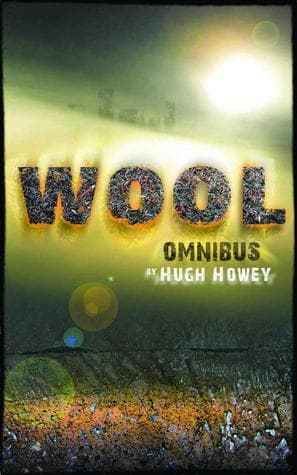
Hugh Howey (2012)
Genre
Fantasy / Science Fiction / Young Adult
Reading Time
10-12 hours
Key Themes
See below
Sign in to track this book
In a post-apocalyptic world where humanity lives in a vast underground silo, a sheriff's quest to understand why her loved ones were sent to their deaths outside uncovers a conspiracy that could shatter their last refuge.
The story starts in Silo 18 with Sheriff Holston's decision to go outside and 'clean' the external sensors. This is a death sentence for anyone wanting to leave the silo. His wife, Allison, had recently gone out and died, believing the world outside was not as shown on the cafeteria screens. Holston's cleaning is a public ritual, ending with his death. After he leaves, Mayor Jahns and Deputy Marnes go to the Mechanical level to interview a candidate for the new Sheriff: Juliette Nichols. Juliette, a skilled mechanic, is hesitant but accepts the job, surprising some in the Judicial department, especially Bernard Holland.
As the new Sheriff, Juliette investigates the reasons behind Holston's decision to go outside. She finds inconsistencies in the records and discovers Holston had been investigating a hidden room and a forbidden book about the silo's origins. Her questions are met with resistance from Judicial, particularly Bernard, who tries to undermine her authority. Juliette learns of a secret tunnel connecting the Mechanical level to the outside, known only to a few. Her search for the truth puts her against the established order and makes her a target for those who want to maintain the status quo and the lies about the outside world.
During their return from the Mechanical level after appointing Juliette, Mayor Jahns and Deputy Marnes stop to eat. Their food and drink have been poisoned. Jahns dies quickly, while Marnes, though very ill, gives a final, cryptic message to Juliette about 'the bad guys' before dying. This double assassination leaves Juliette without her main supporters and isolates her further within the silo's power structure. The timing of their deaths, soon after Juliette's appointment, raises suspicions and points to a deeper conspiracy, designed to consolidate power and silence anyone who might challenge the narrative.
Juliette's continued investigation into Holston's findings and the deaths of Jahns and Marnes leads her to discover more about the IT department's surveillance and control over the silo. Bernard, now acting Head of IT, manipulates events to frame Juliette for various wrongdoings, leading to her arrest and sentencing. Her punishment is to be sent outside to clean, just like Holston and Allison. Before she is sent out, she receives a special suit and, through a trick involving an old friend, a different cleaning cloth and a final message of hope from Mechanical.
When Juliette is sent outside, she expects to die like all the others. However, because of the modified suit and the different cleaning cloth (which allows her to see the true, desolate landscape), she survives the initial exposure and navigates the toxic environment. She discovers a hidden hatch and a tunnel leading to another silo, Silo 17. Her survival shatters the IT department's illusion and proves that the outside world, though still dangerous, is not immediately fatal. This discovery shows a network of silos, changing her understanding of humanity's situation.
Juliette enters Silo 17, a place that seems deserted and broken. She eventually meets a lone, elderly survivor named Solo, who is traumatized and speaks in fragmented sentences. Solo reveals that the people of Silo 17 had a violent uprising and went mad, leaving him as the only survivor. He has lived in isolation for decades, eating scavenged supplies. Through Solo's ramblings and the state of Silo 17, Juliette starts to understand the truth about the network of silos and the experiments done inside them. This shows how fragile human society is under extreme conditions.
Back in Silo 18, Bernard, now the Head of IT and acting Mayor, rules strictly. He controls information and punishes anyone who questions the system. Lukas, a young IT worker who knew Juliette, notices inconsistencies and becomes suspicious of Bernard's motives and their existence. He secretly monitors the external cameras and starts to communicate with Juliette, who is still outside. Lukas represents the growing disagreement within Silo 18 and the hope for change, risking his life to uncover the truth and help Juliette.
Information from Juliette and Lukas, and later directly from Bernard, reveals the full scope of the silo project. It was a massive effort by 'The Founders' to preserve humanity after an apocalyptic event. One hundred and fifty silos were built, each a social experiment. The 'cleaning' ritual has two purposes: to remove dissenters who learn too much and to maintain the illusion of a toxic outside world, ensuring people stay inside the silos. The goal is for one silo to eventually emerge and repopulate Earth when it is safe, a process controlled by Silo 1.
Juliette, with Solo's help, prepares to travel from Silo 17 to Silo 18. Her continued survival, seen by Lukas through the external cameras, becomes a sign of hope for the oppressed residents of Silo 18. Lukas, with other sympathetic individuals, organizes a rebellion against Bernard's rule. The Mechanical level, led by Knox, helps disrupt the IT department's control. As Juliette returns, the residents of Silo 18 fight for their freedom and the truth, leading to a confrontation that challenges their society's foundation.
Juliette returns to Silo 18, joining the rebellion. Bernard is captured, and he reveals the existence of Silo 1, the central control silo where the Founders and their descendants manage the entire network. He explains that Silo 1 monitors and resets other silos if they deviate from the 'Grand Plan,' ensuring humanity's long-term survival. The 'cleaning' is a necessary action to maintain order and prevent early exposure to the still-toxic outside. This revelation shifts the focus from internal silo politics to the larger control by Silo 1.
With the truth about Silo 1 exposed, Juliette and Lukas decide they must reach the central control silo to understand the Founders' plan and potentially change humanity's future. They use hidden tunnels and technology to cross the desolate landscape between the silos. This journey is dangerous, as they navigate the toxic environment and remnants of the old world. Their goal is to confront the architects of their existence and determine if there is a way to free humanity from its subterranean prison, challenging the basis of their engineered survival.
Juliette and Lukas reach Silo 1, a highly advanced and secure facility. They discover that the original Founders are long dead, and their descendants, a small group, have maintained the system for centuries, making difficult decisions to preserve humanity. They confront the last surviving custodian of the Grand Plan, who believes in their actions. After a tense standoff, Juliette and Lukas gain control of Silo 1's systems. They learn that the outside world is slowly healing, offering hope for a future where humanity can finally emerge from the silos and reclaim the surface.
The Protagonist
From a pragmatic mechanic, she transforms into a revolutionary leader, uncovering the truth about humanity's past and forging a path to its future.
The Supporting
Driven by grief and suspicion, he sacrifices himself to expose the silo's lies, becoming a catalyst for change.
The Antagonist
From a seemingly minor IT worker, he ascends to tyrannical power, fully embracing the Founders' vision until his eventual downfall.
The Supporting
She attempts to maintain order and fairness in the silo but is tragically cut down for her choices.
The Supporting
Initially skeptical, he becomes a quiet ally to Juliette before being silenced for his knowledge.
The Supporting
From a cautious observer, he evolves into an active participant in the rebellion, becoming a key figure in the fight for truth.
The Supporting
A steadfast leader of Mechanical, he reluctantly supports Juliette's journey and eventually leads the rebellion from the Down Deep.
The Supporting
Having endured unimaginable trauma, he provides Juliette with crucial information and then finds a new purpose in aiding her.
The Supporting
Her brief, yet impactful, rebellion and death set the central mystery in motion.
The main theme is the struggle between the illusions maintained by the silo's authorities and the often dangerous truth. Citizens are given a sanitized version of history and a false image of the outside world, shown on cafeteria screens. The 'cleaning' ritual is a performance meant to reinforce this illusion and stop dissent. Juliette's journey is about uncovering these layers of deceit, from the modified visors of the cleaning suits to the suppressed historical records. This reveals the brutal reality of their existence and the control over their lives. Bernard's reason for the lies shows the belief that ignorance is needed for survival.
“The truth was a thing that could be killed. It could be buried. It could be distorted and twisted and turned into a lie. But it could not be erased. Not entirely.”
The story explores the human desire to question authority and rebel against oppressive systems. From Allison and Holston's initial acts of defiance to Juliette's search for the truth, the story shows individuals who refuse to accept the status quo. Wanting to go outside is seen as a dangerous form of dissent, punishable by death. The rebellion led by Lukas and Knox in Silo 18, fueled by Juliette's survival and the growing awareness of the lies, shows the collective power of people pushing back against tyranny. This theme highlights the human drive for freedom and self-determination, even against great odds and severe consequences.
“Hope was a dangerous thing. Hope was a set of wings that could lift you out of the silo and into the sky, but there was no sky, not anymore.”
The core of 'Wool' is humanity's survival in a post-apocalyptic world. The theme also looks at the ethical and emotional costs of that survival. The Founders' 'Grand Plan' prioritizes the long-term existence of the species over individual rights or happiness, creating a rigid, controlled society. The systematic removal of 'dangerous' individuals through 'cleaning,' the isolation in silos like 17, and the constant threat of violence within Silo 18 show the harsh realities of this engineered survival. The story questions whether such a controlled, truth-suppressing existence is truly living, or just enduring, and when the cost becomes too high.
“We are not just bodies to be fed and clothed and kept safe. We are minds. We are spirits. We are souls.”
The silo is a small community where people depend on each other but are also rigidly separated. The 'Up Top,' 'Mid-Levels,' and 'Down Deep' are distinct social classes, creating solidarity within groups (like the mechanics of the Down Deep) and tension between them. However, a larger theme is the isolation of each silo from the others, and the deliberate creation of an environment where venturing outside means solitary death. The discovery of other silos and Solo's isolation in Silo 17 show how fragile community is and the psychological effect of extreme solitude. This contrasts with the communal fight for freedom in Silo 18.
“There was a reason they kept us separate. A reason they kept us in the dark. Because if we knew, if we truly knew, it would all fall apart.”
A public execution disguised as a penitent act, reinforcing control.
The 'cleaning' is a central and highly symbolic plot device. It's presented as the ultimate punishment for those who express a desire to leave the silo, or who are deemed 'dangerous' for questioning the status quo. The condemned are sent outside in a protective suit to 'clean' the external sensors, seemingly an act of penance for their perceived transgressions. However, the cleaning is a carefully orchestrated illusion: the visors of the suits are doctored to show a beautiful, thriving world, while the reality is a toxic wasteland. This device serves multiple purposes: it eliminates dissenters, maintains the illusion of an uninhabitable outside, and instills fear in the remaining population, ensuring compliance.
Visual propaganda used to control perception of the outside world.
Large screens in the cafeteria and other public areas project a live, albeit manipulated, feed from the external cameras. These screens consistently display a desolate, toxic landscape, reinforcing the narrative that the outside world is deadly and uninhabitable. This visual propaganda is crucial for maintaining control and preventing anyone from questioning their confinement. The moment Juliette discovers her visor shows a different, more vibrant, but still ultimately dying, world than the public screens, it shatters the primary illusion and exposes the depth of the deception. The screens are a constant reminder of the 'truth' that the authorities want the citizens to believe.
A physical and social stratification reflecting power dynamics.
The silo is divided into distinct levels: the 'Up Top' (Judicial, IT, Mayor's office), 'Mid-Levels' (housing, general services), and the 'Down Deep' (Mechanical, generators). This physical layout mirrors the social hierarchy and power dynamics within the silo. The Down Deep, populated by mechanics, is often seen as unrefined but represents strength and self-sufficiency. The Up Top holds administrative and informational power. The journey between these levels is arduous, symbolizing the social barriers and the difficulty of upward or downward mobility, and highlighting the different perspectives and knowledge held by each segment of society.
A suppressed archive of the silo's true origins.
Holston's initial investigation leads him to a hidden room containing a forbidden book that details the true history of the silos and the apocalyptic event that led to their creation. This book, and the knowledge it contains, is a powerful symbol of suppressed truth and the danger of forbidden information. It represents the historical memory that the authorities wish to erase to maintain control. Juliette's discovery and decryption of this information are pivotal to her understanding of their world, connecting her to the past and providing context for the present deceit. It's the ultimate 'red pill' for those seeking the truth.
The larger context of humanity's engineered survival.
Initially, the residents of Silo 18 believe theirs is the only surviving human community. The discovery of other silos, particularly Silo 17 and later the central command Silo 1, fundamentally expands the scope of the narrative. This device reveals that their existence is part of a much larger, orchestrated 'Grand Plan' by the Founders. It shifts the conflict from an internal struggle within Silo 18 to a broader quest to understand and potentially alter humanity's fate across a network of controlled environments. The varying conditions and fates of the different silos (e.g., Silo 17's madness) serve as experimental variables within this larger design.
“That's the thing about a spiral. No matter how tightly you circle, you're always heading to the same spot.”
— Jules reflects on the cyclical nature of life in the silo.
“How do you know if you're a good person? I guess you don't. You just try to be.”
— Holston ponders morality and self-perception.
“The world outside was a lie. The world inside was a lie too, just a smaller one.”
— Jules comes to terms with the deceptions within and outside the silo.
“Hope was a dangerous thing, but it was also the only thing that kept them going.”
— The inhabitants of the silo cling to hope despite their bleak existence.
“It was impossible to see the whole picture from down in the dark.”
— Jules realizes the limitations of her perspective from within the silo.
“Sometimes you have to break things to fix them.”
— Jules considers radical actions to bring about change.
“Fear was a tool. A weapon. And it worked.”
— The authorities use fear to control the population.
“The greatest prison was not the silo itself, but the minds that believed it was the only world.”
— A reflection on the psychological confinement of the silo's residents.
“Every secret was a potential weapon, waiting to be used.”
— Jules understands the danger of hidden information.
“Ignorance was bliss, until it wasn't.”
— The price of not knowing the truth eventually becomes too high.
“The past was a shadow, but it had a way of reaching out and grabbing you.”
— The lingering effects of past events influence the present.
“There was a difference between knowing something was wrong and being able to do anything about it.”
— Jules struggles with her inability to immediately rectify injustices.
“Even in the darkest places, there were always glimmers of light.”
— A hopeful sentiment amidst the despair of the silo.
“The truth was a weapon, but only if you knew how to wield it.”
— Jules learns that merely possessing the truth is not enough.
Ready to see how well you understood this book? Take our interactive quiz with 10 questions.
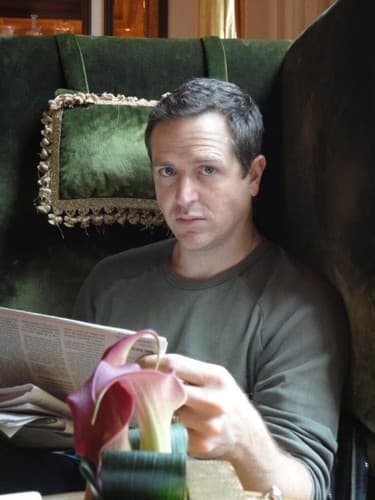
Biography coming soon.







