“The theater was a world unto itself, a place where reality bent and magic bloomed.”
— Phoebe's initial impressions of the Globe Theatre.

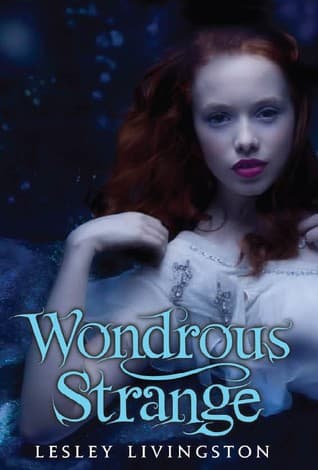
Lesley Livingston (2008)
Genre
Fantasy / Young Adult / Romance
Reading Time
327 min
Key Themes
See below
Sign in to track this book
A teen actress rehearsing for *A Midsummer Night's Dream* discovers her lineage connects her to the dangerous world of faeries, forcing her to accept a destiny she never imagined alongside a mysterious boy.
Seventeen-year-old Kelley Winslow, an aspiring actress, auditions for the lead role of Titania in a New York City production of Shakespeare's *A Midsummer Night's Dream*. Despite nerves and a feeling of being watched, she performs well, channeling an unusual energy. During her callback, she sees a handsome, enigmatic boy, Sonny Flannery, watching her. His presence is unsettling yet captivating. After her audition, Kelley is drawn to Sonny, who approaches her with urgency and a cryptic warning, hinting her life is about to change.
Sonny Flannery tells Kelley he is a faerie and that the world of Faerie is real and connected to the human realm. He explains Kelley is not human; she is a changeling, a faerie child swapped with a human infant at birth, with faerie blood. Sonny warns her that powerful forces from the Unseelie Court are hunting her. He insists her connection to Titania is not a coincidence but a sign of her hidden powers, and her life is in danger if she does not accept her heritage.
While walking in Central Park, Kelley has her first direct encounter with faerie dangers. Grotesque, shadowy creatures – Unseelie Court minions – ambush her, trying to abduct her. As she is about to be overwhelmed, Sonny appears, using speed and strength to fight off the attackers with magic and martial skill. He guides Kelley to safety, confirming his claims and the immediate threat. The experience leaves Kelley shaken but more convinced of Sonny's sincerity and the urgency of her situation.
Sonny begins to train Kelley, helping her understand and use her developing faerie abilities, which show as a connection to nature and a talent for defensive magic. He teaches her about the faerie courts, their politics, and the human world's vulnerability to faerie influence. During their training, often in hidden parts of New York City, Kelley and Sonny spend more time together. Their initial mentor-student relationship grows into a deeper emotional bond, marked by shared vulnerability, trust, and a clear romantic spark, despite the danger.
Sonny introduces Kelley to members of the Seelie Court, his benevolent faerie faction. She meets his mentor, a wise, ancient faerie, and learns about the faerie world's history and her lineage. They explain her human parents were enchanted to forget the changeling swap, and her true faerie mother, a powerful Seelie noble, hid her from the Unseelie Queen, who has a special interest in Kelley due to a prophecy. This revelation complicates Kelley's identity, forcing her to reconcile her human upbringing with her faerie heritage.
As Kelley's powers grow and her presence in the faerie world becomes known, the Unseelie Queen, Maeve, increases her efforts to capture her. Maeve's minions become more aggressive, attacking not only Kelley but also her human friends and the play's production. Kelley realizes her involvement puts innocent lives at risk, strengthening her resolve to understand and control her abilities. Sonny, always watchful, becomes more protective, recognizing the growing danger and the personal stakes for them both.
Kelley and Sonny discover a betrayal within the Seelie Court: a trusted faerie has been secretly working with the Unseelie Queen, providing information about Kelley. This betrayal leads to a major ambush where Kelley is almost captured. In the fight, Sonny is gravely wounded protecting Kelley, a significant sacrifice. His injury deeply affects Kelley, fueling her anger and resolve. She realizes the true cost of the faerie war and the personal sacrifices involved, strengthening her determination to fight back and protect those she cares about, especially Sonny.
With Sonny's life in danger, Kelley must confront her full faerie heritage and the immense power within her. She uses her magical abilities, drawing on her connection to nature and her understanding of faerie magic to heal Sonny. This act is a turning point, as she fully accepts her faerie identity and its responsibilities. She sheds her doubts, realizing she must become a warrior to protect herself, Sonny, and the balance between the human and faerie worlds, setting the stage for a direct confrontation with the Unseelie Queen.
The play's premiere arrives, and Kelley, now fully in her role as Titania, realizes the theater is a nexus of faerie energy. The Unseelie Queen, Maeve, makes her move, trying to use the performance's magical currents and the audience's belief to solidify her power and claim Kelley. Kelley, supported by a recovering Sonny and loyal Seelie Court members, uses her performance and her new command of faerie magic to fight back. The stage becomes a battleground where the lines between play and reality blur as she confronts Maeve directly.
In a climactic magical battle during the play's climax, Kelley, channeling the spirit of Titania and her faerie power, outwits and defeats the Unseelie Queen, Maeve. She does not destroy Maeve but neutralizes her immediate threat, forcing her retreat and disrupting her plans to destabilize the human world. With Maeve temporarily vanquished, the human world is safe, and Kelley has secured her place in the faerie realm. She accepts her dual heritage, embracing both her human and faerie identities. The story ends with Kelley and Sonny looking towards a future together, united by their shared experiences and understanding of their intertwined destinies.
The Protagonist
Kelley transforms from a normal human girl into a powerful faerie warrior, accepting her dual identity and embracing her destiny.
The Love Interest / Supporting Protagonist
Sonny learns to trust and open up to Kelley, finding a deeper purpose and connection through their shared mission.
The Antagonist
Maeve's relentless pursuit of Kelley leads to her temporary defeat, but her desire for power remains a latent threat.
The Supporting
Liam remains a steadfast human friend, unknowingly affected by the faerie world's proximity but ultimately unaware of its true nature, serving as a symbol of what Kelley is fighting to protect.
The Mentioned / Symbolic
Not a character with an arc, but her symbolic presence evolves from a role to a reflection of Kelley's true self.
The Supporting
They remain steadfast in their love for Kelley, symbolizing the human world's vulnerability and innocence.
The Supporting
The Elder provides consistent guidance, helping to shape Kelley's understanding of her heritage and the faerie world.
The central theme is Kelley's journey to understand and accept her true identity. She struggles with being a changeling, torn between her human upbringing and her faerie heritage. Her struggle to reconcile these two parts of herself is clear when she questions who she is after Sonny's revelations. This culminates in her embracing both sides to become a stronger individual. Her role as Titania, a character who reflects her own hidden faerie royalty and power, highlights this theme, forcing her to confront her true nature during the play's performance.
“"Who am I, if not the girl I always thought I was?"”
The developing romance between Kelley and Sonny is closely tied to the theme of sacrifice. Their love grows amid danger, forcing them to make difficult choices for each other's safety and the greater good. Sonny repeatedly risks his life for Kelley, leading to his severe injury, which then motivates Kelley to fully use her powers. Their relationship shows how love can inspire courage and selflessness, demonstrating that true affection often requires personal cost. Their bond strengthens through shared danger and mutual protection.
“"I would give everything for you, Kelley. You know that, don't you?"”
The novel explores the delicate balance between the human and faerie worlds. It suggests the magical realm is not separate but an unseen layer coexisting with our own, constantly influencing it. The theatrical production of *A Midsummer Night's Dream* is a symbolic and literal bridge, acting as a magical channel that blurs the lines between reality and illusion. The presence of faerie creatures in familiar New York City places emphasizes this theme, showing how easily the mundane can become magical, and how vulnerable the human world is to faerie schemes.
“"The veil between our worlds is thinner than you know, child. And sometimes, it tears."”
Kelley initially feels pushed into a destiny she did not choose, being a changeling and a target of the Unseelie Queen. However, as the story progresses, she actively chooses to use her powers, fight for what is right, and protect those she loves. While her heritage sets her on a certain path, her decisions and actions ultimately define her journey. This theme questions how much of our lives are predetermined and how much is shaped by our free will, showing Kelley moving from a passive recipient of fate to an active agent in her own story.
“"My past might be a story written for me, but my future? That's mine to write."”
A faerie child swapped with a human at birth, central to Kelley's identity.
The changeling trope is fundamental to Kelley's character and the entire plot. It establishes her unique dual heritage, making her both human and faerie, and provides the primary reason for the Unseelie Queen's pursuit. This device creates immediate conflict and mystery surrounding Kelley's past and powers. It also serves to highlight the theme of identity, as Kelley must reconcile her human upbringing with her magical origins. The changeling status makes her a bridge between the two worlds, uniquely positioned to understand and defend both.
The play acts as a magical conduit and a symbolic mirror to the faerie conflict.
The production of *A Midsummer Night's Dream* is more than just a backdrop; it is a crucial plot device. The play, with its themes of faerie royalty, magic, and illusion, serves as a powerful magical conduit, especially when performed with genuine emotion and faerie presence. It allows the faerie world to manifest more strongly in the human realm and provides a stage for the climactic confrontation. Symbolically, Kelley's role as Titania mirrors her own journey to discover her faerie queen lineage and power, blurring the lines between performance and reality.
An ancient prediction hinting at Kelley's significance in the faerie world.
While not explicitly detailed, the existence of a prophecy is hinted at as a reason for the Unseelie Queen's particular interest in Kelley. This device creates a sense of destiny and raises the stakes, suggesting that Kelley's existence is not merely accidental but part of a larger, ancient conflict. It provides a deeper motivation for both the Unseelie Court's aggressive pursuit and the Seelie Court's protective measures, positioning Kelley as a pivotal figure whose actions could tip the balance of power between the faerie courts.
“The theater was a world unto itself, a place where reality bent and magic bloomed.”
— Phoebe's initial impressions of the Globe Theatre.
“There are more things in heaven and earth, Horatio, than are dreamt of in your philosophy.”
— A direct quote from Hamlet, used by one of the characters, highlighting the supernatural.
“Sometimes, the greatest courage lies not in fighting, but in choosing what to fight for.”
— A reflection on Phoebe's developing understanding of her role and purpose.
“Love, like a play, has its acts, its entrances and exits, and a grand finale that can either break or make you.”
— Phoebe's musings on her burgeoning feelings for Fae.
“The veil between worlds is thin, especially at dusk, when the shadows stretch and the old magic stirs.”
— A description of the boundary between the human and fae realms.
“Every performance is a gamble, a leap of faith into the hearts of the audience.”
— Phoebe's thoughts on acting and the risks involved.
“True nobility isn't about bloodline, but about the choices one makes when faced with darkness.”
— A character's assessment of heroism and integrity.
“The past is not a cage, but a foundation. What you build upon it is your own doing.”
— A piece of advice given to Phoebe about her lineage and destiny.
“Even in the darkest corners, a flicker of light can reveal the way.”
— A moment of hope amidst despair for the characters.
“Some secrets are best left buried, for their unearthing can shatter more than just peace.”
— A warning about the dangers of uncovering ancient truths.
“The most powerful spells are not spoken, but felt, woven from the deepest desires of the heart.”
— A reflection on the nature of fae magic and its connection to emotion.
“To lose oneself in a role is a kind of freedom, a brief escape from the burdens of being human.”
— Phoebe's experience of immersing herself in a character.
“Not all monsters lurk in the shadows; some walk in the brightest sunlight, cloaked in charm.”
— A realization about the true nature of an antagonist.
“Fate is a tricky playwright; it sets the stage, but we choose our lines.”
— Phoebe's evolving understanding of destiny versus free will.
Ready to see how well you understood this book? Take our interactive quiz with 10 questions.







