“When given the choice between being right or being kind, choose kind.”
— Mr. Browne's first precept of the school year, which becomes a central theme.

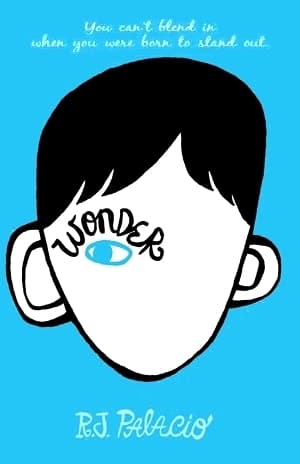
R.J. Palacio (2012)
Genre
Children's / Young Adult
Reading Time
240 min
Key Themes
See below
Sign in to track this book
A boy with a disfigured face starts middle school, learning about empathy and acceptance through his experiences and the people around him.
Ten-year-old August 'Auggie' Pullman was born with severe facial differences and has been homeschooled his whole life. His parents, Isabel and Nate, decide he should attend fifth grade at Beecher Prep Middle School. Auggie is scared because he has only known the safe world of his family. Before school starts, his mother arranges for him to visit the school and meet some students: Jack Will, Julian Albans, and Charlotte Cody. Julian is immediately rude about Auggie's face, while Jack and Charlotte are polite but uncomfortable. Auggie's first day is full of strong feelings as he deals with stares, whispers, and avoidance from his new classmates. He uses his astronaut helmet for comfort.
Auggie quickly makes a friend in Summer Dawson, who genuinely sits with him at lunch on the first day. They form the 'Summer Table.' She sees past his face and likes his humor and kindness. But Julian Albans continues to bully him, leaving mean notes in Auggie's locker and spreading rumors. Auggie also learns about the 'Plague,' a cruel game where students avoid touching Auggie as if he has a disease. Jack Will seems friendly at first but struggles with peer pressure, often avoiding Auggie when Julian is around. Auggie's first semester is a constant fight between finding acceptance and dealing with the pain of being left out, especially on Halloween, his favorite holiday, when he overhears a very upsetting conversation.
On Halloween, Auggie wears a different costume than he planned, a 'Bleeding Scream' mask, so no one will recognize him. He walks into his homeroom and overhears Jack Will, his best friend, talking to Julian and Miles. Jack says he was 'forced' to hang out with Auggie and that he would 'kill himself' if he looked like Auggie. He also agrees with Julian that Auggie is a 'freak.' Auggie is completely heartbroken and devastated by this betrayal. He feels a pain worse than any physical discomfort. He runs home from school, pretending to have a stomach ache, and tells his mother he never wants to go back. This incident breaks his trust and makes him doubt any future friendships.
The story then focuses on Olivia 'Via' Pullman, Auggie's older sister. She has always understood and protected him but often feels invisible because Auggie needs so much attention. She starts high school and finds comfort in new friendships with Miranda and Ella, who knew Auggie before. But later, she feels hurt when they start to distance themselves. Via tries out for the school play, 'Our Town,' and gets the main role. She keeps this a secret from her family, wanting a part of her life that is not about Auggie. She also starts dating Justin, a kind and unusual boy who helps her see her own worth beyond being 'Auggie's sister.'
After Auggie stops talking to him, Jack Will is confused and hurt. Summer eventually tells him about the 'Bleeding Scream' costume, and Jack realizes what terrible things Auggie overheard on Halloween. Filled with regret, Jack sends Auggie many emails, apologizing deeply and explaining that he didn't mean what he said and that he truly values Auggie's friendship. Auggie, still very hurt, ignores him at first. But after thinking about it and getting encouragement from his sister, he gives Jack another chance. Their reconciliation is important. It rebuilds their friendship on honesty and forgiveness and shows Jack's growth in standing up for what is right.
With Jack and Auggie's friendship back, Julian's bullying gets worse. He keeps making mean comments and spreading rumors. Jack finally punches Julian in the face during class, defending Auggie. This causes Jack to be suspended, but it also strengthens his loyalty to Auggie. The principal, Mr. Tushman, addresses the situation. Julian's parents, instead of admitting their son's wrong actions, accuse the school of not being safe for Julian and suggest Auggie should be homeschooled. This shows the deep prejudice and lack of empathy some adults have, mirroring their children's behavior.
Via's high school play, 'Our Town,' is coming up, and she still hasn't told her family. On opening night, Miranda, Via's former best friend, gets stage fright and pretends to be sick. This lets Via step in as the lead. Via finally tells her family, and even with short notice, they all come to support her. Auggie, at first hesitant because he worries his presence will draw unwanted attention to Via, ultimately attends. Seeing Via succeed on stage, with her family's proud support, is a moment of success for Via and a renewed sense of family togetherness. Miranda, despite her earlier distance, shows up backstage to congratulate Via, suggesting their friendship might heal.
Near the end of the school year, Auggie goes on a fifth-grade nature trip. During an outdoor movie, Auggie and Jack Will go to the restroom and are confronted by older, aggressive middle schoolers from another school who make fun of Auggie's appearance and attack them. Unexpectedly, Julian's former friends, Miles and Henry, along with Amos, step in to defend Auggie and Jack. Auggie's hearing aids are broken in the fight, but the incident becomes a turning point. It shows Auggie that he has true friends and that even those who were once uncaring or hostile can help him when it truly matters. This proves his courage and creates stronger bonds.
Auggie returns from the nature trip feeling more confident and accepted. His broken hearing aids are replaced, and he tells his family about the attack, highlighting his friends' bravery. The incident, though scary, ultimately made his bonds with Jack, Summer, and even some of Julian's former friends stronger. He realizes that while his face will always be a part of him, it does not define his worth or his ability to make real connections. The experience helps him understand that true friendship means standing up for each other, even when it is hard or risky.
At the fifth-grade graduation ceremony, Mr. Tushman gives a speech about kindness and courage. To Auggie's surprise, he is called to the stage to receive the 'Henry Ward Beecher Medal' for his quiet strength, courage, and kindness. The audience gives him a standing ovation, a moment of strong acceptance and recognition that brings tears to his parents' eyes. Auggie feels a great sense of joy and belonging. He realizes he has not only gotten through Beecher Prep but has done well and changed how many people see things. He leaves with his parents, feeling like an ordinary kid, but knowing he is special in his own way.
The Protagonist
Auggie transforms from a sheltered, fearful boy into a confident and accepted member of his school community, embracing his uniqueness.
The Supporting
She learns to let go and trust Auggie's ability to navigate the world, finding strength in his growing independence.
The Supporting
He remains a steadfast and loving presence, adapting to the changing dynamics as his children grow.
The Supporting
Via learns to assert her own needs and desires, finding confidence in her individuality while still loving and supporting Auggie.
The Supporting
Jack learns to prioritize true friendship and kindness over social acceptance, becoming a loyal and brave ally to Auggie.
The Supporting
Summer remains a consistently kind and empathetic friend, serving as a pillar of support and moral clarity for Auggie.
The Antagonist
Julian remains largely unchanged within the story, representing the persistent challenge of prejudice, though his friends eventually abandon him.
The Supporting
Mr. Tushman consistently upholds the values of kindness and acceptance, guiding the school community towards greater empathy.
The Supporting
Miranda grapples with identity and peer pressure, eventually reconnecting with her true self and her friendship with Via.
The Supporting
He provides unwavering support and love to Via, helping her to grow and find her own voice.
A main theme of 'Wonder' is choosing kindness over cruelty and showing empathy for others. Characters like Summer and Mr. Tushman show understanding and compassion towards Auggie. Jack Will's story shows the difficulty of choosing kindness when facing peer pressure, which leads him to defend Auggie. The book often says that true strength is treating others with respect and understanding, no matter their differences. The 'Choose Kind' message reminds readers to look past appearances.
“'When given the choice between being right or being kind, choose kind.'”
Auggie's story is about identity and accepting himself. He struggles with how his facial differences make others see him versus how he sees himself. At first, he wants to be 'ordinary,' but through his experiences, he learns to accept his unique qualities and feel confident. Via's story also explores this, as she tries to find her own identity apart from being 'Auggie's sister.' The book suggests that who we are comes from inside and is not just determined by how we look or what roles others give us.
“'I wish every day could be Halloween. We could all wear masks all the time. Then we could walk around and get to know each other before we got to see what we looked like under the masks.'”
The novel clearly shows the hurtful effects of prejudice and bullying, mainly through Auggie's experiences with Julian and the 'Plague.' It shows how small comments, stares, and being excluded can hurt as much as direct aggression. Julian's character shows how prejudice can come from fear and not knowing, often passed on by adults. The story asks individuals and communities to fight bullying and create welcoming places. It shows the courage it takes to stand up against such cruelty, as seen when Jack defends Auggie.
“'You can’t blend in when you were born to stand out.'”
The Pullman family's strong love and support are the base of Auggie's strength. Isabel and Nate's dedication to Auggie's well-being, and their efforts to give him a 'normal' life, are central to his ability to face challenges. Via's complex relationship with Auggie, which includes both protecting him and sometimes resenting him, ultimately shows the deep bonds of sibling love. The family, despite its difficulties and sacrifices, provides a safe place and constant encouragement, allowing Auggie to go out into the world with a strong foundation of unconditional acceptance.
“'The only reason I'm not ordinary is that no one else sees me that way.'”
Narrative told from the viewpoints of several characters, offering varied insights.
The novel is divided into parts, each narrated by a different character (Auggie, Via, Summer, Jack, Justin, Miranda). This device allows the reader to gain a comprehensive understanding of the emotional impact of Auggie's presence on those around him and to see the complexities of their individual struggles and motivations. It moves beyond Auggie's direct experience, revealing the internal conflicts, peer pressures, and personal growth of other characters, and demonstrating that everyone has their own 'story' and challenges, fostering greater empathy for the entire cast.
Monthly inspirational quotes that guide character actions and highlight themes.
Mr. Browne, Auggie's English teacher, introduces monthly 'precepts' – rules about really important things – to his students. These short, philosophical statements, such as 'When given the choice between being right or being kind, choose kind,' serve as moral guideposts throughout the story. They reinforce the book's central themes of kindness, empathy, and courage, providing a framework for the characters' ethical development and prompting readers to consider their own values. The precepts act as direct lessons, subtly influencing the narrative and emphasizing the book's core messages.
A symbolic object representing Auggie's desire for protection and anonymity.
Auggie's astronaut helmet, a gift from his sister's friend Miranda, serves as a powerful symbol. For years, it allowed him to hide his face from the world, offering a sense of anonymity, protection, and normalcy (as he felt like any other kid in a helmet). When it's lost, it forces Auggie to confront the world without his shield, marking a significant step in his journey towards self-acceptance and bravery. Its initial presence and eventual absence track his emotional development and growing confidence in facing the world as himself.
A cruel social game that symbolizes the fear and ostracization Auggie faces.
The 'Plague' is a cruel game invented by students at Beecher Prep, where anyone who accidentally touches Auggie must quickly wash their hands or they'll catch 'the Plague.' This device starkly illustrates the irrational fear, prejudice, and social ostracism Auggie endures. It creates a tangible representation of the invisible barrier that many students erect around him, highlighting the dehumanizing effect of such behavior. The eventual breakdown of the 'Plague,' as more students overcome their fear and embrace Auggie, marks a significant shift in his acceptance within the school community.
“When given the choice between being right or being kind, choose kind.”
— Mr. Browne's first precept of the school year, which becomes a central theme.
“You can't blend in when you were born to stand out.”
— Auggie's reflection on his appearance and acceptance.
“Courage. Kindness. Friendship. Character. These are the qualities that define us as human beings, and propel us, on occasion, to greatness.”
— Auggie's graduation speech, summarizing the book's lessons.
“The things we do outlast our mortality. The things we do are like monuments that people build to honor heroes after they've died. They're like the pyramids that the Egyptians built to honor the pharaohs. Only instead of being made of stone, they're made out of the memories people have of you.”
— Auggie's thoughts on legacy and impact.
“I think there should be a rule that everyone in the world should get a standing ovation at least once in their lives.”
— Auggie's wish for universal recognition and appreciation.
“Your deeds are your monuments.”
— Inscription on a tombstone that Auggie recalls, reinforcing the idea of legacy.
“It's not enough to be friendly. You have to be a friend.”
— Auggie learning about the active role of friendship from his experiences.
“The best way to measure how much you've grown isn't by inches or the number of laps you can now run around the track, or even your grade point average—though those things are important, to be sure. It's what you've done with your time, how you've chosen to spend your days, and whom you've touched this year.”
— Part of Auggie's graduation speech, emphasizing personal growth.
“Sometimes I think my head is so big because it is so full of dreams.”
— Auggie's whimsical thought about his appearance and inner world.
“We carry with us, as human beings, not just the capacity to be kind, but the very choice of kindness.”
— Auggie reflecting on the human ability to choose kindness.
“Everyone deserves a standing ovation because we all overcometh the world.”
— Auggie's expanded thought on his earlier wish for ovations.
“I wish every day could be Halloween. We could all wear masks all the time. Then we could walk around and get to know each other before we got to see what we looked like under the masks.”
— Auggie's wish to be judged by character rather than appearance.
“The universe takes care of all its birds.”
— Auggie's mother comforting him, suggesting a protective order to life.
“You are not ugly, Auggie. You are... you.”
— Auggie's sister Via reassuring him about his self-image.
“Greatness lies not in being strong, but in the right use of strength.”
— One of Mr. Browne's precepts, discussed in class.
Ready to see how well you understood this book? Take our interactive quiz with 10 questions.

Biography coming soon.

Dan Gemeinhart
4.5

Kate O'Hearn
4.4

Jeanne Birdsall
4.4

Jen Wang
4.4

Wendelin Van Draanen
4.3

John Marsden
4.3

Chris Van Allsburg
4.3

Jennifer A. Nielsen
4.2