“We were sisters of the silk, and the silk was our life.”
— Reflecting on the bond between the silk factory workers.

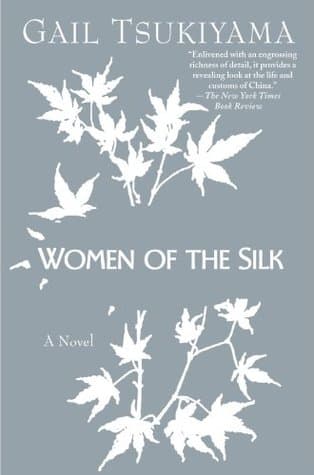
Gail Tsukiyama (1991)
Genre
Historical Fiction
Reading Time
278 min
Key Themes
See below
Sign in to track this book
In 1920s rural China, a young woman abandoned to a silk factory finds sisterhood and the courage to strike for freedom against oppressive tradition.
In 1926, eight-year-old Pei's poor family sends her from their village, Fragrant Willow, to the coastal village of the House of a Thousand Lanterns. She will work at the silk factory. Her family receives a small payment for her labor, believing it will secure her future. At the factory, Pei meets Auntie Yee, the strict but fair dormitory matron, and her roommates: the lively Lin, the quiet Rosedrop, the practical May, and the independent Wildflower. Pei quickly learns the hard work of reeling silk cocoons, enduring long hours and the constant threat of scalding water. She adapts to her demanding new life away from her family.
Pei slowly adjusts to factory life, working fifteen-hour days with hundreds of other women. She learns the process of silk production, from sorting cocoons to reeling threads. Her initial shyness turns into a bond with her roommates. Lin's humor, Rosedrop's art, May's nurturing spirit, and Wildflower's independence become important to Pei. They share meals, dreams, and fears, forming a close sisterhood that helps them endure the harsh conditions and loneliness. Pei sends part of her small earnings to her family, fulfilling her duty.
The factory's stability ends with a new foreman. He is a harsh man, replacing the more lenient supervisor. He immediately puts in stricter rules, increases production quotas, and reduces the women's short breaks. The women, including Pei and her friends, work longer hours under more oppressive conditions, with punishment for small mistakes. The factory atmosphere becomes tense and fearful. The women's physical and emotional health declines under the new rules, sparking resentment among them.
The new foreman's increasing harshness and the unbearable working conditions spark a rebellion among the women. Wildflower, who has a strong sense of justice, leads the discussions. May's quiet strength and Lin's outspokenness support her. The women share stories of unfair treatment, exhaustion, and low wages. Pei, hesitant at first, listens closely, her own sense of injustice growing. The idea of a strike, a radical and dangerous concept in their village, begins to spread, fueled by their shared suffering and hope for change.
With Wildflower's strong leadership and the workers' resolve, the women decide to strike. This is an unprecedented act in their village, with great danger and risk. On the chosen day, the women, including Pei, Lin, Rosedrop, and May, bravely put down their tools. They refuse to work until their demands for better wages, shorter hours, and improved conditions are met. The factory floor, usually loud with machines, falls silent. The foreman and factory owners are dismissive at first, but the women's unity and determination prove to be a strong force, surprising everyone.
The strike continues for days, then weeks, causing great hardship for the women. Without wages, they struggle to buy food, and their families, who depend on their earnings, also suffer. The factory owners try to break their resolve with intimidation and small offers, but the women stand firm. During this time, the bond between Pei and her friends deepens. They share their dwindling resources, offer emotional support, and strengthen each other's commitment. The strike becomes a test of their endurance, unity, and belief in their own worth, with Wildflower remaining a strong example of courage.
After a long and difficult struggle, the factory owners, facing big losses, finally agree to many of the women's demands. The strike is a success, securing better wages, reduced hours, and improved working conditions. The women return to work with a new sense of dignity and empowerment. However, the victory changes the village's social fabric and the women's lives. Some face criticism from conservative families or village elders. Others, like Wildflower, find their independence solidified but also face an uncertain future outside traditional expectations.
After the strike, Wildflower, always independent, decides to become a 'Golden Orchid' – a woman who vows never to marry. She chooses to live independently and follow her own path. This decision goes against societal norms, but it shows Wildflower's commitment to her freedom. She moves into a house with other Golden Orchids, forming a new community based on shared principles of independence. Her choice affects Pei and her friends deeply, showing them an alternative way of life and challenging their ideas of a woman's place in society.
As years pass, Pei grows from a timid girl into a thoughtful and independent young woman. The lessons from the strike and Wildflower's example shape her. She continues to work at the factory, now under fairer conditions, but her view of her future has widened. She observes her friends' lives – May's eventual marriage and family, Lin's continued zest for life, and Rosedrop's quiet pursuit of art – and begins to think about her own desires beyond traditional expectations. Pei's growing self-awareness allows her to make choices that fit her evolving sense of self and purpose.
Over time, the close sisterhood experiences the natural changes of life. May eventually marries and moves away, starting her own family, following a traditional path. Rosedrop, always artistic, finds ways to express herself through her craft, though her life remains somewhat limited. Lin remains a lively presence, navigating her own path with humor and resilience. Wildflower remains a steadfast Golden Orchid, a symbol of independence. Pei, having seen these different paths, continues to work, save, and learn. She understands that while their paths may diverge, the bonds formed in the silk factory will always connect them, shaping their individual futures.
The Protagonist
Pei transforms from a dutiful, submissive child into a self-aware, independent woman, learning to value her own desires and strength.
The Supporting
Wildflower consistently embodies independence, solidifying her choice to live autonomously and inspiring others through her defiance.
The Supporting
Lin maintains her vibrant and outspoken personality, finding strength in friendship and her own resilience.
The Supporting
May follows a more traditional path of marriage and family, embodying quiet strength and nurturing spirit.
The Supporting
Rosedrop continues to cultivate her artistic sensibility, finding solace and expression through creativity despite life's constraints.
The Supporting
Auntie Yee maintains her role as a watchful guardian, subtly supporting the girls while upholding her duties.
The Antagonist
The Foreman remains a static figure of oppression, representing the systemic exploitation the women fight against.
The novel explores sisterhood, showing how the bonds between the women in the silk factory become their main source of strength and survival. Away from their families, Pei, Lin, Rosedrop, May, and Wildflower form a strong connection, sharing resources, fears, and dreams. This solidarity is clearest during the strike, where their collective will and support help them challenge oppressive forces and win a victory impossible individually. Their shared experiences of hardship and resilience create a unique community.
“They were sisters, bound by the thread of silk and the loom of their lives.”
The search for independence, especially for women, is a main theme. The novel contrasts traditional expectations for women (marriage, family) with other paths. Wildflower's decision to become a 'Golden Orchid' – a woman who vows never to marry – is a radical act of self-determination that inspires Pei and challenges societal norms. The collective strike for better conditions also represents independence, as the women assert themselves and demand fair treatment. Pei's journey from a dutiful child to an independent woman shows this changing understanding of self-determination.
“A woman could choose her own path, even if it meant walking alone.”
The story highlights the realities of industrialization and labor exploitation, especially in pre-WWII China. The silk factory, while an economic symbol, also represents a system that demands hard labor, long hours, and low wages from its mostly female workforce. The new foreman's arrival worsens these conditions, pushing the women to their limit. The strike, though successful, reveals the great personal cost and risk involved in fighting for basic human rights against a profit-driven system. It shows the tension between economic progress and human dignity.
“The silk threads spun gold for others, but for them, it spun only exhaustion.”
The novel explores the tension between traditional Chinese customs and new ideas of modernity and individual rights. The expectation for young girls like Pei to work and send money home, and the societal pressure for women to marry, represent tradition. However, the women's collective action during the strike, and Wildflower's choice to become a Golden Orchid, challenge these norms. The factory itself is a symbol of modernity, but it also creates new social structures and chances for women to assert themselves, blurring the lines between old ways and new possibilities.
“The old ways held them tight, but new dreams began to unfurl like the silk itself.”
The factory setting reflects broader societal changes and struggles.
The silk factory serves as a microcosm of Chinese society during a period of significant change. It represents the harsh realities of industrialization, the exploitation of labor, and the limited opportunities available to women. Simultaneously, it becomes a crucible where new forms of community, solidarity, and female empowerment are forged. The enclosed, demanding environment of the factory forces the women to rely on each other, turning a place of hardship into a site of resistance and personal growth, mirroring the larger struggles and transformations occurring in China.
Silk represents beauty, wealth, and the women's intertwined destinies.
Silk itself is a powerful symbol throughout the novel. It represents beauty, luxury, and wealth, yet its production is a grueling, often painful process for the women who create it. The delicate, strong threads mirror the women's own resilience and the intricate bonds of their sisterhood. The cocoons, transformed into silk, can also symbolize the women's own transformations from innocent girls into strong, independent individuals. The thread of silk metaphorically connects their destinies, their labor, and their struggles, highlighting the contrast between the product and its producers.
A social institution representing female independence and defiance.
The 'Golden Orchid' is a specific social institution or choice that serves as a powerful plot device for exploring female independence. It represents a radical alternative to traditional marriage and family life, allowing women to live autonomously and pursue their own paths. Wildflower's decision to become a Golden Orchid provides a concrete example of self-determination and challenges the societal norms presented throughout the story. This choice not only highlights individual agency but also fosters a community of like-minded women, expanding the narrative's exploration of female solidarity beyond the factory walls.
“We were sisters of the silk, and the silk was our life.”
— Reflecting on the bond between the silk factory workers.
“A woman's hands were her fortune, and ours were meant for silk.”
— Describing the dedication and skill required for silk production.
“The cocoon held both death and life, an ending and a beginning.”
— Observing the silkworm cocoons, a central element of their livelihood.
“Sometimes the greatest freedom was found in the smallest choices.”
— A character contemplating the limited but meaningful choices available to them.
“The river carried away our sorrows, but it also brought us our sustenance.”
— Reflecting on the dual nature of the river in their lives.
“Even in the darkest times, there was beauty to be found in the threads we spun.”
— Finding solace and purpose in their craft amidst hardship.
“Our stories were woven into the silk, thread by delicate thread.”
— Realizing their personal histories and struggles were intrinsically linked to their work.
“A woman's heart could be as strong and as delicate as the finest silk.”
— Comparing the strength and vulnerability of women to the silk they produce.
“We learned early that silence could be a weapon, and also a shield.”
— Understanding the strategic use of silence in their confined lives.
“The past was a thread that refused to break, no matter how much we pulled.”
— Grappling with the inescapable influence of history and tradition.
“Hope was a fragile thing, easily unraveled, but essential to re-weave.”
— Acknowledging the precarious nature of hope in their difficult circumstances.
“Some dreams were like the raw silk, needing much processing before they could become beautiful.”
— Comparing the arduous process of realizing dreams to silk production.
“We were bound by tradition, but also by the love we held for one another.”
— Highlighting the dual forces of tradition and affection shaping their community.
“The scent of mulberry leaves was the scent of our lives, our past, and our future.”
— The pervasive and symbolic smell of the mulberry leaves essential for silkworms.
Ready to see how well you understood this book? Take our interactive quiz with 10 questions.







