“The problem was you had to keep systems in place to keep systems in place.”
— Reflecting on the nature of societal structures and his own life.

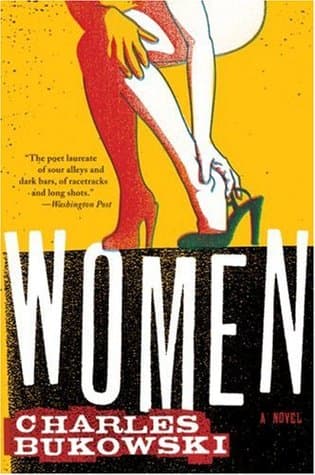
Sign in to track this book
Fifty-year-old Henry Chinaski, a newly famous poet, falls into a spiral of hangovers and lust, navigating women and booze with his usual dark humor.
The novel opens with Henry Chinaski, a 50-year-old writer, finding unexpected success with his poetry and novels. This new fame brings him many women. His first main relationship is with Lydia Vance, a woman he meets through his literary connections. Lydia is free-spirited and often erratic, quickly moving in with Henry. Their relationship has intense passion, frequent arguments, and heavy drinking. Henry is drawn to her wildness but also annoyed by her unpredictable behavior and emotional demands. They navigate the early parts of his literary success together, attending readings and dealing with the new attention.
Lydia's increasingly erratic behavior, including jealousy, public scenes, and an inability to maintain a stable life, eventually pushes Henry away. Despite liking her, he sees the relationship is unsustainable. After their breakup, Henry meets Tammie, a much younger fan of his work. Tammie is shown as naive and somewhat innocent compared to Lydia. She is taken by Henry's persona and literary life. Their relationship is less volatile but still marked by Henry's drinking and his general detachment; he sees her more as a temporary distraction than a serious partner. She provides a brief calm period, but their age difference and life goals become clear.
After Tammie, Henry's life becomes a blur of one-night stands and short relationships with various women drawn to his fame and bad-boy image. One notable person is Dee Dee, an attractive, smart woman who at first seems to offer a more stable connection. Their time together is intense but brief, as Henry struggles with commitment and Dee Dee has her own issues. This period shows Henry's inability to form lasting bonds, his constant search for newness, and his growing tiredness with the endless women, even as he keeps seeing them. He often feels disappointed by the women, despite his initial attraction.
Henry meets Cassady, a woman who, unlike many others, seems less interested in his fame and more in a real connection. She is presented as more grounded and less dramatic. Their relationship offers a glimpse of potential stability for Henry, but his habits of drinking, gambling, and womanizing continue to cause problems. Despite a calmer atmosphere, Henry's self-destructive tendencies and his inability to fully commit or change ultimately ruin the relationship. He likes her calmness but feels restless, unable to settle into a normal partnership, always searching for something more, or perhaps just another distraction.
Valerie is another important person in Henry's journey through women. She has a strong personality, is sometimes jealous, and wants a deeper connection than Henry often gives. Their relationship is a mix of passion and conflict, with accusations and misunderstandings. Henry is both attracted to her fiery nature and put off by her demands. This relationship further shows Henry's pattern of engaging with women who challenge him, only to find himself unable to meet their emotional needs, or perhaps unwilling to give up his own freedom and solitude, which he values amidst the chaos.
Among the many women, Iris stands out for her unique personality and the strong, though short, impact she has on Henry. She is shown as intelligent and independent, not easily swayed by his fame or antics. Their time together, though brief, is memorable for its intensity and the genuine connection they seem to share, even if it is not meant to last. Iris represents a type of woman Henry respects but cannot keep, perhaps because she demands a level of emotional engagement he cannot sustain. She reminds him of how fleeting many of his relationships are and the missed chances for deeper connection.
Throughout the story, Henry's interactions with women, though seemingly endless, often leave him feeling empty. He constantly seeks physical intimacy and brief connections, but these rarely lead to lasting happiness or real companionship. He often feels let down by the women he meets, seeing them as too needy, too unstable, or simply not interesting enough to keep his attention for long. This cycle of pursuit, temporary satisfaction, and eventual disappointment shows a deeper loneliness and an inability to find true contentment despite his success and access to many partners.
Alcohol is always present in Henry's life. It both causes his wild adventures and supports him through emotional struggles. His drinking often makes conflicts in his relationships worse, but also seems to fuel his writing. His writing, in turn, is what draws women to him; they are attracted to his reputation as a celebrated, unconventional poet and novelist. The connection between his drinking, his writing, and his relationships forms the core of his life, each element feeding the others in a destructive yet productive cycle that defines who he is.
Amidst the endless cycle of women, drinking, and writing, Henry sometimes pauses to think about his life's meaning and his relationships. These moments of thought are often brief and cynical, but they show a deeper longing for something more substantial than just physical encounters. He questions the women's motives and his own role in his chaotic life. These quick philosophical thoughts balance the constant pleasure-seeking, suggesting a man who, despite his outward appearance, searches for a deeper truth, or at least a temporary break from his life's perpetual motion.
As the novel goes on, a recurring theme is Henry Chinaski's fundamental solitude. Despite being surrounded by women, he remains emotionally detached and ultimately alone. He struggles to form deep, lasting connections, often ruining relationships through his drinking, cynicism, or unwillingness to compromise. The women serve more as distractions or temporary companions than true partners. The story ends with Henry still in his unique, chaotic life, having experienced countless women but finding no lasting peace or companionship, reinforcing his identity as a solitary figure navigating the world on his own terms.
The Protagonist
Chinaski experiences a rise in literary fame and a subsequent influx of women, but his core personality, cynicism, and inability to commit remain largely unchanged, solidifying his identity as a solitary figure.
The Supporting
Lydia's instability and demands on Henry lead to their inevitable breakup, marking the first of many failed attempts at a stable relationship for him.
The Supporting
Tammie's brief relationship with Henry highlights his inability to find genuine connection with someone younger and less complex.
The Supporting
Dee Dee's presence underscores the transient nature of Henry's many relationships, even with seemingly compatible partners.
The Supporting
Cassady's role emphasizes Henry's struggle with commitment and his preference for his chaotic lifestyle over a potentially stable relationship.
The Supporting
Valerie's tumultuous relationship with Henry reinforces his pattern of engaging with demanding women and then resisting their emotional needs.
The Supporting
Iris's brief but memorable appearance highlights Henry's rare encounters with women he genuinely respects, but cannot keep.
The Mentioned
The collective presence of these 'other women' underscores Henry's persistent promiscuity and his inability to find lasting satisfaction.
The novel explores Henry Chinaski's pursuit of women as a main source of meaning and excitement. Despite many sexual encounters and relationships, Henry consistently feels unfulfilled. Each new woman brings temporary satisfaction but ultimately leaves him feeling empty or disappointed. This is clear in his cynical thoughts after many encounters, where he often finds women 'boring' or 'too much trouble,' suggesting that physical intimacy alone cannot fill loneliness or provide lasting happiness. For example, after many women, he still feels alone, as seen in his quiet moments of thought when he returns to his writing.
“I was getting tired of women, and I hadn't even found one I really wanted.”
Henry Chinaski is a self-destructive artist. His creative process connects to his chaotic life, fueled by alcohol and experiences from his troubled relationships. Despite his literary success, he stays cynically detached and almost deliberately resists normal happiness or stability. His constant drinking and womanizing can be both inspiration and a way to ruin any chance for a settled life, strengthening his identity as a solitary figure. This is clear in how he often returns to his typewriter after a draining encounter, turning his pain into art, but never truly escaping his inner demons.
“Writing was a sickness, a disease, a virus, a madness. It was a beautiful sickness.”
The novel shows a raw, often uncomfortable, portrayal of male desire from Henry's view. His interactions with women are often transactional, driven by physical urges, and tinged with casual misogyny. He objectifies women, categorizes them, and often dislikes their emotional complexities or demands. While the story does not necessarily agree with these views, it presents them as a part of Henry's character, reflecting a raw aspect of male-female dynamics. This appears in his internal thoughts where he often judges women harshly or dismisses their feelings, such as his thoughts on Lydia's emotional outbursts.
“Women were like that: they loved to get you into trouble, then they loved to watch you try to get out of it.”
Henry's sudden literary fame in his fifties brings him unexpected money, attention, and, most notably, women. However, this fame does not bring him happiness or peace. Instead, it makes his existing problems worse, leading to a more chaotic life filled with demanding fans, intrusive letters, and an endless stream of women who are often more interested in his public image than in him as a person. The novel suggests that fame, for someone like Henry, is just another distraction and a cause for further disappointment, rather than a path to contentment. His struggles with public appearances and his wish to retreat to solitude show this dissatisfaction.
“Fame had brought me everything but peace of mind.”
The narrative is composed of a series of loosely connected vignettes, each focusing on a different woman or romantic encounter.
The novel's episodic structure mirrors Henry Chinaski's fragmented and chaotic life. Each chapter or section often introduces a new woman, detailing their brief relationship with Henry before moving on to the next. This structure emphasizes the transient nature of his connections and the cyclical pattern of his pursuit, engagement, and eventual disengagement from women. It allows for a rapid succession of experiences, preventing any single relationship from dominating the narrative and reinforcing the idea of a continuous 'parade' of women through his life.
The story is told entirely from Henry Chinaski's subjective, cynical, and often darkly humorous perspective.
The use of first-person narration allows readers direct access to Henry Chinaski's unfiltered thoughts, observations, and biases. His distinctive voice – crude, witty, self-deprecating, and occasionally misogynistic – shapes the entire narrative. This device immerses the reader in his world, making his experiences feel immediate and authentic, even as his perspective is clearly subjective and unreliable. It is through his eyes that all women are viewed, and his internal monologues reveal his deeper insecurities and philosophical musings amidst the hedonism.
Recurring patterns of initial attraction, intense passion, conflict, and eventual disillusionment in Henry's relationships.
The novel frequently employs repetition in the dynamics of Henry's relationships. While each woman is distinct, the arc of his interactions often follows a similar pattern: initial intense attraction, a period of passion and heavy drinking, followed by arguments, emotional demands from the woman, and Henry's eventual detachment or the relationship's collapse. This repetition underscores Henry's inability to break free from his self-destructive patterns and highlights the cyclical, unfulfilling nature of his pursuit of women, reinforcing the central theme of his enduring solitude.
Alcohol serves as a constant companion, a coping mechanism, a social lubricant, and a catalyst for both pleasure and destruction.
Alcohol is more than just a beverage in 'Women'; it functions as a pervasive symbol of Henry's entire existence. It symbolizes his escapism, his self-destructive tendencies, and his raw, unvarnished approach to life. It fuels his courage in social situations, intensifies his passions, and numbs his pain. However, it also exacerbates conflicts in his relationships and contributes to his overall chaos. Its constant presence highlights the inextricable link between his substance abuse, his relationships, and his identity as an artist and a man on the fringes.
“The problem was you had to keep systems in place to keep systems in place.”
— Reflecting on the nature of societal structures and his own life.
“I was an animal. I was a man. I was a god. I was a clown.”
— Describing his shifting self-perception and identity.
“We are here to unlearn the teachings of the church, the state, and our educational system.”
— His cynical view on established institutions and the need for independent thought.
“Genius might be the ability to say a profound thing in a simple way.”
— Musings on the nature of genius and communication.
“Love is a dog from hell.”
— A characteristic Bukowski take on the difficulties and pain of love.
“I didn't hate the man, I just hated what he represented.”
— Expressing his dislike for conventionality and societal norms rather than individuals.
“The free soul is rare, but you know it when you see it—basically, because you feel good, very good, when you are near or with them.”
— Observing the impact of genuinely free-spirited individuals.
“Some people never go crazy. What truly horrible lives they must lead.”
— A darkly humorous comment on sanity and the human experience.
“Show me a man who is not a slave of his senses and I'll show you a man who has no senses.”
— Reflecting on the inescapable nature of human desires and physicality.
“The greatest moments of my life were when I was alone.”
— Highlighting his preference for solitude and introspection.
“The less you have, the more free you are.”
— A minimalist philosophy on freedom and material possessions.
“There are worse things than being alone. Some people are just too much.”
— Another defense of solitude and a critique of draining social interactions.
“Writing about a writer's block is better than not writing at all.”
— A pragmatic approach to the challenges of the creative process.
“Poets are like a bunch of whores. They're only good for one thing.”
— A cynical and provocative take on the role and nature of poets.
Ready to see how well you understood this book? Take our interactive quiz with 10 questions.
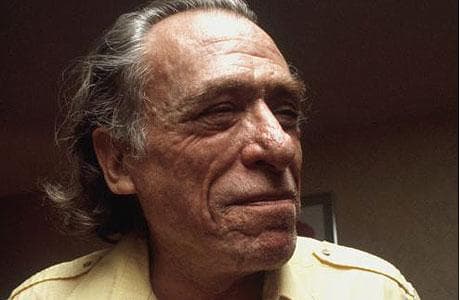
Charles Bukowski was a prolific German-American poet and novelist, often celebrated for his raw, autobiographical style. His notable works include 'Notes of a Dirty Old Man,' 'Factotum,' and 'Ham on Rye,' which vividly depict the gritty realities of working-class life and his own struggles with alcohol and poverty. Bukowski's unflinching prose and anti-establishment themes have cemented his status as a counter-culture icon.







